
Understanding EMDR for Anxiety: How Reprocessing Works
EMDR relieves anxiety by using bilateral stimulation—guided lateral eye movements, rhythmic tactile tapping, or alternating auditory tones—to desensitize hyper-reactive emotional triggers and reprocess the root memories that keep your nervous system stuck in fight-or-flight. This process reduces the vividness and physical charge of distressing experiences, allowing your brain to integrate them into calmer neural networks.
Eye Movement Desensitization and Reprocessing (EMDR) operates on the principle of the Adaptive Information Processing (AIP) model. Under healthy conditions, your brain naturally processes daily experiences, categorizing them, filing away useful information, and discarding the rest. However, when an event carries high stress, fear, or persistent emotional discomfort, the nervous system can become overwhelmed.
Instead of being filed away smoothly into long-term narrative memory, these experiences remain stuck in an isolated, raw neural network. When a present-day situation even vaguely resembles that past event, your nervous system reacts as if the original event is happening right now, triggering sudden physical tension, racing thoughts, and chronic fight-or-flight sensations.
EMDR uses bilateral stimulation to jumpstart your brain’s natural processing mechanisms. By pairing this gentle bilateral input with the targeted recall of anxiety-producing memories, EMDR helps desensitize hyper-reactive somatic responses and integrate those memories into broader, calmer neural networks.
The Science of Using EMDR for Anxiety and Stress
The neurological mechanisms underlying EMDR have been thoroughly evaluated in modern clinical neuroscience. When you engage in horizontal eye movements while holding a distressing image or trigger in your mind, two powerful neurobiological effects occur:
- Working Memory Taxation: Your working memory has limited processing capacity. Holding a vivid, frightening image while simultaneously tracking a visual or tactile target strains this capacity. As a result, the memory loses its vividness, emotional intensity, and physical charge.
- Nervous System De-escalation: Bilateral stimulation appears to stimulate physiological mechanisms similar to the REM (Rapid Eye Movement) stage of sleep. This induces an immediate parasympathetic response, reducing amygdala activity and lowering autonomic nervous system arousal.
As outlined by organizations like the EMDR International Association, this dual attention allows you to revisit distressing sensations without being overwhelmed by them. Exploring how EMDR therapy works reveals that the technique does not erase past memories; rather, it removes their emotional charge so your nervous system no longer perceives danger where there is none.
Targeting Root Causes vs. Managing Symptoms
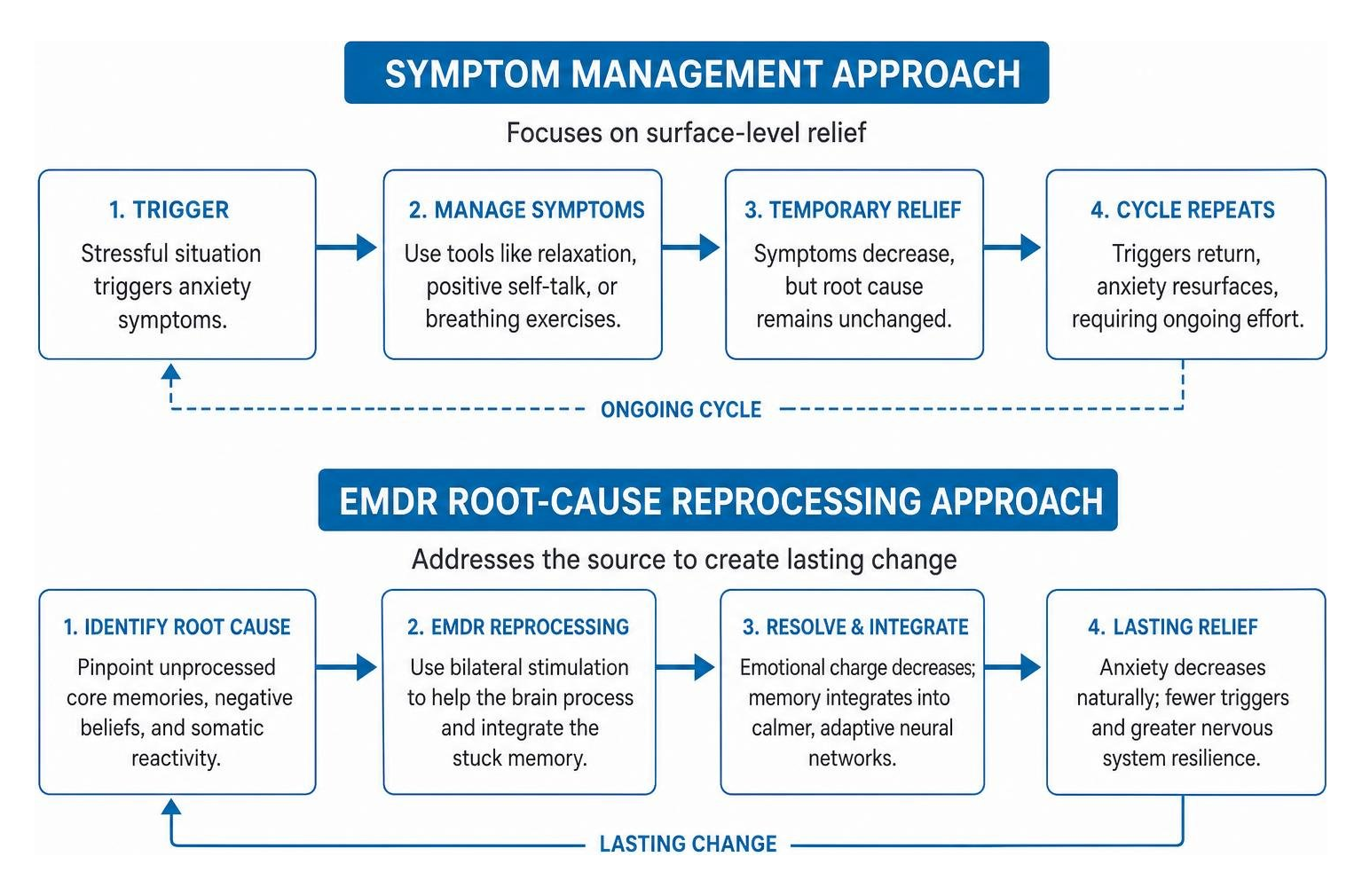
Traditional approaches to anxiety often focus heavily on managing surface-level symptoms through conscious relaxation techniques, positive self-talk, or breathing exercises. While those tools are valuable for stabilization, they require significant daily cognitive effort.
EMDR addresses the core roots of chronic anxiety by targeting:
- Unprocessed Core Memories: The early life events, failures, criticisms, or frightening moments that taught your nervous system the world is unpredictable or dangerous.
- Negative Cognitions: Destructive core beliefs such as “I am not safe,” “I am out of control,” or “I am inadequate.”
- Somatic Reactivity: The visceral gut clenching, chest tightness, or heart racing that occurs before you have even consciously registered a thought.
By directly resolving these foundational blocks through healing through trauma EMDR therapy, the chronic alarm bell in your brain is systematically turned down.
What Clinical Research Says About EMDR’s Effectiveness
While EMDR is globally renowned as a primary treatment for post-traumatic stress disorder, robust empirical research validates its application for generalized anxiety, phobias, panic, and related distress. Both the World Health Organization (WHO) and the American Psychological Association (APA) recognize EMDR as an evidence-based intervention for psychological trauma, and clinical research continues to establish its broader therapeutic reach.
Meta-Analyses on Anxiety, Panic, and Phobia Symptom Reduction
Extensive clinical trials highlight the quantitative impact of EMDR across diverse anxiety presentations:
- Broad Anxiety Relief: A comprehensive meta-analysis of 17 randomized controlled trials (RCTs) involving 647 participants found that EMDR was associated with a significant reduction in overall anxiety (Hedges’ g = −0.71; 95% CI: −0.96 to −0.47).
- Panic and Phobias: The same meta-analysis of EMDR for anxiety disorders demonstrated significant improvements across specific symptom clusters:
- Panic symptoms: g = −0.62 (95% CI: −1.10 to −0.14)
- Phobic reactions: g = −0.45 (95% CI: −0.81 to −0.08)
- Somatic and behavioral anxiety symptoms: g = −0.40 (95% CI: −0.63 to −0.12)
- Depression and Anxiety Comorbidity: A meta-analysis of 40 RCTs (N = 2,064) published in the Journal of EMDR Practice and Research evaluating evidence on depression and anxiety outcomes revealed a standardized mean difference (SMD) of −1.10 for depression and anxiety combined, with an SMD of −1.19 for anxiety symptoms specifically.
When evaluating signs your anxiety may be more than everyday stress, recognizing that targeted psychological protocols can yield substantial physiological relief is often the first step toward lasting wellness.
Long-Term Follow-Up Outcomes and Lasting Relief
A common concern regarding psychotherapy is whether improvements persist after sessions end. In a large meta-analysis of 65 studies covering 3,342 participants, researchers found that EMDR produces sustained therapeutic gains. The meta-analysis on sustained follow-up effects demonstrated that symptom reductions achieved during treatment were maintained at follow-up assessments, typically evaluated over six-month periods.
Because EMDR targets experiential memory networks rather than solely teaching coping strategies that require ongoing conscious maintenance, the resulting neural shifts offer reliable relapse prevention.
EMDR for Anxiety Without PTSD: Resolving “Small-t” Trauma
One of the greatest misconceptions about EMDR is that you must have survived a catastrophic, life-threatening event (“Capital-T” trauma) to qualify for treatment. In clinical practice, chronic anxiety is often driven by cumulative “small-t” trauma—events that do not threaten physical survival but nonetheless overwhelm emotional reserves and disrupt development.
Examples of small-t trauma include:
- Chronic childhood emotional neglect or inconsistent caregiver responses
- Growing up in a household with conditional love or relentless perfectionism
- Relentless peer teasing, social ostracization, or school bullying
- Chronic medical stress or sudden, humiliating public performances
- Prolonged financial instability, acculturation pressure, or systemic discrimination
These experiences accumulate over time, leaving your nervous system hypersensitive to any sign of potential failure, rejection, or vulnerability.
Who Benefits Most from EMDR for Anxiety?
EMDR is especially well suited for individuals who:
- Have High Cognitive Insight but Low Somatic Relief: You understand logically that your worry is disproportionate, yet your body remains locked in a high-arousal state.
- Experience Somatic Hyperarousal: Anxiety manifests prominently as nausea, muscle tightness, heart palpitations, or shallow breathing.
- Struggle with Performance Anxiety: Phobias related to public speaking, social encounters, exams, or professional reviews.
- Navigate Intergenerational Patterns: Individuals impacted by learned familial fears or intergenerational trauma.
For younger populations, navigating anxiety in young adults often involves untangling academic burnout and social pressures. Understanding how counseling helps anxiety provides a safe foundation for addressing these deeply rooted patterns.
How EMDR Addresses Anxiety
When using EMDR for anxiety, we examine the link between present-day triggers, past originating experiences, and future desired behaviors using the three-pronged protocol:
- Past Events: Reprocessing the early formative memories that created the fear response.
- Present Triggers: Desensitizing the current daily situations that provoke your anxiety.
- Future Templates: Mentally rehearsing and integrating adaptive, confident responses for future challenges.
The 8 Phases of EMDR Anxiety Treatment: What to Expect
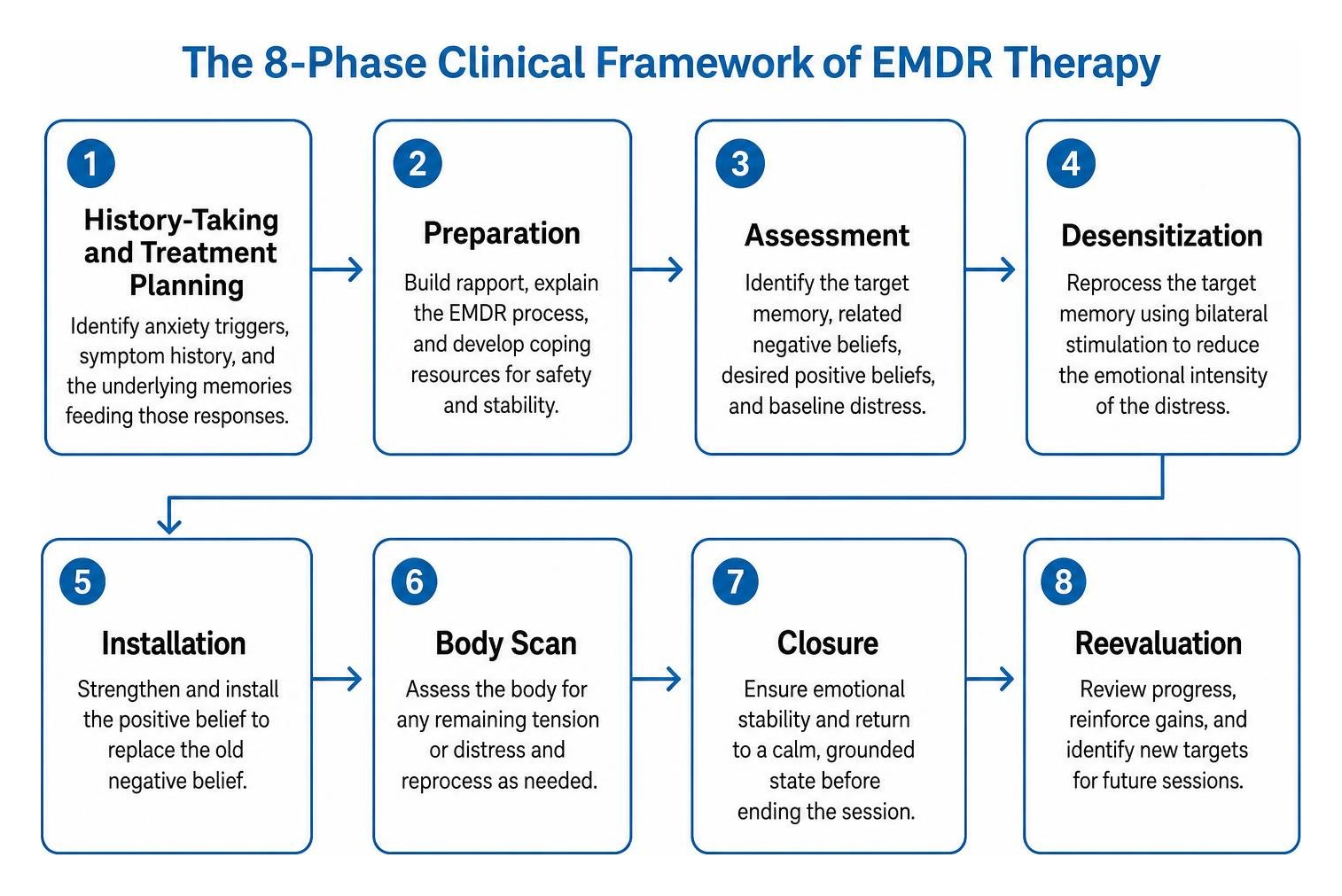
EMDR is a highly structured, eight-phase model designed to keep you grounded, regulated, and in complete control throughout the entire therapeutic process.
Preparation, Desensitization, and Reprocessing Steps

- Phase 1: History-Taking and Treatment Planning: We collaborate to identify your anxiety triggers, symptom history, and the underlying memories feeding those responses.
- Phase 2: Preparation: Your clinician teaches you self-regulation tools, grounding exercises, and somatic stabilization strategies (such as the “Safe/Calm Place” technique) to ensure you can regulate difficult emotions before any reprocessing begins.
- Phase 3: Assessment: A specific target memory or anxiety trigger is activated. We identify the vivid mental image, the negative belief (“I am in danger”), the desired positive belief (“I am safe now”), the associated emotions, and where the tension is felt in your body. We establish baseline ratings using the Subjective Units of Disturbance (SUD) scale (0–10).
- Phase 4: Desensitization: Bilateral stimulation sets are applied. You focus on the distressing material while letting your brain follow whatever associations arise. Reprocessing continues until your SUD score drops to a neutral 0 or 1.
Our team at District Counseling provides specialized EMDR treatment tailored to your individual comfort level and pacing.
Installation, Body Scan, and Integration
- Phase 5: Installation: We strengthen your desired positive cognition using the Validity of Cognition (VOC) scale (1–7) alongside bilateral stimulation until you fully believe it at both a cognitive and somatic level (“I am capable and secure”).
- Phase 6: Body Scan: While holding the original memory and positive belief in mind, you mentally scan your body from head to toe to identify and clear any residual physical tension.
- Phase 7: Closure: Every session ends with grounding exercises, returning your nervous system to emotional equilibrium before you leave the clinic.
- Phase 8: Re-evaluation: At the beginning of the next session, we evaluate recent progress, assess changes in daily anxiety triggers, and identify any new targets requiring reprocessing.
Understanding these eye-opening treatment benefits demonstrates why the protocol is both structured and profoundly gentle.
Potential Risks, Limitations, and Finding the Right Therapist
While EMDR is a thoroughly researched and highly effective therapy, it requires proper clinical assessment and careful pacing to ensure emotional safety.
Clinical Considerations and Readiness Assessment
EMDR involves accessing distressing memories and somatic sensations, which can temporarily elevate emotional arousal. A thorough readiness assessment is critical before beginning Phase 4 desensitization.
Key considerations include:
- Affect Tolerance: The client must possess adequate capacity to tolerate emotional discomfort without becoming completely overwhelmed or numb.
- Dissociative Tendencies: Individuals experiencing significant dissociative symptoms require specialized stabilization protocols prior to reprocessing.
- Acute Life Crises: Active substance withdrawal, unmanaged severe psychiatric instability, or acute safety crises should be stabilized first.
Choosing a Qualified EMDR Clinician
Selecting the right professional ensures your treatment is safe, paced appropriately, and aligned with recognized clinical standards. Look for clinicians who have completed approved EMDRIA (EMDR International Association) training programs.
If you are beginning your search, our comprehensive guide to finding EMDR certified therapists offers practical questions to ask during consultations. If you are located in Texas, you can explore the top EMDR therapy options in Houston across our various convenient locations.
Frequently Asked Questions About EMDR and Anxiety
How many EMDR sessions are typically needed for anxiety?
Treatment duration varies depending on your specific goals and symptom history. For a single-incident trigger (such as panic following a car accident or a specific phobia), clients often experience significant relief within 6 to 10 focused sessions. When addressing complex, lifelong generalized anxiety rooted in years of cumulative small-t trauma, treatment may require several months of consistent work.
Can EMDR make anxiety worse before it gets better?
Because EMDR brings unresolved memories and physical sensations into conscious awareness, it is normal to experience temporary emotional fatigue, vivid dreams, or heightened sensitivity between early reprocessing sessions. This is part of the brain’s natural processing cycle. A skilled clinician will emphasize Phase 2 preparation and grounding so you always have the tools needed to manage emotional activation comfortably.
Does EMDR work for generalized anxiety disorder (GAD) and panic attacks?
Yes. Research confirms that EMDR effectively reduces both generalized worry and panic symptoms. By identifying the initial panic attack or early experiences of helplessness, desensitizing the fear of somatic sensations (fear of the racing heart or dizziness), and installing future templates for high-stress scenarios, EMDR breaks the cycle of anticipatory panic.
Conclusion

Living with chronic anxiety can feel like carrying an invisible alarm system that refuses to turn off. By addressing the unprocessed experiences and neural networks that keep your body trapped in hyperarousal, EMDR provides a structured, evidence-based path toward genuine relief.
At District Counseling, we believe in sincere, authentic, and compassionate care that honors your unique story. With welcoming counseling centers throughout Texas—including Houston, Greater Heights, Memorial, CityCentre, Spring Branch, The Woodlands, Katy, Sugar Land, Cypress, Tomball, Spring, Spring-Tomball, Pearland, Pasadena, Missouri City, Copperfield, Austin, West Lake Hills, Fort Worth, Raíces, and Tree House—our licensed clinicians are here to support your journey.
When you are ready to move past managing symptoms and begin resolving the underlying causes of your anxiety, connect with compassionate care at District Counseling to take your next step forward.
Visited 1 times, 1 visit(s) today


Similar Posts

Francisco Ortiz
November 27, 2026
The Ultimate Guide to Using EMDR for Anxiety Relief
Discover how EMDR for anxiety reprograms your brain’s response to triggers, offering lasting relief from chronic worry and panic....

Francisco Ortiz
November 26, 2026
Austin Christian Counseling: Merging Faith and Mental Wellness
Find hope and healing with Christian counseling in Austin, blending faith and clinical care for your mental wellness....

Francisco Ortiz
November 25, 2026
10 Common Signs of Exhaustion You Shouldn’t Ignore
Learn to recognize the 10 common signs of exhaustion, from physical fatigue to emotional burnout, and discover when to seek medical help....

Francisco Ortiz
November 24, 2026
The Ultimate Guide to Children’s Play Therapy Basics
Discover how children’s play therapy helps kids heal, grow, and communicate through evidence-based clinical play techniques....

Francisco Ortiz
November 23, 2026
A Quick Start Guide to Comparing ADHD Testing Costs
Learn how much it costs to get tested for ADHD in 2027, from $150 telehealth screenings to $5,000+ comprehensive evaluations....

Francisco Ortiz
November 19, 2026
Best Depression Therapists Near Me: Local Care Compared
Find the best depression therapist near me with our guide to local care, credentials, and evidence-based treatment options....

Francisco Ortiz
November 17, 2026
How to Tell When You Are Way Past the Point of Exhaustion
Learn the key signs of being over tired, from brain fog to physical exhaustion, and discover how to reset your sleep and energy....

Francisco Ortiz
November 16, 2026
Healing Through Play: Why Play Therapy Works for Adjustment Disorder
Discover how play therapy for adjustment disorder helps children heal from stress, divorce, and grief through proven therapeutic techniques....

Francisco Ortiz
November 13, 2026
All About Marital Aids: A Quick Start Guide
Discover how a marital aid can enhance intimacy, communication, and wellness with this guide on types, safety, and relationship support....

Francisco Ortiz
November 11, 2026
The Ultimate Guide to the DOT SAP Evaluation Process
Learn the complete DOT SAP evaluation process for return-to-duty compliance, from initial assessment to Clearinghouse clearance....


