
What Should You Expect to Pay for an ADHD Evaluation in 2026?
When people ask us how much an ADHD assessment costs, the most accurate answer is that out-of-pocket expenses range from $150 to $5,000 or more without insurance. That broad pricing window exists because an evaluation can range from a brief clinical interview to a comprehensive multi-day neuropsychological battery.
Navigating this financial decision is increasingly common. Roughly 6.0% of U.S. adults—representing approximately 15.5 million people—currently carry an ADHD diagnosis, with more than half diagnosed in adulthood. Many adults spend years developing exhausting compensatory habits to manage focus, time management, and emotional regulation before seeking answers. When they finally look for an evaluation, navigating pricing, diagnostic depth, and provider credentials can feel overwhelming.
Understanding what you pay requires looking at the diagnostic process itself. An ADHD assessment is never a single blood test or simple quiz. It is a multi-step clinical evaluation that explores your developmental history, executive functioning, cognitive strengths, and current daily symptoms.
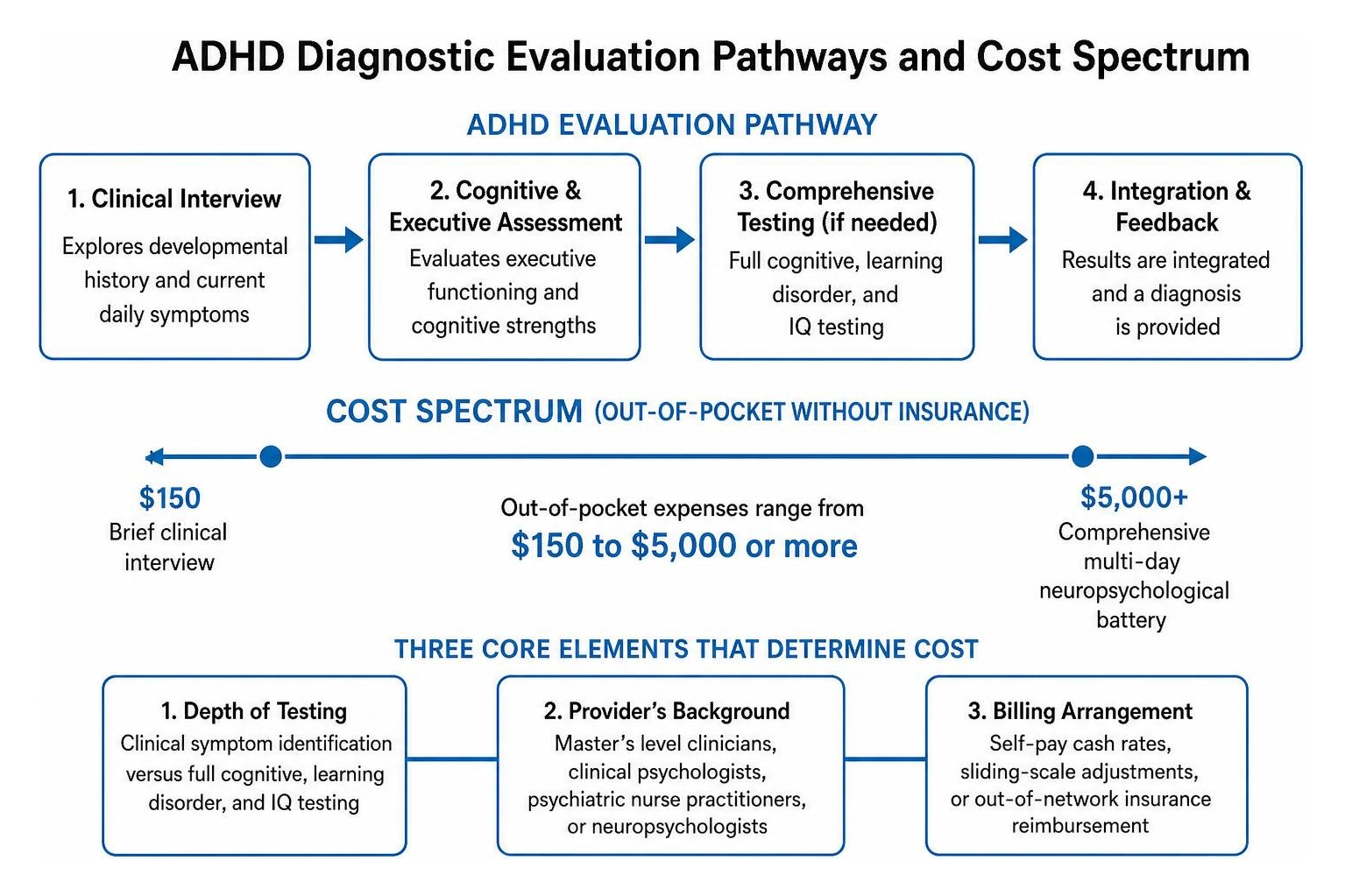
The total price you encounter depends on three core elements:
- The depth of testing: Clinical symptom identification versus full cognitive, learning disorder, and IQ testing.
- The provider’s background: Master’s level clinicians, clinical psychologists, psychiatric nurse practitioners, or neuropsychologists.
- Your billing arrangement: Self-pay cash rates, sliding-scale adjustments, or out-of-network insurance reimbursement.
Knowing how these elements interact helps you avoid paying thousands for testing you might not need—or paying for a cheap online screening that fails to give you a valid, actionable diagnosis.
How Much Does ADHD Testing Cost Across Different Evaluation Types?
To choose the right testing path, it helps to understand what each tier provides and what it costs out of pocket:
| Evaluation Tier | Typical Cost (Cash / Self-Pay) | Assessment Time | Core Components | Primary Best Use Case |
|---|---|---|---|---|
| Online Telehealth Screening | $150 – $900 | 30 – 60 minutes | Self-report rating scales, brief virtual psychiatric interview | Quick diagnostic screening to begin basic therapy or non-controlled medication management |
| Standard Clinical Evaluation | $1,000 – $2,500 | 2 – 4 hours (1–2 sessions) | DSM-5-TR clinical interview, developmental history, observer rating scales, differential diagnosis, diagnostic summary | Adults and adolescents seeking medical treatment, executive function therapy, or workplace clarity |
| Comprehensive Neuropsychological Battery | $2,500 – $5,000+ | 6 – 12 hours (multiple sessions) | Standardized cognitive testing (IQ, memory, processing speed, continuous performance tests), academic achievement tests, formal 15–20 page report | Academic disability accommodations (SAT/GRE/LSAT/MCAT, college 504 plans), complex differential diagnosis (TBI, memory loss) |
Online Telehealth Screeners and Diagnostic Consultations ($150–$900)
Virtual evaluations have expanded rapidly, offering accessible price points. Initial self-pay appointments typically range from $150 to $300, though subscription-based psychiatric platforms may charge $100 to $150 upfront plus ongoing monthly platform fees of $80 to $130.
During a virtual visit, you complete standardized self-report symptom rating scales followed by a 30- to 60-minute video intake with a licensed provider. These evaluations are helpful if you want a fast preliminary screening or need to discuss symptom patterns with a professional.
However, purely virtual assessments have critical limitations:
- Prescription regulations: Strict federal and Texas state regulations govern Schedule II stimulant medications. Some telehealth platforms do not prescribe controlled substances, and local commercial pharmacies may decline prescriptions written by purely virtual out-of-state entities.
- Accommodation limits: Brief virtual intake summaries generally do not meet the strict evidentiary standards required by standardized testing boards (such as the College Board, LSAC, or USMLE) or university accessibility offices.
If you are exploring early self-reflection tools, comparing top online screeners can help you decide whether your struggles warrant formal clinical evaluation.
Standard In-Person Clinical Evaluations ($1,000–$2,500)
For the vast majority of adults, a standard clinical evaluation provides the optimal balance of diagnostic validity, personalized care, and cost. Conducted over one to two sessions spanning two to four clinical hours, this evaluation thoroughly evaluates your symptoms against DSM-5-TR diagnostic criteria.
During this assessment, your clinician will:
- Review childhood and developmental history to confirm whether symptoms were present before age 12.
- Administer structured behavioral rating scales to measure inattention, hyperactivity, and executive dysfunction.
- Gather collateral history from a partner, parent, or close friend whenever possible.
- Screen for look-alike or co-occurring mental health conditions such as anxiety, major depressive disorder, sleep issues, or trauma.
- Deliver a diagnostic report with personalized treatment recommendations.
This tier gives medical providers, psychiatrists, and therapists the documentation they need to begin comprehensive care. You can learn more about how we structure this clinical journey in our guide on how to get tested for ADHD step by step.
Comprehensive Neuropsychological and Psychoeducational Testing ($2,500–$5,000+)
Comprehensive neuropsychological testing is the most intensive diagnostic option. Conducted by licensed clinical psychologists or neuropsychologists, these evaluations span 6 to 12 hours of direct testing over several appointments, followed by extensive scoring, clinical interpretation, and report writing.
These batteries evaluate cognitive architecture across multiple domains:
- Full-scale intellectual functioning (IQ)
- Working memory capacity and processing speed
- Sustained and divided attention under performance stress (e.g., continuous performance tests)
- Academic achievement (reading, writing, and mathematical fluency) to rule out specific learning disorders like dyslexia or dyscalculia
- Executive function mapping (planning, organizing, and impulse control)
This intensive testing results in a comprehensive 10- to 20-page diagnostic report. This documentation is required if you are requesting formal accommodations under the Americans with Disabilities Act (ADA), such as extra time on professional licensing exams, modified testing environments in higher education, or formal workplace modifications. To see what these batteries examine in detail, explore our comprehensive adult ADHD testing guide.
What Key Factors Drive the Total Cost of an ADHD Diagnosis?

When researching ADHD evaluation fees, you will find significant variation between providers. Several practical factors explain why prices differ across practices.
Provider Type and Clinical Credentials
The credentials of the professional administering your evaluation directly shape fee structures:
- Private Psychiatrists and Psychiatric Nurse Practitioners ($150–$500+ per intake): Focus primarily on medical diagnosis and psychiatric medication management. Intakes are typically 60 to 90 minutes.
- Licensed Clinical Psychologists ($1,000–$3,000+): Administer specialized psychological test batteries, objective rating tools, and cognitive assessments, delivering detailed diagnostic reports.
- Licensed Master’s Level Clinicians (LPC, LMFT, LCSW): Provide clinical diagnostic assessments, mental health evaluations, and ongoing behavioral therapy. Understanding whether a therapist can diagnose ADHD depends on state practice acts and the intended purpose of your evaluation documentation.
Insurance Coverage, In-Network Status, and Cost-Sharing
Health insurance coverage for ADHD testing is nuanced:
- Basic Clinical Diagnostics: Most commercial insurance plans cover diagnostic clinical interviews and psychiatric evaluations as medically necessary care. Depending on your benefits, your out-of-pocket obligation may simply be a specialist copay ($20–$50) or coinsurance (typically 15%–20%) after meeting your annual deductible.
- Neuropsychological and Educational Testing: Insurance carriers often deny coverage for extensive neuropsychological batteries unless there is documented neurological trauma, traumatic brain injury, or suspected cognitive decline. Testing ordered solely for academic accommodations or career guidance is frequently classified as “educational” rather than “medically necessary.”
- Out-of-Network Reimbursement: Many private testing specialists operate on a self-pay model to ensure thorough clinical care without managed-care time restrictions. In these cases, you can request a superbill (an itemized diagnostic receipt with CPT codes such as 90791, 96130, and 96136) to submit to your insurer for potential out-of-network reimbursement. You can also pay for testing using pre-tax funds from a Health Savings Account (HSA) or Flexible Spending Account (FSA).
Geographic Location and Facility Setting
Assessment pricing reflects regional operating overhead:
- Major Metropolitan Centers: In urban areas across Texas—including Houston, Austin, and Fort Worth—private clinical testing rates align with standard regional cost-of-living and clinical demand.
- Suburban Practices: Specialized evaluation practices in communities like The Woodlands, Katy, Cypress, Memorial, Pearland, and Sugar Land offer comprehensive evaluations locally, removing the need to navigate major hospital systems.
- Cross-Border Evaluation Alternatives: Some individuals consider low-cost cross-border options (such as $125 adult evaluations in border cities like Tijuana). While the lower upfront fee is appealing, cross-border care presents significant continuity challenges: Schedule II stimulant prescriptions from international clinics cannot be filled at U.S. pharmacies, and domestic clinicians often require a fresh evaluation before assuming medical care.
- Community and Academic Resources: Regional university clinics, such as the community assessment provider resources hosted across Texas higher education centers, offer valuable low-cost alternatives.
For a focused look at local diagnostic considerations, see our resource on securing an ADHD evaluation in Texas.
Clinical Complexity and Differential Diagnosis
ADHD rarely exists in a vacuum. A high-quality evaluation carefully rules out look-alike conditions that impair executive functioning:
- Chronic generalized anxiety and hypervigilance
- Major depressive disorder and cognitive slowing
- Complex trauma and nervous system dysregulation
- Chronic sleep disorders (e.g., sleep apnea, delayed sleep phase syndrome)
- Undiagnosed adult autism spectrum presentations
When symptoms overlap, an evaluator must administer additional diagnostic modules, such as specialized depression inventories, trauma assessments, or differential autism testing. These additional clinical steps ensure an accurate diagnosis, while naturally increasing the total time and cost of the evaluation.
What Hidden and Ongoing Costs Should You Budget for After Diagnosis?

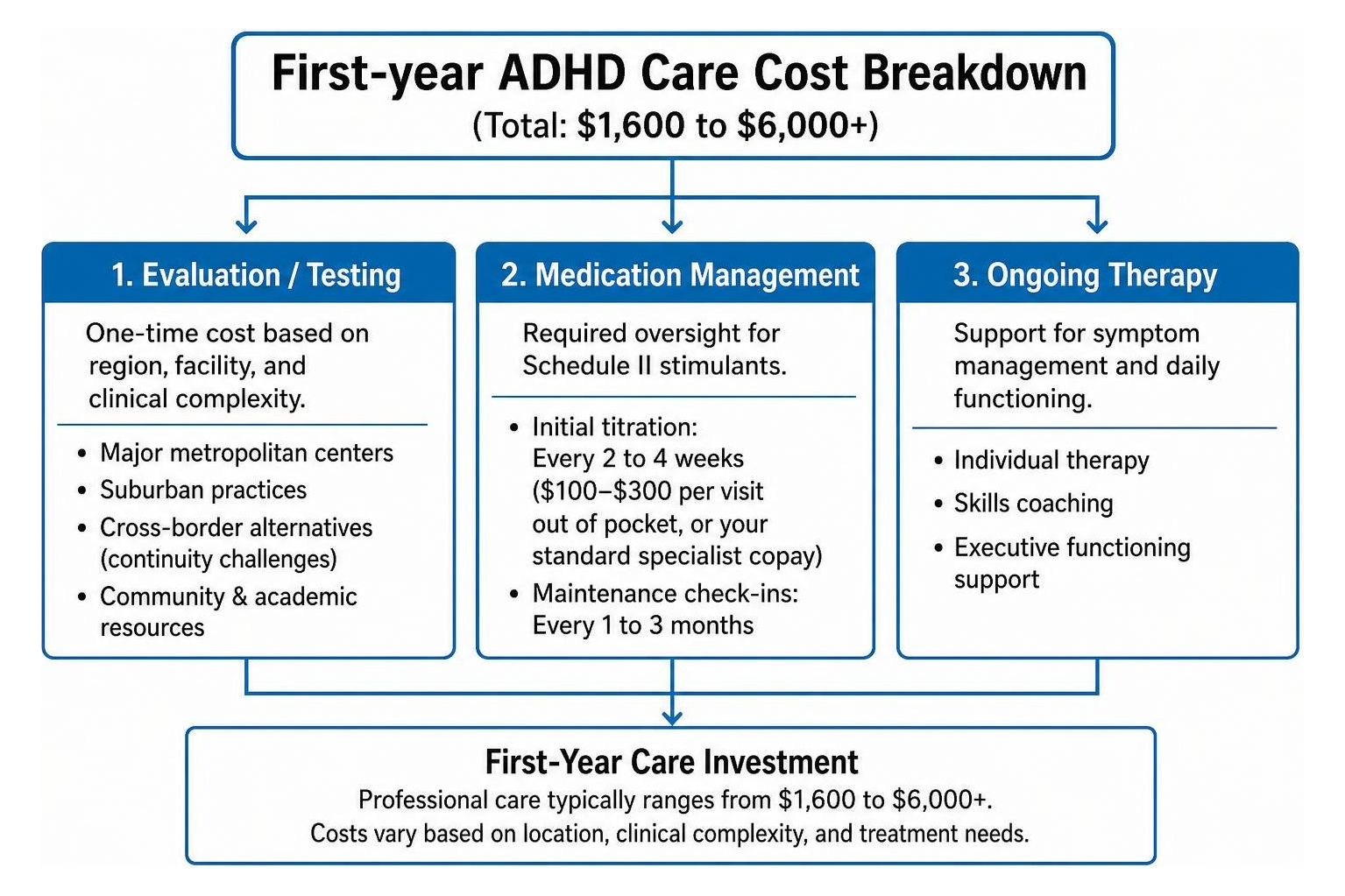
Getting tested is the first milestone. Building an accurate budget means planning for the ongoing care required during your first year after diagnosis, which typically ranges from $1,600 to $6,000+ in professional care.
Ongoing Medication Management and Prescription Fees
If your treatment plan includes prescription medication, state and federal regulations for Schedule II stimulants require regular clinical oversight:
- Initial Titration: You will likely meet with your prescribing provider every 2 to 4 weeks while adjusting your medication and dosage ($100–$300 per visit out of pocket, or your standard specialist copay).
- Maintenance Check-ins: Once stable, state laws generally require medical follow-up appointments every 1 to 3 months for ongoing monitoring and prescription renewals.
- Prescription Costs: Generic stimulants (such as methylphenidate or dextroamphetamine/amphetamine salts) typically cost $15 to $60 per month with insurance or discount programs. Brand-name medications without coverage can exceed $300 to $400 monthly.
- Supply Disruptions: Nationwide shortages continue to impact medication access, with 71.5% of adults taking stimulants reporting difficulty getting prescriptions filled. These disruptions often require extra provider check-ins to switch formulations or transfer prescriptions across pharmacies.
Psychotherapy, Behavioral Coaching, and Skill Building
Medication can help regulate neurochemistry, but it does not teach executive function skills. Many adults benefit from specialized therapy to overcome years of coping through stress:
- Cognitive Behavioral Therapy (CBT): Focuses on reframing perfectionism, addressing emotional dysregulation, and restructuring negative self-beliefs ($125–$250 per session).
- ADHD Coaching: Provides practical systems for calendar management, task initiation, organization, and project completion.
- Therapeutic Recovery: Working with an experienced therapist helps with managing ADHD burnout and overwhelm, helping you replace chronic overextension with sustainable daily habits.
The Financial Impact of Delaying an Evaluation
When weighing testing costs, it is equally important to calculate the financial impact of leaving ADHD untreated:
- Workplace friction: Career stagnation, missed promotions, and lost productivity caused by chronic procrastination and missed deadlines.
- Impulsive spending: Unbudgeted purchases, forgotten recurring subscriptions, and late fees (often called the “ADHD tax”).
- Secondary healthcare costs: Treating stress-induced physical conditions, chronic insomnia, and co-occurring anxiety that stem from unmanaged symptoms.
We discuss these compounding hidden expenses in detail in our article on the hidden cost of delaying an ADHD evaluation.
How Can You Find Affordable or Low-Cost ADHD Testing Options?
If private comprehensive testing is outside your current budget, several legitimate, evidence-based alternatives provide reliable diagnostics without compromising clinical integrity.
Sliding-Scale Community Mental Health Clinics ($0–$300)
Federally Qualified Health Centers (FQHCs) and local non-profit community mental health clinics receive public funding to provide psychiatric and psychological care regardless of insurance status.
- Services are billed on an income-verified sliding scale, meaning fees adjust based on household size and earnings.
- In many cases, intake fees and diagnostic evaluations range from $0 to $300.
- You can locate community clinics in your area using the online mental health service locator provided by the Substance Abuse and Mental Health Services Administration (SAMHSA).
For additional strategies on navigating testing without coverage, review this guide on getting an ADHD diagnosis without insurance.
University Psychology Training Clinics
Universities with doctoral programs in clinical psychology (Ph.D. or Psy.D.) often operate on-campus community training clinics.
- The Process: Evaluations are conducted by advanced graduate student clinicians under the direct, close supervision of fully licensed clinical faculty and neuropsychologists.
- Cost: Testing batteries that would cost $3,000+ in private practice are often offered for $200 to $600, frequently with additional sliding-scale options for local residents and students.
- Trade-Off: Because university clinics offer rigorous, faculty-reviewed assessments at low cost, waitlists often range from 3 to 6 months, and testing protocols may take multiple visits to complete.
Regional Private Practice and Telehealth Hybrid Options
Many private practices provide transparent, bundled cash pricing that eliminates unexpected laboratory or scoring surcharges.
At District Counseling, we provide accessible clinical evaluations, psychological assessments, and personalized mental health care across Texas. Whether you are looking for Austin ADHD evaluations, Fort Worth ADHD evaluations, or appointments in our Houston-area offices (such as Greater Heights, Memorial, Katy, Cypress, Pearland, or The Woodlands), our clinicians offer thorough testing and practical ongoing support.
Red Flags and Budget Pitfalls to Avoid
When looking for affordable evaluation options, be cautious of shortcuts that cost you more in the long run:
- 5-minute online quiz mills: Web services promising a full medical diagnosis and instant prescription in minutes are deceptive. They do not meet DSM-5-TR clinical standards and produce documentation that medical doctors and schools will not accept.
- Recurring subscription billing traps: Some telehealth platforms advertise low $49 introductory visits, but require mandatory monthly memberships ($100–$150/month) while making it difficult to book timely follow-up appointments.
- Clinicians lacking local prescribing authority: Paying for an online evaluation only to discover the provider is not licensed in Texas—or cannot write local stimulant prescriptions—leaves you paying a second provider to start over.
What Are the Most Frequently Asked Questions About ADHD Testing Costs?
Does health insurance usually cover the cost of ADHD testing?
Yes, most health insurance plans cover standard clinical diagnostic interviews and psychiatric assessments when performed by an in-network provider and billed as medically necessary. However, plans frequently exclude or require strict prior authorization for multi-hour neuropsychological testing, especially if the testing is requested for academic accommodations, career assessment, or educational planning rather than acute neurological conditions.
Can you get a legitimate ADHD diagnosis for free or under $200?
Yes. Federally Qualified Health Centers, county mental health authorities, and university psychology training clinics provide clinical diagnostic evaluations on income-based sliding scales that often fall between $0 and $200. Additionally, self-pay diagnostic intakes with psychiatric nurse practitioners or master’s level diagnostic clinicians often fall within the $150 to $250 range.
Why is comprehensive neuropsychological testing so much more expensive than a basic assessment?
Comprehensive neuropsychological testing requires 6 to 12 hours of direct clinical administration, standardized cognitive tests (IQ, memory, executive functioning, continuous attention tests), formal test scoring, norm comparisons, and the development of a comprehensive 10- to 20-page diagnostic report. The extensive clinical hours required by a doctoral-level psychologist drive the $2,500 to $5,000+ price range.
How Do You Decide Which ADHD Evaluation Path Is Right for You?
Choosing an evaluation path comes down to clarifying your primary goal:
- If you need clarity, validation, behavioral strategies, and clinical care, a standard clinical evaluation ($1,000–$2,500) provides a thorough diagnostic foundation without unnecessary testing expenses.
- If you need formal educational accommodations, standardized testing adjustments, or detailed cognitive mapping, an in-depth neuropsychological evaluation ($2,500–$5,000+) is the necessary investment.
- If your budget is tightly constrained, exploring university training clinics or sliding-scale community health centers ($0–$300) offers safe, validated answers.
Investing in an evaluation is ultimately an investment in understanding how your brain works. The right diagnosis turns years of frustration and self-doubt into self-compassion, targeted systems, and effective care.
If you are ready to take the next step with an experienced clinical team, we are here to help. Reach out to District Counseling today to explore our comprehensive, compassionate ADHD evaluation services across our Texas locations.
Visited 1 times, 1 visit(s) today


Similar Posts

Francisco Ortiz
November 23, 2026
A Quick Start Guide to Comparing ADHD Testing Costs
Learn how much it costs to get tested for ADHD in 2027, from $150 telehealth screenings to $5,000+ comprehensive evaluations....

Francisco Ortiz
November 19, 2026
Best Depression Therapists Near Me: Local Care Compared
Find the best depression therapist near me with our guide to local care, credentials, and evidence-based treatment options....

Francisco Ortiz
November 17, 2026
How to Tell When You Are Way Past the Point of Exhaustion
Learn the key signs of being over tired, from brain fog to physical exhaustion, and discover how to reset your sleep and energy....

Francisco Ortiz
November 16, 2026
Healing Through Play: Why Play Therapy Works for Adjustment Disorder
Discover how play therapy for adjustment disorder helps children heal from stress, divorce, and grief through proven therapeutic techniques....

Francisco Ortiz
November 13, 2026
All About Marital Aids: A Quick Start Guide
Discover how a marital aid can enhance intimacy, communication, and wellness with this guide on types, safety, and relationship support....

Francisco Ortiz
November 11, 2026
The Ultimate Guide to the DOT SAP Evaluation Process
Learn the complete DOT SAP evaluation process for return-to-duty compliance, from initial assessment to Clearinghouse clearance....

Francisco Ortiz
November 9, 2026
The Complete Guide to Finding an Immigration Evaluator
Find expert immigration evaluation for asylum, VAWA, hardship waivers, and N-648 with this complete guide to forensic assessments....

Francisco Ortiz
November 6, 2026
An Essential Guide to the Psychological Evaluation Process
Learn how a psychological evaluation provides diagnostic clarity and a roadmap for mental health treatment....

Francisco Ortiz
November 4, 2026
Best Counseling Services in Cypress: Find Local Support Now
Find compassionate counseling in Cypress for individuals, couples, teens, and families. Start your wellness journey with expert local support today....

Francisco Ortiz
November 2, 2026
A Comprehensive Guide to Finding a Houston Therapist
Find a Houston therapist for anxiety, trauma, or couples counseling. Compare costs, insurance, and specialized care in this local guide....


