
What Is Children’s Play Therapy?
Children’s play therapy is mental health treatment that uses play to help children express feelings, work through difficult experiences, and practice new ways to cope. A trained therapist offers a safe space, carefully chosen toys, and a steady relationship. Unlike ordinary play, each session is guided by a treatment approach and the child’s needs.
It can help children facing anxiety, behavior changes, trauma, grief, or stress related to illness. Sessions may look like storytelling, drawing, or pretend play rather than a typical conversation.
I’m Francisco Ortiz, a Licensed Professional Counselor-Supervisor with experience counseling families and overseeing school-based mental health services. That work shapes how I explain children’s play therapy to parents: as real care delivered in a way children can use.
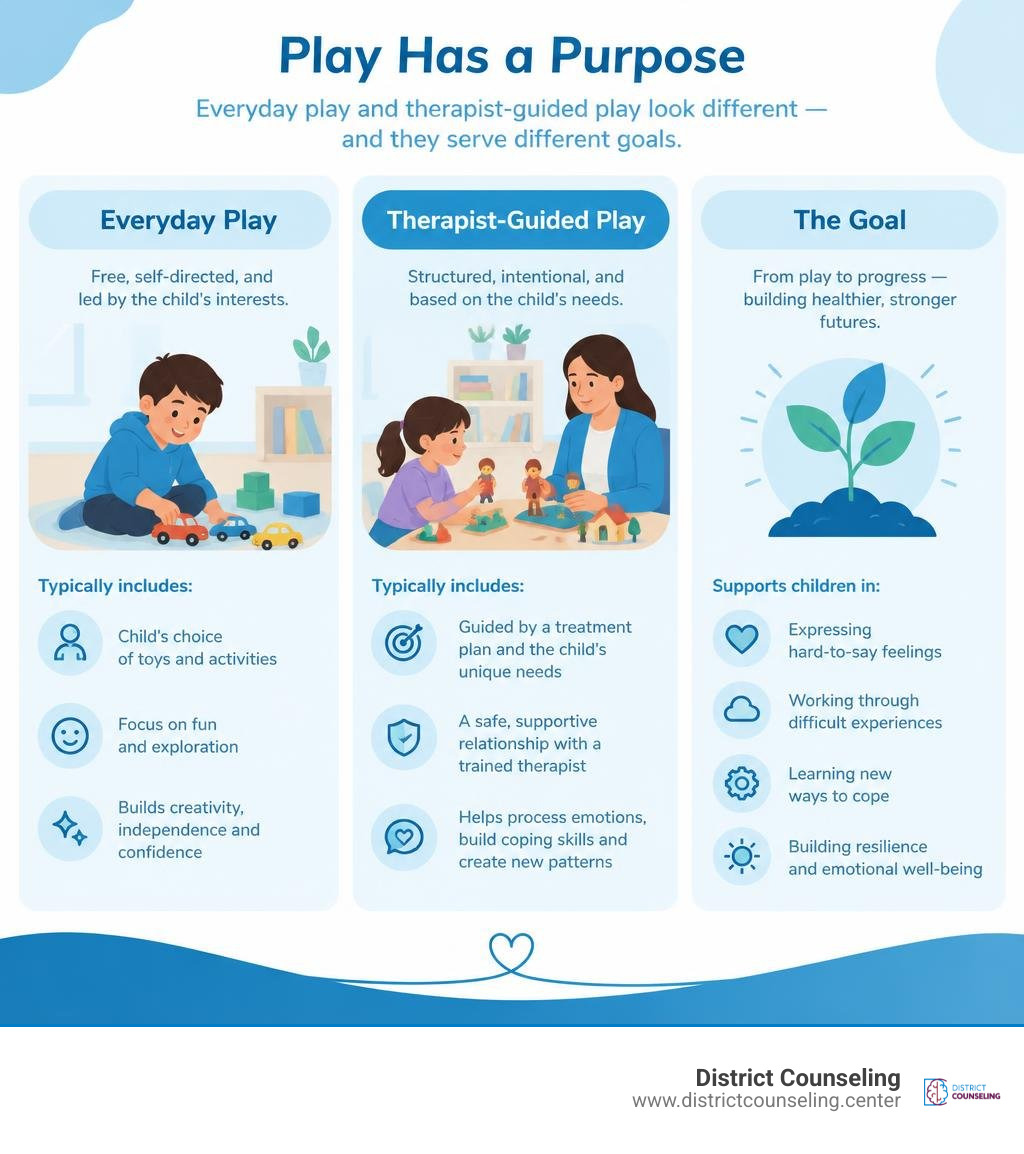
Most children under the age of 11 have not fully developed the abstract cognitive processing required to sit on a couch and unpack complex emotional struggles through words alone. When adults experience distress, we talk; when children experience distress, they play. In clinical practice, toys act as the child’s words, and play serves as their natural language.
Understanding Children’s Play Therapy and How It Works
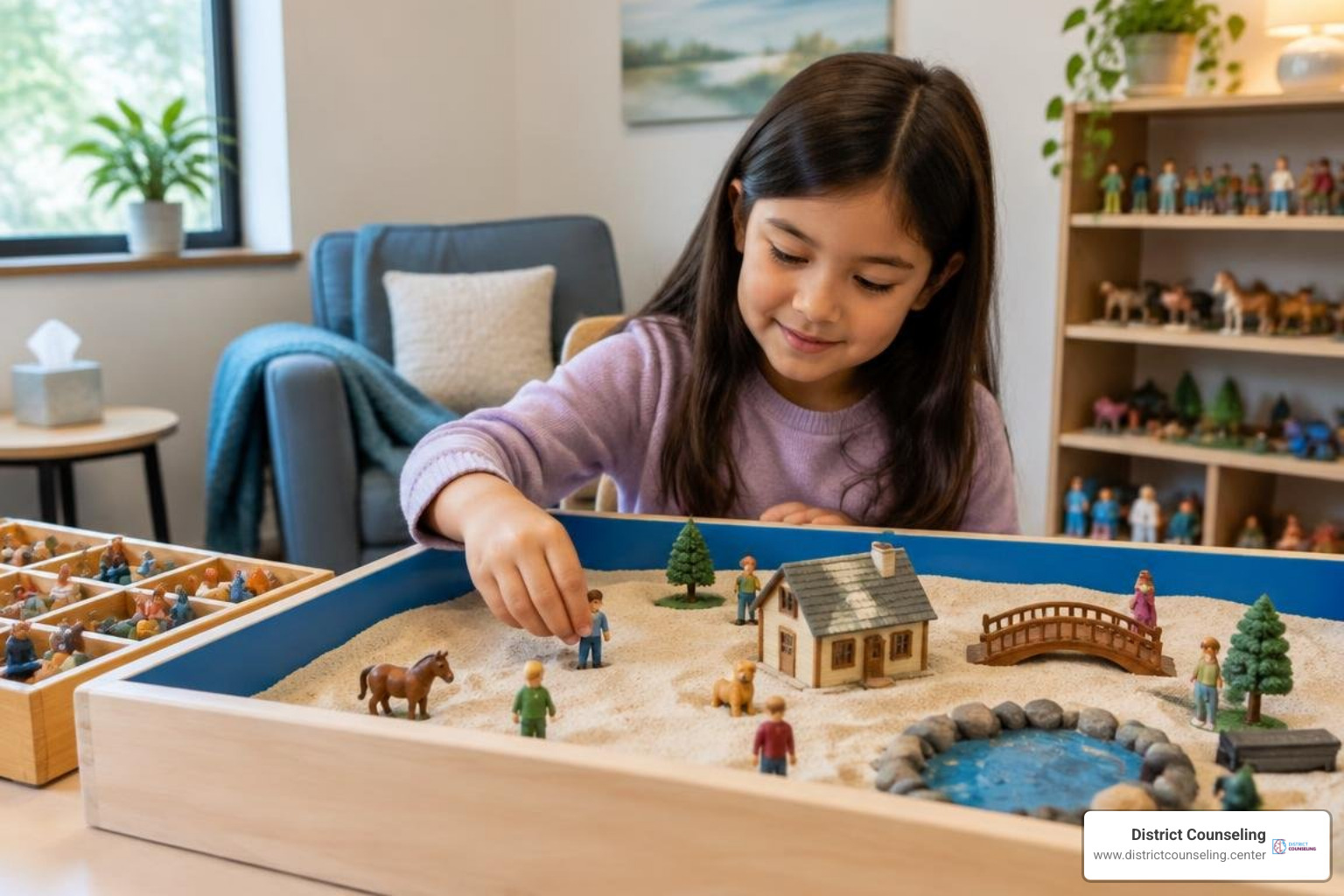
At its core, therapeutic play is grounded in rigorous clinical science. According to the Association for Play Therapy, play therapy is defined as “the systematic use of a theoretical model to establish an interpersonal process wherein trained Play Therapists use the therapeutic powers of play to help clients prevent or resolve psychosocial difficulties and achieve optimal growth and development.”
Rather than an adult sitting down to chat casually with a child, the clinician uses a grounded psychological framework to build a secure therapeutic alliance. In this space, children can externalize internal turmoil without feeling interrogated. Depending on the clinical goals, the clinician may utilize non-directive play (where the child freely leads the session) or directive play (where the therapist introduces specific games, storytelling, or role-playing exercises).
Regular Play vs. Clinical Play Therapy
Parents often ask why an hour at a local park or playroom does not yield the same mental health outcomes as a clinical session. The key difference lies in the clinical containment, intentionality, and psychological scaffolding provided by a licensed professional.
| Feature | Regular Social or Home Play | Clinical Play Therapy |
|---|---|---|
| Primary Goal | Entertainment, recreation, or social fun | Emotional processing, symptom relief, and behavioral growth |
| Adult Role | Caregiver, rule enforcer, or peer companion | Licensed clinician tracking themes, reflecting emotions, and holding boundaries |
| Toy Selection | Random, electronic, or entertainment-focused | Purposefully chosen to represent specific emotional and relational dynamics |
| Emotional Focus | Casual, spontaneous, or focused on winning games | Systematic exploration of fear, grief, anger, identity, and coping |
| Safety Structure | Everyday household or school rules | Strict clinical confidentiality, unconditional acceptance, and therapeutic limit-setting |
The Clinical Playroom Environment and Toy Categories
A therapeutic playroom is not a random toy box; every item is intentionally curated to help a child project their inner world into physical form. Clinical practice organizes toys into five primary categories:
- Family and Nurturing Toys: Dollhouses, baby bottles, animal families, and kitchen sets allow children to explore domestic life, attachment styles, sibling dynamics, and feelings of safety or neglect.
- Aggressive Toys: Toy soldiers, foam swords, wild predators, and handcuffs provide a healthy, safe outlet to externalize intense anger, explore power dynamics, and release buried frustration without causing harm.
- Scary Toys: Monsters, spiders, snakes, and menacing figures let children project real-life fears, phobias, and traumatic memories into manageable, external objects they can conquer.
- Expressive Materials: Clay, paint, kinetic sand, and drawing supplies facilitate raw sensory regulation and non-verbal emotional release.
- Pretend and Fantasy Toys: Costumes, puppets, magic wands, and doctor kits help children try on new identities, rewrite scary narratives, and regain a sense of mastery over chaotic life events.
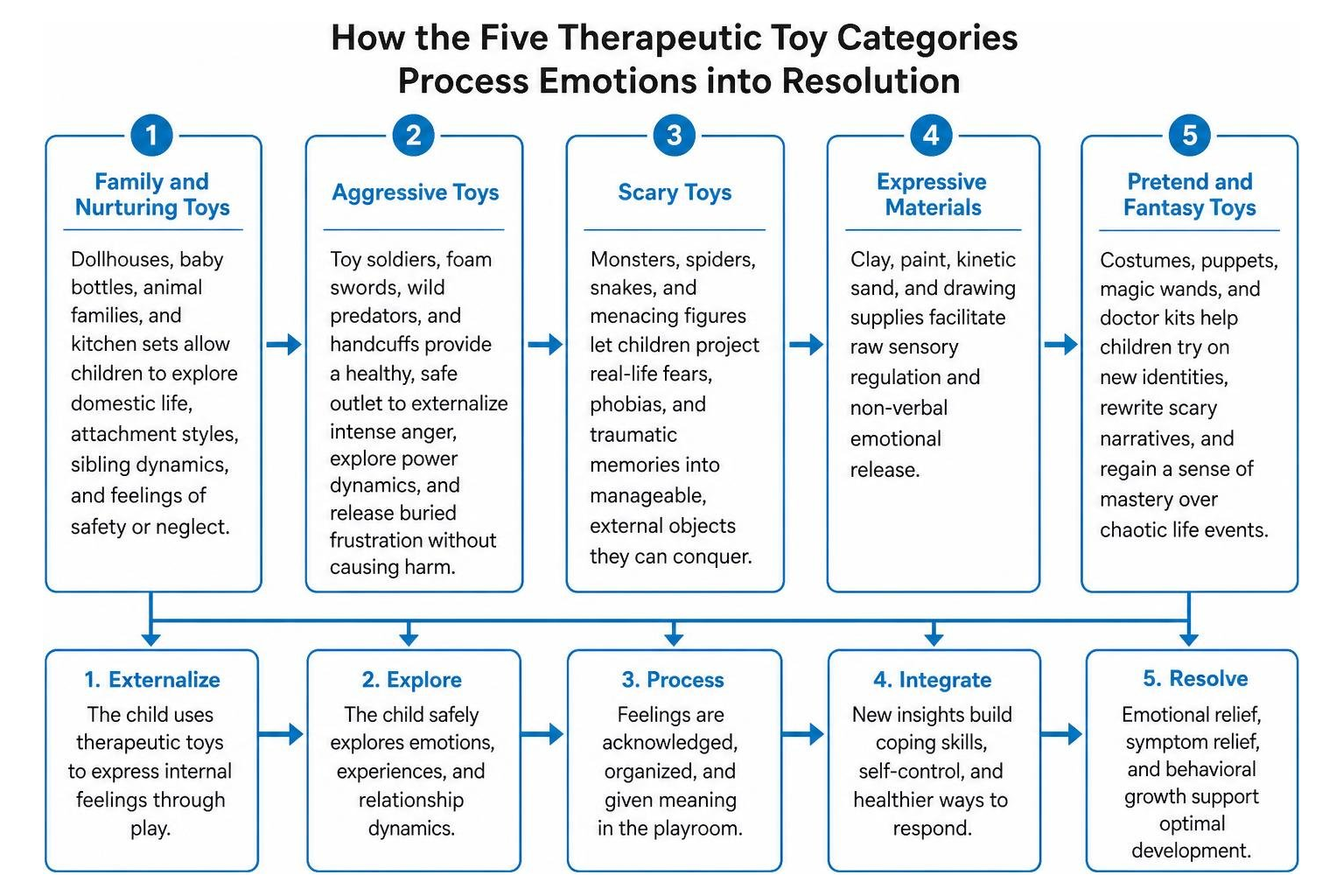
Therapeutic limit-setting protects the safety of the playroom. By separating feelings from behaviors (for example, “You can feel as angry as you want, but the sand stays in the box”), children learn that while all emotions are welcome, healthy boundaries keep them and others safe.
Typical Session Structure and Treatment Duration
The therapeutic journey begins with an in-depth caregiver intake assessment. The clinician gathers a full developmental, medical, family, and academic history to understand what triggers the child’s distress.
Individual sessions are typically scheduled on a weekly cadence and last 30 to 45 minutes. Research indicates that a standard, effective course of treatment spans between 10 and 20 sessions, although some children facing complex trauma or neurodevelopmental differences benefit from longer care. During this time, clinicians track repetitive themes, emotional breakthroughs, and behavioral improvements, conducting regular caregiver check-ins to ensure positive changes carry over into home and school environments.
Major Modalities and Approaches in Modern Practice
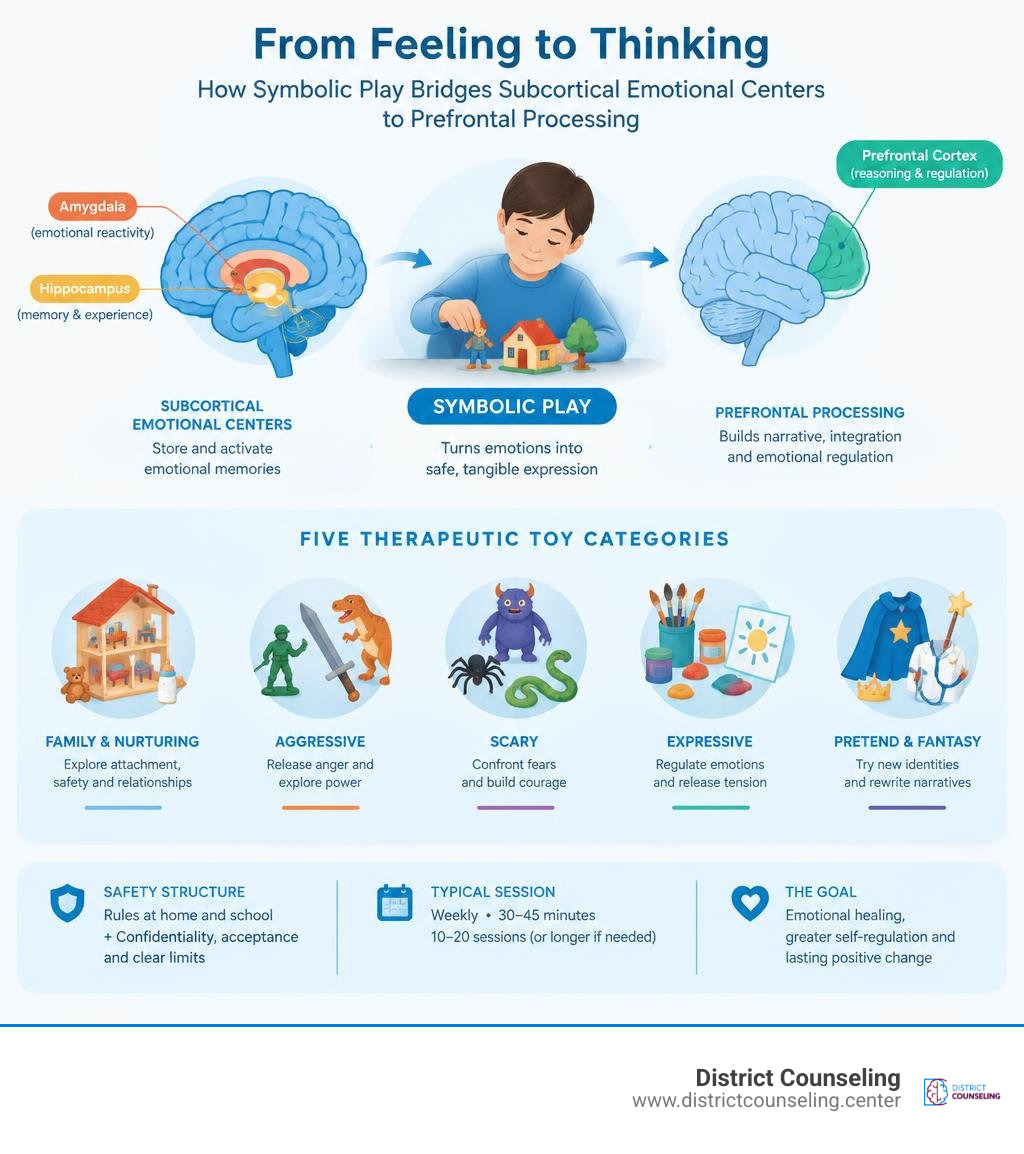
When children encounter severe stress, their brains register distress nonverbally. Traumatic and overwhelming memories frequently reside in subcortical brain structures like the amygdala and hippocampus. Because the prefrontal cortex—the center of logic and verbal articulation—is still maturing in elementary-aged youth, traditional verbal processing can stall.
Engaging in symbolic play creates a developmental bridge. It gently moves emotionally charged experiences from reactive subcortical regions into the frontal lobe, where cognitive integration, narrative coherence, and emotional regulation can occur (Koukourikos et al., 2021). For families navigating life transitions, exploring how play therapy works for adjustment disorder shows how these neurological shifts restore stability.
Clinicians draw from several evidence-based modalities to match each child’s unique diagnostic profile, as highlighted in comprehensive research on clinical play modalities.
Child-Centered Play Therapy (CCPT)
Pioneered by Virginia Axline and expanded by Garry Landreth, Child-Centered Play Therapy is a non-directive, humanistic approach designed primarily for children ages 3 to 10. CCPT operates on the foundational belief that children possess an innate drive toward self-healing when provided with genuine, unconditional acceptance and relational safety.
In CCPT, the clinician adheres to core therapeutic principles: developing warm rapport, accepting the child exactly as they are, recognizing and reflecting expressed feelings, trusting the child’s capacity to solve their own problems, and allowing the child to direct the pace and path of the session. The model is formally recognized as an evidence-based, promising practice by the Title IV-E Prevention Services Clearinghouse, backed by studies demonstrating improvements in behavioral and emotional functioning across clinical trials.
Adlerian and Cognitive-Behavioral Approaches
While non-directive models give the child total freedom over the narrative, directive approaches offer structured interventions:
- Adlerian Play Therapy: Based on Alfred Adler’s individual psychology, this model views all childhood behavior as goal-directed, driven by a deep need for social belonging and significance. The therapist actively explores the child’s lifestyle, mistaken beliefs, and family dynamics, using art, role-play, and metaphors to help them build social interest and constructive behaviors.
- Cognitive-Behavioral Play Therapy (CBPT): Designed to teach adaptive coping strategies in a developmentally accessible format, CBPT incorporates cognitive-behavioral techniques into play. Therapists use puppets, storytelling, and structured games to model emotional regulation, reframe irrational fears, and practice social problem-solving. A recent clinical case series on school-age outcomes demonstrated how targeted play interventions effectively resolve school refusal, performance perfectionism, and stress-induced somatic issues.
Conditions and Clinical Challenges Addressed

Therapeutic play supports a wide spectrum of pediatric mental health conditions and life disruptions. It offers effective support for:
- Emotional Dysregulation: Alleviating intense temper tantrums, separation panic, phobias, chronic sadness, and somatic complaints like stress-related stomachaches. Caregivers seeking specialized care can access dedicated childhood depression and anxiety support to address these root causes.
- Trauma and Loss: Helping youth safely process physical or emotional abuse, domestic violence exposure, bullying, parental divorce, or the death of a loved one. Targeted trauma counseling interventions provide structured containment for traumatic memories.
- Neurodivergence and Attention Deficits: Assisting children with focus, impulse control, frustration tolerance, and social communication. Parents exploring behavioral challenges often begin with comprehensive pediatric ADHD evaluations to tailor home and classroom accommodations.
- Family System Transitions: Assisting siblings, blended families, and adopted youth in establishing secure attachment and navigating identity shifts.
Key Benefits for Emotional Growth
The empirical evidence supporting therapeutic play spans emotional, social, behavioral, and academic domains (Gupta et al., 2023):
- Behavioral & Emotional Functioning: Systematic clearinghouse reviews across 12 clinical studies with 760 participants confirmed a favorable, statistically significant effect on overall child well-being and emotional regulation.
- Social Competence: Across 5 reviewed studies (280 participants), Child-Centered Play Therapy demonstrated a favorable effect on social functioning, yielding an effect size of 0.32. In a clinical study of 372 preschool children, group play interventions enhanced socio-emotional communication and real-time problem-solving skills.
- Academic Achievement: When emotional distress is addressed, cognitive bandwidth expands. Research evaluating 228 participants across 5 studies revealed an educational achievement effect size of 0.34, showing measurable improvements in early reading and classroom focus, as detailed in an analytical overview of pediatric play therapy.
- Trauma Recovery: In a randomized study involving 60 displaced orphaned children, Group Activity Play Therapy resulted in significant reductions in behavioral outbursts and trauma symptoms.
Medical Applications and Chronic Illness Support
When children face chronic medical diagnoses, surgeries, or prolonged hospital stays, they often experience overwhelming powerlessness. Medical play therapy provides specialized interventions right at the bedside or in outpatient clinics.
For instance, in a clinical trial involving 15 children diagnosed with Type 1 diabetes mellitus, intensive individual play therapy significantly reduced anxiety symptoms and boosted daily compliance with blood testing and insulin regimens. Similarly, a study of 203 children undergoing surgery found that youth who received pre-operative play therapy experienced lower stress levels both before entering the operating room and throughout postoperative recovery. Portable play kits equipped with miniature medical instruments, doctor coats, and doll patients allow young patients to act out procedures, ask questions, and regain a sense of mastery over their physical bodies.
Practitioner Credentials and What Parents Should Expect
Taking your child to counseling can feel daunting, but the process is structured to be transparent, collaborative, and deeply supportive of the entire family system.
The journey typically follows three key phases:
- Initial Caregiver Intake: Parents meet one-on-one with the therapist to discuss family history, current behavioral patterns, school observations, and primary treatment goals.
- Weekly Direct Play Sessions: The child attends consistent individual sessions where the therapist provides emotional reflection, tracks symbolic themes, and helps them practice self-regulation.
- Collateral Parent Consultations: Every 4 to 6 weeks, the clinician meets with caregivers to share high-level progress updates, review behavioral shifts, and introduce at-home therapeutic parenting techniques like reflective listening and clear limit-setting.
Caregivers can also participate in models like Child-Parent Relationship Training (CPRT), a 10-session evidence-based model that teaches parents how to conduct therapeutic play sessions at home. When selecting care, reviewing tips on finding an experienced child therapist helps ensure the right clinical fit.
Who Is Qualified to Provide Children’s Play Therapy?
Because play therapy is a clinical mental health intervention, it should only be delivered by licensed clinical mental health professionals. Qualified clinicians hold a master’s or doctoral degree in counseling, psychology, or clinical social work (such as an LPC, LMFT, LCSW, or Licensed Psychologist) along with extensive post-graduate training in play therapy theory and clinical supervision.
Many specialized practitioners earn the credential of Registered Play Therapist (RPT) or Registered Play Therapist-Supervisor (RPT-S) through the Association for Play Therapy. This credential requires advanced coursework, hundreds of hours of direct play therapy clinical experience, and rigorous supervision, as outlined in clinical guidelines from Psychology Today. Families seeking local care can connect with specialized child counseling services delivered by experienced, licensed clinicians.
Frequently Asked Questions About Play Therapy
What is the ideal age range for a child to start play therapy?
Play therapy is most effective for children developmentally between the ages of 3 and 11 years old. Preschool and elementary-aged youth in this bracket have developed the capacity for imaginative, symbolic play but have not yet developed the mature abstract reasoning needed for traditional talk therapy. Adapted cognitive-behavioral and expressive art techniques can also be modified to support older pre-teens and adolescents.
How does play therapy differ from playing at home or school?
While social and recreational play is vital for healthy childhood development, it lacks clinical assessment, systemic treatment pacing, and psychological containment. In a clinical session, a licensed professional actively tracks behavioral themes, uses emotional reflection to build self-awareness, models healthy boundaries, and provides a neutral, confidential space where a child can express taboo or intense emotions without fear of upsetting family members.
How long does it take to see noticeable improvements in a child’s behavior?
While every child’s healing timeline is unique, most treatment courses average between 10 and 20 weekly sessions. Early signs of progress—such as reduced intensity of tantrums, better sleep, improved verbalization of basic feelings, or calmer transitions—frequently emerge within the first 6 to 8 sessions as the therapeutic relationship solidifies.
Conclusion
Children do not experience emotional pain any less than adults; they simply lack the adult vocabulary to tell us what hurts. By meeting children within their natural developmental language, therapeutic play honors how young minds grow, process, and heal.
Whether your child is struggling with behavioral outbursts, navigating a family divorce, processing traumatic grief, or managing the stress of a chronic medical diagnosis, compassionate clinical support can help restore balance to your home. At District Counseling, we provide compassionate counseling services in Texas, offering dedicated pediatric play therapy, trauma-informed care, and comprehensive psychological evaluations across our Houston, Cypress, Katy, Spring, Sugar Land, and surrounding Texas clinics. Reach out today to schedule an initial consultation and give your child the tools they need to thrive.
Scientific References
Koukourikos K, Tsaloglidou A, Tzeha L, Iliadis C, Frantzana A, Katsimbeli A, Kourkouta L. “An Overview of Play Therapy..” Materia socio-medica, 2021. PMCID PMC8812369. Gupta N, Chaudhary R, Gupta M, Ikehara LH, Zubiar F, Madabushi JS. “Play Therapy As Effective Options for School-Age Children With Emotional and Behavioral Problems: A Case Series..” Cureus, 2023. PMCID PMC10328142.
Visited 1 times, 1 visit(s) today


Similar Posts

Francisco Ortiz
November 24, 2026
The Ultimate Guide to Children’s Play Therapy Basics
Discover how children’s play therapy helps kids heal, grow, and communicate through evidence-based clinical play techniques....

Francisco Ortiz
November 23, 2026
A Quick Start Guide to Comparing ADHD Testing Costs
Learn how much it costs to get tested for ADHD in 2027, from $150 telehealth screenings to $5,000+ comprehensive evaluations....

Francisco Ortiz
November 19, 2026
Best Depression Therapists Near Me: Local Care Compared
Find the best depression therapist near me with our guide to local care, credentials, and evidence-based treatment options....

Francisco Ortiz
November 17, 2026
How to Tell When You Are Way Past the Point of Exhaustion
Learn the key signs of being over tired, from brain fog to physical exhaustion, and discover how to reset your sleep and energy....

Francisco Ortiz
November 16, 2026
Healing Through Play: Why Play Therapy Works for Adjustment Disorder
Discover how play therapy for adjustment disorder helps children heal from stress, divorce, and grief through proven therapeutic techniques....

Francisco Ortiz
November 13, 2026
All About Marital Aids: A Quick Start Guide
Discover how a marital aid can enhance intimacy, communication, and wellness with this guide on types, safety, and relationship support....

Francisco Ortiz
November 11, 2026
The Ultimate Guide to the DOT SAP Evaluation Process
Learn the complete DOT SAP evaluation process for return-to-duty compliance, from initial assessment to Clearinghouse clearance....

Francisco Ortiz
November 9, 2026
The Complete Guide to Finding an Immigration Evaluator
Find expert immigration evaluation for asylum, VAWA, hardship waivers, and N-648 with this complete guide to forensic assessments....

Francisco Ortiz
November 6, 2026
An Essential Guide to the Psychological Evaluation Process
Learn how a psychological evaluation provides diagnostic clarity and a roadmap for mental health treatment....

Francisco Ortiz
November 4, 2026
Best Counseling Services in Cypress: Find Local Support Now
Find compassionate counseling in Cypress for individuals, couples, teens, and families. Start your wellness journey with expert local support today....


