
Understanding Adjustment Disorder in Children: Triggers, Signs, and Subtypes
Play therapy for adjustment disorder helps children process acute life stressors, regulate difficult emotions, and restore daily functioning by using toys and symbolic play as natural communication tools. While adults can talk through major life upheavals, young children rarely possess the abstract reasoning or verbal fluency to articulate complex emotional distress. Instead, their reactions surface through behavioral acting out, regression, or unexplained somatic complaints. Play therapy bridges this developmental gap, providing a developmentally attuned environment where children safely externalize and resolve situational stress.
According to the DSM-5, an adjustment disorder is diagnosed when a child develops clinically significant emotional or behavioral symptoms in response to an identifiable stressor within three months of its onset. These symptoms cause marked distress that is out of proportion to the severity of the stressor or significantly impairs academic, social, or family functioning.
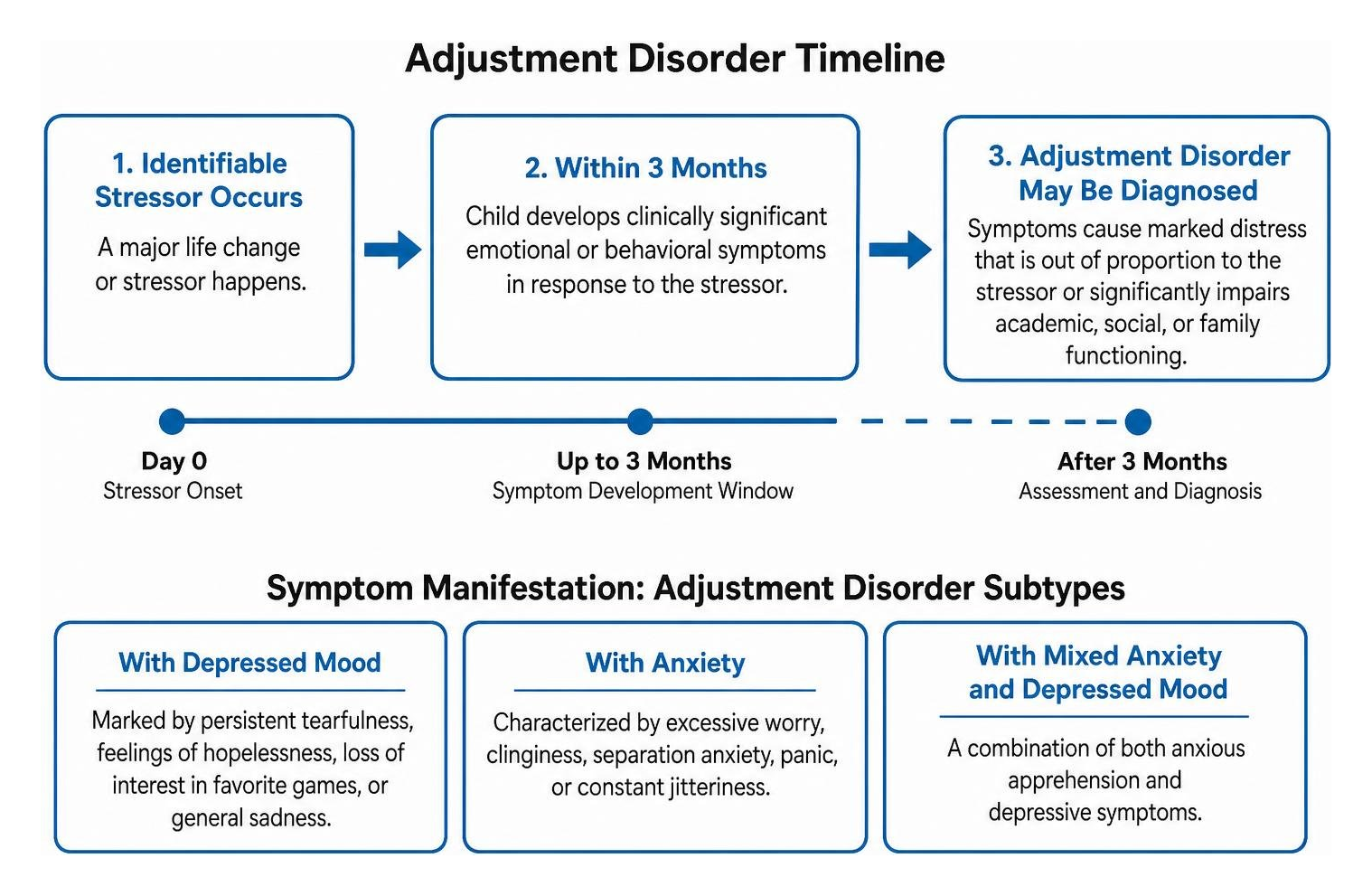
It is crucial for caregivers to understand that adjustment disorders are situational reactions rather than permanent character traits. Clinicians recognize six primary subtypes of adjustment disorder based on how the distress manifests:
- With Depressed Mood: Marked by persistent tearfulness, feelings of hopelessness, loss of interest in favorite games, or general sadness.
- With Anxiety: Characterized by excessive worry, clinginess, separation anxiety, panic, or constant jitteriness.
- With Mixed Anxiety and Depressed Mood: A combination of both anxious apprehension and depressive symptoms.
- With Disturbance of Conduct: Exhibited through behavioral acting out, rule violations, defiance, aggression, or vandalism.
- With Mixed Disturbance of Emotions and Conduct: A presentation involving both emotional distress (crying, anxiety) and behavioral outbursts (fighting, truancy).
- Unspecified: Maladaptive reactions that do not cleanly fit the other categories, such as somatic complaints or social withdrawal.
Parents often wonder if their child’s sudden sadness is part of a broader mood disorder. Understanding the differences between acute situational stress and childhood depression is essential for securing appropriate, timely support.
Common Triggers: Divorce, Relocation, and Grief
Children thrive on predictability, stability, and routine. When their world shifts unexpectedly, their baseline sense of safety can quickly erode. Common events that trigger adjustment disorders include:
- Parental Separation or Divorce: Navigating two households, witnessing parental conflict, or coping with changes in custody schedules.
- Relocation and New Communities: Leaving behind familiar schools, friends, bedrooms, and daily routines.
- Bereavement and Loss: The death of a grandparent, relative, or beloved family pet.
- School Transitions: Moving from preschool to kindergarten, changing campuses, or encountering sudden academic pressures.
- Medical Stressors: A child’s sudden illness, hospitalization, or the serious diagnosis of a sibling or parent.
- Family Composition Changes: The arrival of a new baby sibling, the introduction of a stepparent, or blended family dynamics.
Identifying Behavioral and Emotional Symptoms
Because young children communicate through their actions, signs of an adjustment disorder often show up at home and in the classroom:
- Behavioral Acting Out: Uncharacteristic aggression, tantrums, destruction of toys, or defiance toward caregivers and teachers.
- Regression: Reverting to earlier developmental stages, such as thumb-sucking, baby talk, or bedwetting after being fully potty trained.
- Somatic Complaints: Frequent stomachaches, headaches, or nausea with no medical basis.
- Sleep and Appetite Disruptions: Bedtime fears, nightmares, difficulty falling asleep, or changes in eating habits.
- Social and Academic Shifts: Withdrawing from peer groups, losing interest in sports or hobbies, and experiencing sudden drops in school performance.
Understanding the Clinical Benefits of Play Therapy for Adjustment Disorder
When a child enters a therapy room, handed an invitation to sit on a couch and answer introspective questions, they will likely freeze, shrug, or state, “I don’t know.” Play therapy shifts the medium of healing into the child’s natural language: play.
From a neurobiological perspective, severe stress and trauma are encoded in non-verbal, sensory, and emotional regions of the brain, such as the amygdala and hippocampus (Gupta et al., 2023). Young children have not yet fully developed the prefrontal neural pathways needed to translate these intense somatic and emotional experiences into words.
Through symbolic and imaginative play—such as using animal figures, expressive art, or sandbox scenes—children project internal conflicts outward. This process allows traumatic or stressful memories to move from non-verbal brain structures to the frontal lobe, where they can be organized, processed, and integrated safely.
Clinical literature highlights play therapy as an effective intervention for school-age children managing complex behavioral and emotional concerns (Gupta et al., 2023). By manipulating toys, children gain psychological distance from their problems, allowing them to confront painful experiences without becoming overwhelmed.
Core Principles of Play Therapy for Adjustment Disorder
Pioneered by figures like Virginia Axline and Garry Landreth, clinical play therapy rests on foundational therapeutic principles:
- The Child Leads the Way: Therapists establish unconditional positive regard and non-judgmental acceptance, creating a space where the child feels safe to explore difficult feelings.
- Toys as Words, Play as Language: Play materials are deliberately chosen to allow a full range of expression, including nurturing items, aggressive-release toys, and real-world miniatures.
- Empathetic Reflection: The therapist serves as an attuned mirror, reflecting feelings and themes back to the child (e.g., “That little bear feels very scared that the big house is changing”), which builds emotional literacy.
- Therapeutic Limit-Setting: Clear, firm, and gentle boundaries are maintained to ensure physical safety, helping the child practice self-control and respect for relationships.
Research Evidence and Clinical Outcomes
Decades of research support the efficacy of play-based interventions:
- High Treatment Efficacy: Meta-analytic reviews of over 100 outcome studies demonstrate that play therapy produces moderate to high positive treatment effects across diverse age groups and presenting concerns.
- Symptom Reduction Across Domains: A meta-analysis of 17 randomized controlled trials confirmed that play therapy significantly reduces symptoms of anxiety, depression, and disruptive behaviors (Gupta et al., 2023).
- Self-Regulation and Empathy: Controlled studies have documented measurable improvements in empathy, aggression reduction, and self-regulation among elementary school-aged children (Gupta et al., 2023).
- Sustained Emotional Growth: Empirical studies examining youth experiencing behavioral challenges found that structured play sessions yield significant improvements in both emotion regulation and social adjustment (Gupta et al., 2023).
Key Modalities and Techniques in Therapeutic Play
Play therapists use a range of evidence-based modalities, balancing non-directive, child-led approaches with structured, cognitive-behavioral techniques depending on the child’s needs.

Non-Directive Child-Centered Play (NDCCP)
In Non-Directive Child-Centered Play Therapy (CCPT), the child chooses the toys and directs the theme of the session. The therapist creates a warm, permissive environment, tracking behaviors and reflecting emotional states in real time.
If a child is struggling with parental divorce, they might repeatedly set up two distinct dollhouses, moving mini-figures back and forth. In this non-directive space, the child works through the uncertainty of shuttling between homes, exploring different endings and building a sense of mastery at their own pace.
Directive and Cognitive-Behavioral Play Interventions
Directive play therapy incorporates structured games, guided activities, and clinician-led exercises to target specific symptoms.
- Cognitive-Behavioral Play Therapy (CBPT): Adapts cognitive-behavioral concepts into playful activities. For example, children might draw “worry monsters” and practice breathing techniques to shrink them, externalizing anxiety and learning coping mechanisms.
- Bibliotherapy: Using carefully selected storybooks that feature characters dealing with relocation, family loss, or school stress helps normalize the child’s struggles and models healthy problem-solving.
- Interpersonal and Expressive Interventions: Incorporating expressive arts helps build emotional literacy and social-emotional competencies (Gupta et al., 2023). Therapists may also integrate structured behavioral frameworks to help children recognize cause-and-effect in interpersonal relationships.
Play Therapy vs. Traditional Talk Therapy and CBT
Traditional talk therapy relies on abstract logic, introspective insight, and expressive vocabulary—skills that are still developing throughout childhood. When young children are asked to sit, maintain eye contact, and explain why they feel upset, they may feel pressured or defensive.
Specialized children’s counseling services address these developmental differences by using creative, play-based methods instead of sitting across a desk.
| Therapeutic Dimension | Traditional Talk Therapy | Standard Cognitive Behavioral Therapy (CBT) | Play Therapy |
|---|---|---|---|
| Primary Medium | Spoken language and verbal dialogue | Structured verbal worksheets and cognitive tracking | Play, toys, art, sandtray, and symbolic enactment |
| Target Age Range | Adolescents and adults | Older children (8+), teens, and adults | Children ages 3 to 12 (adaptable for all ages) |
| Processing Mode | Conscious, left-brain, analytical reflection | Cognitive restructuring and behavioral homework | Symbolic, right-brain, sensory-emotional integration |
| Pacing & Direction | Therapist-guided conversational topics | Highly structured, protocol-driven agendas | Child-centered or balanced directive play |
| Engagement Style | Direct, face-to-face dialogue | Educational exercises and rational analysis | Imaginative exploration and non-threatening projection |
Treatment Timeline, Parent Collaboration, and What to Expect
Parents seeking therapy for an adjustment disorder often want to know what the process looks like and how long it will take. Clinical research suggests that resolving the difficulties of a typical child referred for treatment takes an average of 20 weekly sessions, though some children adjust more quickly and others with complex stressors may require more time.
Sessions typically run 30 to 50 minutes once a week. The therapeutic process generally unfolds across three distinct phases:
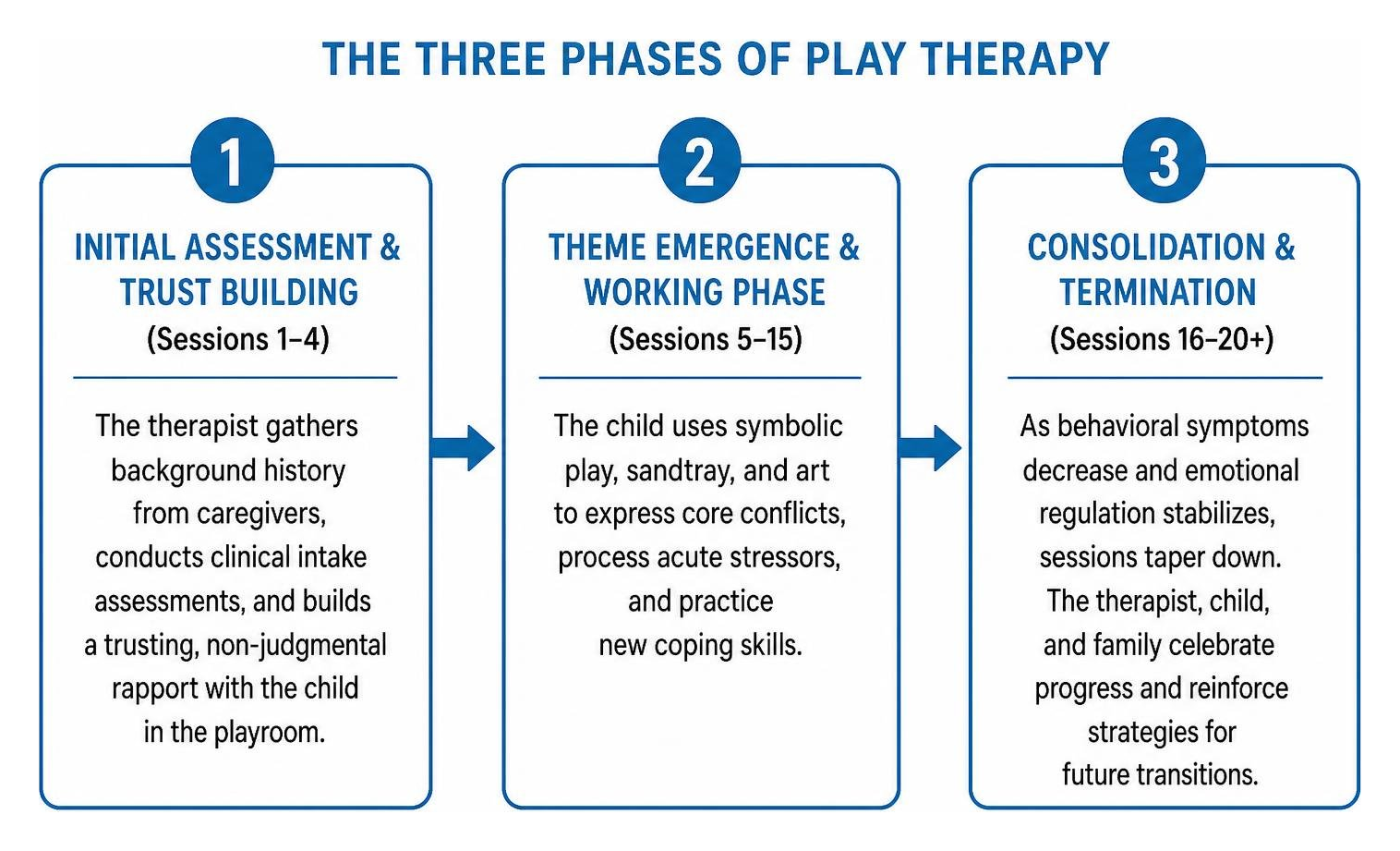
- Initial Assessment & Trust Building (Sessions 1–4): The therapist gathers background history from caregivers, conducts clinical intake assessments, and builds a trusting, non-judgmental rapport with the child in the playroom.
- Theme Emergence & Working Phase (Sessions 5–15): The child uses symbolic play, sandtray, and art to express core conflicts, process acute stressors, and practice new coping skills.
- Consolidation & Termination (Sessions 16–20+): As behavioral symptoms decrease and emotional regulation stabilizes, sessions taper down. The therapist, child, and family celebrate progress and reinforce strategies for future transitions.
How Parents Participate in Play Therapy for Adjustment Disorder
Therapy is most effective when caregivers are actively involved. Research consistently shows that treatment outcomes are strongest when parents participate in the process.
Caregivers collaborate through:
- Regular Parent Consultations: Meeting privately with the therapist every few weeks to discuss behavioral progress, share updates on home routines, and address emerging challenges.
- Filial Play and Parent Coaching: Learning therapeutic limit-setting, emotion-labeling, and reflective listening skills to use during dedicated play sessions at home.
- Home Routine Support: Creating predictable schedules, calm bedtime routines, and clear expectations that reinforce the security established in the playroom.
What to Look For in a Qualified Play Therapist
When looking for a provider to support your child, look for clinicians who hold specialized credentials and formal training in developmentally informed therapies:
- RPT or RPT-S Credential: Conferred by the Association for Play Therapy (APT), the Registered Play Therapist (RPT) or Registered Play Therapist-Supervisor (RPT-S) designation confirms master’s- or doctoral-level mental health licensure, hundreds of hours of play therapy training, and extensive supervised clinical experience.
- Clinical Licensure: Ensure the clinician is a Licensed Professional Counselor (LPC), Licensed Clinical Social Worker (LCSW), or Licensed Marriage and Family Therapist (LMFT).
- Developmental Competence: Look for a therapist who understands family systems, pediatric neurobiology, and trauma-informed care.
Frequently Asked Questions About Play Therapy for Adjustment Disorder
How many sessions does a child typically need to resolve an adjustment disorder?
While every child is unique, outcome studies indicate an average course of approximately 20 weekly sessions is effective for resolving standard adjustment concerns. Mild situational stressors may resolve in fewer sessions, whereas children experiencing multiple concurrent changes or complex family dynamics may benefit from longer care.
Can play therapy help if my child refuses to talk about what is bothering them?
Yes. Play therapy does not require a child to talk directly about their problems. Because toys serve as their words, children process difficult feelings symbolically through sandbox scenes, puppets, and art, lowering their defenses and making it easier to work through stress safely.
What is the ideal age range for a child entering play therapy?
Play therapy is primarily designed for children ages 3 through 12, matching the period when play is their primary mode of communication. However, expressive arts, sandtray techniques, and experiential activities can be adapted for preschoolers, adolescents, and even adults navigating major life changes.
Conclusion
Childhood transitions—whether moving across town, coping with family changes, or grieving a loss—can feel overwhelming to young minds. When stressors disrupt a child’s emotional balance, play therapy provides a structured, evidence-based space to help them process their experiences, build resilience, and regain confidence.
At District Counseling, our compassionate team provides specialized care for children, teens, and families across Texas, including Houston, Spring, Cypress, Katy, Sugar Land, The Woodlands, Austin, Fort Worth, and surrounding communities. If your child is struggling with a recent life change, explore our mental health and counseling services to connect with a qualified therapist and support their path forward.
References
Gupta N, Chaudhary R, Gupta M, Ikehara LH, Zubiar F, Madabushi JS. “Play Therapy As Effective Options for School-Age Children With Emotional and Behavioral Problems: A Case Series..” Cureus, 2023. PMCID PMC10328142.
Visited 1 times, 1 visit(s) today


Similar Posts

Francisco Ortiz
November 16, 2026
Healing Through Play: Why Play Therapy Works for Adjustment Disorder
Discover how play therapy for adjustment disorder helps children heal from stress, divorce, and grief through proven therapeutic techniques....

Francisco Ortiz
November 13, 2026
All About Marital Aids: A Quick Start Guide
Discover how a marital aid can enhance intimacy, communication, and wellness with this guide on types, safety, and relationship support....

Francisco Ortiz
November 11, 2026
The Ultimate Guide to the DOT SAP Evaluation Process
Learn the complete DOT SAP evaluation process for return-to-duty compliance, from initial assessment to Clearinghouse clearance....

Francisco Ortiz
November 9, 2026
The Complete Guide to Finding an Immigration Evaluator
Find expert immigration evaluation for asylum, VAWA, hardship waivers, and N-648 with this complete guide to forensic assessments....

Francisco Ortiz
November 6, 2026
An Essential Guide to the Psychological Evaluation Process
Learn how a psychological evaluation provides diagnostic clarity and a roadmap for mental health treatment....

Francisco Ortiz
November 4, 2026
Best Counseling Services in Cypress: Find Local Support Now
Find compassionate counseling in Cypress for individuals, couples, teens, and families. Start your wellness journey with expert local support today....

Francisco Ortiz
November 2, 2026
A Comprehensive Guide to Finding a Houston Therapist
Find a Houston therapist for anxiety, trauma, or couples counseling. Compare costs, insurance, and specialized care in this local guide....

Francisco Ortiz
October 30, 2026
How to Become a Substance Abuse Professional and Help Save Careers
Learn how to become a substance abuse professional and help save careers with this step-by-step guide to DOT SAP qualification and certification....

Francisco Ortiz
October 28, 2026
Demystifying the Evaluation for Immigration Process
Learn how a professional evaluation for immigration supports asylum, waivers, and visa cases with expert forensic assessments....

Francisco Ortiz
October 26, 2026
The Complete Guide to Emotional Exhaustion
Learn the signs, causes, and recovery paths for emotional exhaustion—plus proven strategies to reclaim your energy and well-being....


