
Find a Depression Therapist Near Me Who Fits Your Life
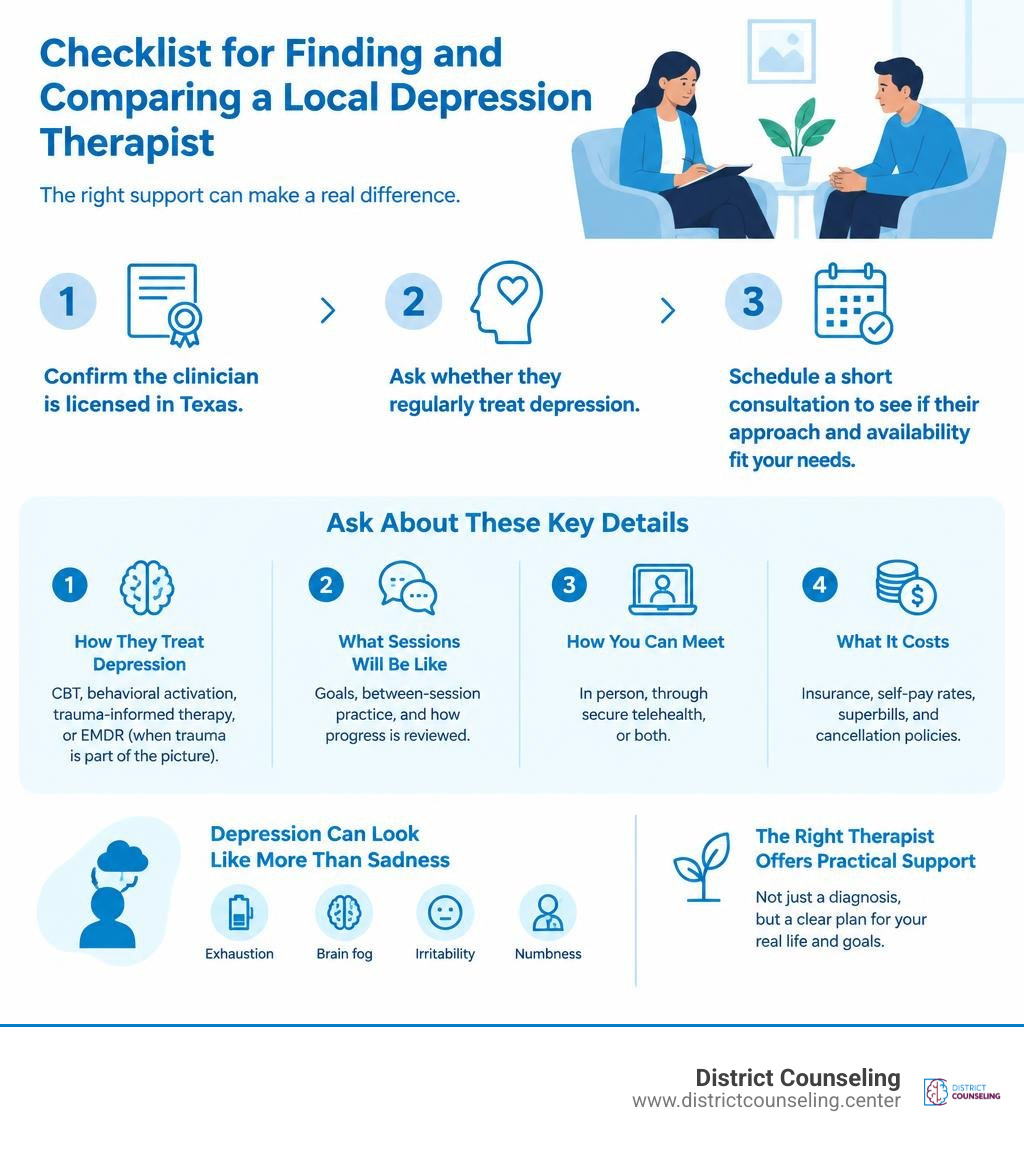
To find a depression therapist near me, start with three checks: confirm the clinician is licensed in Texas, ask whether they regularly treat depression, and schedule a short consultation to see if their approach and availability fit your needs.
Look for a therapist who can clearly explain:
- How they treat depression, such as CBT, behavioral activation, trauma-informed therapy, or EMDR when trauma is part of the picture.
- What sessions will be like, including goals, between-session practice, and how progress is reviewed.
- How you can meet, whether in person, through secure telehealth, or both.
- What it costs, including insurance, self-pay rates, superbills, and cancellation policies.
Depression does not always look like constant sadness. It can feel like numbness, exhaustion, irritability, brain fog, or keeping up at work and home while feeling empty inside. The right local therapist should offer practical support, not make you guess what treatment will involve. According to the American Psychological Association, depression is one of the most common mental health conditions, and evidence-based psychotherapy can significantly reduce symptoms.
I am Francisco Ortiz, a Licensed Professional Counselor-Supervisor with experience providing psychotherapy for mood disorders, trauma, and family concerns, as well as supervising mental health clinicians. In this guide, I will help you narrow a search for a depression therapist near me into clear, useful choices for your schedule, symptoms, and goals.
Quick depression therapist near me definitions:
Recognizing When to Seek Professional Depression Therapy
Depression rarely arrives announced. More often, it settles in quietly—a subtle draining of color from daily routines, an unexplained drop in physical energy, or an ongoing mental fog that makes even basic decisions feel exhausting. While everyone experiences bad days, clinical depression involves persistent patterns that disrupt your emotional stability, relationships, and physical well-being.

Without targeted care, a depressive episode can persist for six to eight months or longer, significantly impacting your quality of life. Recognizing the subtle indicators early allows you to seek support before exhaustion turns into complete burnout. Reviewing the signs you may have high-functioning depression can help you determine whether what you are feeling is temporary stress or something requiring professional care.
Identifying Core Symptoms and High-Functioning Depression
Clinical depression manifests across a broad spectrum. While some individuals experience profound sadness that makes getting out of bed difficult, many others live with high-functioning depression. On the outside, you might be hitting deadlines, managing family obligations, and maintaining a polished social presence. Internally, however, you may feel as though you are running on empty fumes.
Common core symptoms include:
- Persistent emotional flatness: A pervasive sense of numbness where neither joyful events nor stressful situations elicit a genuine emotional response.
- Cognitive fog and executive fatigue: Difficulty focusing, chronic indecisiveness, and memory lapses during standard work or home tasks.
- Anhedonia: The loss of interest or pleasure in hobbies, exercise, intimacy, or socializing.
- Physical sluggishness or sleep disruption: Waking up exhausted despite eight hours of sleep, insomnia, or sudden changes in appetite.
- Chronic internal self-doubt: An unrelenting inner critic that amplifies guilt, inadequacy, and performance pressure.
Depression also impacts younger populations differently; understanding depression and anxiety in teens can clarify how irritability and academic withdrawal often mask deeper mood struggles in adolescents.
Understanding Depressive Cycles and Root Causes
Depression operates as a self-reinforcing cycle. When energy drops, our natural instinct is to withdraw, cancel plans, and reduce activity. While rest is essential, sustained withdrawal eliminates sources of positive reinforcement and connection, which further lowers mood and deepens fatigue.
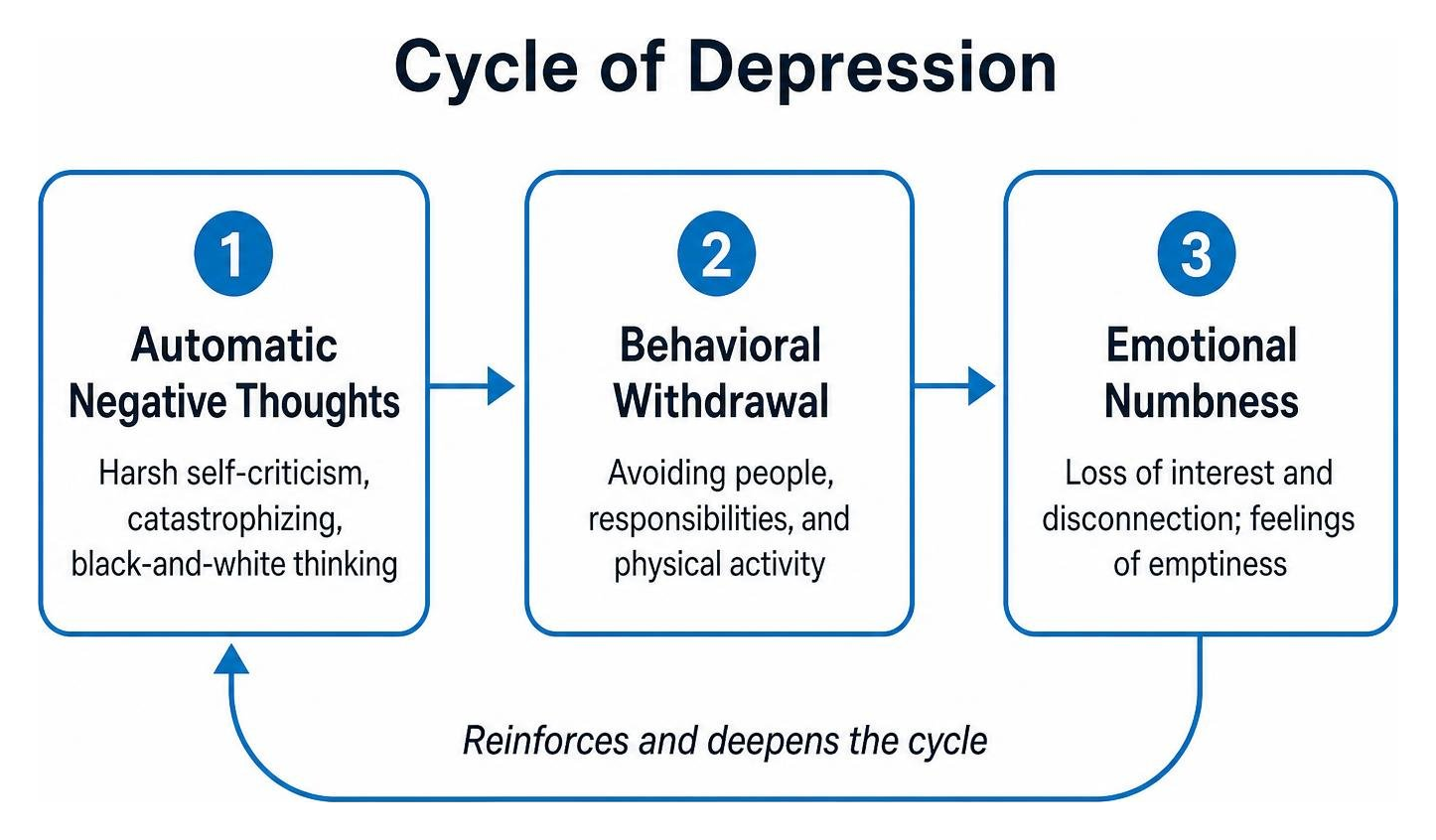
This cycle is maintained by:
- Automatic negative thoughts: Cognitive distortions such as catastrophizing, black-and-white thinking, and harsh self-judgment.
- Behavioral avoidance: Isolating from friends, avoiding responsibilities, and abandoning physical movement.
- Biological and environmental stressors: Chronic nervous system dysregulation, unprocessed grief, career burnout, or neurochemical shifts.
Effective care focuses on treating depression through counseling by identifying these cycles and methodically dismantling the feedback loops that keep you stuck.
Evidence-Based Approaches for Treating Depression
Modern mental health treatment moves beyond passive listening. Evidence-based psychotherapy employs structured, clinically validated interventions designed to retrain neural pathways, resolve underlying distress, and rebuild daily functionality. Exploring the 5 common types of therapy for depression explained illustrates the distinct modalities clinicians use to foster sustainable healing.
Cognitive Behavioral Therapy and Behavioral Activation
Cognitive Behavioral Therapy (CBT) is widely regarded as one of the most effective, research-backed treatments for depression. CBT operates on the premise that our thoughts, emotions, and behaviors are inextricably linked. By learning to identify and restructure automatic negative thought patterns, you change your emotional and physical experience of daily stressors.
A central pillar of CBT is Behavioral Activation. Because depression robs individuals of spontaneous motivation, waiting until you “feel like” doing something often leads to further stagnation. Behavioral activation introduces small, manageable actions that stimulate dopamine and positive reinforcement, recognizing that motivation typically follows action, not the other way around.
Engaging in why depression and anxiety counseling is the brain workout you actually need reinforces how structured clinical exercises build long-term cognitive resilience.
Trauma-Informed Care and Advanced Clinical Modalities
When depression is intertwined with unresolved trauma, chronic adverse life events, or nervous system dysregulation, standard talk therapy alone may not reach the root cause. Advanced modalities provide deeper resolution:
- Eye Movement Desensitization and Reprocessing (EMDR): Helps the brain reprocess traumatic memories and distress that keep the nervous system locked in fight, flight, or freeze states.
- Psychological Evaluations: Comprehensive diagnostic testing for conditions like ADHD, autism, or learning differences that frequently co-occur with or mimic chronic depression.
- Somatic and Nervous System Regulation: Body-based tools designed to calm physical hyperarousal and release stored emotional tension.
To understand how targeted interventions address complex backgrounds, explore our guide from teens to trauma: a guide to finding local depression specialists.
Key Factors When Choosing a Depression Therapist Near Me
Finding the right clinical fit is essential for successful therapy. The therapeutic relationship—the trust, safety, and mutual understanding between you and your clinician—serves as the foundation for meaningful progress.

When evaluating potential providers, utilizing structured guidance on navigating your search for the best depression therapist nearby helps you filter options based on clinical expertise, communication style, and location.
Essential Clinical Credentials and Specializations
Therapists hold various credentials, each reflecting rigorous graduate education, supervised clinical hours, and state board licensing:
- LPC / LPC-Associate (Licensed Professional Counselor): Trained in clinical mental health assessment, psychotherapy techniques, and individualized treatment planning.
- LMFT (Licensed Marriage and Family Therapist): Specializes in relationship dynamics, family systems, and how interpersonal environments influence mood disorders.
- LCSW (Licensed Clinical Social Worker): Focuses on clinical psychotherapy while integrating environmental, community, and systemic factors.
- Licensed Psychologist (PhD / PsyD): Specializes in advanced psychological assessments, complex diagnostics, and evidence-based psychotherapy.
Reviewing specialized services for depression and anxiety counseling ensures that your provider possesses dedicated training in mood disorders rather than general wellness coaching.
Questions to Ask a Potential Depression Therapist Near Me
Before committing to ongoing therapy, schedule a brief consultation to ask specific questions:
- What evidence-based modalities (CBT, EMDR, ACT) do you use to treat depression?
- How do you structure sessions, and will there be actionable practices between visits?
- How do we measure progress, and how will we know when treatment is working?
- What is your experience working with high-functioning depression, trauma, or co-occurring anxiety?
- What are your policies regarding scheduling, out-of-pocket fees, and superbill documentation?
Evaluating Delivery Methods: In-Person vs. Telehealth Counseling
Choosing how to attend sessions is an important logistical consideration. Both in-person office visits and virtual therapy sessions provide high levels of clinical effectiveness, and many clients utilize a hybrid model based on their weekly commitments. Clarifying does professional counseling help with depression applies equally across delivery formats.
Comparing In-Person vs. Virtual Care with a Depression Therapist Near Me
| Consideration | In-Person Therapy | Virtual Telehealth Therapy |
|---|---|---|
| Environment | Dedicated, confidential clinical office free from home or work distractions. | Accessible from your home, private office, or quiet personal space. |
| Commute & Time | Requires travel time to a local clinic location. | Zero commute; easily integrated into lunch hours or busy schedules. |
| Clinical Nuance | Direct physical observation of nonverbal cues and body language. | Full interactive video on secure, HIPAA-compliant platforms. |
| Best Suited For | Severe symptoms, hands-on somatic/trauma work, or those lacking private space at home. | Busy professionals, parents, individuals with mobility barriers, or regional access needs. |
We provide in-person clinical care across our local Texas offices—including Austin, CityCentre, Copperfield, Cypress, Fort Worth, Greater Heights, Houston, Katy, Memorial, Missouri City, Pasadena, Pearland, Raíces, Spring, Spring Branch, Spring-Tomball, Sugar Land, The Woodlands, Tomball, Tree House, and West Lake Hills—alongside secure telehealth services across the state.
Navigating Insurance, Out-of-Pocket Costs, and Access
Understanding the financial structure of therapy prevents surprises:
- In-Network vs. Out-of-Network: Some practices operate out-of-network to maintain complete diagnostic privacy and individualized treatment plans unconstrained by insurance session limits.
- Superbills: Many out-of-network providers provide detailed itemized statements (superbills) that you can submit directly to your insurance provider for potential out-of-network reimbursement.
- HSA/FSA Funds: Health Savings Accounts and Flexible Spending Accounts can routinely be used to pay for licensed psychotherapy services.
For a comprehensive breakdown of care models, visit our comprehensive guide to depression counseling.
Frequently Asked Questions About Depression Therapy
How long does depression therapy typically take to work?
Most individuals experience meaningful relief within 3 to 6 months, which typically translates to 12 to 24 consistent weekly sessions. While initial coping and grounding tools provide relief in the first few visits, deeper work involving core cognitive restructuring and root-cause processing takes consistent practice over several months.
Can depression therapy be effective as a standalone treatment?
Yes. For mild-to-moderate depression, evidence-based psychotherapy alone is often effective. In moderate-to-severe or treatment-resistant cases, a collaborative approach combining clinical therapy with medical psychiatric care offers the most comprehensive symptom reduction.
What is the difference between a psychologist, counselor, and therapist?
“Therapist” is an umbrella term encompassing licensed professionals who provide psychotherapy. Counselors (LPCs) and clinical social workers (LCSWs) focus extensively on clinical interventions and talk therapy. Psychologists (PhDs or PsyDs) hold doctoral degrees and are uniquely qualified to conduct comprehensive psychological and neuropsychological evaluations alongside psychotherapy.
Conclusion
Living with depression can make the world feel impossibly heavy, but you do not have to carry it in isolation. Evidence-based counseling provides the clinical framework, practical tools, and compassionate partnership necessary to break depressive cycles and rediscover clarity.
Whether you need in-person care at one of our Texas locations or the flexibility of virtual telehealth, our dedicated team is here to support your journey. Take the first step toward lasting emotional balance and start compassionate personalized therapy today.
Visited 1 times, 1 visit(s) today


Similar Posts

Francisco Ortiz
November 19, 2026
Best Depression Therapists Near Me: Local Care Compared
Find the best depression therapist near me with our guide to local care, credentials, and evidence-based treatment options....

Francisco Ortiz
November 17, 2026
How to Tell When You Are Way Past the Point of Exhaustion
Learn the key signs of being over tired, from brain fog to physical exhaustion, and discover how to reset your sleep and energy....

Francisco Ortiz
November 16, 2026
Healing Through Play: Why Play Therapy Works for Adjustment Disorder
Discover how play therapy for adjustment disorder helps children heal from stress, divorce, and grief through proven therapeutic techniques....

Francisco Ortiz
November 13, 2026
All About Marital Aids: A Quick Start Guide
Discover how a marital aid can enhance intimacy, communication, and wellness with this guide on types, safety, and relationship support....

Francisco Ortiz
November 11, 2026
The Ultimate Guide to the DOT SAP Evaluation Process
Learn the complete DOT SAP evaluation process for return-to-duty compliance, from initial assessment to Clearinghouse clearance....

Francisco Ortiz
November 9, 2026
The Complete Guide to Finding an Immigration Evaluator
Find expert immigration evaluation for asylum, VAWA, hardship waivers, and N-648 with this complete guide to forensic assessments....

Francisco Ortiz
November 6, 2026
An Essential Guide to the Psychological Evaluation Process
Learn how a psychological evaluation provides diagnostic clarity and a roadmap for mental health treatment....

Francisco Ortiz
November 4, 2026
Best Counseling Services in Cypress: Find Local Support Now
Find compassionate counseling in Cypress for individuals, couples, teens, and families. Start your wellness journey with expert local support today....

Francisco Ortiz
November 2, 2026
A Comprehensive Guide to Finding a Houston Therapist
Find a Houston therapist for anxiety, trauma, or couples counseling. Compare costs, insurance, and specialized care in this local guide....

Francisco Ortiz
October 30, 2026
How to Become a Substance Abuse Professional and Help Save Careers
Learn how to become a substance abuse professional and help save careers with this step-by-step guide to DOT SAP qualification and certification....


