
How Texas caregivers can beat exhaustion with virtual therapy
Caregiver exhaustion therapy in Texas: Where to start
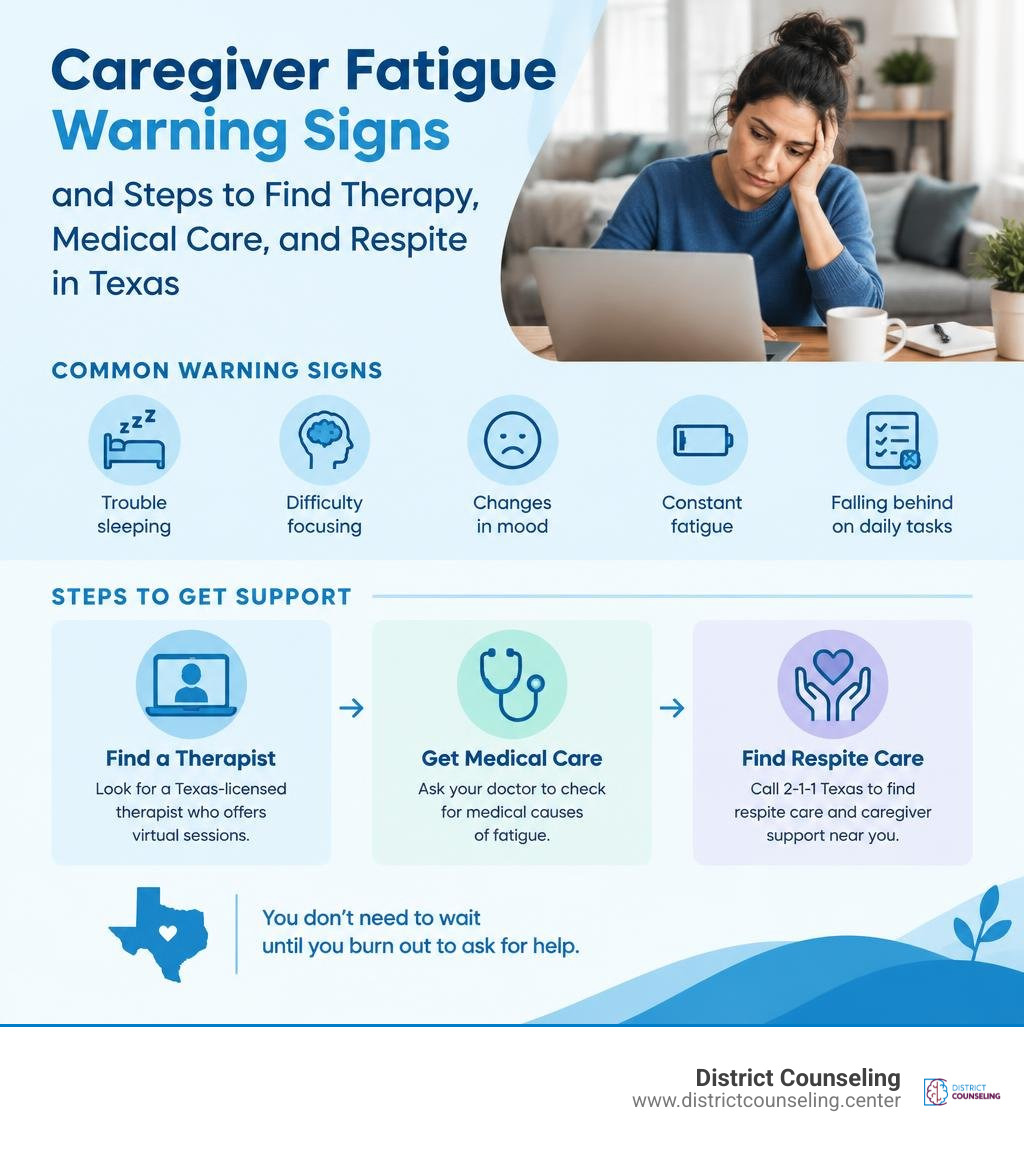
If caregiving leaves you drained even after rest, look for a Texas-licensed therapist who offers virtual sessions. Ask your doctor to check for medical causes of fatigue, and call 2-1-1 Texas to find respite care and caregiver support near you. You do not need to wait until you burn out to ask for help.
Caregiver exhaustion can affect your sleep, focus, mood, and ability to keep up with daily tasks. This guide covers the warning signs, online therapy options, and practical ways to make care more sustainable. For many Texas families, finding specialized caregiver exhaustion therapy in Texas through virtual sessions is the most accessible path back to stability.
I’m Francisco Ortiz, a Licensed Professional Counselor-Supervisor with experience counseling people through mood disorders, trauma, and family challenges. That work shapes this guide to caregiver exhaustion therapy in Texas.
Helpful resources for navigating burnout and chronic stress:
Understanding Caregiver Exhaustion vs Everyday Burnout
Caring for an aging parent, a spouse with a chronic illness, or a child with high medical needs is an act of deep devotion. Yet, it frequently extracts a heavy personal toll. Many people dismiss their chronic fatigue as simple tiredness, believing that a solid weekend of sleep will reset their batteries. However, caregiver exhaustion runs much deeper than ordinary tiredness.
A 2021 report by the Wales Centre for Public Policy identified physical and mental exhaustion—often referred to as burnout—as one of the most critical threats to caregiving and social service stability. When stress continues unabated for months or years, it can evolve into clinical exhaustion disorder. Researchers define exhaustion disorder as a clinical condition characterized by psychological and physical symptoms of exhaustion that develop in response to long-term psychosocial stress (Grossi et al., 2015).
Unlike standard tiredness, clinical exhaustion alters your neurological and physical baseline. Understanding where you fall on the spectrum helps you seek the right care before your body forces a shutdown. Reviewing the 10 signs you’re emotionally exhausted can provide essential clarity when your energy reserves are completely depleted.
| Dimension | Everyday Fatigue | Caregiver Burnout | Clinical Exhaustion Disorder |
|---|---|---|---|
| Primary Cause | Acute physical exertion or temporary lack of sleep | Ongoing, unmanaged emotional and logistical stress | Prolonged psychosocial stress without recovery periods |
| Restoration | Resolves after 1–2 nights of quality rest | Requires intentional lifestyle changes and boundaries | Requires structured clinical intervention and therapy |
| Cognitive Function | Intact; occasional minor lapses | Forgetfulness, difficulty focusing, mental fog | Executive dysfunction, impaired working memory, slow processing |
| Emotional State | Normal range; occasional irritability | Cynicism, detachment, feeling overwhelmed | Profound emotional numbness, despair, severe anxiety |
| Physical Health | Normal baseline vitality | Frequent headaches, muscle tension, mild fatigue | Chronic somatic pain, sleep pathology, immune compromise |
Medical resources on being a caregiver reinforce that caregiving duties often compound over time, slowly shifting an individual from mild tiredness into deep emotional and physical depletion.
Physical and Cognitive Warning Signs in Family Caregivers
Research demonstrates that chronic mental and physical exhaustion substantially impairs day-to-day cognitive functioning, including working memory, sustained attention, executive function, and processing speed (Gavelin et al., 2020). For a family caregiver managing complex medication schedules, coordinating medical appointments, and balancing personal obligations, these cognitive deficits can feel terrifying.
Cognitive and physical warning signs to monitor include:
- Executive Dysfunction and Brain Fog: Struggling to organize daily routines, prioritize emergency versus non-emergency tasks, or make basic household decisions.
- Memory Deficits: Repeatedly misplacing essential items, missing scheduled appointments, or forgetting whether a loved one took their prescribed morning dose.
- Sleep Disturbances: Experiencing hyperarousal at bedtime, waking up abruptly at 3:00 AM with racing thoughts, or feeling unrefreshed despite eight hours in bed.
- Emotional Detachment and Irritability: Snapping at family members over minor inconveniences or feeling completely numb when a loved one expresses distress.
- Somatic and Immune Vulnerabilities: Recurring tension headaches, gastrointestinal upset, persistent body aches, and frequent viral illnesses due to prolonged immune suppression.
Texas-Specific Pressures Accelerating Caregiver Stress
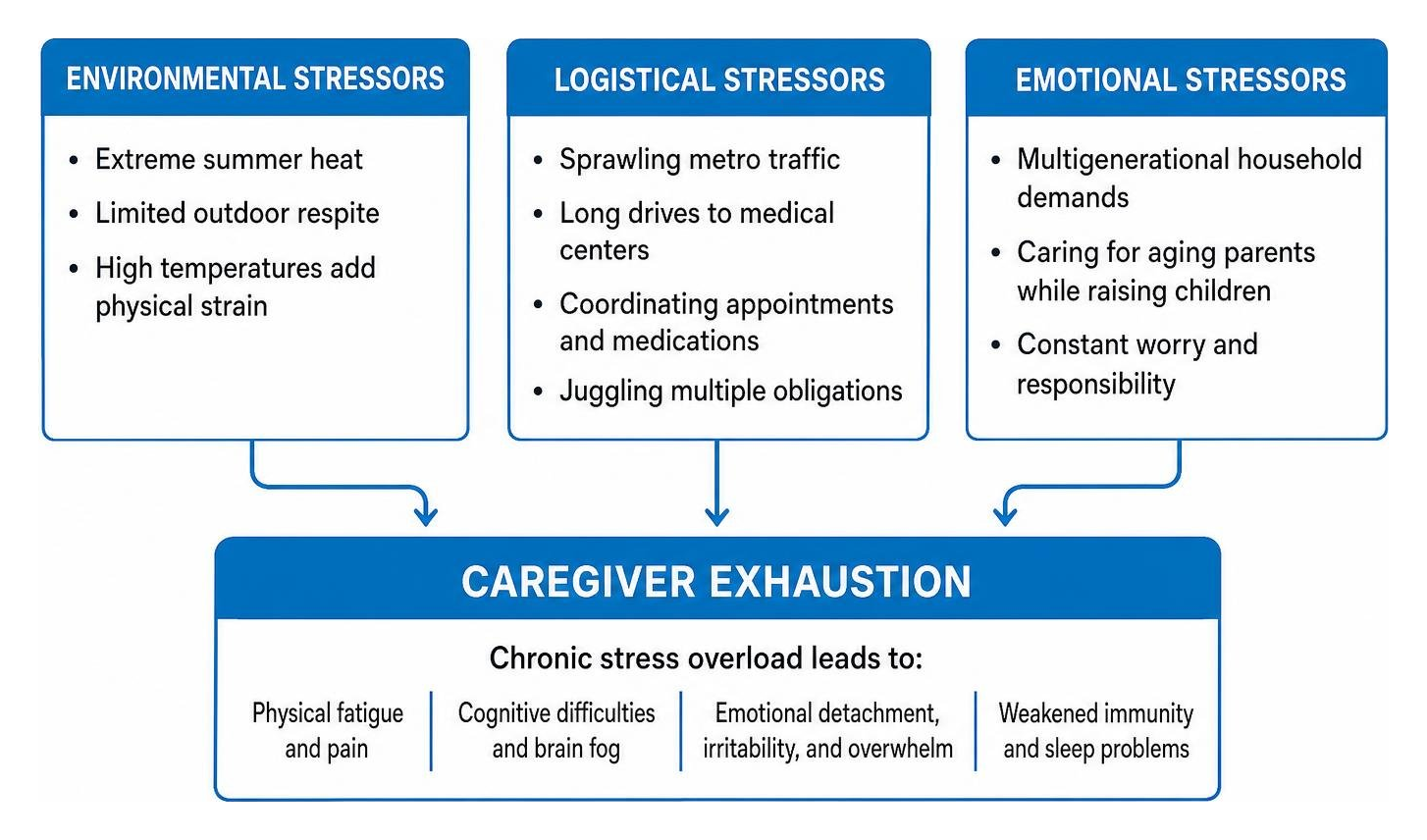
Caregivers across the Lone Star State face unique environmental, geographical, and cultural pressures that accelerate burnout. Texas is vast, and navigating care logistics here often requires significant stamina.
- Extreme Summer Heat: Managing medical transportation or mobility needs during brutal Texas heatwaves adds immense physical stress. High temperatures limit outdoor respite, trapping both caregivers and care recipients inside for months at a time.
- Sprawling Metro Traffic: Whether navigating the Katy Freeway in Houston, Interstate 35 through Austin, or highways across Fort Worth, simply driving a loved one to specialized medical centers consumes hours of emotional and physical energy.
- Multigenerational Household Dynamics: In communities across Sugar Land, Pasadena, Spring, and Pearland, many family members belong to the “sandwich generation”—simultaneously raising young children while caring for aging parents under one roof. Juggling children’s counseling appointments alongside geriatric healthcare logistics leaves virtually zero space for personal rest.
- Logistical Gaps Between Suburbs and Medical Centers: Families living in outer suburbs like Cypress, Tomball, The Woodlands, or Missouri City often travel significant distances to access major hospital systems, adding transit fatigue to an already packed caregiving schedule.
Accessing Caregiver Exhaustion Therapy Texas Providers Offer Online
When you are already overwhelmed with care duties, the thought of dressing up, driving across town, sitting in traffic, and waiting in an office for an appointment can make therapy feel impossible. Virtual counseling removes those structural hurdles.

Through secure, modern telehealth counseling, Texas caregivers can connect with experienced mental health professionals directly from the comfort and privacy of their living rooms, home offices, or parked cars during quiet moments. Working with dedicated therapists licensed across Texas ensures your care is legally compliant, confidential, and tailored to the realities of your local community.
Finding authentic therapy for emotional exhaustion in Houston or surrounding regions gives you a designated space where you are the priority. In our therapy sessions, you do not have to perform, minimize your struggles, or apologize for feeling overwhelmed.
How Virtual Caregiver Exhaustion Therapy Texas Sessions Work
Engaging in virtual therapy is designed to be as frictionless as possible:
- HIPAA-Compliant Privacy: Sessions occur over encrypted video platforms that protect your confidentiality and personal health data.
- Zero Commute Overhead: You save hours of travel and fuel costs, eliminating the stress of navigating highway traffic before or after your session.
- Flexible Scheduling: Sessions can be booked during your loved one’s nap times, while they are attending adult day programs, or when another family member steps in for an hour.
- Home-Based Comfort: You can attend sessions with your favorite cup of tea, a weighted blanket, and your notes in hand, allowing your nervous system to downshift in a safe environment.
- Coordinated Respite Integration: Your therapist can help you design realistic crisis plans and coordinate care boundaries without leaving your home base.
Evidence-Based Modalities in Caregiver Exhaustion Therapy Texas Practices
Clinical exhaustion requires targeted therapeutic interventions that address both the cognitive patterns of guilt and the somatic dysregulation caused by chronic stress. A broad overview of psychotherapy underscores how structured psychological care promotes emotional resilience and reduces symptoms of despair.
Key modalities we utilize include:
- Cognitive Behavioral Therapy (CBT): CBT helps caregivers recognize and dismantle unhelpful beliefs, such as “If I take an hour for myself, I am failing my family” or “No one else can do this correctly.” By restructuring these thoughts, you free up emotional energy and reduce unnecessary self-blame.
- Eye Movement Desensitization and Reprocessing (EMDR): When caregiving involves acute medical emergencies, sudden diagnoses, or witnessing a loved one’s physical decline, caregivers can develop secondary traumatic stress. Specialized EMDR treatment processes these distressing memories, reducing the body’s acute stress response.
- Somatic and Nervous System Regulation: Chronic caregiving keeps the sympathetic nervous system locked in fight-or-flight mode. We teach practical grounding, breathwork, and somatic release exercises that signal physical safety to your brain.
- Targeted Trauma Care: Through dedicated trauma counseling, caregivers address the grief, boundary violations, and emotional exhaustion that often stem from long-term familial crises.
Comprehensive Strategies to Rebuild Energy and Set Sustainable Boundaries
Therapy provides the framework for healing, but day-to-day relief requires sustainable micro-habits that protect your baseline wellness.

When caregiving puts enormous pressure on a partnership or marriage, participating in relationship and marital counseling allows partners to align on duties and maintain emotional intimacy. Furthermore, when exhaustion triggers persistent neurochemical imbalances, pairing psychotherapy with psychiatric medication management can alleviate crippling anxiety or clinical depression.
Practical Self-Care and Boundary Management for Lone Caregivers
Self-care for a caregiver is not about bubble baths or luxury vacations; it is about establishing protective boundaries that preserve your sanity:
- Implement Task Triage: Divide daily responsibilities into three buckets: Essential for Survival (medications, feeding), Important but Flexible (laundry, yard work), and Unnecessary (pleasing distant relatives, perfectionist cleaning). Ruthlessly eliminate the third category.
- Utilize Direct Communication Scripts: When friends or relatives ask, “How can I help?” avoid saying “We’re fine.” Keep a running list of specific, low-effort tasks ready. For example: “Could you drop off a meal on Tuesday?” or “Could you sit with Mom for 45 minutes on Thursday so I can take a walk?”
- Practice Micro-Respite: If you cannot take a full afternoon off, claim non-negotiable 10-minute micro-breaks throughout the day. Step outside, feel the sunlight, practice diaphragmatic breathing, and leave your phone inside.
- Establish Strict Emotional Boundaries: You are responsible for providing compassionate care, but you are not responsible for fixing another person’s emotional reactions to their illness. Differentiating between empathy and emotional absorption prevents rapid compassion fatigue.
- Protect Your Sleep Hygiene: Avoid checking medical portals or health forums within 60 minutes of bedtime. Offload your logistical to-do list onto paper before getting under the covers to prevent rumination during the night.
Statewide Texas Resources and Community Support Systems
No caregiver is meant to carry the load entirely alone. Texas offers several state-funded, regional, and nonprofit programs designed to provide financial, physical, and emotional relief:
- Texas Area Agencies on Aging (AAA): Funded through the Texas Health and Human Services Commission (HHSC), local AAAs help family caregivers access respite care vouchers, home-delivered meals, caregiver training, and benefits counseling across counties including Harris, Travis, Tarrant, and Fort Bend.
- 2-1-1 Texas: Dialing 2-1-1 connects you with statewide social workers who can direct you to local food assistance, utility relief programs, and adult day care subsidies.
- Texas Caregiver Support Network: Offers virtual peer support groups, educational webinars, and local community forums where you can exchange practical caregiving tips with others who understand your daily realities.
- Local School District Family Support: If you are caring for a child with special developmental needs, resources through local education networks—such as the community initiatives within the Katy Independent School District—can help connect your family with specialized educational programs and developmental aids.
- Faith-Based and Nonprofit Respite Cooperatives: Many local churches and community centers across Houston, Austin, and Fort Worth provide scheduled “Parents’ Night Out” or senior day respite programs that grant caregivers several hours of uninterrupted rest.
Frequently Asked Questions About Caregiver Exhaustion in Texas
How does chronic caregiver exhaustion impact health if left untreated?
Leaving clinical exhaustion unaddressed leads to severe physiological and psychological consequences. Prolonged exposure to cortisol and inflammatory cytokines puts significant strain on the cardiovascular system, increasing the long-term risk of hypertension and cardiac events. Chronic stress disrupts gut flora, compromises immune defenses, and accelerates cognitive decline. Psychologically, untreated exhaustion frequently transitions into major depressive disorder, generalized anxiety disorder, and profound feelings of hopelessness.
How can family members or employers recognize caregiver exhaustion early?
Caregiver exhaustion often manifests subtly before a total breakdown occurs. In the workplace, look for increased absenteeism, missed deadlines, declining task engagement, or sudden withdrawal from collaborative projects. Familiarizing yourself with workplace stress and burnout provides helpful frameworks for identifying these shifts. Family members may notice emotional flattening, uncharacteristic irritability, expressions of overwhelming guilt, or neglect of personal grooming and nutrition.
Does insurance in Texas cover online therapy for caregiver burnout?
Yes. Texas telehealth parity laws require most major state-regulated commercial health insurance plans to provide comparable coverage for telehealth appointments as they do for in-person mental health visits. Many individuals utilize their standard insurance benefits, while others leverage Health Savings Accounts (HSA) or Flexible Spending Accounts (FSA) to cover virtual therapy. Out-of-network reimbursement and transparent private-pay options are also widely accessible, giving you complete autonomy over your therapeutic care.
Conclusion: Reclaiming Your Well-Being While Caring for Others
You cannot pour from an empty vessel, nor can you provide sustainable, tender care to a loved one when your own nervous system is frayed. Acknowledging that you have reached your limit is not an admission of defeat; it is an essential step toward preserving your health and your family’s stability.
At District Counseling, we provide compassionate, authentic care designed to help you recover your energy, process the complex emotions of caregiving, and set healthy boundaries. Whether you are seeking care in Austin, Houston, Fort Worth, Katy, Sugar Land, The Woodlands, West Lake Hills, or anywhere across Texas, our online sessions meet you exactly where you are.
Take the first step toward reclaiming your peace. Connect with our team today to explore specialized depression and anxiety counseling and start your journey toward sustainable well-being.
Visited 1 times, 1 visit(s) today
Similar Posts

Francisco Ortiz
October 14, 2026
How Texas caregivers can beat exhaustion with virtual therapy
Beat caregiver exhaustion therapy Texas caregivers trust—virtual sessions for stress, boundaries, and recovery. Start today....

Francisco Ortiz
October 12, 2026
Find Local Youth Counselor: How They Can Help Your Teen Thrive (52 characters)
Find a qualified youth counselor near me to help your teen thrive with evidence-based support for anxiety, trauma, and more....

Francisco Ortiz
October 9, 2026
Faith-Based Pastoral Counseling: A Comprehensive Guide
Discover how pastoral counseling integrates faith and psychology for holistic healing, grief, trauma, and marital support....

Francisco Ortiz
October 7, 2026
Houston Counseling Options: Find Local Help Nearby
Find affirming counseling in Houston for trauma, LGBTQ+ care, couples, and more. Explore local options and start your healing today....

Francisco Ortiz
October 5, 2026
Why every teacher needs a burnout therapy game plan
Why every teacher needs a burnout therapy game plan – Learn about burnout therapy for teachers...

Francisco Ortiz
October 2, 2026
Child Therapist Near Me? Here is How to Spot a Great One
Find a child therapist near me who fits your child’s needs. Learn signs, costs, and effective therapy options....

Adalid Blandin
September 30, 2026
Mental Health and Miracles: Finding Local Christian Care
Find pastoral counselling near me for faith-based emotional and spiritual support in Texas....

Adalid Blandin
September 28, 2026
Missouri City and Houston Couples Therapy 101
Explore relationship counseling in Houston options, from couples therapy to intensives, with costs, insurance, and therapist tips for Missouri City families....

Adalid Blandin
September 25, 2026
How to find authentic therapy for emotional exhaustion in Houston
Find emotional exhaustion therapy Houston that helps professionals and caregivers move from burnout to renewed energy and balance....

Francisco Ortiz
September 23, 2026
A Practical Guide to Finding Licensed Telehealth Counselors in Texas
Find licensed telehealth counseling in Texas with this guide to legal standards, privacy, insurance, and best practices for virtual care....


