
What a Psychological Evaluation Can Tell You
A psychological evaluation is a structured way to understand how a person thinks, feels, and behaves. It brings together interviews, observations, records, and, when useful, standardized tests. The goal is to answer a specific question, such as whether ADHD or autism may explain certain challenges, and turn the findings into practical recommendations.
You can expect to discuss your concerns, complete tests chosen for your needs, and review the results with the evaluator. You do not need to study. Honest answers give the clearest picture.
I’m Francisco Ortiz, a Licensed Professional Counselor-Supervisor and Certified Forensic Mental Health Evaluator. My experience with psychological evaluation includes assessments for immigration and other legal proceedings, as well as mental health concerns.
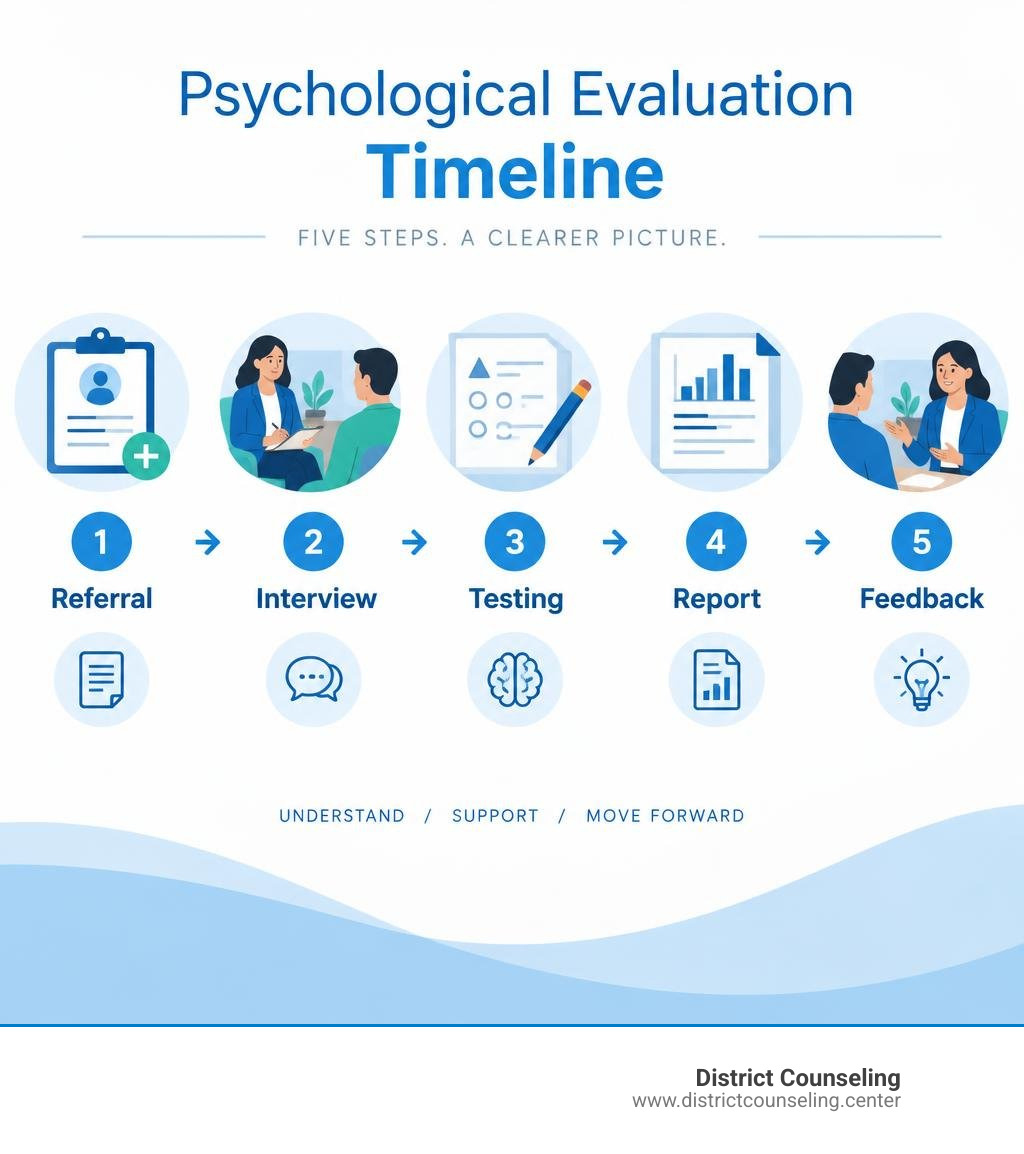
What Is a Psychological Evaluation and How Does It Work?
When people hear the phrase testing and assessment, they often picture pop quizzes or inkblots. In reality, a psychological evaluation works much like comprehensive medical diagnostic testing. When you experience persistent physical fatigue or chest discomfort, a physician does not simply guess the cause—they order blood panels, EKGs, or imaging scans to gather objective physiological data.
In mental healthcare, standardized instruments, clinical interviews, and behavioral observations serve that exact diagnostic purpose. Psychological evaluations help clinicians look beneath surface-level symptoms to understand cognitive mechanics, emotional processing, and neurological functioning.
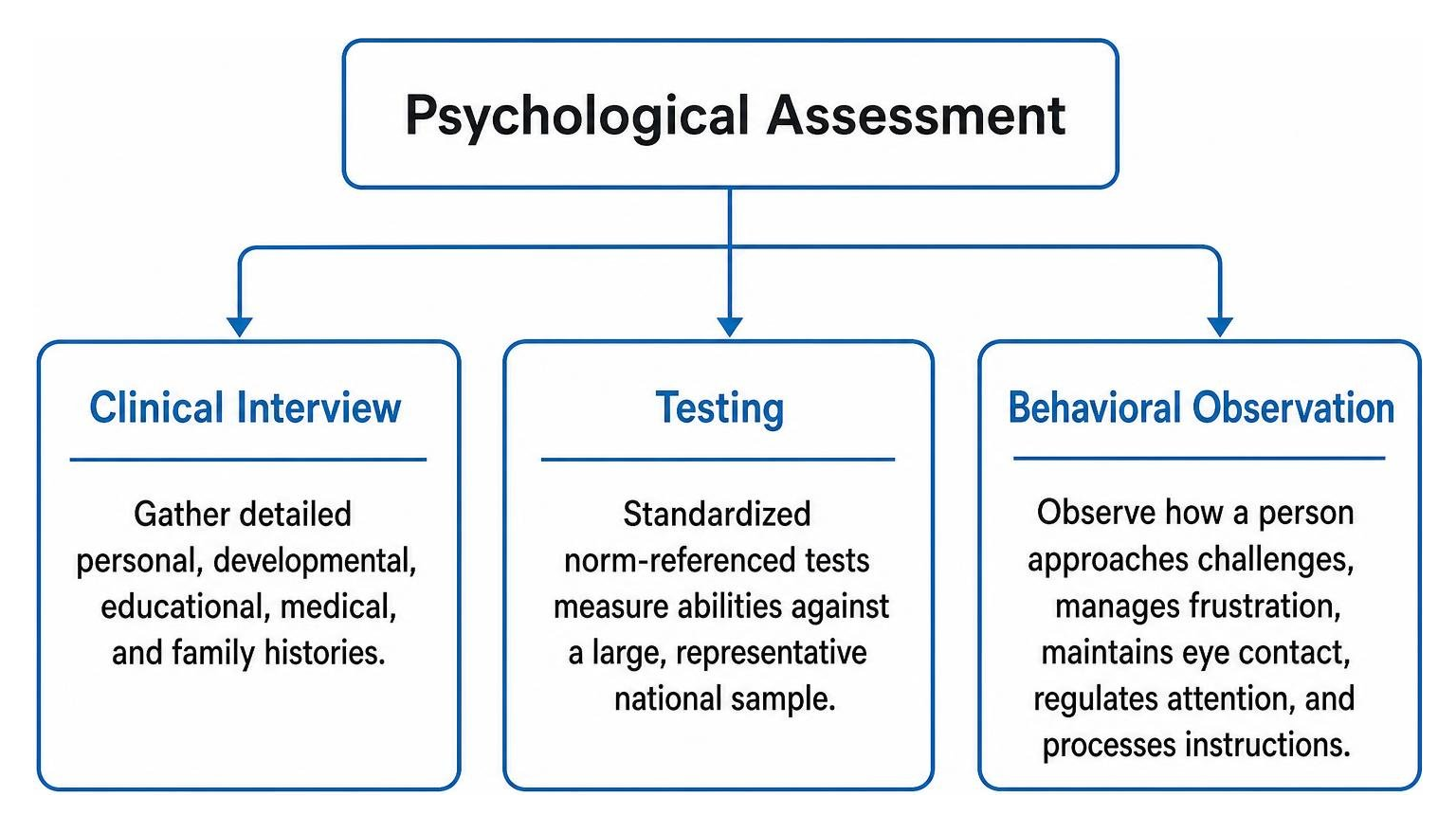
A formal evaluation combines multiple data streams into a cohesive diagnostic picture:
- Clinical Interviews: Evaluators gather detailed personal, developmental, educational, medical, and family histories.
- Standardized Norm-Referenced Tests: Structured tasks, questionnaires, and problem-solving batteries measure abilities against a large, representative national sample.
- Behavioral Observations: Clinicians observe how a person approaches challenges, manages frustration, maintains eye contact, regulates attention, and processes instructions.
- Collateral Records: Reviewing prior medical records, report cards, historical therapy notes, or workplace evaluations provides longitudinal context.
As outlined in formal clinical resources like the American Psychological Association’s guidance on understanding psychological testing and assessment, testing is not a one-size-fits-all battery. Instead, it is an individualized investigative process tailored to answer specific referral questions.
Psychological Testing and Clinical Diagnosis
A key goal of psychological testing is establishing an accurate differential diagnosis. Many mental health conditions share overlapping external symptoms. For example, a child who cannot sit still and struggles to complete schoolwork might have Attention-Deficit/Hyperactivity Disorder (ADHD), an underlying learning disability such as dyslexia, sensory processing challenges, or generalized anxiety.
Similarly, an adult experiencing memory lapses and concentration issues at work could be navigating major depressive disorder, early cognitive decline, burnout, or the neurological sequelae of an undiagnosed concussion.
By mapping an individual’s cognitive profile—such as verbal comprehension, perceptual reasoning, working memory, and processing speed—evaluators isolate the root causes of distress. Rather than treating outward behaviors blindly, testing illuminates symptom etiology, ensuring targeted therapeutic, medical, or educational interventions.
Who Administers Testing and Necessary Professional Qualifications
Psychological evaluations require advanced training in psychometric theory, test administration, statistical interpretation, differential diagnosis, and ethical test security. These assessments are administered, scored, and interpreted by licensed clinical psychologists, licensed psychological associates under supervision, or qualified mental health specialists with formal assessment credentials.
Evaluating clinicians must know how to maintain standardized testing conditions, control for cultural and linguistic nuances, and spot factors that could invalidate results—such as acute anxiety, test fatigue, or poor effort. Above all, qualified evaluators use clinical judgment to synthesize numerical scores with human life histories.
Types of Specialized Assessments and Clinical Use Cases
Psychological evaluations are applied across many settings, from schools and clinics to courtrooms.
ADHD Evaluation
Attention-Deficit/Hyperactivity Disorder can look very different from one person to the next. In young children, it may present as physical hyperactivity; in high-achieving teens or adults, it often shows up as internal restlessness, chronic procrastination, emotional dysregulation, and executive dysfunction.
At District Counseling, a specialized ADHD evaluation does not rely on a quick questionnaire. Instead, it involves a multi-informant approach across home, work, or school environments. Clinicians use continuous performance tests, working memory tasks, and standardized behavioral rating scales completed by spouses, parents, or teachers to assess functional impairment across daily routines.
For Texas residents seeking local appointments, we offer comprehensive ADHD evaluations in Austin and ADHD evaluations in Fort Worth, as well as targeted child-and-family testing through our Tree House ADHD psychological evaluation program. Families seeking care can also explore our ADHD evaluation for children, teens and adults in Texas or our dedicated Spanish ADHD evaluation services.
Developmental and Immigration Assessments
Autism evaluations require specialized clinical protocols. Our clinicians use evidence-based instruments like the Autism Diagnostic Observation Schedule (ADOS-2) alongside developmental interviews to evaluate social communication, repetitive behaviors, and sensory sensitivities.
We deliver comprehensive autism testing for all age ranges, including regional care such as autism testing in Fort Worth, autism testing in Austin, specialized care for adults via adult autism testing in Katy and adult autism testing in Cypress, pediatric assessments at our Tree House autism psychological evaluation clinic, and bilingual care through evaluación de autismo en español.
Evaluations also serve vital roles in legal and civic matters:
- Immigration Hardship Evaluations: Detailed mental health assessments document extreme hardship, trauma, or persecution for extreme hardship waivers, VAWA, U-Visas, and Asylum claims. Explore our dedicated clinic options including psychological evaluations for immigration in Houston, Austin immigration evaluations, Katy immigration evaluations, Cypress, Fort Worth, Pearland, Spring Branch, Sugar Land, Missouri City, and Tree House, or read our educational guides on the importance of immigration psychological evaluations and psychological evaluations for immigration: a guide. We also provide evaluación psicológica para la inmigración en español.
- Forensic and Court-Ordered Evaluations: Legal proceedings often require objective insights. We conduct Greater Heights forensic mental health evaluations, immigration forensic mental health evaluations, criminal recidivism evaluations, child custody evaluations, and court-ordered mental health evaluations.
- Substance Abuse & Workplace Safety: For safety-sensitive transportation roles and legal compliance, we provide DOT SAP evaluations, Greater Heights substance abuse evaluations, and resources on substance abuse evaluation requirements and demystifying drug abuse evaluations.
For complex neurological cases, you can read our guide on navigating neuropsychological evaluations from Katy to Pasadena.
Understanding Test Scores and Score Interpretation
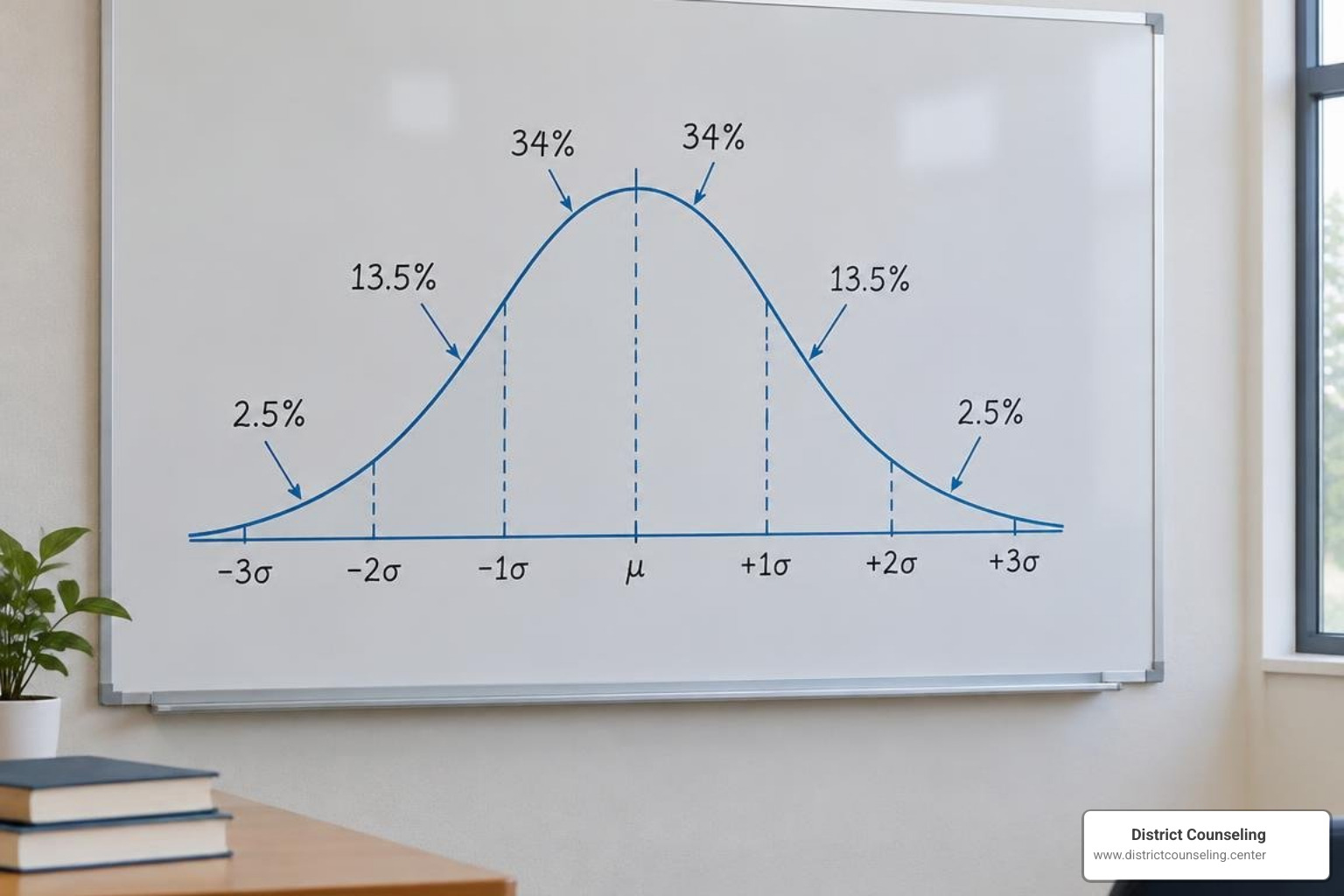
Reviewing a psychological evaluation report filled with psychometric data can feel like reading a foreign language. Evaluators translate raw test performance—such as the exact number of correct answers on a subtest—into standardized metrics that follow a normal bell curve.
Norm-Referenced vs. Criterion-Referenced Scoring
Understanding the distinction between norm-referenced and criterion-referenced scores is essential:
- Norm-Referenced Scores: These compare an individual’s performance directly against a representative national sample of peers of the same chronological age or educational level. Intelligence tests (such as the Wechsler scales: WPPSI, WISC, WAIS) and academic batteries (such as the Woodcock-Johnson) are norm-referenced. Standard scores commonly feature a mean of 100 and a standard deviation of 15.
- Criterion-Referenced Scores: These measure performance against an absolute standard or specific curriculum mastery level, regardless of how other test-takers perform (for example, whether a student can add fractions with 80% accuracy).
On standardized norm-referenced scales:
- A standard score of 100 corresponds to the 50th percentile rank (dead center average).
- A standard score of 85 corresponds to the 16th percentile rank (-1 standard deviation).
- A standard score of 115 corresponds to the 84th percentile rank (+1 standard deviation).
- Approximately two-thirds (68%) of all children score between standard scores of 85 and 115.
- One half of all children score between standard scores of 90 and 110, which represents the core “Average” range.
- Individual subtests generally use scaled scores with a mean of 10 and a standard deviation of 3, where a score of 10 represents the 50th percentile rank.
Interpreting Score Discrepancies and Grade Equivalents
A single Full-Scale IQ (FSIQ) number does not always tell the whole story. When broad index scores differ significantly, an overall composite can be misleading.
For instance, if a student demonstrates a high Verbal Comprehension Index (VCI) alongside a significantly suppressed Processing Speed Index (PSI) or Perceptual Reasoning Index (PRI), combining them masks both their high verbal gifts and their underlying processing bottleneck.
Clinical research shows that an extreme 35-point discrepancy between Verbal Comprehension and Perceptual Reasoning indices occurs naturally in only 0.8% of the general school-aged population.
Grade and age equivalents must also be interpreted carefully. If an evaluation shows that a 10th-grade student with a Full-Scale IQ of 68 scores at a grade equivalent of 2.4 in reading and 2.7 in math (the 0.2 percentile rank), this does not mean the teenager thinks like a second grader.
Rather, it indicates that their foundational decoding and calculation skills align with the raw performance of an average second grader in their fourth month of school. Advanced assessment batteries also utilize metrics like the Relative Proficiency Index (RPI) from the Woodcock-Johnson series to predict how efficiently a person will complete academic or vocational tasks in real-world environments.
For a clinical deep dive into scoring manuals and interpretation strategies, professionals often consult resources like the Desk Reference To Assist With Interpretation of Psychological Evaluations.
Navigating the Testing Process: Preparation and Administration
Knowing what to expect during an assessment helps alleviate nervousness and ensures valid, reliable results.

Preparing for Your Psychological Evaluation
You cannot “cram” or study for a psychological evaluation. In fact, attempting to practice psychological test items or look up answers online will backfire—it invalidates the standardized test norms and prevents the clinician from identifying where support is needed.
To prepare for your appointment:
- Rest Well: Get a full night of sleep prior to your testing session.
- Eat Well and Stay Hydrated: Cognitive testing requires mental stamina; eat a nutritious meal beforehand and bring snacks.
- Take Prescribed Medications as Usual: Unless specifically instructed otherwise by your evaluator, adhere to your normal medication routine.
- Bring Corrective Devices: Remember your eyeglasses, contacts, hearing aids, or other assistive tools.
- Gather Records: Assemble relevant medical histories, previous psychiatric notes, individualized education programs (IEPs), 504 plans, or past evaluations.
- Adopt an Open Mindset: Approach the evaluation simply as an opportunity to understand your unique cognitive and emotional profile.
Test Accommodations and Modifications
During administration, evaluators must carefully balance testing accommodations and test modifications:
- Testing Accommodations: Adjustments that eliminate secondary disability barriers without changing what the test measures. Examples include providing large-print text for visual impairments, scheduling sensory breaks for an autistic client, or using quiet, low-distraction rooms for an individual with ADHD. Accommodations preserve score validity because the core test construct remains unchanged.
- Test Modifications: Alterations that fundamentally change the underlying construct being measured (such as reading a reading comprehension test aloud to an examinee). While modifications may be clinically informative, they invalidate standard score comparisons against national norm groups and must be explicitly documented in the written report.
From Assessment to Intervention: Reports and Treatment Planning
A psychological evaluation is only as valuable as the real-world clarity and change it creates. Numbers on a page are transformed into actionable interventions through the written evaluation report.
Key Components of a Psychological Evaluation Report
A comprehensive, professional psychological report includes:
- Reason for Referral: The specific diagnostic or educational questions prompting the evaluation.
- Relevant History: A detailed developmental, educational, vocational, medical, psychiatric, and family background review.
- Behavioral Observations: Objective descriptions of demeanor, test engagement, speech, motor behavior, attention span, and frustration tolerance during testing.
- Assessment Instruments Administered: A full listing of all standardized batteries, rating scales, and clinical tools used.
- Test Results and Clinical Interpretation: Clear breakdowns of cognitive, academic, neuropsychological, and personality data.
- Diagnostic Impressions: Formal DSM-5 diagnoses that match the psychometric and clinical findings.
- Functional Limitations: A description of how diagnoses affect everyday life, often structured around clinical frameworks such as the World Health Organization Disability Assessment Schedule (WHODAS 2.0).
- Actionable Recommendations: Evidence-based accommodations, therapeutic interventions, and vocational strategies.
Translating Clinical Findings into Actionable Treatment Plans
With clear diagnostic findings in hand, your care team can build a targeted, effective treatment plan:
- Evidence-Based Psychotherapy: Recommending specialized modalities such as Cognitive Behavioral Therapy (CBT) for depression, or Eye Movement Desensitization and Reprocessing (EMDR) and trauma care for Post-Traumatic Stress Disorder.
- Academic and Workplace Accommodations: Structuring formal 504 Plans or Individualized Education Programs (IEPs)—such as extended time, quiet testing environments, structured visual checklists, and oral instructions.
- Collaborative Care: Partnering with psychiatrists or primary care physicians for medication management, as well as speech-language pathologists, occupational therapists, and counselors.
If you are located in Northwest Houston and seeking in-person counseling or therapy following an evaluation, our clinicians provide dedicated local care at Copperfield Counseling & Therapy.
Frequently Asked Questions About Psychological Evaluations
How long does a full assessment usually take?
A full psychological evaluation is comprehensive. It typically includes a 60- to 90-minute clinical intake interview, 2 to 6 hours of direct face-to-face testing (often split across sessions to prevent fatigue), several hours of clinician scoring and synthesis, and a 45- to 60-minute feedback conference to review the final written report.
Can you study or practice for psychological tests?
No. Standardized assessments are normed on individuals who have never seen the items before. Practicing test items causes artificial “practice effects,” skewing your scores, invalidating the results, and making it harder for your clinician to secure the accommodations or therapies you need.
What is the difference between a psychological evaluation and a psychiatric assessment?
A psychiatric assessment is conducted by a medical doctor (psychiatrist) or psychiatric nurse practitioner, focusing primarily on diagnosing mental health conditions through clinical interviews to determine whether psychiatric medication is appropriate. A psychological evaluation is conducted by a psychologist or specialized evaluator who utilizes extensive psychometric testing batteries, cognitive measures, and objective rating scales to map cognitive profiles and emotional functioning.
What is the difference between testing accommodations and modifications?
Testing accommodations (like extra time, visual aids, or frequent movement breaks) remove physical or sensory barriers without changing what the test is measuring, keeping standard scores valid. Modifications (like reading a reading test aloud) fundamentally change the skill being tested, which invalidates direct comparisons to standardized norm groups.
Conclusion: Empowering Your Mental Health Journey
Navigating cognitive challenges, unexplained emotional distress, or specialized legal requirements can feel overwhelming. A professional psychological evaluation removes the guesswork by delivering objective clarity, validating your daily experiences, and mapping out a personalized path forward.
At District Counseling, we provide compassionate, authentic care across Texas. Whether you need child neurodevelopmental testing, adult ADHD diagnostics, or specialized psychological evaluations for immigration, our team is dedicated to supporting you. We serve individuals, couples, and families across our local offices in Houston, Austin, Fort Worth, Katy, Cypress, Pearland, Spring Branch, Sugar Land, Missouri City, and surrounding communities.
Take the first step toward clarity and personalized care—reach out to our clinical team today to schedule your comprehensive evaluation.
Visited 1 times, 1 visit(s) today


Similar Posts

Francisco Ortiz
November 6, 2026
An Essential Guide to the Psychological Evaluation Process
Learn how a psychological evaluation provides diagnostic clarity and a roadmap for mental health treatment....

Francisco Ortiz
November 4, 2026
Best Counseling Services in Cypress: Find Local Support Now
Find compassionate counseling in Cypress for individuals, couples, teens, and families. Start your wellness journey with expert local support today....

Francisco Ortiz
November 2, 2026
A Comprehensive Guide to Finding a Houston Therapist
Find a Houston therapist for anxiety, trauma, or couples counseling. Compare costs, insurance, and specialized care in this local guide....

Francisco Ortiz
October 30, 2026
How to Become a Substance Abuse Professional and Help Save Careers
Learn how to become a substance abuse professional and help save careers with this step-by-step guide to DOT SAP qualification and certification....

Francisco Ortiz
October 28, 2026
Demystifying the Evaluation for Immigration Process
Learn how a professional evaluation for immigration supports asylum, waivers, and visa cases with expert forensic assessments....

Francisco Ortiz
October 26, 2026
The Complete Guide to Emotional Exhaustion
Learn the signs, causes, and recovery paths for emotional exhaustion—plus proven strategies to reclaim your energy and well-being....

Francisco Ortiz
October 23, 2026
Demystifying the Court-Ordered Mental Health Evaluation Process
Learn what to expect in a court ordered mental health evaluation, including legal criteria, costs, and outcomes....

Francisco Ortiz
October 21, 2026
Finding the Right EMDR Specialist in Cypress Texas for Real Healing
Find a qualified EMDR specialist in Cypress Texas for real trauma healing and lasting anxiety relief....

Francisco Ortiz
October 19, 2026
Why therapy for caregiver exhaustion is a necessity not a luxury
Find relief with exhaustion therapy for caregivers. Learn how clinical support heals burnout and restores your well-being....

Francisco Ortiz
October 16, 2026
Navigating Neuropsychological Evaluations from Katy to Pasadena
Learn how an ADHD evaluation for Houston teens works, from medication management to school accommodations and 504 plans....


