
The Complete Guide to Emotional Exhaustion
What Is Emotional Exhaustion and How Does It Develop?
Emotional exhaustion is a state of feeling psychologically depleted, drained, and completely overwhelmed by ongoing personal or occupational stressors. When you live in a sustained state of high demand without adequate time or resources to recover, your psychological reserves run dry. You might describe it as running on empty, feeling like a sponge that has been wrung out completely, or carrying an invisible mental weight that makes even simple decisions feel insurmountable.
There is a fundamental difference between acute physical tiredness and deep emotional depletion:
- Physical tiredness is a bodily state that follows strenuous exertion, long hours, or poor sleep. It responds predictably to physical rest: after a solid night of sleep or a restful weekend, your physical stamina rebounds.
- Emotional exhaustion is a systemic psychological and neurobiological depletion. It does not resolve with a nap or a day off because the underlying emotional load remains active. Even after sleeping for nine hours, someone suffering from emotional depletion wakes up with a pervasive sense of dread, mental heaviness, and apathy.
In organizational psychology, emotional exhaustion is recognized as the foundational first dimension of burnout. Developed by researchers Christina Maslach and Susan E. Jackson, the three-component model conceptualizes burnout as consisting of:
- Emotional Exhaustion: The initial depletion of psychological resources, leaving you incapable of giving more of yourself at an emotional level.
- Depersonalization (Cynicism): A defensive, detached, or callous attitude toward clients, colleagues, or loved ones as an attempt to shield yourself from further emotional strain.
- Reduced Personal Accomplishment: A profound sense of inadequacy, loss of self-efficacy, and feeling that your efforts no longer make any meaningful difference.
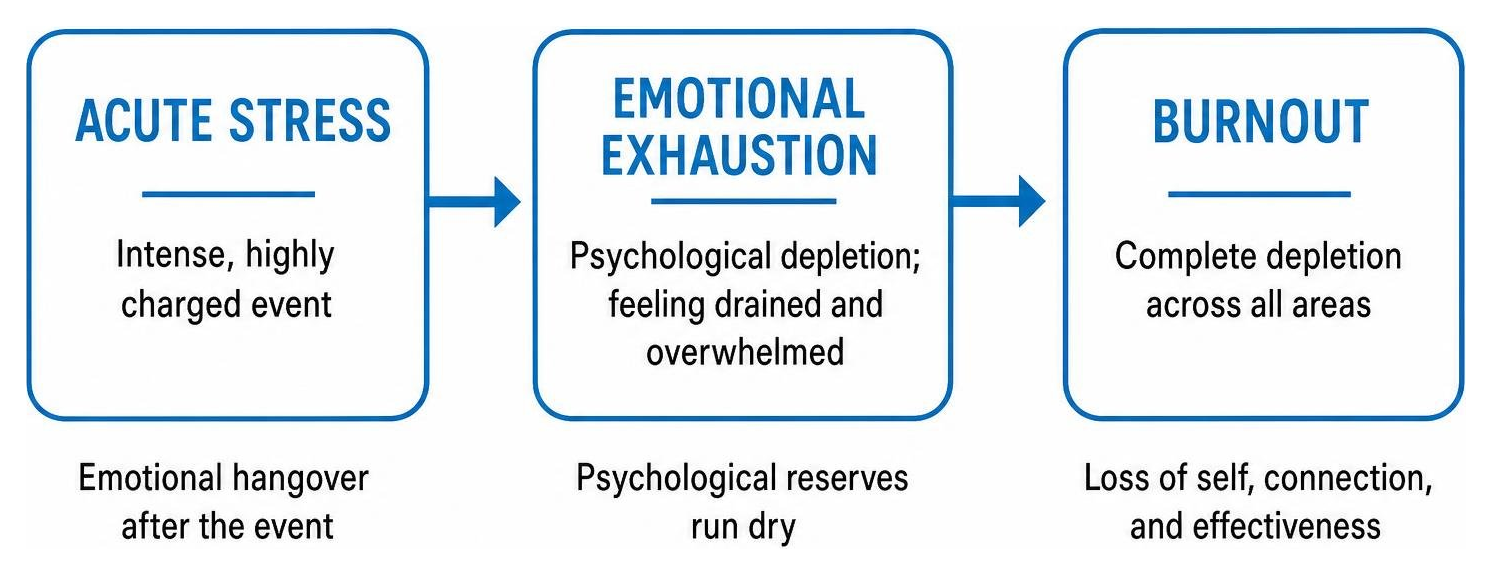
Many people first encounter this depletion through what clinicians describe as an “emotional hangover.” This occurs after an intense, highly charged event—such as navigating a high-stakes divorce, caring for a sick relative through a medical crisis, or completing an excruciating corporate audit. In an emotional hangover, your nervous system remains stuck in a heightened state of stress arousal for days or weeks after the event has passed.
When these high-intensity events become continuous rather than episodic, the Conservation of Resources (COR) theory helps explain what happens next. Developed by psychologist Stevan Hobfoll, COR theory posits that individuals strive to obtain, retain, and protect their valued resources—including time, energy, self-esteem, and social support. When those resources are persistently threatened or drained without replenishment, you enter a “loss spiral.” In a loss spiral, coping with the initial exhaustion drains whatever remaining energy you have, making you increasingly vulnerable to further stress, until emotional exhaustion settles in as your daily baseline.
How Does Emotional Exhaustion Differ From Clinical Depression and Fatigue?
Because emotional exhaustion involves lethargy, low mood, and cognitive clouding, it is frequently confused with Major Depressive Disorder (MDD) or Chronic Fatigue Syndrome (CFS/ME). While these conditions frequently overlap and co-occur, understanding their differences is critical for finding the right treatment path.
| Dimension | Emotional Exhaustion | Physical Fatigue | Major Depressive Disorder (MDD) |
|---|---|---|---|
| Primary Trigger | Chronic, unmanaged emotional, relational, or workplace stress | Acute physical exertion, poor sleep, or temporary illness | Complex interplay of biological, genetic, cognitive, and environmental factors |
| Response to Rest | Minimal short-term response; requires boundary changes and psychological restoration | Rapid improvement after adequate sleep and physical downtime | No direct improvement from rest alone; persistent across contexts |
| Pervasiveness | Often context-dependent initially (e.g., improves during extended vacations) | Physical, temporary, and non-contextual | Pervasive across all life areas, including leisure and relationships |
| Sense of Self | Feels overwhelmed, depleted, and powerless against external demands | Physically tired, but sense of self-worth and motivation remain intact | Characterized by persistent feelings of worthlessness, excessive guilt, and anhedonia |
| Core Relief Mechanism | Restoring resources, nervous system regulation, setting boundaries, therapy | Sleep, nutrition, hydration, and physical relaxation | Comprehensive psychotherapy, lifestyle interventions, and possible medication |
A hallmark feature of emotional exhaustion is cognitive disruption. People commonly experience intense “brain fog,” executive dysfunction, forgetfulness, and an inability to make minor daily decisions—like choosing what to eat for dinner. These cognitive stalls happen because the prefrontal cortex becomes dysregulated under chronic stress. If you are experiencing these warning signs, learning how to identify the 10 warning signs you’re emotionally exhausted can help you take action before total shutdown occurs.
What Are the Primary Signs and Symptoms of Emotional Exhaustion?
Emotional exhaustion rarely happens overnight. It is a slow, creeping process that gradually chips away at your resilience. As explored in comprehensive overviews of emotional exhaustion and burnout dimensions, the symptoms span emotional, somatic, and behavioral domains, creating a compounding cycle that affects every corner of your life.
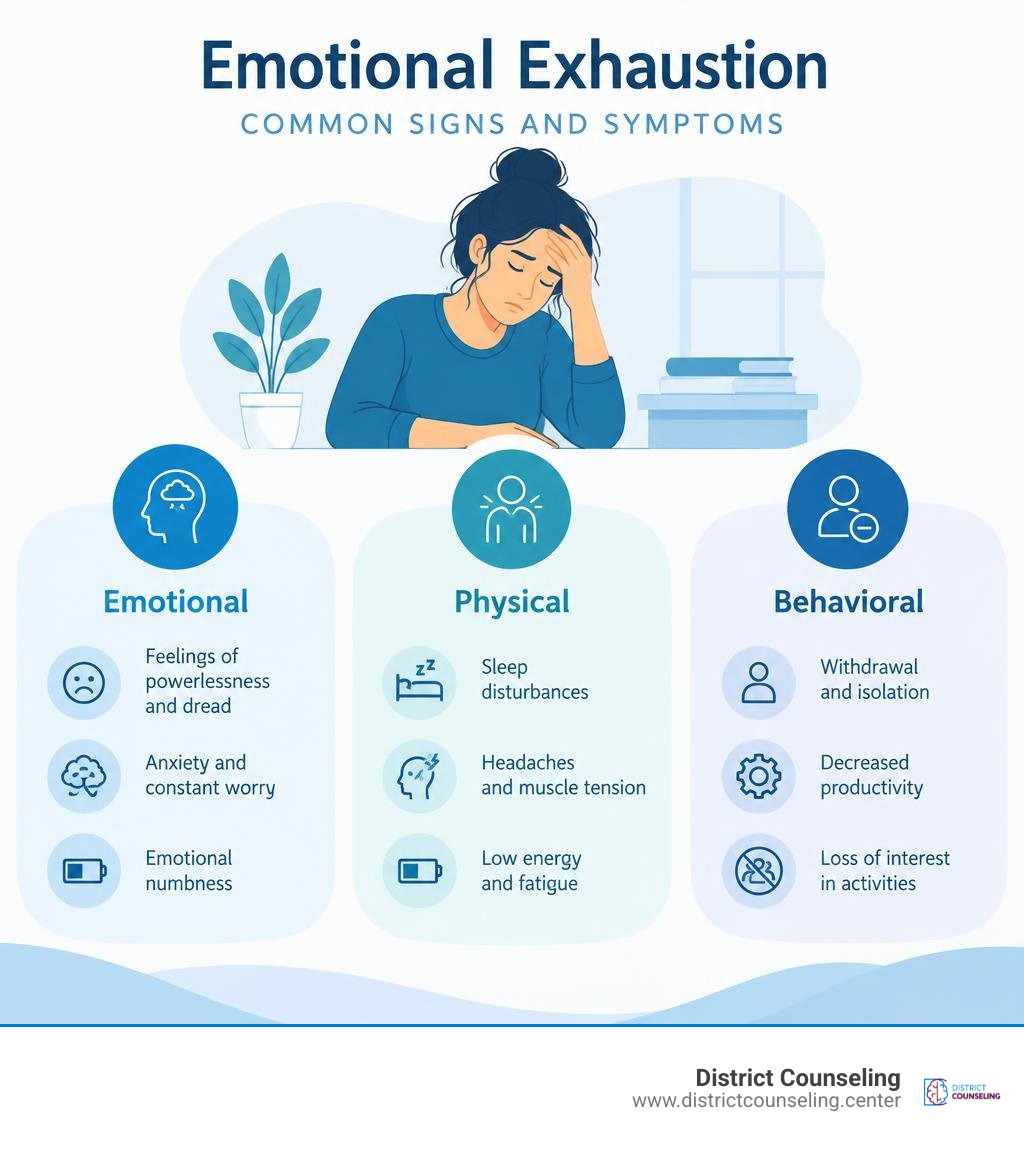
Emotional and Cognitive Symptoms
When your emotional reserves are drained, your internal emotional regulation breaks down:
- Feelings of Powerlessness and Dread: A persistent sensation of being trapped in your current circumstances, accompanied by morning dread before the day begins.
- Emotional Numbness and Apathy: You may find that you no longer feel joy, excitement, or deep sadness—just a flat, mechanical indifference to events around you.
- Irritability and Short Temper: Minor inconveniences (such as a slow computer, traffic on I-10, or an unexpected email) trigger disproportionate frustration or anger.
- Cynicism and Detachment: Developing a negative, jaded perspective toward work, family obligations, or colleagues as a defense mechanism.
- Executive Dysfunction and Brain Fog: Difficulty concentrating, frequent memory lapses, struggling to organize thoughts, and prolonged procrastination on simple tasks.
- Loss of Intrinsic Motivation: The internal drive that once fueled your passions, hobbies, or career ambitions evaporates, leaving only mechanical obligation.
Physical and Somatic Manifestations
Chronic psychological strain places the autonomic nervous system in constant distress, producing measurable physical symptoms:
- Non-Restorative Sleep: Waking up just as exhausted as when you went to bed, often accompanied by sleep-onset insomnia or waking up at 3:00 AM with racing thoughts.
- Somatic Pain and Tension: Recurring tension headaches, tight jaws from teeth grinding, and chronic tightness across the neck, shoulders, and lower back.
- Gastrointestinal Distress: Chronic stomach aches, acid reflux, irritable bowel flare-ups, and nausea triggered by nervous system dysregulation.
- Appetite and Metabolic Shifts: Significant changes in eating habits, ranging from losing all interest in food to intense cravings for simple carbohydrates and comfort foods.
- Frequent Infections: Chronic stress suppresses the immune response, making you vulnerable to frequent colds, sinus infections, and prolonged recovery times.
Behavioral and Interpersonal Changes
As internal resources deplete, observable behaviors shift as you try to manage the deficit:
- Social Withdrawal: Canceling plans, avoiding phone calls, and pulling away from friends and family because interpersonal interaction feels like an unbearable chore.
- Presenteeism: Showing up physically to work or family gatherings while being completely mentally and emotionally checked out.
- Performance Drops: Missing deadlines, making uncharacteristic errors, and taking twice as long to complete standard tasks.
- Maladaptive Coping Mechanisms: Increasing reliance on high doses of caffeine to get through the day, alcohol to unwind at night, or compulsive digital scrolling to escape reality.
What Causes Emotional Exhaustion and Who Is Most at Risk?

Emotional exhaustion does not stem from personal weakness; it is the natural psychological consequence of an unsustainable imbalance between external demands and internal resources. Systematic reviews on workplace triggers and emotional fatigue demonstrate that prolonged exposure to high-stress environments without adequate recovery time is the leading driver of systemic depletion (Diogo & S, 2025). For a broader look at this dynamic, see this systematic review on emotional fatigue and workplace triggers.
High-Pressure Occupations and Emotional Labor
Certain professions demand intense “emotional labor”—the requirement to display specific, organizationally sanctioned emotions regardless of how you genuinely feel:
- Healthcare and Mental Health Workers: Doctors, nurses, counselors, and emergency responders regularly navigate secondary traumatic stress, high-stakes decisions, and compassion fatigue.
- Educators and School Personnel: Teachers frequently absorb the emotional distress of their students while managing heavy workloads and limited institutional support.
- Service and Hospitality Roles: Frontline workers who must maintain mandatory cheerfulness (“service with a smile”) experience cognitive dissonance between their true emotional state and outward display rules.
- Corporate Professionals: High-demand environments characterized by unclear expectations, lack of job autonomy, micromanagement, and constant connectivity through email create an ongoing state of hyper-vigilance. Learning to recognize workplace stress and burnout before it leads to collapse is essential for long-term career sustainability.
Personal, Family, and Caregiver Strain
Workplace stress is only one piece of the puzzle. Personal and domestic demands frequently drain emotional reserves just as quickly:
- Informal Caregiving: Caring for an aging parent with cognitive decline, managing a partner’s chronic illness, or supporting a child with special needs creates relentless, around-the-clock emotional labor.
- Financial and Relational Stress: Long-term financial insecurity, high-conflict partnerships, going through a contentious divorce, or living without a local support system.
- Neurodivergence in a Neurotypical World: Autistic individuals and those with ADHD often spend substantial energy “masking” their traits to navigate daily environments, leading to neurodivergent burnout. Understanding how to support ADHD and neurodivergent burnout recovery requires tailored approaches that account for sensory and executive functioning needs.
Psychological Risk Factors
Individual cognitive patterns can amplify vulnerability to emotional depletion:
- Self-Critical Perfectionism: Tying your self-worth exclusively to flawless output and viewing rest as laziness.
- Chronic People-Pleasing: An inability to set or hold boundaries due to fear of conflict, disapproval, or abandonment.
- Imposter Phenomenon: An underlying belief that you must overwork and over-deliver to avoid being exposed as inadequate.
What Are the Long-Term Consequences of Unresolved Emotional Exhaustion?
Allowing emotional exhaustion to go unaddressed does not just result in career dissatisfaction—it reshapes your neurobiology and cardiovascular health. Longitudinal studies published in clinical and occupational research indicate that chronic emotional exhaustion leads to measurable structural and hormonal disruptions over time (Cruz-Soto et al., 2025).
When stress becomes chronic, the hypothalamic-pituitary-adrenal (HPA) axis initially floods the body with cortisol and adrenaline (hypercortisolemia). Over months of relentless strain, the HPA axis can downregulate, leading to hypocortisolemia (abnormally low cortisol output). This hormonal crash results in profound systemic inflammation, severe lethargy, and an inability to mount a normal physiological response to daily stressors.
Physical Health Deterioration
The biological impact of long-term emotional exhaustion shows up across multiple body systems:
- Cardiovascular Strain: Chronic sympathetic nervous system activation contributes to arterial stiffness, sustained hypertension, and an elevated long-term risk of cardiovascular events.
- Metabolic Disruption: Chronic cortisol dysregulation interferes with glucose metabolism and insulin sensitivity, increasing susceptibility to metabolic syndrome and central adiposity.
- Aggravated Chronic Pain: Elevated baseline inflammation lowers your pain threshold, worsening conditions like fibromyalgia, migraines, and chronic lower back pain.
Relational and Career Impact
When your emotional bank account is overdrawn, your personal relationships and career suffer:
- Erosion of Empathy: You lose the capacity to be emotionally present for your spouse, children, or friends, which can cause strain, misunderstandings, and emotional distance at home.
- Career Disengagement and Turnover: What begins as missed deadlines can turn into complete job detachment, chronic absenteeism, and impulsive resignations. Addressing the silent overload of workplace stress early on helps protect both your health and your professional goals.
How Can You Recover From Emotional Exhaustion Through Daily Self-Care?

Recovering from emotional exhaustion requires intentional, daily practices that help reset your nervous system. Evidence-based strategies for managing emotional exhaustion symptoms focus on rebuilding your physical baseline, protecting your emotional boundaries, and creating daily space for your nervous system to downshift.
Restoring Physiological Resilience
You cannot resolve psychological exhaustion without addressing your body’s basic physiological needs:
- Prioritize 7 to 9 Hours of Sleep: Sleep is when your brain clears metabolic waste and regulates emotional processing. Support this by maintaining consistent sleep and wake times, keeping your bedroom cool and dark, and putting away digital screens at least 60 minutes before bed.
- Meet Aerobic Activity Guidelines: The Centers for Disease Control and Prevention (CDC) recommends that adults aim for at least 150 minutes of moderate-intensity aerobic activity per week (such as brisk walking, cycling, or swimming). Regular moderate movement helps clear circulating stress hormones, raises endorphins, and improves sleep quality without overtaxing an already depleted system.
- Nourish Your Nervous System: Eat balanced, regular meals containing complex carbohydrates, lean proteins, and healthy fats to stabilize blood sugar. Limit heavy caffeine consumption, which can mimic anxiety and keep your adrenal glands in an overstimulated state.
Establishing Psychological and Relational Boundaries
To stop the loss spiral, you have to close the leaks in your daily energy reserves:
- Identify Non-Negotiable Boundaries: Determine which commitments are actively draining you and establish clear limits. This might mean not checking work emails after 6:30 PM, declining non-essential social invites, or stepping back from volunteer committees.
- Practice Saying “No” Cleanly: Give yourself permission to decline requests without offering elaborate excuses. A clear “I don’t have the capacity to take that on right now” is a complete, healthy boundary.
- Build Micro-Recovery Breaks Into Your Day: Instead of powering through hours of uninterrupted work, take five-minute breaks between meetings or tasks to step outside, stretch, or practice slow breathing. Moving beyond simple perks to create real balance is central to restructuring workplace wellness.
Restorative Coping Practices
Incorporate small, restorative habits into your daily routine to help calm your nervous system:
- Somatic Grounding and Box Breathing: Practice inhaling for 4 seconds, holding for 4 seconds, exhaling for 4 seconds, and holding for 4 seconds. This simple rhythm activates the parasympathetic “rest and digest” branch of your nervous system.
- Progressive Muscle Relaxation (PMR): Systematically tense and release muscle groups from your toes to your forehead to discharge stored physical tension.
- Expressive Journaling: Spend 10 minutes writing out your unfiltered thoughts and worries to get them out of your head and onto paper.
- Low-Stakes Hobbies: Engage in activities that have no performance metrics or deadlines—such as gardening, sketching, casual reading, or listening to music.
- Connect With Safe People: Spend time with friends or family members where you can be yourself without having to perform, manage their emotions, or maintain a positive facade.
What Professional Treatments and Therapies Support Recovery?
When self-care, rest, and personal boundaries are not enough to lift the exhaustion, professional mental health support provides the structure needed for deep recovery. Psychotherapy offers a safe, focused space to uncover the root causes of chronic stress and develop sustainable coping skills.
Evidence-Based Psychotherapy Modalities
Several clinical modalities are particularly effective for treating emotional exhaustion and burnout:
- Cognitive Behavioral Therapy (CBT): Helps you identify and reframe maladaptive thought patterns, such as catastrophic thinking, black-and-white beliefs, and harsh self-criticism that drive overwork.
- Eye Movement Desensitization and Reprocessing (EMDR) & Trauma-Informed Care: If your exhaustion stems from secondary traumatic stress, workplace bullying, or past adverse experiences, EMDR helps your brain reprocess stuck emotional memories, reducing nervous system reactivity.
- Acceptance and Commitment Therapy (ACT): Encourages psychological flexibility, helping you drop the struggle with difficult emotions, clarify your personal core values, and align your daily life with what matters most to you.
Specialized Counseling and Local Support
At District Counseling, we provide personalized psychotherapy tailored to your unique circumstances and challenges. Our team offers in-person care across Texas—including our counseling offices in Greater Heights, Memorial, CityCentre, Sugar Land, The Woodlands, Katy, Pearland, Cypress, Clear Lake, Austin, and Fort Worth—as well as convenient telehealth appointments statewide.
If you are feeling overwhelmed, you do not have to figure out recovery alone. Reach out to our team for compassionate depression and anxiety counseling to start rebuilding your emotional resilience.
Medical Interventions and Collaboration
It is always a good idea to consult your primary care physician to rule out any underlying physiological contributors to your fatigue. A simple blood panel can check for:
- Thyroid dysfunction (hypothyroidism)
- Iron deficiency anemia
- Vitamin D and Vitamin B12 deficiencies
- Autoimmune markers
In some cases, your doctor or psychiatrist may suggest short-term adjunctive pharmacotherapy—such as an SSRI/SNRI for co-occurring mood symptoms or a short-term sleep aid—to help stabilize your baseline while you work through psychotherapy.
Frequently Asked Questions About Emotional Exhaustion
Can emotional exhaustion be cured with a weekend of rest?
No. While a quiet weekend can help relieve acute physical tiredness, it rarely resolves chronic emotional exhaustion. Emotional depletion develops over months or years of continuous stress and nervous system activation. True recovery requires sustained lifestyle changes, consistent boundaries, emotional processing, and weeks or months of intentional resource replenishment.
Is emotional exhaustion classified as a medical diagnosis?
In the World Health Organization’s International Classification of Diseases (ICD-11), burnout is classified as an “occupational phenomenon” rather than a standalone medical illness. It is defined by three dimensions: feelings of energy depletion or exhaustion, increased mental distance or cynicism toward one’s job, and reduced professional efficacy. While not a standalone psychiatric disorder, emotional exhaustion frequently co-occurs with, or can progress into, clinical conditions like Major Depressive Disorder and Generalized Anxiety Disorder.
What is the fastest way to start recovering when feeling completely overwhelmed?
When you feel like you are at your breaking point, focus on immediate harm reduction:
- Drop non-essential tasks: Clear your calendar of optional obligations for the next 7 days.
- Set one clear boundary: Identify the single biggest drain on your energy right now and put a firm limit around it.
- Tend to your physical basics: Make sure you are drinking water, eating regular meals, and getting into bed at a consistent time.
- Reach out for support: Talk to a trusted friend or schedule an appointment with a professional counselor who can help you map out a manageable recovery plan.
What Are the Key Steps Toward Reclaiming Your Energy and Well-Being?
Emotional exhaustion is a clear signal from your mind and body that your current way of living or working is no longer sustainable. It is not a failure of will, character, or competence—it is the predictable result of carrying too much for too long without adequate support or recovery.
Reclaiming your energy starts with a few foundational steps:
- Acknowledge where you are: Name the exhaustion rather than minimizing it or trying to push through.
- Protect your physical baseline: Prioritize consistent sleep, nourishing food, and moderate daily movement.
- Establish firm boundaries: Close down the demands and relationships that consistently drain your resources.
- Seek professional guidance: Work with a therapist who can help you rebalance your nervous system and build long-term resilience.
Recovery takes time, patience, and deliberate care, but your energy, clarity, and peace of mind can be restored. Whenever you are ready to take that next step, compassionate support is here to help you move forward.
Visited 1 times, 1 visit(s) today


Similar Posts

Francisco Ortiz
October 26, 2026
The Complete Guide to Emotional Exhaustion
Learn the signs, causes, and recovery paths for emotional exhaustion—plus proven strategies to reclaim your energy and well-being....

Francisco Ortiz
October 23, 2026
Demystifying the Court-Ordered Mental Health Evaluation Process
Learn what to expect in a court ordered mental health evaluation, including legal criteria, costs, and outcomes....

Francisco Ortiz
October 21, 2026
Finding the Right EMDR Specialist in Cypress Texas for Real Healing
Find a qualified EMDR specialist in Cypress Texas for real trauma healing and lasting anxiety relief....

Francisco Ortiz
October 19, 2026
Why therapy for caregiver exhaustion is a necessity not a luxury
Find relief with exhaustion therapy for caregivers. Learn how clinical support heals burnout and restores your well-being....

Francisco Ortiz
October 16, 2026
Navigating Neuropsychological Evaluations from Katy to Pasadena
Learn how an ADHD evaluation for Houston teens works, from medication management to school accommodations and 504 plans....

Francisco Ortiz
October 14, 2026
How Texas caregivers can beat exhaustion with virtual therapy
Beat caregiver exhaustion therapy Texas caregivers trust—virtual sessions for stress, boundaries, and recovery. Start today....

Francisco Ortiz
October 12, 2026
Find Local Youth Counselor: How They Can Help Your Teen Thrive (52 characters)
Find a qualified youth counselor near me to help your teen thrive with evidence-based support for anxiety, trauma, and more....

Francisco Ortiz
October 9, 2026
Faith-Based Pastoral Counseling: A Comprehensive Guide
Discover how pastoral counseling integrates faith and psychology for holistic healing, grief, trauma, and marital support....

Francisco Ortiz
October 7, 2026
Houston Counseling Options: Find Local Help Nearby
Find affirming counseling in Houston for trauma, LGBTQ+ care, couples, and more. Explore local options and start your healing today....

Francisco Ortiz
October 5, 2026
Why every teacher needs a burnout therapy game plan
Why every teacher needs a burnout therapy game plan – Learn about burnout therapy for teachers...


