
Finding the Right EMDR Specialist in Cypress Texas for Real Healing
Choosing an EMDR Specialist in Cypress Texas for Trauma Recovery
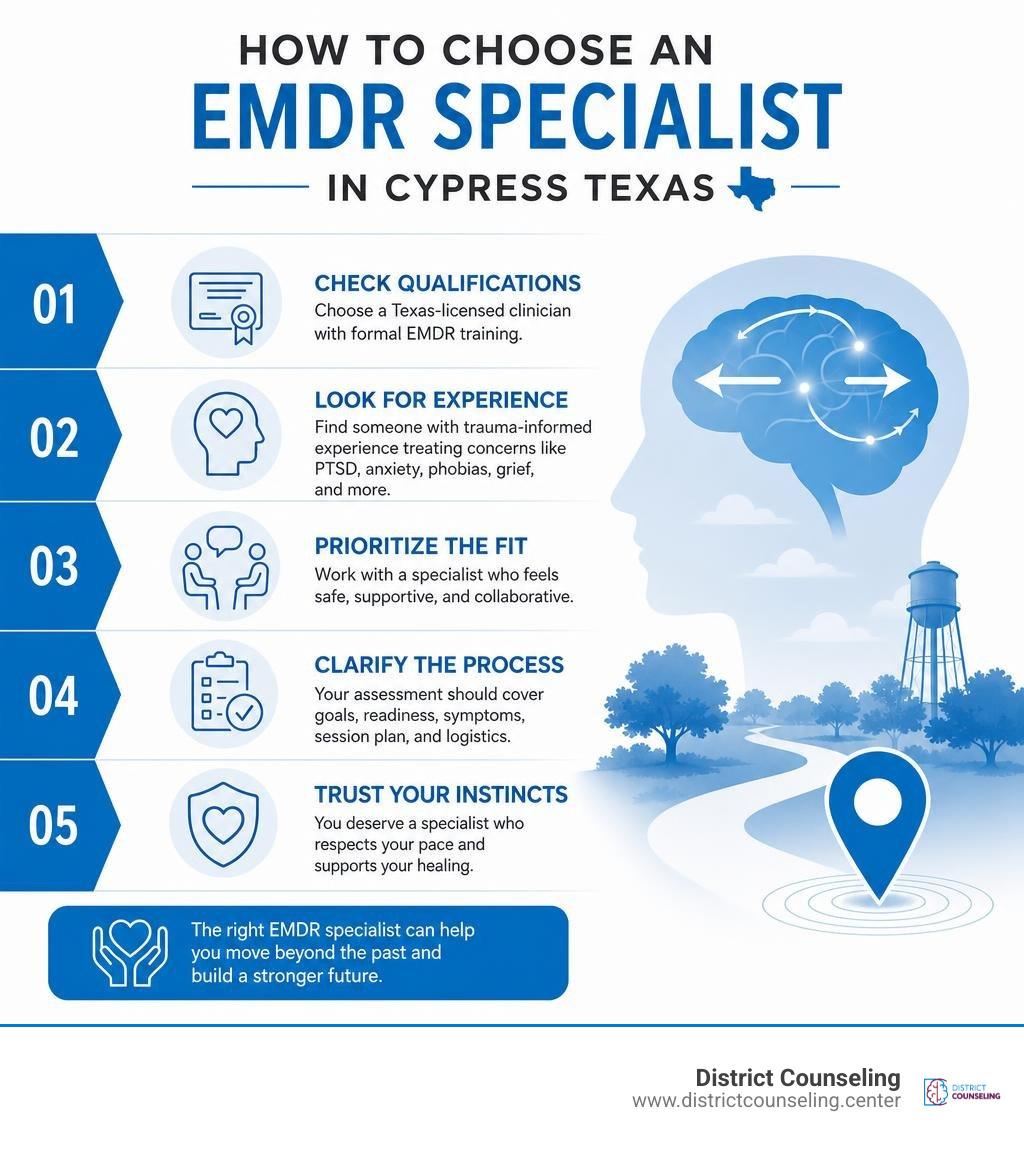
A qualified EMDR specialist Cypress Texas can help you decide whether Eye Movement Desensitization and Reprocessing is a safe, practical fit for trauma, anxiety, panic, or other distress that still affects daily life.
- What EMDR is: A structured therapy that helps the brain reprocess upsetting memories using guided bilateral stimulation, such as eye movements, taps, or sounds.
- Who it may help: Children, teens, and adults with PTSD, trauma reactions, anxiety, phobias, grief, chronic pain, or related concerns.
- What to look for locally: A Texas-licensed mental health clinician with formal EMDR training, trauma-informed experience, and a treatment approach that feels safe and collaborative.
- What comes next: An initial assessment should clarify your goals, readiness, symptoms, session plan, cost, and insurance options before memory processing begins.
EMDR is not about forcing yourself to relive every detail of the past. It is a structured method designed to reduce the emotional charge of memories that still trigger fear, shame, panic, or a strong body response.
I am Francisco Ortiz, a Licensed Professional Counselor-Supervisor with experience supporting people with trauma, mood concerns, and complex mental health needs. As an EMDR specialist Cypress Texas resource at District Counseling, I bring a trauma-informed perspective that can help you understand your options before moving into the next steps of care.
What Is EMDR Therapy and How Does It Work?
Eye Movement Desensitization and Reprocessing (EMDR) is an evidence-based psychotherapy approach designed to accelerate the brain’s natural healing capabilities. When a distressing event occurs, the brain’s ordinary information-processing system can get overwhelmed. Instead of converting the event into a peaceful past memory, the central nervous system locks the raw sights, sounds, emotions, and physical sensations into a frozen neural network. Years later, a familiar smell or sudden sound in Cypress can trigger the exact same panic, heart rate spike, or visceral fear experienced during the original event.
EMDR relies on bilateral stimulation—typically side-to-side eye movements, alternating auditory tones, or tactile hand taps—to gently unlock those trapped memories. While you maintain one foot anchored firmly in the safe present moment, your brain reaccesses the memory network. This mimics the psychological and neurological processes that happen naturally during Rapid Eye Movement (REM) sleep, enabling the brain to forge new, adaptive neural connections.
Through standard protocols like our EMDR Treatment, the treatment systematically guides clients through The Eye-Opening Truth About How EMDR Therapy Works across eight distinct phases:
- History Taking and Treatment Planning: Identifying targeted memories, current life triggers, and personal goals.
- Preparation: Establishing stabilization techniques, ground-testing coping resources, and building rapport.
- Assessment: Selecting the specific image, negative belief (e.g., “I am helpless”), desired positive belief, and physical sensations tied to a target memory.
- Desensitization: Applying bilateral stimulation sets until the memory’s emotional distress drops to neutral.
- Installation: Strengthening the positive belief (e.g., “I am safe now”) until it feels fully authentic.
- Body Scan: Checking for residual physical tension or somatic discomfort held in the body.
- Closure: Returning to full emotional equilibrium at the end of every session.
- Reevaluation: Checking progress at the start of subsequent sessions to confirm lasting integration.
How EMDR Differs from Talk Therapy
Traditional conversational talk therapy—such as Cognitive Behavioral Therapy (CBT)—primarily addresses thoughts, emotions, and behaviors from a top-down, analytical perspective. While talk therapy provides invaluable insights and tools, it often requires clients to re-explain traumatic events repeatedly, which can sometimes lead to feeling overwhelmed without necessarily resolving the underlying subconscious triggers.
By contrast, EMDR is a bottom-up, somatic, and neurobiological therapy. You do not need to share every graphic detail of your trauma aloud to achieve deep healing. Because EMDR taps directly into the brain’s innate processing mechanisms, many people experience profound emotional breakthroughs far more efficiently than with conversational methods alone. Scientific research on EMDR mechanisms confirms that bilateral stimulation alters memory consolidation, reducing both the vividness and emotional intensity of distressing recollections.
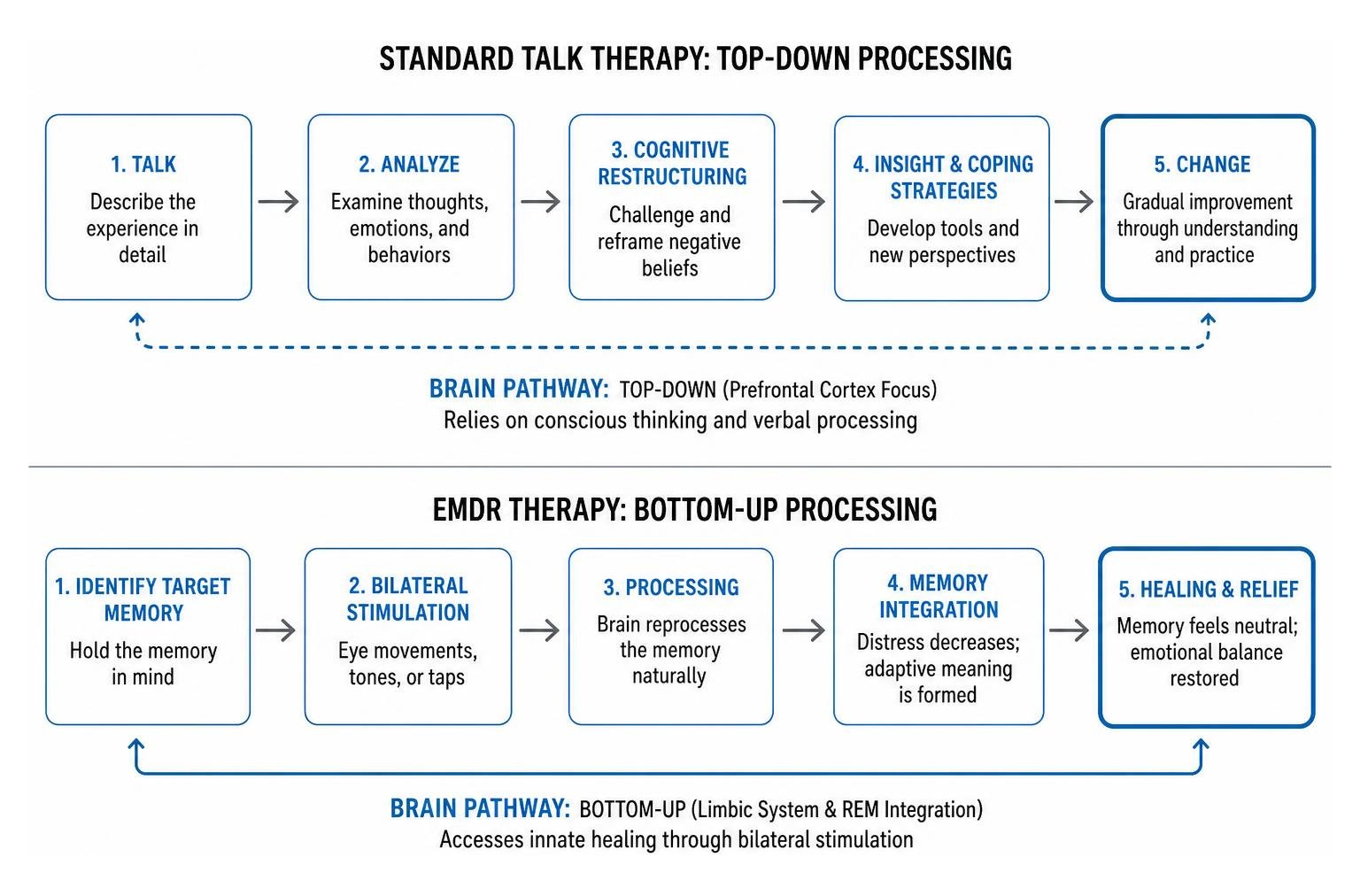
| Feature | Traditional Talk Therapy | EMDR Therapy |
|---|---|---|
| Primary Focus | Verbal analysis, cognitive restructuring, insight | Bilateral stimulation, somatic processing, memory consolidation |
| Verbal Detail Required | High; requires detailed discussion of events | Low to Moderate; target memories are held internally |
| Brain Processing | Top-down (prefrontal cortex emphasis) | Bottom-up (limbic system & REM state integration) |
| Average Treatment Duration | Often ongoing over months or years | Target-focused, often achieving goals in fewer sessions |
| Homework Demands | Daily worksheets, behavioral tracking | Minimal; processing happens within guided sessions |
Who Benefits Across All Age Groups
Trauma does not discriminate by age, and neither does EMDR. A qualified EMDR specialist Cypress Texas tailors the protocol to fit the developmental stage of every individual:
- Children: Kids often lack the vocabulary to articulate complex emotional pain. Through customized child-centered protocols, specialized therapists utilize play-based bilateral stimulation, drawing, or rhythmic drumming to process childhood fears, nightmares, or medical trauma via Cypress Children’s Counseling.
- Adolescents: Teenagers navigating social anxiety, academic burnout, bullying, or early trauma benefit from modern, non-judgmental EMDR techniques provided through Cypress Teen Counseling.
- Adults: Whether dealing with acute single-incident events (such as motor vehicle accidents or natural disasters) or complex developmental trauma, adults discover that EMDR helps quiet an overactive nervous system, restores sleep quality, and restores self-worth.
Conditions Treated by an EMDR Specialist Cypress Texas
While initially developed for combat veterans and severe trauma survivors, decades of rigorous clinical trials demonstrate that EMDR effectively treats a broad spectrum of mental health conditions. Looking at Scientific research on EMDR treatment outcomes, health organizations worldwide—including the American Psychological Association and the World Health Organization—recognize EMDR as a frontline intervention.
If you are exploring local care through EMDR Treatment in Cypress or seeking comprehensive Trauma Counseling in Cypress, our specialists routinely apply these methods across a range of challenges.

Addressing Trauma, PTSD, and Anxiety
Trauma isn’t defined solely by life-threatening catastrophes; it includes any event that leaves you feeling overwhelmed, helpless, or deeply isolated. When unresolved trauma lingers, your sympathetic nervous system stays stuck on high alert, creating ongoing symptoms:
- Intrusive Memories and Flashbacks: Unexpected visual memories or physical panic triggered by subtle everyday cues.
- Generalized Anxiety and Panic Attacks: Constant hypervigilance, racing thoughts, chest tightness, or a fear of impending doom.
- Depressive Symptoms: Emotional numbness, chronic shame, low motivation, and feeling disconnected from loved ones.
By targeting the root memories driving these reactions, an EMDR specialist Cypress Texas helps calm your nervous system, replacing negative core beliefs like “I am unsafe” with grounded self-convictions like “I am in control now.”
Treating Chronic Pain, Phobias, and Addiction
The brain and body are inextricably linked. Unprocessed emotional trauma often manifests physically or drives destructive coping mechanisms:
- Chronic Pain and Medical Dilemmas: When medical scans can’t fully explain persistent pain, somatic EMDR protocols can help clear stored neurological distress, lowering physical pain perception.
- Specific Phobias and Performance Anxiety: From public speaking phobias to fear of driving on Highway 290, EMDR desensitizes intense anticipatory anxiety.
- Substance Misuse and Addictive Behaviors: Addictive urges often mask underlying emotional pain. By combining EMDR with localized support through Cypress Substance Abuse Counseling, clients can desensitize drug or alcohol cravings, targeting the original triggers that drive impulse loops.
What to Expect During EMDR Sessions
Starting a new therapy journey can feel intimidating, but EMDR is structured to feel safe, measured, and supportive every step of the way. You will never be pushed into memory work before you are completely ready.

During early preparation sessions, your therapist works closely with you to establish grounding techniques. Exercises like the “Safe/Calm Place” or “Container Exercise” teach you how to regulate your emotional state quickly. Once safety is firmly established, memory target identification begins:
- Focusing on the Target: You briefly hold the traumatic image, negative belief, and physical body sensations in your mind.
- Bilateral Sets: Your therapist guides bilateral stimulation (light bars, alternating hand buzzers, or guided hand movements) for 30 to 60 seconds at a time.
- Pause and Notice: You take a deep breath and share whatever comes up—a new thought, a shifting physical feeling, or a fading memory.
- Integration: The cycle repeats until the target memory no longer carries emotional distress, ending with a body scan to release any lingering physical tension.
How Many Sessions Are Typically Needed?
Treatment length varies depending on whether you are working through a single traumatic event or complex, multi-layered history. For detailed insights on timing and structure, read The Ultimate Guide to Healing Through Trauma EMDR Therapy.
- Single-Event Trauma: A distinct incident (like a dog bite, minor car collision, or singular panic attack) can often be reprocessed in as few as 6 to 12 targeted sessions.
- Complex PTSD or Chronic Trauma: Ongoing childhood neglect, repeated abuse, or long-term domestic distress generally requires a longer commitment to build stabilization and reprocess multiple memory networks sequentially.
Unlike open-ended therapies that can stretch on for years without clear markers, EMDR is goal-oriented, offering measurable relief as individual target memories are resolved.
Potential Side Effects and Risks
EMDR is a transformative tool, but active neurobiological processing requires energy. Knowing what to expect post-session helps ensure a smooth, comfortable recovery:
- Temporary Emotional Fatigue: Feeling tired or “drained” after a session is normal, as your brain continues organizing information in the background.
- Vivid Dreams: Increased dreaming or light sleep disturbance can happen between sessions as your mind consolidates memories.
- Heightened Emotional Awareness: Brief bursts of emotion or heightened sensory sensitivity may surface for a day or two after processing.
Your therapist will equip you with tailored self-care plans and grounding strategies, ensuring you feel stable, supported, and grounded after leaving the office.
Finding the Right EMDR Specialist in Cypress Texas
Not all therapy providers possess the same level of training in bilateral desensitization. To get the best outcomes, it pays to understand what qualifications matter most. To deepen your search, review Don’t Blink: A Guide to Finding EMDR Certified Therapists and browse our local profile on Cypress Therapists.
Credentials of a Qualified EMDR Specialist Cypress Texas
When evaluating potential providers in Cypress, keep these clinical benchmarks in mind:
- Licensure: Your specialist should hold an active Texas state license as a Licensed Professional Counselor (LPC), Licensed Clinical Social Worker (LCSW), Licensed Marriage and Family Therapist (LMFT), or Licensed Psychologist.
- EMDRIA Approved Training: Look for clinicians who have completed training accredited by the Eye Movement Desensitization and Reprocessing International Association (EMDRIA).
- Certification Status: While basic training allows clinicians to practice EMDR, an EMDRIA Certified Therapist has completed additional advanced coursework, conducted dozens of documented client sessions, and undergone direct consultation with senior experts.
- Trauma-Informed Experience: Ensure the clinician maintains a dedicated focus on trauma, somatic regulation, and anxiety management.
Consultation Steps with an EMDR Specialist Cypress Texas
Choosing the right therapist is a deeply personal decision. Here is how to navigate your first interactions:
- Initial Consultation Call: Most practices offer a short consultation. Ask about their experience with your specific concerns, their approach to bilateral stimulation, and their pacing style.
- Comprehensive Assessment: During your initial evaluation, discuss your mental health history, comfort levels, and physical health considerations.
- Evaluating Rapport: Do you feel heard, respected, and safe? A strong therapeutic alliance is essential for successful trauma processing.
- Convenient Local Access: Select a practice with flexible scheduling and convenient access near major Cypress landmarks like Towne Lake, Bridgeland, or Cypress Ranch High School. You can easily locate us via our Cypress Location page.
Frequently Asked Questions About EMDR Therapy in Cypress
Is EMDR therapy covered by health insurance?
Coverage depends on your specific insurance provider and plan. Many insurance plans reimburse for EMDR under standard outpatient psychotherapy billing codes (such as CPT code 90837 for 60-minute individual therapy).
At District Counseling, we can provide itemized superbills that you can submit to your insurance company for potential out-of-network reimbursement. You can also utilize Health Savings Accounts (HSA) or Flexible Spending Accounts (FSA) to cover treatment costs tax-free.
How quickly does EMDR therapy start working?
Many clients notice shifts—such as reduced physical tension, improved sleep, or diminished panic—within 3 to 6 memory processing sessions. However, the exact timeline depends on whether you are working through a single event or complex developmental trauma. Your therapist will continually review your goals to track noticeable improvements in your daily life.
Can EMDR therapy be conducted via telehealth?
Yes! Remote EMDR is highly effective. Utilizing secure, HIPAA-compliant platforms, therapists employ visual light-bar applications on-screen or guided bilateral auditory tones. Remote sessions allow you to process trauma from the comfort, privacy, and safety of your own home through Cypress Telehealth Counseling.
Conclusion
Living with unresolved trauma, persistent panic, or overwhelming worry can feel like walking through life carrying an invisible, heavy weight. You don’t have to carry it forever. Partnering with a dedicated EMDR specialist Cypress Texas offers a proven, compassionate pathway to unlock trapped memories, quiet your body’s alarm systems, and help you regain peace of mind.
At District Counseling, our sincere, compassionate team aligns directly with what matters most to families across Cypress, Houston, Katy, Spring, Sugar Land, and surrounding Texas communities. We treat you as a whole person, building an authentic environment where real healing can thrive.
Ready to take your next step toward emotional freedom? Explore our full array of services at our main Cypress Counseling Services hub, connect with our team today, and discover how transformative specialized trauma care can be.
Visited 1 times, 1 visit(s) today


Similar Posts

Francisco Ortiz
October 21, 2026
Finding the Right EMDR Specialist in Cypress Texas for Real Healing
Find a qualified EMDR specialist in Cypress Texas for real trauma healing and lasting anxiety relief....

Francisco Ortiz
October 19, 2026
Why therapy for caregiver exhaustion is a necessity not a luxury
Find relief with exhaustion therapy for caregivers. Learn how clinical support heals burnout and restores your well-being....

Francisco Ortiz
October 16, 2026
Navigating Neuropsychological Evaluations from Katy to Pasadena
Learn how an ADHD evaluation for Houston teens works, from medication management to school accommodations and 504 plans....

Francisco Ortiz
October 14, 2026
How Texas caregivers can beat exhaustion with virtual therapy
Beat caregiver exhaustion therapy Texas caregivers trust—virtual sessions for stress, boundaries, and recovery. Start today....

Francisco Ortiz
October 12, 2026
Find Local Youth Counselor: How They Can Help Your Teen Thrive (52 characters)
Find a qualified youth counselor near me to help your teen thrive with evidence-based support for anxiety, trauma, and more....

Francisco Ortiz
October 9, 2026
Faith-Based Pastoral Counseling: A Comprehensive Guide
Discover how pastoral counseling integrates faith and psychology for holistic healing, grief, trauma, and marital support....

Francisco Ortiz
October 7, 2026
Houston Counseling Options: Find Local Help Nearby
Find affirming counseling in Houston for trauma, LGBTQ+ care, couples, and more. Explore local options and start your healing today....

Francisco Ortiz
October 5, 2026
Why every teacher needs a burnout therapy game plan
Why every teacher needs a burnout therapy game plan – Learn about burnout therapy for teachers...

Francisco Ortiz
October 2, 2026
Child Therapist Near Me? Here is How to Spot a Great One
Find a child therapist near me who fits your child’s needs. Learn signs, costs, and effective therapy options....

Adalid Blandin
September 30, 2026
Mental Health and Miracles: Finding Local Christian Care
Find pastoral counselling near me for faith-based emotional and spiritual support in Texas....


