Your Brain Needs a Workout Too: Why Counseling for Depression and Anxiety Actually Works
Does counseling help with depression and anxiety? Yes — and the research is clear on this.
Here is a quick summary before we dive deeper:
| Question | Answer |
|---|---|
| Does counseling work for depression? | Yes. About 75% of people who enter psychotherapy show meaningful benefits. |
| Does counseling work for anxiety? | Yes. CBT alone has a 60–80% response rate for anxiety disorders. |
| Is it as good as medication? | For mild to moderate cases, research shows they are equally effective. |
| Is it better long-term? | Yes. Counseling provides relapse-prevention skills that medication alone does not. |
| Who should consider it? | Anyone experiencing persistent sadness, worry, or symptoms interfering with daily life. |
Anxiety and depression are two of the most common mental health challenges affecting people today. In 2020 alone, an estimated 21 million U.S. adults had at least one major depressive episode. Yet many people wait years before seeking help — one analysis found the average person waits 11 years after symptoms begin before reaching out.
That gap is costly. The longer these conditions go untreated, the harder they can be to address.
Counseling is not just “talking about your feelings.” It is a structured, evidence-based process that produces measurable changes in how your brain processes stress, fear, and negative thought patterns. Think of it like physical therapy for your mind — targeted, intentional, and backed by decades of clinical research.
I am Francisco Ortiz, a Licensed Professional Counselor-Supervisor with extensive experience providing psychotherapy to individuals, couples, and families navigating mood disorders, trauma, and anxiety — and I have seen that does counseling help with depression and anxiety is not even a close call when someone commits to the process. In this guide, I will walk you through exactly how counseling works, what the science says, and how to find the right fit for your needs.
Understanding the “Heavy Lifting”: What are Anxiety and Depression?
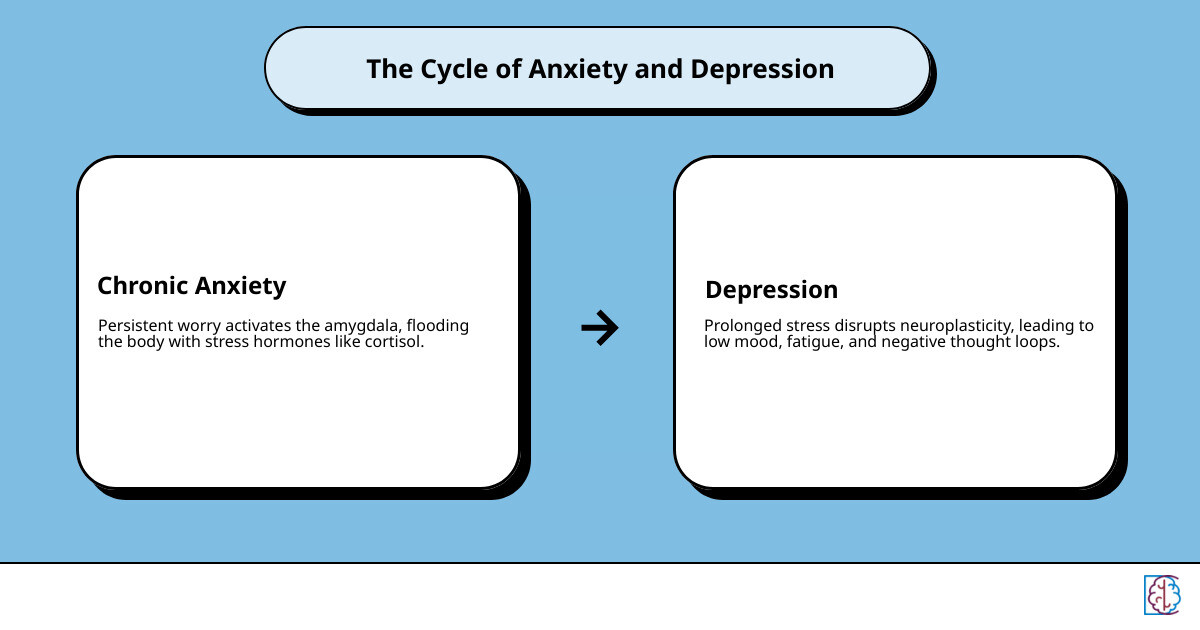
To understand how counseling works, we first have to understand what we are up against. While everyone feels “down” or “nervous” sometimes, Major Depressive Disorder (MDD) and Generalized Anxiety Disorder (GAD) are clinical conditions that go far beyond a bad day.
Sadness vs. Depression
Sadness is a natural human emotion usually tied to a specific event, like a breakup or a disappointment. It passes. Depression, however, is like a heavy fog that refuses to lift. To meet the clinical criteria, symptoms must last at least two weeks and interfere with your ability to work, eat, or sleep. It often feels like a loss of identity or a total depletion of energy.
Stress vs. Anxiety
Stress is a response to an external threat (like a deadline). Once the deadline passes, the stress usually goes with it. Anxiety is the “alarm system” that stays on even when there is no immediate danger. It involves ruminative worry, physical tension, and often a sense of impending doom.
At District Counseling, we often work with people who don’t realize their “high-stress lifestyle” has crossed the line into something more. For example, high-functioning anxiety a common experience among austin professionals often masks itself as extreme productivity, while the individual is actually crumbling internally. Similarly, there are signs you may have high-functioning depression that allow people to keep showing up for work while feeling completely hollow inside.
Recognizing the signs your anxiety may be more than everyday stress is the first step toward the “mental gym.”
Does counseling help with depression and anxiety in teens and children?
Early intervention is critical. In 2020, roughly 4.1 million children in the U.S. (about 17% of those aged 12–17) experienced a major depressive episode. For younger populations, depression can look less like “sadness” and more like irritability, social withdrawal, or a drop in school performance.
We believe in supporting the whole family. If you are a parent, our depression in children a guide for parents district counseling offers tools to spot these signs early. Addressing depression and anxiety in teens through counseling not only provides immediate relief but also helps prevent these patterns from becoming lifelong struggles in adulthood.
Does counseling help with depression and anxiety? The Science of the “Brain Workout”
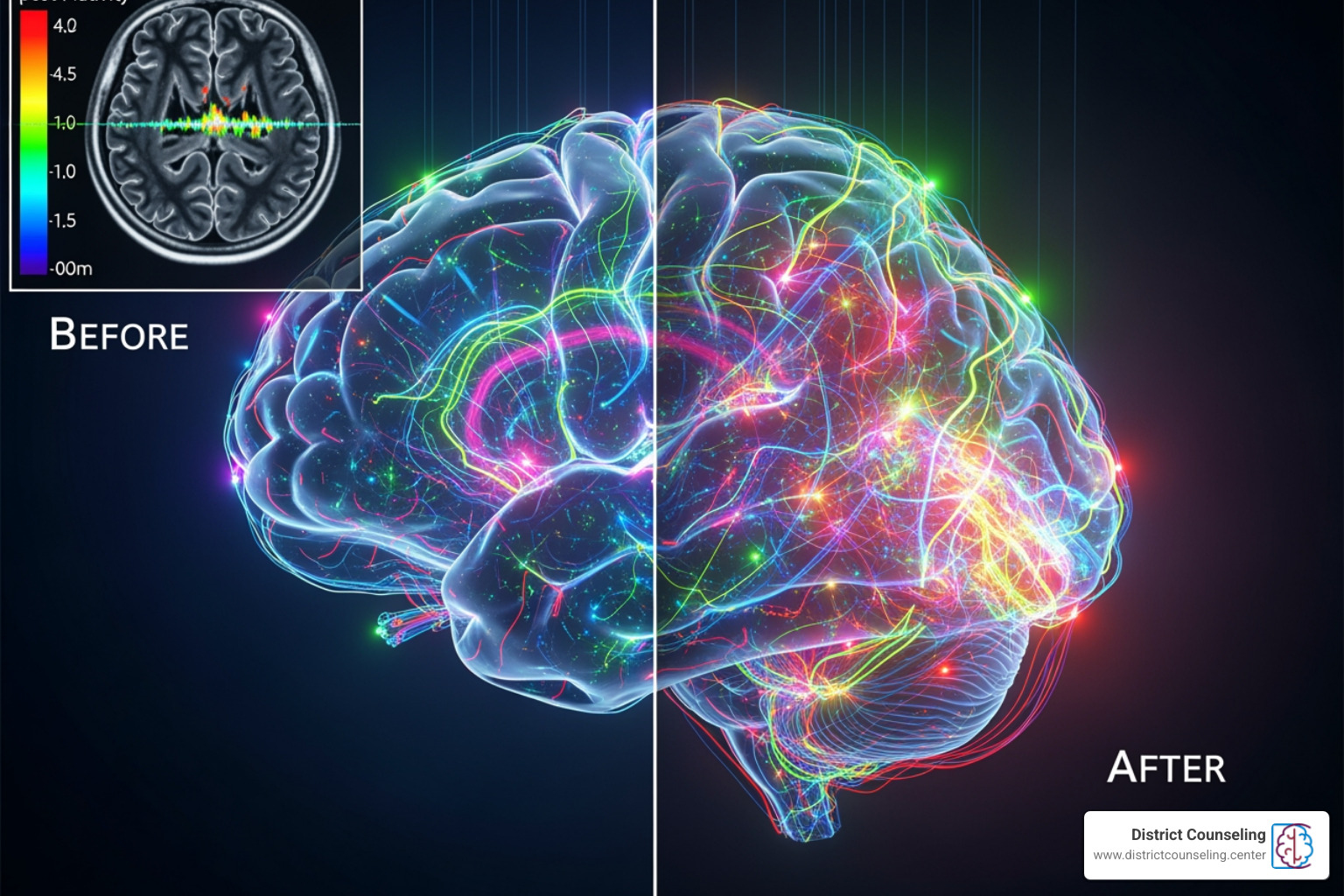
When we talk about counseling as a “brain workout,” we aren’t being metaphorical. Research shows that psychotherapy actually changes the brain’s physical structure and function — a concept known as neuroplasticity.
The Neurobiology of Change
Studies have shown that successful counseling can reduce hyperactivity in the amygdala, the brain’s “threat-detection center.” When you are anxious, your amygdala is constantly screaming “danger!” Counseling helps the prefrontal cortex (the logical part of the brain) “talk back” to the amygdala, effectively calming the nervous system.
Evidence-based research, such as this Psychotherapy for Major Depressive Disorder and Generalized Anxiety Disorder assessment, highlights that structured therapy leads to significant clinical benefits. In fact, about 75% of people who enter psychotherapy show benefits, experiencing improved relationships and better coping strategies.
If you’ve wondered, does professional counseling help with depression, the answer is a resounding yes. It targets the psychological and emotional components that medication alone might miss, providing a foundation for long-term thriving rather than just symptom management.
Why interpersonal therapy (IPT) helps with depression and anxiety
Interpersonal Therapy (IPT) is a highly effective, goal-oriented approach that focuses on your relationships. The theory is simple: our mood is often tied to how we interact with others. IPT helps you:
- Improve social support: Identifying who in your life can provide genuine help.
- Resolve conflicts: Learning how to communicate needs without triggering a cycle of anxiety.
- Navigate life transitions: Such as a new job, a move to Houston, or the end of a relationship.
- Address grief: Processing loss in a way that allows for emotional movement.
By improving relationship dynamics, IPT reduces the isolation that often fuels depression.
Choosing Your Routine: Effective Types of Counseling
Just as you wouldn’t use a treadmill to build your biceps, different mental health challenges require different therapeutic “exercises.” At District Counseling, we specialize in several evidence-based modalities.
How CBT serves as a core exercise for mental health
Cognitive Behavioral Therapy (CBT) is often considered the “gold standard” for treating both anxiety and depression. It operates on the idea that your thoughts, feelings, and behaviors are all connected.
- Cognitive Restructuring: We help you identify “negative automatic thoughts” (e.g., “I’m a failure”) and replace them with more balanced, realistic perspectives.
- Behavioral Activation: Depression often tells you to withdraw. CBT encourages you to gradually re-engage in meaningful activities, even when your motivation is low.
- Exposure Therapy: For anxiety, we help you face feared situations in a controlled, safe way to break the power of phobias and panic.
If you are curious about what counseling approach is best for depression or how can counseling help you get rid of anxiety, CBT is usually the starting point because of its high success rate (60–80% for anxiety).
DBT and EMDR
For those dealing with intense emotional swings, Dialectical Behavior Therapy (DBT) provides tools for emotional regulation and distress tolerance. If your anxiety or depression is rooted in past trauma, EMDR (Eye Movement Desensitization and Reprocessing) is a powerful tool we use to help the brain “reprocess” traumatic memories so they no longer trigger a fight-or-flight response in the present.
Medication vs. Counseling: Finding the Right Balance
One of the most common questions we hear is: “Should I just take a pill?” The answer depends on your specific situation, but the research offers some very clear guidance.
| Feature | Counseling (Talk Therapy) | Medication (Antidepressants) |
|---|---|---|
| Primary Goal | Build skills and change thought patterns | Balance brain chemistry (Serotonin/Norepinephrine) |
| Time to Work | Often 8–12 sessions for initial shift | Typically 4–8 weeks for full effect |
| Side Effects | Temporary emotional discomfort | Nausea, weight gain, or sleep changes |
| Relapse Prevention | High (you keep the skills forever) | Lower (symptoms may return if stopped) |
| Best For | Mild to severe cases | Moderate to severe cases |
Research published in the Counseling or Antidepressants for Treating Depression? | AAFP journal shows that for mild to moderate depression, there is no consistent evidence that one is more effective than the other. However, for moderate to severe cases, a combination of both is often the most effective path.
When treating depression through counseling, we often find that medication can “lower the volume” of the symptoms enough so that the person can actually engage in the “skill-building” work of therapy. Think of medication as the cast that holds the bone in place, while counseling is the physical therapy that actually makes the limb strong again.
Frequently Asked Questions about Counseling
Starting counseling can feel intimidating. Here is what you can realistically expect from the process.

How long does counseling typically take to show results?
While every person is different, research shows that meaningful improvement often begins around session five. A standard course of structured therapy like CBT typically lasts between 12 to 20 sessions.
“Breakthrough moments” — where you suddenly realize you haven’t had a panic attack in a week or you feel a genuine spark of joy — usually happen between sessions 8 and 12. Consistency is the most important factor; like any workout, you won’t see results if you only go once a month.
Are there any risks or side effects associated with counseling?
Yes, counseling has “side effects.” Because we are dealing with deep emotions, you might feel temporary emotional instability or “worse” after a session where you discussed a difficult topic. You might also experience tension in your relationships as you begin to set healthier boundaries and change your behavior.
This is why we offer trial sessions. The “chemistry” between you and your therapist is one of the strongest predictors of success. If you don’t feel a sense of trust after 3 sessions, it is perfectly okay to ask for a different fit.
How do I find the right counselor or therapist?
When searching for a therapist in areas like Houston, Katy, or Cypress, look for:
- Credentials: Ensure they are a Licensed Professional Counselor (LPC), LCSW, or Psychologist.
- Specialization: Do they have experience with your specific struggle (e.g., postpartum depression, teen anxiety, or trauma)?
- Personality Fit: Do you feel heard and respected?
- Practicality: Do they offer telehealth or have a location near you?
If you are looking for how to help someone with anxiety, the best thing you can do is help them navigate these logistical steps to find a provider they trust.
Conclusion: Start Your Mental Health Journey Today
At District Counseling, we know that the hardest part of the “brain workout” is simply walking through the door (or logging into your first telehealth session). Whether you are navigating the high-pressure environment of the Houston energy corridor or supporting a child in the Cypress-Fairbanks area, we are here to provide sincere, authentic, and compassionate care.
Does counseling help with depression and anxiety? It does more than just help; it empowers you to reclaim your life from the fog of depression and the constant noise of anxiety. You don’t have to wait for a crisis to start.
If you’re ready to invest in your emotional resilience, reach out to us for Depression and Anxiety Counseling. We have locations across Texas, including Houston, Katy, Sugar Land, and The Woodlands, ready to help you start your journey toward a healthier, more balanced mind.
Visited 5 times, 1 visit(s) today



Similar Posts

Francisco Ortiz
October 23, 2026
Demystifying the Court-Ordered Mental Health Evaluation Process
Learn what to expect in a court ordered mental health evaluation, including legal criteria, costs, and outcomes....

Francisco Ortiz
October 21, 2026
Finding the Right EMDR Specialist in Cypress Texas for Real Healing
Find a qualified EMDR specialist in Cypress Texas for real trauma healing and lasting anxiety relief....

Francisco Ortiz
October 19, 2026
Why therapy for caregiver exhaustion is a necessity not a luxury
Find relief with exhaustion therapy for caregivers. Learn how clinical support heals burnout and restores your well-being....

Francisco Ortiz
October 16, 2026
Navigating Neuropsychological Evaluations from Katy to Pasadena
Learn how an ADHD evaluation for Houston teens works, from medication management to school accommodations and 504 plans....

Francisco Ortiz
October 14, 2026
How Texas caregivers can beat exhaustion with virtual therapy
Beat caregiver exhaustion therapy Texas caregivers trust—virtual sessions for stress, boundaries, and recovery. Start today....

Francisco Ortiz
October 12, 2026
Find Local Youth Counselor: How They Can Help Your Teen Thrive (52 characters)
Find a qualified youth counselor near me to help your teen thrive with evidence-based support for anxiety, trauma, and more....

Francisco Ortiz
October 9, 2026
Faith-Based Pastoral Counseling: A Comprehensive Guide
Discover how pastoral counseling integrates faith and psychology for holistic healing, grief, trauma, and marital support....

Francisco Ortiz
October 7, 2026
Houston Counseling Options: Find Local Help Nearby
Find affirming counseling in Houston for trauma, LGBTQ+ care, couples, and more. Explore local options and start your healing today....

Francisco Ortiz
October 5, 2026
Why every teacher needs a burnout therapy game plan
Why every teacher needs a burnout therapy game plan – Learn about burnout therapy for teachers...

Francisco Ortiz
October 2, 2026
Child Therapist Near Me? Here is How to Spot a Great One
Find a child therapist near me who fits your child’s needs. Learn signs, costs, and effective therapy options....


