
When You Need a Therapist for Depression Near Me: What to Know First
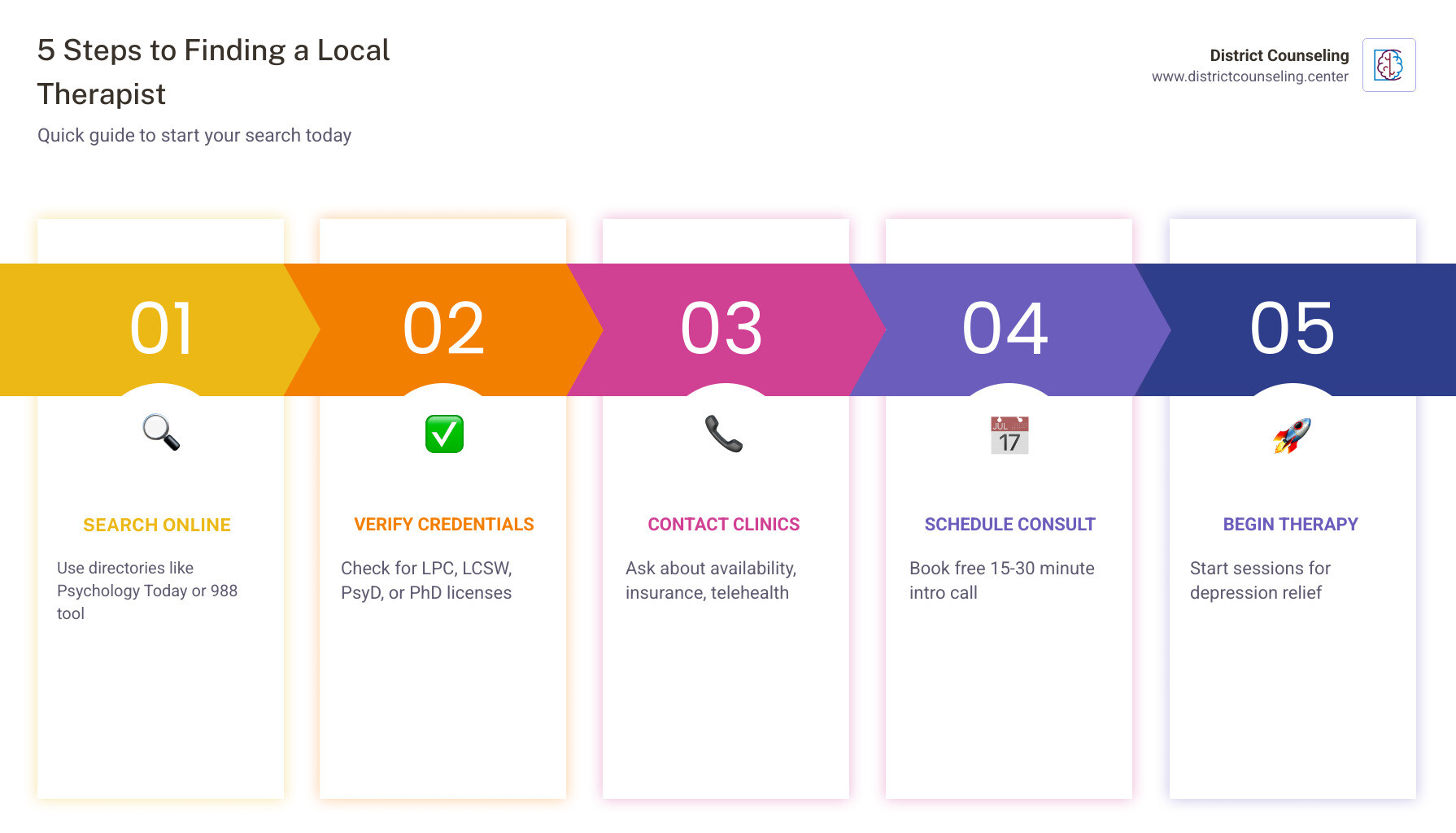
If you’re looking for a therapist for depression near me, here’s a quick-start guide to help you take action today:
- Search online directories like Psychology Today or 988’s provider search tool — filter by location, insurance, and specialty
- Check credentials — look for licensed professionals such as LPC, LCSW, PsyD, or PhD who specialize in depression
- Contact local clinics in your area and ask about availability, accepted insurance, and telehealth options
- Schedule an initial consultation — many therapists offer free 15–30 minute intro calls
- In a crisis? Call or text 988 immediately to reach a trained counselor, 24/7
Depression is one of the most common — and most treatable — mental health conditions. Yet finding the right therapist can feel overwhelming, especially when you’re already exhausted.
You’re not alone in that struggle. Millions of people search for local depression support every year, and the path forward often starts with a single step: knowing what to look for and where to begin.
This guide walks you through everything — from recognizing when it’s time to get help, to understanding your therapy options, to navigating costs and logistics — so you can find the right fit with confidence.
I’m Francisco Ortiz, a Licensed Professional Counselor-Supervisor with extensive experience helping individuals struggling with mood disorders, trauma, and depression find effective, lasting relief — making the search for a therapist for depression near me something I help people navigate every day. Whether you’re dealing with a recent life transition or long-standing depressive symptoms, the right support is closer than you think.
Recognizing When to Search for a Therapist for Depression Near Me

Depression isn’t just “feeling blue” or having a bad day. It is a medical condition that affects how you think, feel, and handle daily activities. While everyone experiences sadness, clinical depression is characterized by its persistence and the way it interferes with your ability to function.
Common signs that it is time to look for a therapist for depression near me include:
- Persistent Sadness or Emptiness: Feeling “down” or “hollow” most of the day, nearly every day, for at least two weeks.
- Loss of Interest: Activities you once loved — hobbies, social outings, or even work — no longer bring joy or satisfaction.
- Sleep and Appetite Disturbances: This could mean sleeping too much (hypersomnia) or being unable to sleep (insomnia), as well as significant weight loss or gain unrelated to dieting.
- Low Energy: Feeling physically weighed down or exhausted, even after a full night’s rest.
- Cognitive Difficulties: Finding it hard to focus, remember details, or make simple decisions.
Sometimes, depression doesn’t look like staying in bed all day. You might be experiencing Signs You May Have High-Functioning Depression, where you manage to go to work and fulfill obligations but feel internally drained, cynical, or disconnected.
According to the DSM-5 (the manual used by professionals to diagnose mental health conditions), a diagnosis of Major Depressive Disorder typically requires at least five symptoms to be present for a two-week period. However, you don’t need to wait for a “formal” diagnosis to seek help. If your mood is impacting your relationships or your performance at work, reaching out is a sign of strength.
Important: If you are experiencing suicidal ideation or thoughts of self-harm, please seek immediate help. You can call or text the Immediate crisis support via 988 at any time to speak with a trained counselor.
Evidence-Based Therapy Modalities for Lasting Relief
When you begin your search for a therapist for depression near me, you will likely encounter several different “modalities” or types of therapy. Understanding these can help you choose a provider whose approach aligns with your needs.
Cognitive Behavioral Therapy (CBT)
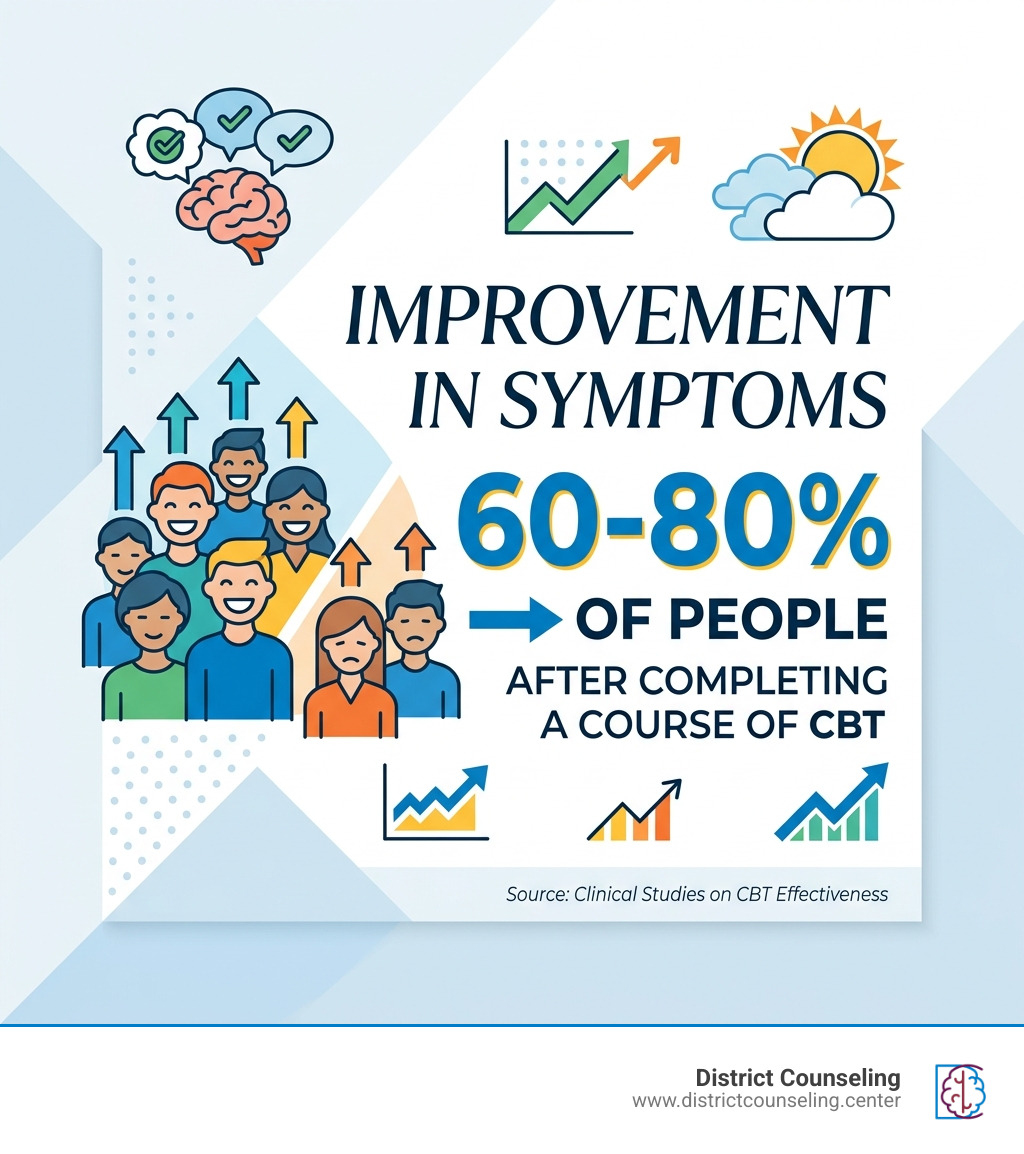
CBT is often considered the “gold standard” for depression treatment. It focuses on the relationship between your thoughts, feelings, and behaviors. By identifying and challenging “negative automatic thoughts” — those pesky internal critics that tell you things will never get better — you can begin to change your emotional state. Scientific research on depression counseling consistently shows that CBT is highly effective for reducing symptoms and preventing relapse.
Interpersonal Therapy (IPT)
Depression often affects (and is affected by) our relationships. IPT focuses on improving your communication patterns and how you relate to others. It is particularly helpful if your depression was triggered by a specific life event, such as a loss, a conflict, or a major transition.
Mindfulness-Based Approaches
Mindfulness-Based Cognitive Therapy (MBCT) combines traditional CBT with mindfulness strategies like meditation and breathwork. This helps you stay present and prevents you from getting caught in “rumination” — the habit of obsessively overthinking past mistakes or future worries.
EMDR and Trauma-Informed Care
For many, depression is rooted in past traumatic experiences. Eye Movement Desensitization and Reprocessing (EMDR) is a specialized technique that helps the brain reprocess painful memories so they no longer trigger intense emotional distress. If you suspect your mood is tied to past events, looking for a trauma-informed practitioner is essential. You can learn more about What Counseling Approach is Best for Depression on our blog.
Regardless of the specific method, the goal of Treating Depression Through Counseling is to provide you with a safe, confidential space to develop the tools you need for long-term wellness.
Finding a Specialized Therapist for Depression Near Me

The alphabet soup of credentials can be confusing. Here is a quick breakdown of the professionals you might encounter:
- LPC (Licensed Professional Counselor): Trained to provide mental health counseling and focus on emotional and behavioral wellness.
- LCSW (Licensed Clinical Social Worker): Focuses on the individual within their social environment, often providing therapy and connecting clients to resources.
- PsyD or PhD (Psychologists): Doctors of psychology who often specialize in clinical therapy and psychological testing.
It is also important to consider specialized care if you fall into specific demographics. Many Therapists specialize in:
- LGBTQ+ Care: Addressing the unique stressors and stigmas faced by the community.
- Perinatal Depression: Supporting mothers and families through pregnancy and the postpartum period.
- Veteran Support: Helping those who have served navigate PTSD and transition back to civilian life.
- Life Transitions: Navigating the “big” changes like divorce, retirement, or career shifts.
What to Expect During Your First Session with a Therapist for Depression Near Me
The first session, often called an “intake,” is largely about getting to know each other. You don’t have to have all the answers or even a clear “story” yet.
Your therapist will likely ask about your history, your current symptoms, and what you hope to achieve. This is also your time to see if the therapist feels like a good fit. Do you feel heard? Is the environment welcoming? A strong “therapeutic alliance” — the bond between you and your counselor — is one of the biggest predictors of success.
During this session, you will discuss:
- Confidentiality: Understanding how your privacy is protected.
- Goal Setting: What does “feeling better” look like for you?
- Clinical Assessment: A deeper look at your symptoms to create a treatment plan.
You might find yourself wondering, Does Professional Counseling Help with Depression? The answer is a resounding yes, but it is a collaborative process. If you’re ready to start, you can Contact a local office to set up that first meeting.
Navigating Logistics: Insurance, Costs, and Session Formats
Finding a therapist for depression near me also involves practical considerations like budget and scheduling.
| Payment Type | Description | Pros/Cons |
|---|---|---|
| In-Network | Therapist has a contract with your insurance (e.g., Aetna, Cigna). | Lowest out-of-pocket cost; limited provider choice. |
| Out-of-Network | You pay upfront and may get partial reimbursement via a “superbill.” | More provider options; higher initial cost. |
| Sliding Scale | Fees are adjusted based on your income level. | Makes therapy accessible for lower incomes; limited spots. |
| Self-Pay | You pay the full fee directly to the clinic. | Maximum privacy and choice; most expensive. |
Beyond cost, consider the format that works for your life:
- Telehealth: Perfect for those with busy schedules or those living in areas like Cypress or Katy who prefer to skip the Houston traffic.
- In-Person: Provides a physical “safe space” away from home or work distractions.
- Medicaid/Medicare: Some clinics specialize in these plans to ensure community-wide access.
For a full list of what we offer, visit our Services page.
Beyond Individual Talk Therapy: Comprehensive Mental Health Services
Depression rarely exists in a vacuum. Often, it is intertwined with other life challenges or mental health conditions. Comprehensive clinics offer more than just one-on-one “talk therapy.”
- Couples Therapy: Depression can strain marriages and partnerships. Counseling helps both partners understand the condition and improve their connection.
- Group Therapy: Sometimes, knowing you aren’t the only one struggling is the most powerful medicine. Groups provide community support and shared wisdom.
- Medication Management: For some, a combination of therapy and medication (like SSRIs) provides the best results.
- Specialized Assessments: We provide psychological evaluations for ADHD, Autism, and even Psychiatric Weight Loss Program support.
It’s also important to remember that depression affects all ages. We offer specialized support for Depression and Anxiety in Teens and have created a Depression in Children: A Guide for Parents to help families navigate these challenges together.
Frequently Asked Questions about Depression Therapy
How long does it take to see results in therapy?
Mental health isn’t like a physical injury where you can predict a “six-week recovery.” However, research indicates that many clients start to see a positive shift in their mood within 6-8 sessions. For more significant, lasting changes in personality or deep-seated patterns, 15-20 sessions are often common. Consistency is the secret ingredient; attending sessions weekly helps maintain the momentum of Research on therapy breakthroughs.
Can therapy help with both depression and anxiety?
Absolutely. In fact, it is more common than not for these two to show up together. This is known as “comorbidity.” Therapy helps with emotional regulation, providing tools that work for both the “lows” of depression and the “highs” of anxiety. You can explore our Depression & Anxiety Counseling page for more on how we treat these co-occurring issues and learn How Can Counseling Help You Get Rid of Anxiety simultaneously.
What if I don’t know what to talk about in my sessions?
This is a very common fear! Many people worry they aren’t “interesting” enough for therapy. Your therapist is trained to guide the conversation. You can start by:
- Mentioning a specific emotional trigger from your week.
- Discussing a dream or a recurring thought.
- Simply saying, “I feel stuck today and don’t know where to start.” Even silence can be a productive part of the collaborative process.
Conclusion
Finding the right therapist for depression near me is a journey toward reclaiming your life. Whether you are in Houston, Austin, Sugar Land, or the Woodlands, the most important thing is that you don’t have to carry the weight of depression alone.
At District Counseling, we pride ourselves on being a sincere, authentic, and compassionate presence in the Texas mental health community. We align our treatment with what matters most to you, helping you move from a place of “just getting by” to a life of genuine connection and joy.
If you’re ready to take that first step, we are here to walk with you. Explore our Depression & Anxiety Counseling services today and let’s start the journey toward healing together.
Visited 4 times, 1 visit(s) today


Similar Posts

Francisco Ortiz
October 21, 2026
Finding the Right EMDR Specialist in Cypress Texas for Real Healing
Back-to-School Mental Health: Tips for a Smooth Transition – Discover practical tips to ease back-to-school anxiety for kids, teens, and parents. Build healthy routines, manage stress, and foster emotional… …...

Francisco Ortiz
October 19, 2026
Why therapy for caregiver exhaustion is a necessity not a luxury
Find relief with exhaustion therapy for caregivers. Learn how clinical support heals burnout and restores your well-being....

Francisco Ortiz
October 16, 2026
Navigating Neuropsychological Evaluations from Katy to Pasadena
Learn how an ADHD evaluation for Houston teens works, from medication management to school accommodations and 504 plans....

Francisco Ortiz
October 14, 2026
How Texas caregivers can beat exhaustion with virtual therapy
Beat caregiver exhaustion therapy Texas caregivers trust—virtual sessions for stress, boundaries, and recovery. Start today....

Francisco Ortiz
October 12, 2026
Find Local Youth Counselor: How They Can Help Your Teen Thrive (52 characters)
Find a qualified youth counselor near me to help your teen thrive with evidence-based support for anxiety, trauma, and more....

Francisco Ortiz
October 9, 2026
Faith-Based Pastoral Counseling: A Comprehensive Guide
Discover how pastoral counseling integrates faith and psychology for holistic healing, grief, trauma, and marital support....

Francisco Ortiz
October 7, 2026
Houston Counseling Options: Find Local Help Nearby
Find affirming counseling in Houston for trauma, LGBTQ+ care, couples, and more. Explore local options and start your healing today....

Francisco Ortiz
October 5, 2026
Why every teacher needs a burnout therapy game plan
Why every teacher needs a burnout therapy game plan – Learn about burnout therapy for teachers...

Francisco Ortiz
October 2, 2026
Child Therapist Near Me? Here is How to Spot a Great One
Find a child therapist near me who fits your child’s needs. Learn signs, costs, and effective therapy options....

Adalid Blandin
September 30, 2026
Mental Health and Miracles: Finding Local Christian Care
Find pastoral counselling near me for faith-based emotional and spiritual support in Texas....


