
A Comprehensive Guide to Substance Abuse Evaluation Requirements
What You Need to Know About Substance Abuse Evaluations
Substance abuse evaluations are structured clinical assessments used to determine whether a person’s use of alcohol or drugs is causing harm — and what, if anything, should be done about it.
If you’re looking for a quick answer, here’s what matters most:
- What it is: A professional assessment of your relationship with alcohol or drugs, conducted by a licensed counselor or addiction specialist.
- Who needs one: People facing a DWI charge, a court order, a workplace drug policy violation, a child custody dispute, or anyone concerned about their own or a loved one’s substance use.
- What happens: A face-to-face interview, standardized screening tools, and a review of your medical and personal history — typically lasting 45 to 90 minutes.
- The outcome: A written report with a diagnosis (if applicable) and personalized treatment recommendations.
- Is it confidential? Yes. Your information is legally protected under federal privacy laws.
You don’t need to be in crisis to benefit from an evaluation. Many people seek one simply to get clarity.
Substance use disorders are more common than most people realize. Roughly 5% to 8% of the population is directly affected by alcohol or drug dependence — and far more are impacted by someone else’s use. Yet the majority of people who need help never receive it.
An evaluation is often the first step that changes that.
I’m Francisco Ortiz, a Licensed Professional Counselor-Supervisor and Certified Forensic Mental Health Evaluator with extensive experience conducting substance abuse evaluations in complex legal, clinical, and family settings. My forensic training and background in psychological assessments uniquely position me to guide you through what this process actually looks like — and what to expect every step of the way.
Understanding the Purpose of Substance Abuse Evaluations
When someone is asked to undergo a substance abuse evaluation, it can feel like a punitive hurdle. However, we view it as a highly objective diagnostic tool. Its primary purpose is not to pass judgment, but to establish an accurate clinical assessment of an individual’s substance use patterns.
As we navigate the current landscape of July 2026, clinical standards emphasize treating substance use disorders with the same scientific rigor as any other medical condition. A proper clinical assessment cuts through assumptions and looks at the actual impact that substances have on your physical health, mental wellbeing, and daily functioning. According to the medical guidelines compiled in Substance use disorders: Clinical assessment – UpToDate, a thorough assessment must go beyond a simple checklist of symptoms. It must investigate the frequency of use, physical consequences, psychological readiness to change, and any co-occurring health issues.
The evaluation serves as a roadmap. It helps us determine if a problem exists, the severity of that problem, and what specific resources or interventions will best support your health and safety.
Who Conducts Professional Substance Abuse Evaluations?
An evaluation is only as reliable as the professional administering it. To ensure accuracy and legal validity, these assessments must be conducted by credentialed professionals. This typically includes a licensed counselor, a clinical psychologist, or a specialized addiction specialist.
At District Counseling, our clinicians are trained in evidence-based diagnostic criteria and understand the intricate nuances of local Texas court, workplace, and family systems. Whether you visit us for Substance Abuse Counseling in Spring Branch or consult with our teams in Cypress or Greater Heights, you will work with a compassionate professional dedicated to an objective and respectful assessment process.
Social Use vs. Abuse vs. Dependence
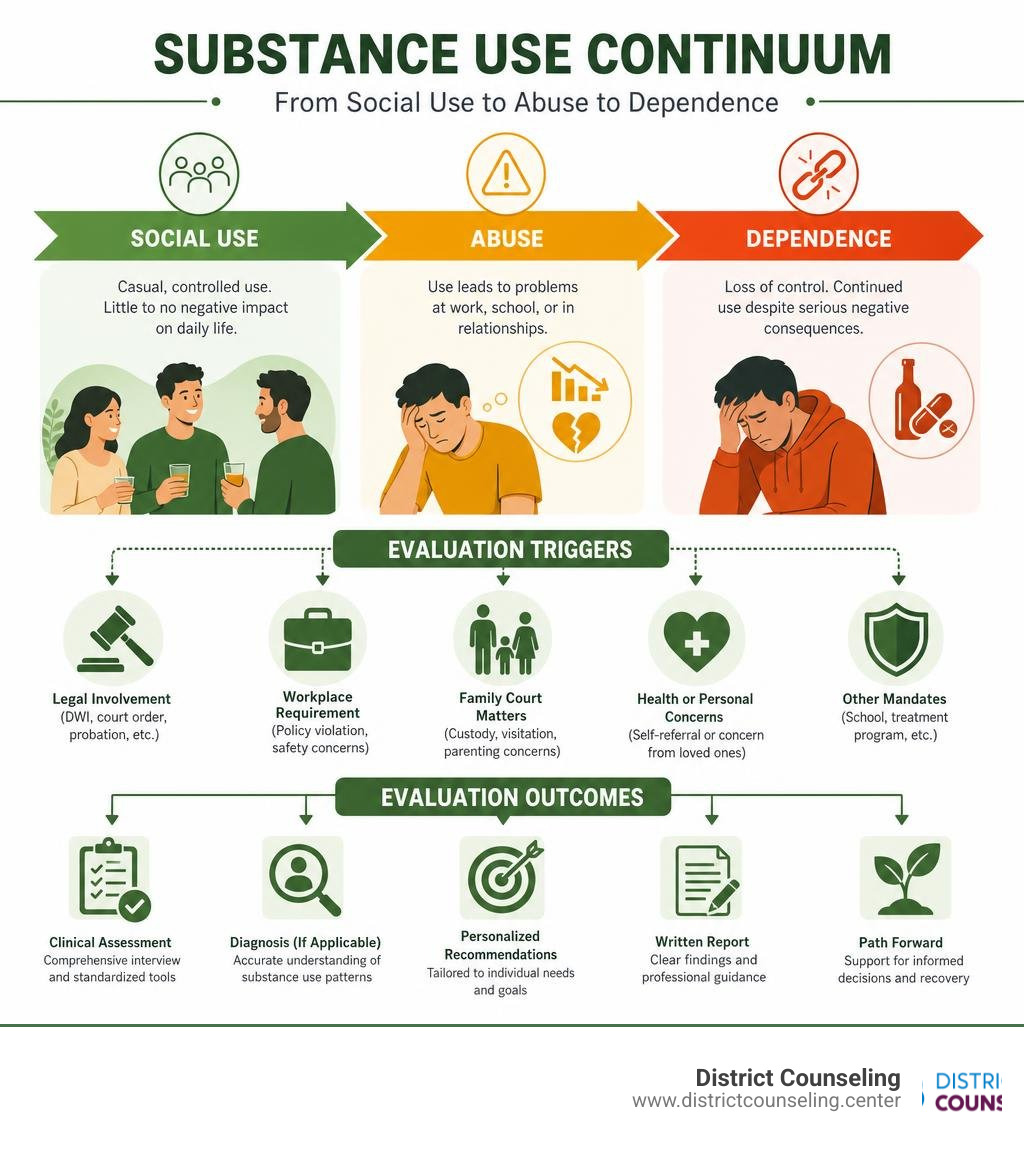
To understand the results of an evaluation, it helps to look at where an individual’s behavior falls on the substance use continuum. Clinical professionals categorize substance use into three distinct levels:
- Social Use: This involves occasional, moderate consumption of a substance (such as alcohol) that does not result in negative legal, social, physical, or occupational consequences.
- Abuse: This occurs when substance use begins to interfere with daily life. It is marked by recurring negative consequences, such as missing work, experiencing relationship strain, or driving under the influence, even if the person is not physically dependent on the substance.
- Dependence (Addiction): This is characterized by physical or psychological changes, including increased tolerance (needing more of the substance to achieve the same effect) and withdrawal symptoms when use stops. The individual often feels a compulsive urge to use despite knowing the severe harm it causes.
Distinguishing between these levels requires scientifically validated tools. As highlighted in the study on Evidence-Based Assessment of Substance Use Disorder, using structured, evidence-based instruments is critical to reducing clinician bias and ensuring that individuals receive an accurate diagnosis rather than an arbitrary label. This distinction is vital, especially considering that alcohol and drug dependence directly affects 5% to 8% of the population, with millions more suffering from the broader consequences of substance abuse.
When is an Evaluation Required?
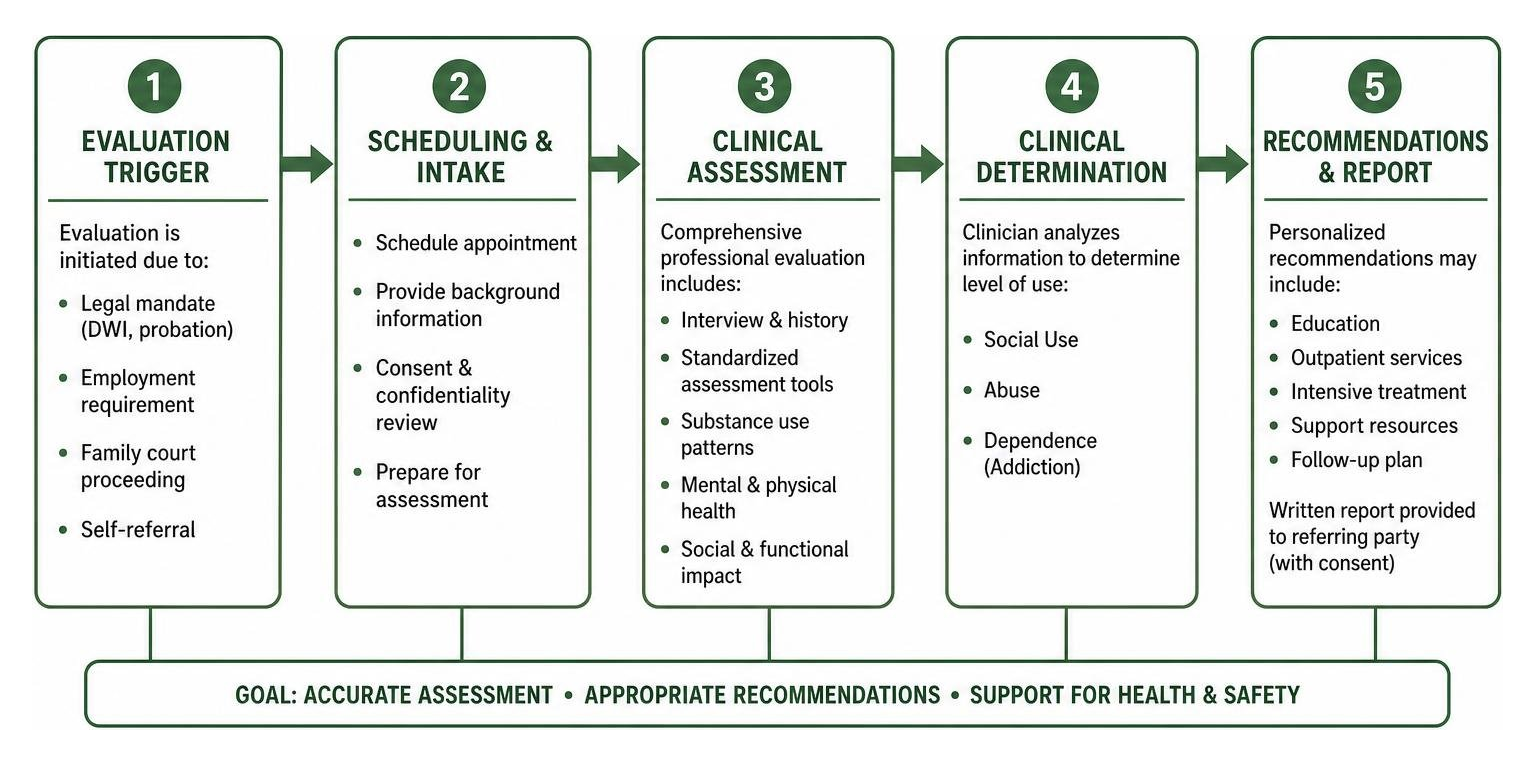
While some people seek out an evaluation voluntarily to better understand their habits, most evaluations are initiated due to an external trigger. These requirements generally stem from legal mandates, workplace safety policies, or family court proceedings.
Legal, Employment, and Family Situations
In Texas, a substance abuse evaluation is frequently mandated in the following scenarios:
- Legal Mandates (DWI & Probation): If you are arrested for a Driving While Intoxicated (DWI) offense in Texas, the court will almost certainly require a professional evaluation. This helps the judge or probation officer determine if the incident was an isolated mistake or part of a deeper pattern of abuse. For those navigating these stressful legal waters, working with experienced professionals like those specializing in Tarrant County Substance Abuse Evaluation & Legal … can help ensure your clinical assessment is completed accurately and submitted to the court without delay.
- Family Law and Child Custody: During divorce or child custody disputes, the Department of Family and Protective Services (DFPS) or a family court judge may order an evaluation if one parent alleges that the other’s substance use poses a safety risk to the children.
- Employment Policies: Many employers utilize Drug-Free Workplace policies. If an employee exhibits erratic behavior, high absenteeism, or fails a random drug screen, the employer may suspend duties and require an evaluation before the employee can return to work.
DOT SAP and Workplace Evaluations
For individuals working in safety-sensitive industries regulated by the federal government—such as commercial truck drivers, pilots, or pipeline operators—the stakes are exceptionally high. Under the Department of Transportation (DOT) guidelines, any drug or alcohol violation requires immediate removal from safety-sensitive duties.
To return to work, the employee must complete a specialized return-to-duty process overseen by a qualified Substance Abuse Professional (SAP). We provide comprehensive DOT SAP Evaluation services to guide Texas workers through these stringent federal requirements, helping them demonstrate accountability and safely return to their livelihoods.
The Drug and Alcohol Evaluation Process
Demystifying the Drug Abuse Evaluation Process can significantly reduce the anxiety associated with scheduling your appointment. A standard clinical evaluation is structured, professional, and typically takes between 45 to 90 minutes. It is not an interrogation; rather, it is a comprehensive clinical conversation supported by objective data.
Standardized Screening Tools and Clinical Interviews
The evaluation relies on a combination of standardized, psychometric screening tools and a detailed personal interview.
During the written portion, you will complete validated questionnaires such as the Alcohol Use Disorders Identification Test (AUDIT) or the Drug Abuse Screening Test (DAST-10). These tools use specific scoring systems to identify potential risks.
Following the written screening, the clinician will conduct a face-to-face (or virtual telehealth) interview to gather your biopsychosocial history. This covers:
- Your history of substance use (age of first use, frequency, and quantity).
- Your physical and mental health history.
- Your family history of addiction or mental health struggles.
- Your current social environment, relationship stability, and employment status.
To guide this process, professional clinicians utilize frameworks like the ASAM Criteria Intake Assessment Guide, which ensures that every dimension of an individual’s life—from physical withdrawal risks to their living environment—is thoroughly evaluated.
How Substance Abuse Evaluations Differ from Psychiatric Evaluations
It is common to confuse a substance use assessment with a general psychiatric evaluation, but they serve different clinical purposes:
- Psychiatric Evaluations: These are conducted by medical doctors (psychiatrists) or clinical psychologists to diagnose broader mental health conditions like bipolar disorder, schizophrenia, or major depression. They often focus on symptom management, brain chemistry, and potential medication options.
- Substance Abuse Evaluations: These focus specifically on behavioral patterns, consequences, and treatment needs related to drug and alcohol use.
However, these two fields frequently overlap. Co-occurring disorders (having both a mental health condition and a substance use disorder) are incredibly common. According to federal data analyzed in Chapter 3—Screening and Assessment of Co-Occurring Disorders – Substance Use Disorder Treatment for People With Co-Occurring Disorders – NCBI Bookshelf, of the 9.2 million U.S. adults with co-occurring disorders, more than 90% did not receive treatment for both, and roughly half received no treatment at all.
An experienced evaluator will screen for both issues simultaneously, ensuring that underlying depression, anxiety, or trauma is addressed alongside substance use.
Outcomes, Recommendations, and Next Steps
Once the clinical interview is complete and all screening scores are tallied, the evaluator will synthesize the information to determine the appropriate level of care.
To keep recommendations objective and fair, clinicians refer to the multidimensional guidelines outlined in The ASAM Criteria ®, Fourth Edition Level of Care Assessment Guide. This framework rates risks across six key dimensions (such as withdrawal potential, physical health, and recovery environment) to find the least restrictive, safest treatment environment for the individual.
| Treatment Level | Description | Typical Weekly Commitment | Best Suited For |
|---|---|---|---|
| Level 0.5: Education | Informational classes focused on risk reduction and substance awareness. | 8 to 12 hours total | First-time offenders, low-risk use, social users. |
| Level 1: Outpatient Therapy | Individual or group counseling sessions while living at home. | 1 to 8 hours per week | Mild substance use disorders, high motivation. |
| Level 2.1: Intensive Outpatient (IOP) | Structured therapeutic programs with group and individual therapy. | 9 to 20 hours per week | Moderate to severe disorders, stable living environment. |
| Level 3: Residential/Inpatient | 24-hour supervised clinical care in a residential facility. | Full-time residency | Severe addiction, high relapse risk, unstable environment. |
| Level 4: Medical Detox | Medically managed hospital setting for acute withdrawal. | 24-hour medical monitoring | High risk of severe physical withdrawal (e.g., alcohol, benzodiazepines). |
Understanding Treatment Recommendations
If the evaluation indicates that treatment is necessary, the counselor will recommend a specific program tailored to your needs. This could range from completing a brief educational course to enrolling in specialized Substance Abuse Treatment programs.
To maintain complete objectivity and avoid conflicts of interest, some evaluation clinics enforce a policy where they do not immediately admit evaluation clients into their own treatment programs for a set period (such as three months). This ensures that the clinician’s recommendations are based solely on your clinical needs, not on filling treatment beds.
What Happens After the Evaluation is Completed?
After the clinical interview, the evaluator will compile their findings into a formal, written report. This document will outline the clinical tools used, the diagnosis (if any), and the official recommendations.
If your evaluation was court-ordered or requested by an employer, this report will be securely sent to the referring third party (such as your attorney, probation officer, or HR department) once you sign a release of information. In Texas, state-funded resources like the Outreach, Screening, Assessment and Referral (OSAR) service help coordinate these assessments and guide individuals to local funding and treatment programs if they lack insurance or financial means.
Costs, Confidentiality, and Preparation
Entering an evaluation prepared can help the session run smoothly and ensure you get an accurate, fair report.
How to Prepare for Substance Abuse Evaluations
To prepare for your appointment, we recommend gathering all necessary documentation beforehand. This includes:
- Any legal documents, court orders, or arrest reports (such as a Texas DWI ticket).
- A complete list of your current medical prescriptions.
- Your past mental health and substance treatment history.
The absolute best way to prepare is to commit to complete honesty. Evaluators are highly trained to spot discrepancies between clinical interviews, standardized test scores, and official arrest records. Discrepancies can invalidate the assessment or lead to more intensive treatment recommendations.
If you are a parent seeking information regarding your child, reviewing resources on Teen Drug Abuse and Treatment Options can help you understand how assessments are adapted to support adolescents and families compassionately.
Confidentiality and Legal Protections
One of the most common fears people have is that their employer, neighbors, or family members will find out about their substance use.
We want to reassure you that substance abuse evaluations are protected by strict federal and state privacy laws. Under HIPAA and federal regulations known as 42 CFR Part 2, any information you share during an evaluation is strictly confidential.
Clinicians cannot confirm your attendance or share your records with anyone—including courts, spouses, or employers—unless you provide explicit, written consent via a signed Release of Information (ROI). The only exceptions are emergency situations involving immediate danger to yourself or others, or cases of child or elder abuse. If you are in immediate crisis and need confidential support, you can always reach out to the federal National Helpline for Mental Health, Drug, Alcohol Issues for 24/7 assistance.
Frequently Asked Questions About Substance Abuse Evaluations

How do I know if I or someone I know needs an evaluation?
If substance use is causing repeated disruptions in daily life—such as relationship conflicts, financial strain, declining performance at work or school, or legal trouble—an evaluation is highly recommended. It serves as an objective, professional “check-up” to see if casual use has crossed into abuse or dependence.
What should I expect during the evaluation interview?
Expect a professional, non-judgmental conversation. The counselor will ask about your substance use history, physical health, family background, and daily stressors. It is not an interrogation; it is a clinical tool designed to understand your lifestyle and help you find the safest path forward.
Are there free options for substance use assessments?
Yes. Many community health centers, non-profit organizations, and state-funded programs (such as OSAR in Texas) offer low-cost or free evaluations based on your income. Many private practices also offer sliding-scale fees to ensure that financial constraints do not stand in the way of getting help.
Conclusion
Navigating a court order, a workplace policy, or personal concerns about alcohol and drug use can feel overwhelming. However, a professional substance abuse evaluation is not a punishment — it is a compassionate, objective first step toward clarity, safety, and recovery.
At District Counseling, we provide professional, confidential, and court-accepted evaluations tailored to your unique situation. Our team is proud to offer sincere, authentic, and compassionate support across our convenient Texas locations, including Houston, Greater Heights, Cypress, Spring Branch, Katy, and Sugar Land.
If you or a loved one is ready to take the next step, schedule your confidential Substance Abuse Evaluation with us today, and let us help you find the right path forward.
Visited 37 times, 1 visit(s) today
Similar Posts

Francisco Ortiz
October 16, 2026
Navigating Neuropsychological Evaluations from Katy to Pasadena
Learn how an ADHD evaluation for Houston teens works, from medication management to school accommodations and 504 plans....

Francisco Ortiz
October 14, 2026
How Texas caregivers can beat exhaustion with virtual therapy
Beat caregiver exhaustion therapy Texas caregivers trust—virtual sessions for stress, boundaries, and recovery. Start today....

Francisco Ortiz
October 12, 2026
Find Local Youth Counselor: How They Can Help Your Teen Thrive (52 characters)
Find a qualified youth counselor near me to help your teen thrive with evidence-based support for anxiety, trauma, and more....

Francisco Ortiz
October 9, 2026
Faith-Based Pastoral Counseling: A Comprehensive Guide
Discover how pastoral counseling integrates faith and psychology for holistic healing, grief, trauma, and marital support....

Francisco Ortiz
October 7, 2026
Houston Counseling Options: Find Local Help Nearby
Find affirming counseling in Houston for trauma, LGBTQ+ care, couples, and more. Explore local options and start your healing today....

Francisco Ortiz
October 5, 2026
Why every teacher needs a burnout therapy game plan
Why every teacher needs a burnout therapy game plan – Learn about burnout therapy for teachers...

Francisco Ortiz
October 2, 2026
Child Therapist Near Me? Here is How to Spot a Great One
Find a child therapist near me who fits your child’s needs. Learn signs, costs, and effective therapy options....

Adalid Blandin
September 30, 2026
Mental Health and Miracles: Finding Local Christian Care
Find pastoral counselling near me for faith-based emotional and spiritual support in Texas....

Adalid Blandin
September 28, 2026
Missouri City and Houston Couples Therapy 101
Explore relationship counseling in Houston options, from couples therapy to intensives, with costs, insurance, and therapist tips for Missouri City families....

Adalid Blandin
September 25, 2026
How to find authentic therapy for emotional exhaustion in Houston
Find emotional exhaustion therapy Houston that helps professionals and caregivers move from burnout to renewed energy and balance....


