
The Intimacy Fix: What to Expect from Couples Sex Counselling
What Couples Sex Counselling Can Help You Change
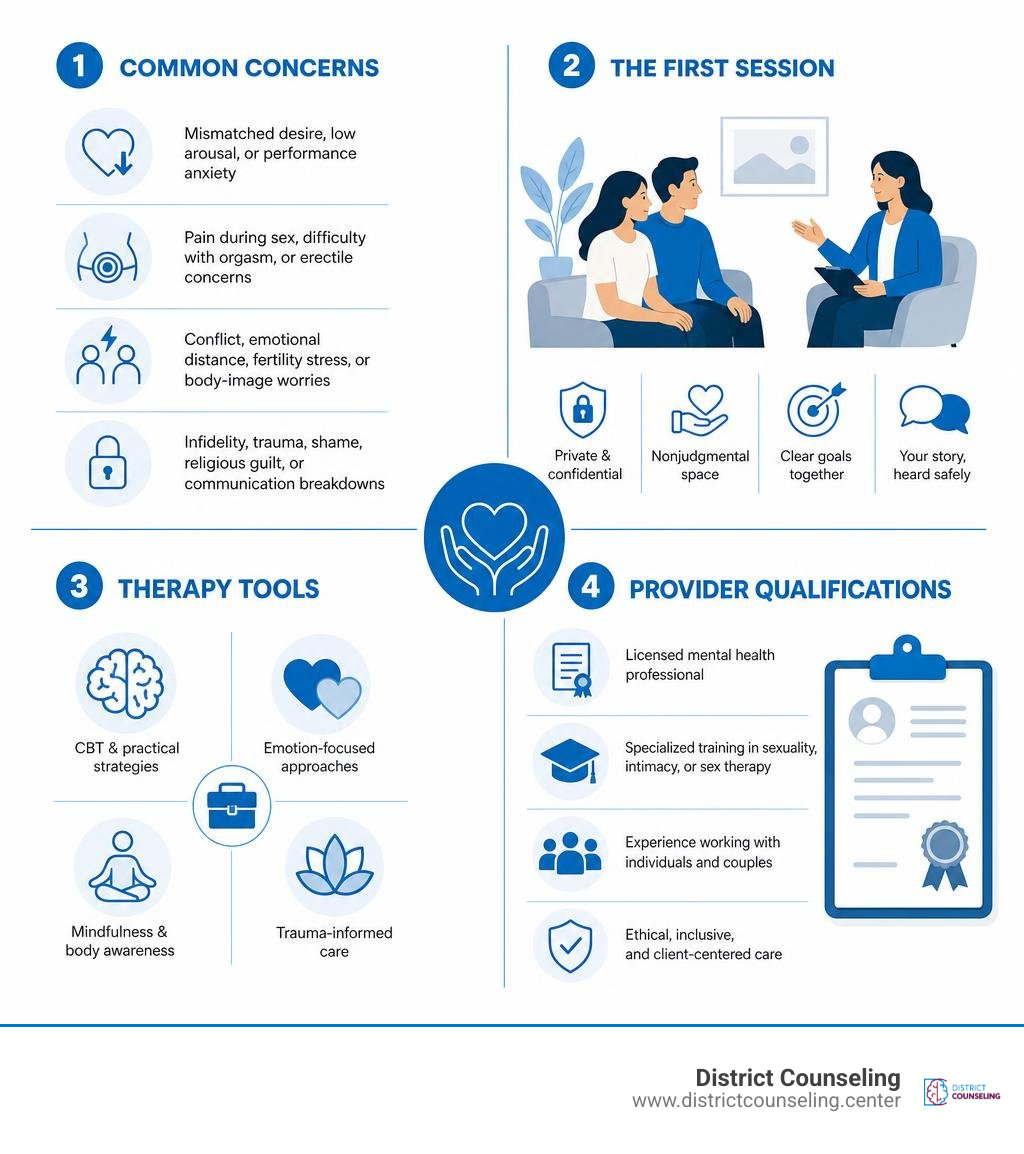
A relationship counsellor who works with sex and intimacy helps partners talk safely about desire, connection, sexual concerns, and the stress that can make closeness hard. Sex therapy is talk-based therapy, not physical contact in the office. You can expect a private, nonjudgmental assessment, clear goals, and practical exercises to try at home if they fit your needs.
Couples often seek help for:
- Mismatched desire, low arousal, or performance anxiety
- Pain during sex, difficulty with orgasm, or erectile concerns
- Conflict, emotional distance, fertility stress, or body-image worries
- Infidelity, trauma, shame, religious guilt, or communication breakdowns
A qualified provider looks at the whole picture: relationship patterns, mental health, physical health, culture, values, and possible medical factors. They may use approaches such as CBT, emotion-focused therapy, mindfulness, or trauma-informed work. When symptoms may have a physical cause, therapy can work alongside care from a physician, gynecologist, urologist, or other medical provider.
I am Francisco Ortiz, a Licensed Professional Counselor-Supervisor with experience supporting individuals, couples, and families affected by trauma, mood concerns, and relationship conflict. My background in trauma-informed psychotherapy and clinical supervision informs this guide to finding the right relationship counsellor sex support for your goals.
Learn more about relationship counsellor sex:
Sex Therapy vs. Couples Counselling: Understanding the Distinctions
When intimacy hits a wall, many couples wonder whether they need standard marital counseling or specialized sex therapy. While both share the overarching goal of strengthening your bond, their focus and clinical training differ significantly.
General relationship counseling often centers on communication patterns, conflict resolution, co-parenting, division of emotional labor, and day-to-day emotional connection. In contrast, sex therapy targets the psychological, physiological, and relational roadblocks that specifically interfere with physical intimacy, sexual fulfillment, and erotic connection.
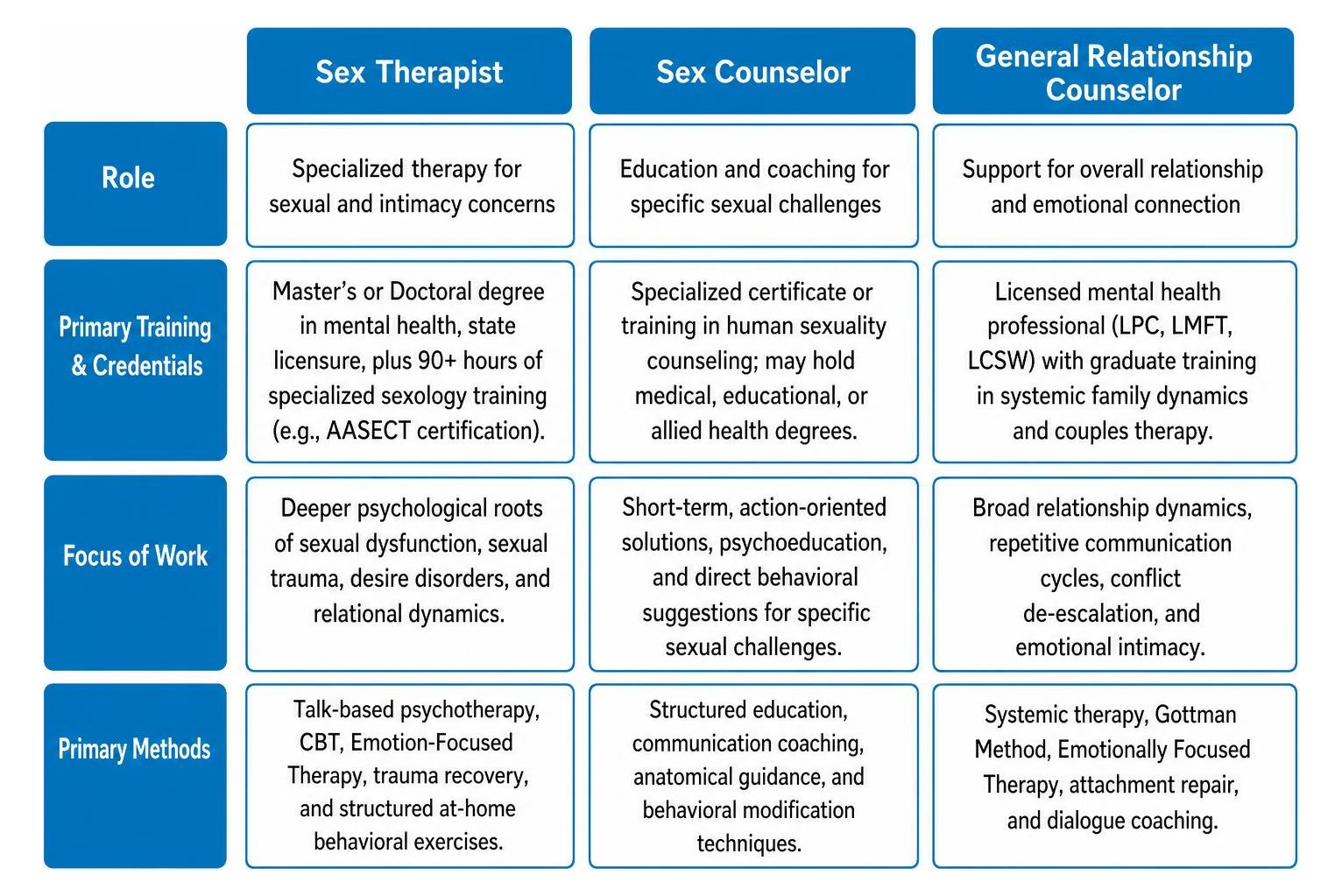
| Role | Primary Training & Credentials | Focus of Work | Primary Methods |
|---|---|---|---|
| Sex Therapist | Master’s or Doctoral degree in mental health, state licensure, plus 90+ hours of specialized sexology training (e.g., AASECT certification). | Deeper psychological roots of sexual dysfunction, sexual trauma, desire disorders, and relational dynamics. | Talk-based psychotherapy, CBT, Emotion-Focused Therapy, trauma recovery, and structured at-home behavioral exercises. |
| Sex Counselor | Specialized certificate or training in human sexuality counseling; may hold medical, educational, or allied health degrees. | Short-term, action-oriented solutions, psychoeducation, and direct behavioral suggestions for specific sexual challenges. | Structured education, communication coaching, anatomical guidance, and behavioral modification techniques. |
| General Relationship Counselor | Licensed mental health professional (LPC, LMFT, LCSW) with graduate training in systemic family dynamics and couples therapy. | Broad relationship dynamics, repetitive communication cycles, conflict de-escalation, and emotional intimacy. | Systemic therapy, Gottman Method, Emotionally Focused Therapy, attachment repair, and dialogue coaching. |
Core Definitions: Sex Therapist, Sex Counselor, and General Counsellor
Understanding these professional distinctions helps you choose the right care provider. A general couples counselor evaluates how emotional disconnections ripple across your day-to-day partnership. Reviewing everything you need to know about couples therapy illustrates how relational frameworks help resolve communication gridlocks.
However, when emotional disconnections intersect directly with sexual dysfunction, a sex therapist steps in with comprehensive psychotherapy. Certified sex therapists undergo extensive postgraduate education to understand the neurobiology of arousal, the somatic holding of sexual shame, and the four distinct phases of the human sexual response cycle: desire, arousal, orgasm, and resolution. Meanwhile, sex counselors specialize in action-based education, offering targeted interventions for situational hurdles without necessarily diving into years of clinical trauma or deep characterological shifts.
Choosing a Qualified Relationship Counsellor Sex Therapist for Your Relationship Goals
Achieving certification as a clinical sex therapist is an extensive journey. It typically requires at least nine years of higher education and supervised clinical practice, encompassing an undergraduate degree, a clinical master’s or doctoral program, hundreds of hours of supervised patient contact, and at least 90 hours of specialized coursework in human sexuality.
When searching for a clinician, prioritize credentials that reflect dedicated clinical rigor, state licensure, and strict ethical standards. Clinicians who blend sexology with proven frameworks—such as those discussed when decoding the Gottman Method: how to find a certified relationship pro—provide a structured path toward healing. Reputable directories and providers such as the Find a Counsellor / Therapist in BC – BCACC – BC Association of Clinical Counsellors demonstrate how licensed professionals maintain strict professional codes: all in-office sex therapy sessions are 100% talk-based, maintaining clear boundaries with absolutely zero physical contact between therapist and client.
How a Relationship Counsellor Sex Specialist Helps Couples Reconnect

Sexual intimacy does not exist in a vacuum. It sits at the intersection of biological functioning, emotional safety, personal history, and relational trust. When one of these pillars wobbles, the physical connection often suffers first. By consulting the ultimate guide to relationship therapy, you can see how systemic clinicians untangle the complex web between psychological distress and physical disconnection.
A specialized clinician will often encourage you to consult your physician, gynecologist, or urologist to rule out hormonal shifts, pelvic floor dysfunction, or medication side effects. Once underlying physical issues are evaluated, therapy works to dismantle the mental and emotional roadblocks that maintain sexual distress.
Navigating Desire Discrepancy, Arousal, and Physical Dysfunctions
One of the most common complaints brought to couples therapy is a desire discrepancy—where one partner desires sex more frequently or in different ways than the other. Over time, this dynamic can devolve into a painful “pursuer-distancer” cycle, creating anxiety for the lower-desire partner and feelings of rejection for the higher-desire partner.
Therapy helps partners understand the critical distinction between spontaneous desire (wanting sex out of the blue) and responsive desire (arousal that develops in response to pleasurable stimuli and emotional safety). Specialized counseling provides actionable interventions for:
- Erectile Dysfunction (ED) & Premature Ejaculation: Deconstructing the performance anxiety and “spectatoring” (critically observing oneself during sex) that inhibits natural physiological responses.
- Painful Intercourse (Dyspareunia & Vaginismus): Addressing the involuntary pelvic floor tightening driven by anticipation of pain, past trauma, or somatic stress.
- Difficulty Reaching Orgasm (Anorgasmia): Exploring psychological inhibition, body awareness, and personalized paths to physical release.
- Genital Self-Image and Body Insecurity: Counteracting the shame and self-consciousness that prevent people from relaxing into vulnerable physical connection.
Rebuilding Connection After Infidelity, Trauma, and Narcissistic Abuse
When trust is shattered through physical or emotional infidelity, intimacy often grinds to a complete halt. Betrayal trauma creates hypervigilance, making physical closeness feel unsafe. Understanding how relationship therapy for couples can save your sanity is essential when high-conflict betrayals threaten to tear a relationship apart.
Rather than relying on simplistic victim-versus-perpetrator narratives, modern sex and relationship therapists utilize a structured, three-stage recovery model:
- Safety and Stabilization: Establishing transparent boundaries, halting compulsive or outside sexual behaviors, managing acute emotional distress, and ending active deceit.
- Deconstruction and Meaning-Making: Understanding the relational vulnerabilities, personal attachment wounds, or external stressors that contributed to the breach, without excusing the betrayal.
- Re-contracting and Intimacy Rebuilding: Crafting explicit new agreements for emotional and physical fidelity, slowly introducing safe touch, and cultivating renewed erotic connection.
In cases involving narcissistic abuse or coercive control, therapy focuses heavily on restoring individual agency, establishing firm emotional boundaries, and protecting client safety before any joint sexual healing is attempted.
Evidence-Based Therapeutic Approaches and Clinical Modalities
Effective sex and relationship counseling relies on multidisciplinary psychosexual therapies that integrate the brain, emotions, and nervous system. Clinicians weave together established psychological approaches:
- Cognitive Behavioral Therapy (CBT): Identifies and restructures automatic negative thoughts, catastrophic thinking, and irrational performance expectations around sex.
- Emotion-Focused Therapy (EFT): Helps partners identify the unexpressed attachment fears beneath anger or withdrawal, fostering emotional accessibility and responsiveness.
- Internal Family Systems (IFS): Explores the internal “parts” of each partner—such as protective parts that shut down intimacy or wounded inner child parts that fear abandonment.
- Sand Tray and Expressive Modalities: Offers non-verbal, somatic avenues to externalize feelings of sexual shame, past trauma, and compulsive behaviors that words alone struggle to capture.
Somatic Practices, Sensate Focus, and Private Home Exercises
Because sexual responses are fundamentally physiological, talking alone is not always enough to shift physical anxiety. Therapists frequently prescribe structured behavioral homework to be completed in the total privacy of your home.

A cornerstone of psychosexual therapy is Sensate Focus, an evidence-based protocol developed by Masters and Johnson:
- Phase 1: Non-Genital Touch: Partners take turns giving and receiving mindful, non-demanding touch across the body, explicitly avoiding breasts and genitals. The goal is sensory awareness and relaxation, with intercourse completely off the table.
- Phase 2: Genital Touch Without Orgasm Goal: Touch is expanded to include intimate areas, focusing purely on sensations of warmth, pressure, and texture rather than achieving arousal or climax.
- Phase 3: Integration and Mutual Pleasure: Partners slowly reintegrate sexual touch and intercourse, carrying forward the low-pressure, mindful presence developed in earlier stages.
Exploring from eye contact to intimacy: relationship therapy exercises that actually work provides further practical tools for establishing physical and emotional grounding together.
Inclusive Frameworks: Neurodiversity, Religious Deconstruction, and Cultural Competency
Every relationship carries unique cultural conditioning, neurological wiring, and spiritual values. Effective counseling adapts to these intersectional dynamics:
- Neurodiversity-Affirming Care: Partners with ADHD, autism, or sensory processing differences may experience touch, stimulation, and intimacy routines in unique ways. Therapists help couples establish explicit, sensory-friendly sexual communication that avoids overstimulation.
- Deconstructing Religious Guilt: Purity culture and sex-negative upbringings can cause individuals to associate sexual pleasure with moral failure, resulting in persistent shame or involuntary physical tension even within marriage. Therapy helps clients gently separate core spiritual values from toxic sexual guilt.
- LGBTQ2S+, Kink, and Non-Monogamy Competence: Affirming practitioners provide safe, judgment-free support for diverse gender identities, sexual orientations, consensual non-monogamy, and kink dynamics.
Inside the Therapy Room: What to Expect in Treatment
Walking into therapy to discuss your sex life can feel daunting. Knowing what to expect demystifies the process and helps alleviate nervousness from day one.
Sex therapy occurs in a standard, comfortable therapy room or via a secure telehealth platform. Sessions are strictly conversational. Your therapist acts as a compassionate, objective facilitator who normalizes sensitive topics and helps you translate complex feelings into productive dialogue.
What Happens During Your First Relationship Counsellor Sex Therapy Session
Your initial session focuses primarily on clinical assessment and setting a foundation of safety:
- Intake and Assessment: Your therapist will explore your current relationship dynamics, relationship history, and the primary concerns bringing you in.
- Psychosexual History: You will discuss your sexual development, cultural/religious background, past medical treatments, and any history of trauma or distress.
- Goal Clarification: You and your partner collaboratively define what a healthy, fulfilling intimate life looks like for your unique partnership.
- Safety and Confidentiality Agreements: Reviewing clinical boundaries, practice policies, and privacy standards ensures that both partners feel secure sharing openly.
Key Questions to Ask Before Hiring a Sex and Relationship Provider
Before committing to a provider, ask these targeted questions to ensure they have the proper background for your needs:
- What specific postgraduate training or certifications in sexology and couples therapy do you hold?
- How do you integrate medical, physiological, and psychological perspectives when evaluating sexual concerns?
- Are you experienced in working with our specific challenges, such as trauma recovery, neurodivergence, or infidelity?
- How do you structure at-home exercises, and what is your policy on session boundaries?
If you are located in the Greater Houston area, working with local practices like Relationship & Marital Counseling Copperfield ensures you receive specialized, trauma-informed care aligned with your community.
Frequently Asked Questions About Sex and Relationship Counselling
Is sex therapy strictly talk-based, or is there physical touch involved?
Sex therapy with a licensed mental health professional is strictly talk-based. There is never any physical touch, nudity, or sexual activity between the therapist and clients during sessions. Any experiential touch or mindfulness exercises are assigned as private homework to be completed by partners in the comfort and privacy of their own homes.
How long does couples sex counselling typically take to show results?
The timeline depends on the complexity of the issues. Targeted concerns like mild performance anxiety or basic desire mismatches may see noticeable improvement within 8 to 12 sessions. Complex challenges involving deep-seated betrayal trauma, chronic physical pain, or long-standing attachment wounds may take several months of consistent work. Active participation in take-home exercises significantly accelerates progress.
Can relationship and sex therapy help if only one partner is willing to attend?
Yes. While working together as a couple is ideal for addressing systemic dynamics, individual therapy can be transformative. An individual can explore personal anxiety, heal from sexual shame, process attachment wounds, and learn how to communicate boundaries clearly. Shifting how one partner shows up in the relationship often changes the relational dynamic as a whole.
Conclusion
Sexual struggles and intimacy breakdowns do not mean a relationship is broken beyond repair. By opening up the conversation in a structured, compassionate, and evidence-based clinical environment, you and your partner can release shame, dismantle anxiety, and build a vibrant, authentic sexual connection.
At District Counseling, we offer compassionate, trauma-informed therapy tailored to what matters most to your relationship. Whether you are navigating communication hurdles, recovering from betrayal, or seeking to reignite intimacy across our Texas locations—including Houston, Austin, Fort Worth, Katy, The Woodlands, and Sugar Land—our team is here to walk alongside you.
Schedule your dedicated relationship & marital counseling services today and take the first step toward lasting closeness and connection.
Visited 1 times, 1 visit(s) today
Similar Posts

Francisco Ortiz
August 26, 2026
The Intimacy Fix: What to Expect from Couples Sex Counselling
Learn how a relationship counsellor sex specialist helps couples rebuild intimacy, desire, and trust through evidence-based therapy....

Francisco Ortiz
August 24, 2026
Before the Nikah: Navigating Islamic Premarital Counseling
Discover how premarital counseling Islam builds a sacred, lasting union through faith-based modules, therapy, and practical guidance before your Nikah....

Francisco Ortiz
August 21, 2026
The Ultimate Guide to West Lake Hills Family Counseling and Keeping the Peace
The Ultimate Guide to West Lake Hills Family Counseling and Keeping the Peace – Learn about west lake hills family counseling...

Francisco Ortiz
August 19, 2026
How Relationship Therapy for Couples Can Save Your Sanity
Discover how relationship therapy for couples can restore connection, resolve conflict, and rebuild trust with evidence-based guidance....

Francisco Ortiz
August 17, 2026
Ready to Wed: What to Expect in Christian Premarital Counseling
Discover what to expect in premarital counseling Christian couples trust for a strong, faith-based marriage foundation....

Francisco Ortiz
August 14, 2026
Space City Love: Navigating Gottman Method Couples Therapy in Houston
Discover how Gottman Method couples therapy in Houston helps partners rebuild intimacy, manage conflict, and strengthen their bond with expert guidance....

Francisco Ortiz
August 12, 2026
A – Z Guide to Houston Counseling Options
A – Z Guide to Houston Counseling Options – Learn about Houston counseling...

Francisco Ortiz
August 10, 2026
Before You Walk Down the Aisle: Must-Read Premarital Counseling Books
Discover the best premarital counseling books for faith-based or secular marriage preparation, including workbooks and expert guides....

Francisco Ortiz
August 7, 2026
From Eye Contact to Intimacy: Relationship Therapy Exercises That Actually Work
Try these 5 relationship therapy exercises to boost intimacy, improve communication, and strengthen your bond at home....

Francisco Ortiz
August 5, 2026
Couples Therapy Prices Demystified: From Sliding Scales to Premium Sessions
Learn the real couples therapy price range, from sliding scales to premium sessions, plus tips to reduce costs....


