Everything You Need to Know About Couples Therapy
Why Couples Therapy Matters More Than You Think
Couples therapy is a form of psychotherapy that helps partners resolve conflicts, improve communication, and rebuild emotional connection — with or without a relationship crisis driving the decision.
Quick answers:
- What it is: A structured process where a licensed therapist works with both partners to identify patterns, improve communication, and strengthen the relationship
- Who it’s for: Any couple — married, dating, or co-parenting — dealing with conflict, distance, trust issues, or life transitions
- How long it takes: Typically 12 to 24 sessions, depending on the issues involved
- Does it work? Yes — 60 to 80% of distressed couples benefit from evidence-based approaches
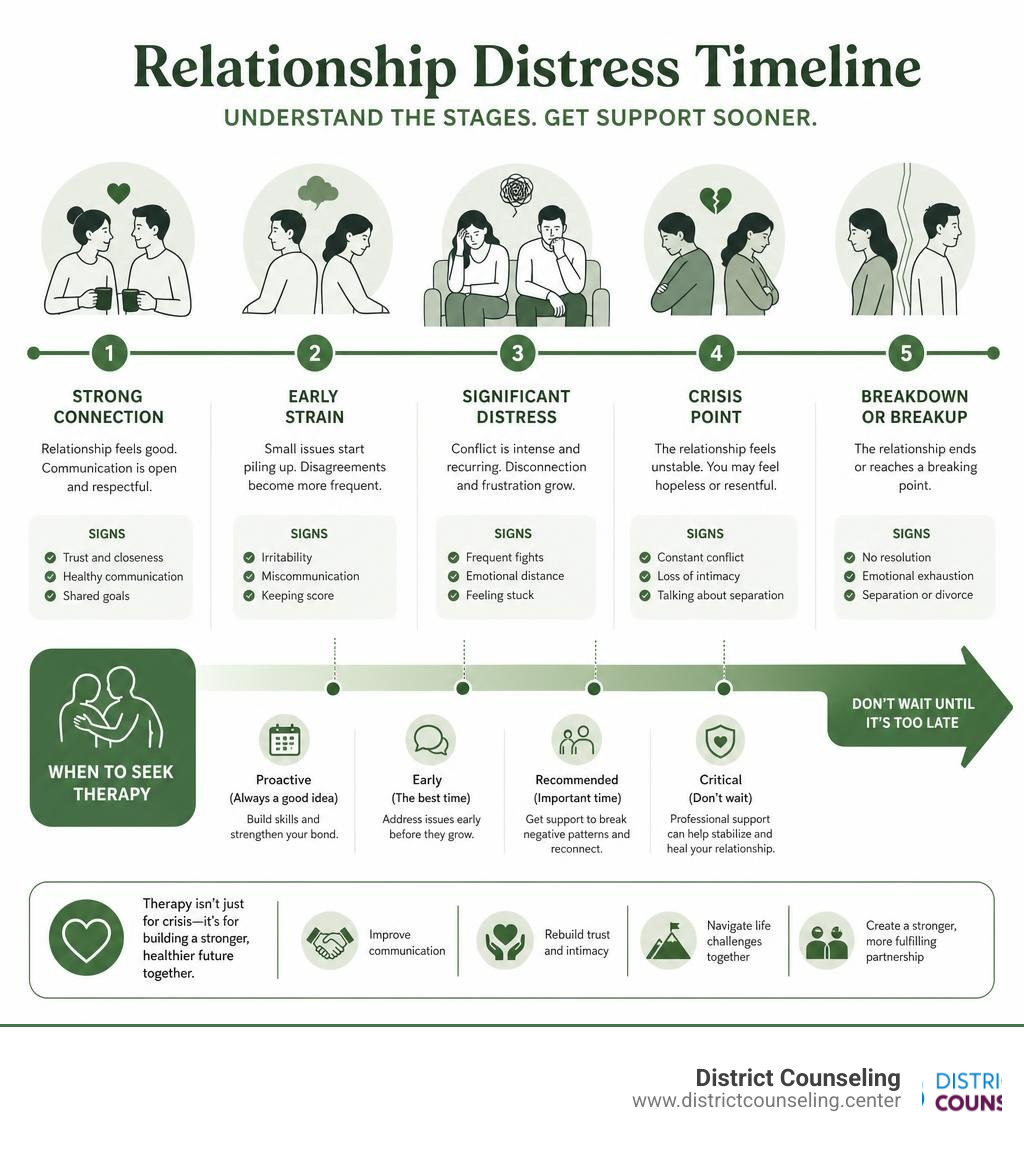
- When to start: Sooner is better; most couples wait too long
Relationships are hard. That’s not a failure — it’s just the reality of two different people trying to build a life together.
About one-third to half of all couples eventually separate or divorce, and roughly half of those divorces happen within the first seven years of marriage. Even among couples who stay together, around 20% experience significant relationship distress at any given time.
Those numbers aren’t meant to discourage you. They’re meant to normalize something: most relationships hit rough patches. The difference between couples who come out stronger and those who don’t often comes down to whether they get the right support — and when.
I’m Francisco Ortiz, a Licensed Professional Counselor-Supervisor with extensive experience providing couples therapy to partners navigating mood disorders, trauma, and relationship conflict. In this guide, I’ll walk you through everything you need to know — from how the process works to how to find the right therapist for your situation.
Defining the Scope and Goals of Relationship Support
When your relationship feels strained, finding the right path forward can feel overwhelming. You might hear terms like “relationship therapy,” “marriage counseling,” or “systemic therapy” thrown around and wonder what they actually mean. At its core, the goal of any couples intervention is to improve relationship satisfaction, build robust conflict resolution skills, and foster a deeper emotional connection.
But not all support is created equal. Understanding the different levels of support is the first step toward getting the right kind of help.
How Couples Therapy Differs from Individual Therapy and Counseling
It is common to confuse individual therapy, couples counseling, and couples therapy. However, they serve very different purposes and use entirely different clinical approaches.
- Individual Therapy: In individual therapy, the client is the person sitting in the chair. The focus is on personal growth, self-exploration, and managing individual mental health conditions. While relationship issues are often discussed, the therapist only hears one side of the story.
- Couples Counseling: Counseling is generally a short-term focus designed to address a specific, concrete problem. For example, if you and your partner are constantly arguing about how to budget your money or how to divide household chores, couples counseling can help you establish immediate, practical solutions.
- Couples Therapy: This is a deeper, often longer-term process that treats the relationship itself as the client. Instead of focusing only on surface-level problems, we dive into the long-term patterns, attachment styles, and systemic dynamics that drive your conflicts.
For a deeper dive into these differences, you can read The Ultimate Guide to Relationship Therapy or explore our comprehensive breakdown in The Ultimate Guide to Marital Counseling.
Common Reasons for Seeking Help and Realistic Outcomes
Why do partners seek professional help? While some make the call during a crisis, others use therapy proactively to maintain a strong bond. Some of the most common reasons couples walk through our doors include:
- Communication Breakdown: Feeling like you are speaking two completely different languages, or constantly falling into the “silent treatment.”
- Infidelity and Betrayal: Rebuilding a relationship after a breach of trust is incredibly difficult, but entirely possible with structured support.
- Emotional Distance: Feeling more like roommates than romantic partners.
- Major Life Transitions: Navigating parenthood, career changes, retirement, or moving to a new city.
What are the realistic outcomes? Therapy is not a magic wand that will turn your partner into a different person, nor is it a guarantee that you will stay together. Sometimes, a healthy and successful outcome of therapy is helping a couple “de-couple” in a peaceful, respectful, and cooperative way — especially when co-parenting is involved.
However, for couples committed to staying together, the realistic outcomes of consistent work include improved relationship satisfaction, a restored sense of safety, and the ability to navigate future conflicts without damaging the bond. To learn more about identifying these signs in your own relationship, check out When to Seek Couples Counseling and our guide on Improving Communication with Spouse. If your relationship is recovering from a breach of trust, you may also find our resources on How to Build Trust Between a Couple and Tips to Build Trust in a Relationship helpful.
Understanding the Core Principles of Couples Therapy

When you step into a couples therapy session, you are entering a space specifically designed to foster emotional safety. A skilled therapist does not act as a judge or jury; we do not take sides. Instead, we work to build a strong therapeutic alliance with both of you, helping you slow down, step back, and examine the repetitive cycles that keep you stuck.
Evidence-Based Models of Couples Therapy
Just as there are different styles of individual therapy, there are several highly researched, evidence-based models of couples therapy. The most effective approaches include:
- Emotionally Focused Therapy (EFT): Grounded in attachment theory, EFT helps partners identify their underlying emotional needs and attachment security. Instead of just fighting about who left the dishes in the sink, EFT helps couples see that they are actually crying out for connection, reassurance, and safety.
- Behavioral Couple Therapy (BCT) & Integrative Behavioral Couple Therapy (IBCT): BCT focuses on increasing positive exchanges, improving communication skills, and joint problem-solving. IBCT goes a step further by combining active behavioral change with emotional acceptance, helping partners accept the differences they cannot change.
- The Gottman Method: Developed by Drs. John and Julie Gottman, this structured, research-based approach focuses on building “Love Maps,” sharing fondness and admiration, and managing conflict. It is highly famous for identifying the “Four Horsemen of the Apocalypse” — criticism, defensiveness, contempt, and stonewalling — which are major predictors of relationship dissolution.
To understand how these methods are applied, you can read our articles Decoding the Gottman Method and The Gottman Four Horsemen and How To Defeat Them. For a comprehensive look at the academic literature supporting these models, refer to the landmark study Interventions for Couples from UCLA.
| Therapy Model | Primary Focus | Core Strategy | Best Suited For |
|---|---|---|---|
| Emotionally Focused Therapy (EFT) | Attachment bonds & emotional safety | De-escalating negative cycles; expressing primary vulnerabilities | Emotional disconnect, trauma, and deep-seated insecurity |
| Behavioral Couple Therapy (BCT) | Behavior exchanges & communication | Skill-building, behavioral contracts, and positive reinforcement | Concrete problem-solving, structured conflict, and substance issues |
| Integrative Behavioral Couple Therapy (IBCT) | Behavioral change + emotional acceptance | Formulating the theme; building tolerance and soft expressions | Chronic differences, personality clashes, and long-standing gridlock |
| Gottman Method | Sound Relationship House theory | Building love maps; managing conflict; defeating the Four Horsemen | General relationship maintenance, communication repair, and trust-building |
Key Strategies and Common Factors in Successful Treatment
While each model has its own unique techniques, research shows that successful couples therapy relies heavily on “common factors” that cross all therapeutic styles. According to a comprehensive 25-year evidence review published in the Journal of Family Therapy, systemic interventions evidence base, the most successful therapies share these core strategies:
- Externalizing the Pattern: Helping the couple see that the loop is the enemy, not the partner. Instead of blaming each other, partners learn to team up against their negative cycle.
- Expanding Emotional Expression: Moving from secondary emotions (like anger and contempt) to primary vulnerabilities (like fear of abandonment, rejection, or loneliness).
- Promoting Cognitive Restructuring: Changing how partners perceive and interpret each other’s behaviors.
- Fostering New Bonding Events: Creating structured moments in and out of session where partners can experience safe, positive emotional connection.
Efficacy of Couples Interventions for Specific Clinical Issues

Many people assume couples therapy is only for general relationship “tune-ups.” However, systemic interventions are highly effective at treating specific, complex clinical issues — often outperforming individual therapy alone.
Addressing Psychosexual Problems and Mental Health Disorders
When one or both partners struggle with mental health issues or physical health conditions, the relationship inevitably feels the impact. Fortunately, couples-based interventions offer powerful relief:
- Psychosexual Problems: Sexual difficulties are incredibly common. In the UK, 42% of men and 51% of women report experiencing sexual problems in a given year. A meta-analysis of twenty studies by Frühauf et al. (2013) found an effect size of 0.58 across psychosexual disorders, meaning the average treated couple fared better after couples-based sex therapy than 73% of those on waiting lists.
- Depression and Anxiety: When a partner is diagnosed with depression within a distressed relationship, couples therapy is often the treatment of choice. Systemic therapy combined with medication helps 78–81% of cases fare better than medication alone.
- Alcohol and Substance Use: Behavioral Couple Therapy (BCT) for alcohol problems helps partners build a supportive environment for sobriety, resulting in significantly lower relapse rates and reduced relationship conflict.
- Infidelity and Betrayal Trauma: Recovering from an affair requires specialized, trauma-informed care. If you are walking this difficult path, read our guides on Couples Counseling After Betrayal, How to Cope with Trauma Caused by Infidelity, and The Unbreakable Bond: When Trust is Betrayed and How We Heal.
Prevention Programs vs. Traditional Therapy
Can you protect your relationship before distress even sets in? Absolutely. Relationship Education (RE) programs are designed to build resilience in healthy couples.
- PREP (Prevention and Relationship Education Program): A highly structured program focusing on communication, conflict management, and commitment.
- Hold Me Tight: A couples workshop based on the principles of Emotionally Focused Therapy (EFT), designed to help couples repair and strengthen their attachment bonds.
- The Marriage Checkup: A brief, proactive intervention where couples receive a regular assessment of their relationship health, much like an annual physical at the doctor’s office.
While traditional therapy is designed to treat active, moderate-to-severe relationship distress, these prevention programs are fantastic for couples looking to build a strong foundation. To explore how to maintain a healthy marriage over time, read What Makes Love Last and Healthy Marriages: Regular Couples Counseling is the Key.
How to Find the Right Therapist and Navigate the Process
Taking the step to start therapy is a courageous decision, but finding the right professional can feel like searching for a needle in a haystack. Because couples work is highly specialized, it is crucial to work with someone who has specific, advanced training in relationship systems.
Qualifications, Experience, and Therapeutic Fit
When searching for a therapist, look for specific clinical credentials and specialized training:
- Licensed Marriage and Family Therapists (LMFTs): These professionals have dedicated their entire graduate education and clinical training to understanding relationship systems and family dynamics.
- Licensed Professional Counselors (LPCs) & Licensed Clinical Social Workers (LCSWs): While these therapists treat a wide range of issues, ensure they have post-graduate certifications in couples-specific modalities (such as EFT, Gottman Method, or IBCT).
The most critical factor in successful therapy is the therapeutic alliance — the trust and comfort you feel with your therapist. An effective couples therapist must remain completely impartial, providing a balanced, nonjudgmental space where neither partner feels ganged up on.
If you are ready to begin your search, we recommend reading our practical guides: Find a Therapist in For Couples Relationship Issues and No More Silent Treatment: Finding Quality Couples Therapy Near You.
For those looking for specialized, local care in Texas, you can explore trusted regional resources:
- Get matched with specialized clinicians at District Counseling of Copperfield.
- Search the local directory to Find Couples Therapy and Counseling in Fort Worth, TX.
Cost-Effectiveness and Societal Benefits
While therapy is an investment of time and money, the long-term cost of unresolved relationship distress is far higher. Beyond the obvious emotional toll, relationship breakdown often leads to expensive legal fees, real estate division, and a significant drop in physical and mental health.
In fact, research on the “healthcare cost offset” shows that couples who complete systemic therapy experience a significant reduction in overall medical doctor visits and physical health complaints. When your relationship is peaceful, your body and mind naturally follow suit.
To learn more about your options, read All About Marital Counseling Options, discover creative ways to invest in your bond in Beyond Date Night, and explore community resources in From Open Relationships to Marriage Guidance: Finding Local Support.
Frequently Asked Questions about Couples Therapy
Starting therapy can bring up a lot of questions. Here are the answers to some of the most common concerns we hear from couples.
What is the success rate of couples therapy?
Research shows that 60% to 80% of distressed couples benefit significantly from evidence-based approaches like behavioral or emotionally focused couples therapy.
Furthermore, about half of these couples fully maintain their clinical gains at a 2-year follow-up. In a famous longitudinal study by Snyder et al. (1991), researchers found that four years after treatment, only 3% of couples who completed insight-oriented couples therapy had divorced, compared to 38% of those in traditional behavioral therapy alone — highlighting the power of choosing a deep, pattern-focused therapist.
Can couples therapy help if only one partner is willing to attend?
Yes. While it is always ideal for both partners to attend, a relationship is a system. If you change one part of a system, the entire system is forced to adjust.
If your partner is hesitant to attend, working with a systemic therapist individually can help you understand your relationship dynamics, break your own negative habits, and bring positive change back into your home.
How long does couples therapy typically last?
For most couples, a standard course of evidence-based therapy lasts between 12 to 24 sessions.
We typically recommend meeting on a weekly frequency at the beginning of treatment. This allows us to build momentum, establish emotional safety, and construct a clear, tailored treatment plan to help you reach your goals.
Take the Next Step in Your Relationship Journey
Your relationship does not have to be on the brink of collapse for you to benefit from professional support. Whether you are looking to heal from a deep betrayal, improve your communication, or simply tune up an already strong bond, we are here to help.
At District Counseling, we provide advanced, evidence-based couples therapy, psychotherapy, and trauma-informed care. We are proud to offer sincere, authentic, and compassionate alignment to what matters most to couples across Texas.
Whether you are looking for support in Houston, Katy, Cypress, Copperfield, Heights, Sugar Land, Pearland, Fort Worth, or Austin, our team is ready to walk alongside you.
Ready to build a stronger, more resilient bond? Visit our Relationship & Marital Counseling page today to schedule your initial consultation.
Visited 4 times, 1 visit(s) today


Similar Posts

Francisco Ortiz
October 21, 2026
Finding the Right EMDR Specialist in Cypress Texas for Real Healing
Find a qualified EMDR specialist in Cypress Texas for real trauma healing and lasting anxiety relief....

Francisco Ortiz
October 19, 2026
Why therapy for caregiver exhaustion is a necessity not a luxury
Find relief with exhaustion therapy for caregivers. Learn how clinical support heals burnout and restores your well-being....

Francisco Ortiz
October 16, 2026
Navigating Neuropsychological Evaluations from Katy to Pasadena
Learn how an ADHD evaluation for Houston teens works, from medication management to school accommodations and 504 plans....

Francisco Ortiz
October 14, 2026
How Texas caregivers can beat exhaustion with virtual therapy
Beat caregiver exhaustion therapy Texas caregivers trust—virtual sessions for stress, boundaries, and recovery. Start today....

Francisco Ortiz
October 12, 2026
Find Local Youth Counselor: How They Can Help Your Teen Thrive (52 characters)
Find a qualified youth counselor near me to help your teen thrive with evidence-based support for anxiety, trauma, and more....

Francisco Ortiz
October 9, 2026
Faith-Based Pastoral Counseling: A Comprehensive Guide
Discover how pastoral counseling integrates faith and psychology for holistic healing, grief, trauma, and marital support....

Francisco Ortiz
October 7, 2026
Houston Counseling Options: Find Local Help Nearby
Find affirming counseling in Houston for trauma, LGBTQ+ care, couples, and more. Explore local options and start your healing today....

Francisco Ortiz
October 5, 2026
Why every teacher needs a burnout therapy game plan
Why every teacher needs a burnout therapy game plan – Learn about burnout therapy for teachers...

Francisco Ortiz
October 2, 2026
Child Therapist Near Me? Here is How to Spot a Great One
Find a child therapist near me who fits your child’s needs. Learn signs, costs, and effective therapy options....

Adalid Blandin
September 30, 2026
Mental Health and Miracles: Finding Local Christian Care
Find pastoral counselling near me for faith-based emotional and spiritual support in Texas....


