
A Comprehensive Guide to Depression Counseling
Why Depression Counseling Matters — and When to Seek It
Depression counseling is professional therapy that helps people manage and recover from depression through structured, evidence-based conversations with a licensed mental health professional.
Quick answer — what depression counseling involves:
- Assessment — a therapist evaluates your symptoms, history, and goals
- Talk therapy — approaches like CBT or IPT help you identify and shift negative thought patterns
- Coping skills — you learn practical tools to manage symptoms between sessions
- Ongoing support — regular sessions (often weekly) track progress and adjust your treatment plan
- Collaboration — therapy may be combined with medication, lifestyle changes, or both for best results
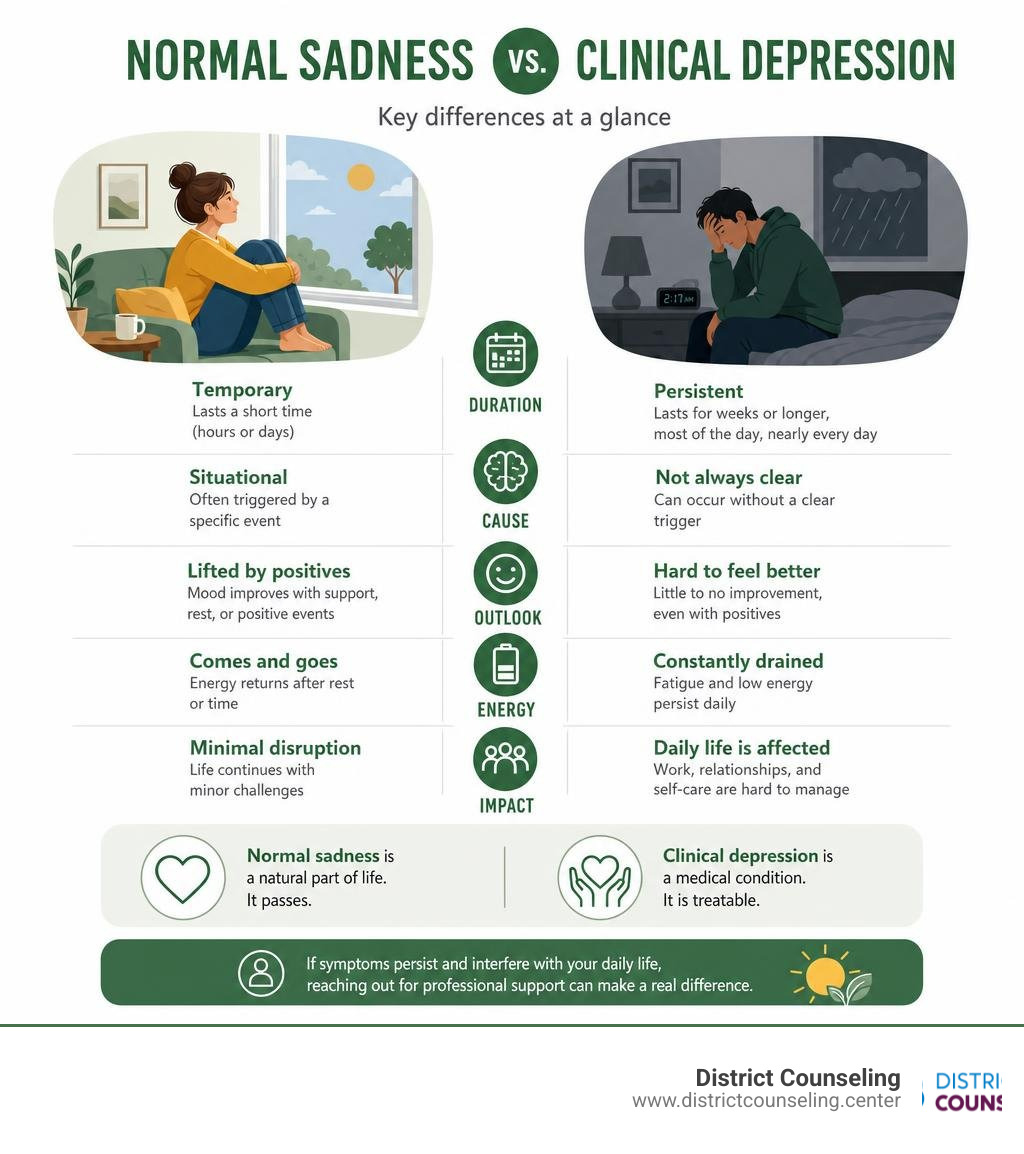
Everyone feels sad sometimes. That’s a normal part of life. But depression is something different — and something more.
Depression isn’t just a bad week or a rough patch. It’s a persistent condition that drains your energy, disrupts your sleep, strains your relationships, and makes even simple daily tasks feel impossible. According to national data, an estimated 21 million U.S. adults had at least one major depressive episode in 2020 alone — about 8.4% of all adults. It’s also the single most common reason people decide to start therapy.
The good news? Depression is highly treatable. With the right support, most people see real, lasting improvement.
I’m Francisco Ortiz, a Licensed Professional Counselor-Supervisor with extensive experience providing depression counseling to individuals, couples, and families dealing with mood disorders and trauma. In this guide, I’ll walk you through everything you need to know — from recognizing symptoms to understanding your treatment options.
Understanding Depression: Symptoms, Causes, and Daily Impact
To understand how depression counseling works, we must first look at what depression actually is. Clinical depression—formally known as Major Depressive Disorder (MDD)—is a complex mood disorder that affects both the mind and the body. It is not a personal failure, a character flaw, or a sign of weakness. It is a genuine medical condition that alters brain chemistry and overexcites the body’s stress-response system.
When clinical depression sets in, its impact ripples across every single area of an individual’s life. It fundamentally alters:
- Daily Functioning: Simple tasks like getting out of bed, showering, cooking, or keeping up with work can feel like climbing Mount Everest in flip-flops. The sheer physical exhaustion and lack of motivation make routine chores feel completely overwhelming.
- Problem-Solving: Depression clouds your cognitive processing. When faced with a minor setback, the brain’s executive functioning slows down, making it incredibly difficult to find logical solutions or make simple decisions.
- Relationships: It is incredibly common for people struggling with depression to withdraw socially. This isolation isn’t because they no longer care about their loved ones; rather, they feel like an emotional burden or simply lack the energy to engage. This withdrawal can strain marriages, friendships, and family dynamics.
At District Counseling, we recognize that these struggles require more than just “positive thinking.” Through our dedicated Depression and Anxiety Counseling services, we walk alongside you to help restore your mental clarity, rebuild your daily routines, and repair the connection with those who matter most to you.
Recognizing the Symptoms and Warning Signs
Depression rarely shows up overnight. It often creeps in gradually, whispering untruths like “nothing will ever change” or “there is no point in trying.” While sadness is a primary component, clinical depression can manifest in many different ways. If you or a loved one has experienced several of the following symptoms for two weeks or more, it is a strong indicator that you should seek professional support:
- Unrelenting Sadness or Emptiness: A persistent low mood that doesn’t lift, even when good things happen.
- Loss of Interest (Anhedonia): Finding zero joy or pleasure in hobbies, sports, or social activities you once loved.
- Fatigue and Low Energy: Feeling physically drained and heavy, even after a full night of sleep.
- Sleep Disruption: Insomnia (trouble falling or staying asleep) or hypersomnia (sleeping excessively).
- Appetite and Weight Changes: Significant weight loss or gain, or a dramatic increase or decrease in appetite.
- Feelings of Worthlessness or Excessive Guilt: An internal critic that constantly magnifies your mistakes and minimizes your worth.
- Cognitive Difficulties: Struggle with memory, focus, and making everyday decisions.
- Physical Slowing or Agitation: Moving and speaking noticeably slower, or conversely, feeling restless and unable to sit still.
- Thoughts of Death or Suicide: Passive thoughts of wanting to escape or active thoughts of self-harm.
If you are experiencing severe crises or thoughts of self-harm, please know that immediate, confidential support is always available. You can reach out to the National Helpline for Mental Health, Drug, Alcohol Issues – SAMHSA or call the 988 Suicide & Crisis Lifeline at any time.
Causes and Risk Factors of Depressive Disorders
Why do some people develop depression while others do not? The truth is that depression does not have a single, neat cause. Instead, it is typically triggered by a combination of biological, psychological, and environmental factors:
- Genetics and Family History: Research indicates that depression is approximately 40% to 50% heritable. If you have a close biological relative with a mood disorder, your baseline susceptibility may be higher.
- Brain Chemistry: Imbalances in neurotransmitters (like serotonin, dopamine, and norepinephrine) can impair the brain’s ability to regulate mood and manage stress.
- Adverse Life Events and Trauma: Experiencing chronic stress, physical illness, financial strain, or the loss of a loved one can trigger depressive episodes. Unresolved trauma or adverse childhood experiences (ACEs) often fuel long-standing depressive patterns.
- Age-Specific Vulnerabilities: Depression looks different across various stages of life. For instance, younger populations face unique developmental pressures. Parents looking to understand warning signs in their younger children can read our resource, Depression in Children: A Guide for Parents. Similarly, teenagers experience rapid hormonal and social shifts that complicate their mental health; you can learn more about this in our guide on Depression and Anxiety in Teens.
What to Expect in Depression Counseling

Taking the step to schedule your first therapy session can feel incredibly intimidating. You might worry about being judged, or you might simply feel too exhausted to explain your life story to a stranger.
First, take a deep breath. At District Counseling, we believe therapy should be a collaborative, heart-centered, and deeply human process—not a cold, clinical checklist.
Here is what you can expect when you begin your journey with our clinical depression counselors:
- The First Session (The Intake): This initial meeting is all about connection. Your counselor will ask gentle questions about what you are currently experiencing, your history, and what you hope to gain from therapy. You do not have to have everything figured out; you set the pace.
- Developing Coping Skills: Together, we will identify practical, real-world tools to help you manage your symptoms. This might include breathing exercises to calm an overexcited nervous system, strategies to combat negative automatic thoughts, or simple behavioral modifications.
- Goal Setting: We help you establish realistic, manageable goals. When you are depressed, a goal like “fixing my entire life” is paralyzing. Instead, we break it down into tiny, achievable steps—like stepping outside for five minutes a day or practicing one boundary with a family member.
To learn more about the structure and transformative power of this process, explore our detailed article on Treating Depression Through Counseling.
The Benefits of Online Depression Counseling
In June 2026, mental health care is more accessible than ever. While we love welcoming clients into our physical offices, we also recognize that when you are in the thick of a depressive episode, simply showering, getting in your car, and driving to an appointment can feel like an impossible hurdle.
This is where online therapy (telehealth) shines. The benefits of virtual counseling include:
- Unmatched Convenience: You can meet with your licensed therapist from the safety and comfort of your own couch, bed, or office.
- Increased Accessibility: If you live in a rural area of Texas or have mobility or transportation limitations, telehealth connects you with top-tier specialists instantly.
- Proven Effectiveness: Multiple clinical reviews have shown that online Cognitive Behavioral Therapy (e-CBT) is just as effective—and in some studies, slightly more effective—than traditional face-to-face therapy for managing depression and anxiety.
Whether you prefer the warmth of an in-person office or the convenience of your screen, our team provides high-quality, HIPAA-compliant virtual care. You can find more details about our online options on our Depression and Anxiety Counseling page.
How to Find the Right Depression Counseling for You
The single most important predictor of success in therapy is the relationship between you and your counselor. You need to feel safe, heard, and respected. When searching for a licensed therapist, look for someone who has advanced training in evidence-based modalities and extensive experience treating mood disorders.
Because we are deeply rooted in Texas, we understand the unique cultural and regional needs of our communities. We are proud to offer compassionate, authentic care across several Texas locations, ensuring you can find a local professional who understands your environment:
- If you are in the heart of Houston, you can visit our team at CityCentre – District Counseling .
- If you are located further west, you can connect with our dedicated Counselors & Therapists in Katy – District Counseling .
Additionally, we provide care across many other Texas communities, with offices and telehealth services reaching clients in Austin, Fort Worth, Greater Heights, Sugar Land, and beyond.
Evidence-Based Therapies and Treatment Approaches
When treating depression, relying on guesswork isn’t enough. Professional counselors use structured, scientifically validated psychotherapies to help clients rewrite their mental patterns. The American Psychological Association recommends several specific clinical interventions for adults, which you can read about in the official Depression Treatments for Adults guideline.
At District Counseling, we draw from these established models to create a highly personalized treatment plan tailored to your unique emotional needs. For a broad overview of how these methods work, see our post on 5 Common Types of Therapy for Depression Explained.
Cognitive Behavioral Therapy (CBT) and Interpersonal Therapy (IPT)
Two of the most widely researched and successful talk therapies for depression are Cognitive Behavioral Therapy (CBT) and Interpersonal Psychotherapy (IPT).
- CBT operates on the premise that our thoughts, feelings, and behaviors are deeply interconnected. When we are depressed, we develop “negative schemas”—entrenched, distorted beliefs about ourselves, the world, and the future. A CBT therapist helps you use Socratic questioning to challenge these negative distortions and replace them with realistic, balanced thoughts.
- IPT, on the other hand, focuses on your social environment. It posits that depression is often triggered or maintained by interpersonal difficulties. IPT typically targets four specific areas: unresolved grief, role disputes (conflicts with partners or family), role transitions (like starting a new job, moving, or becoming a parent), and interpersonal deficits (chronic isolation or difficulty maintaining relationships).
To help you visualize how these approaches differ, we have put together a quick comparison table:
| Feature | Cognitive Behavioral Therapy (CBT) | Interpersonal Therapy (IPT) |
|---|---|---|
| Primary Focus | Identifying and restructuring negative, distorted thoughts and behaviors | Improving interpersonal relationships and social functioning |
| Key Concept | Thoughts, feelings, and behaviors are interconnected | Depression is tied to social context, life changes, or conflict |
| Common Techniques | Thought records, behavioral activation, cognitive reframing | Exploring role transitions, resolving disputes, processing grief |
| Typical Duration | 6 to 20 weekly sessions | 12 to 20 weekly sessions |
If you are wondering which of these methods aligns best with your personality and struggles, check out our guide on What Counseling Approach is Best for Depression?.
Psychotherapy vs. Medication: A Combined Approach
A common question people ask when starting therapy is: “Do I need medication, or is talk therapy enough?”
The answer depends largely on the severity of your depression:
- For Mild to Moderate Depression: Psychotherapy alone is often highly effective. It helps you develop long-term coping mechanisms and has an enduring protective effect, meaning it lowers your risk of relapse long after your therapy sessions have ended.
- For Severe or Treatment-Resistant Depression: A combined approach—combining psychotherapy with psychiatric medication—frequently yields the best clinical outcomes.
Common medications include Selective Serotonin Reuptake Inhibitors (SSRIs) and Serotonin-Norepinephrine Reuptake Inhibitors (SNRIs). While antidepressants can help regulate brain chemistry and lift the heavy physical fog of depression, they do not teach you how to process trauma, navigate relationship conflicts, or challenge negative thinking. That is why medication is most powerful when paired with consistent counseling.
For a deeper dive into medical diagnoses, drug types, and clinical trials, you can review the comprehensive medical breakdown of Diagnosis and treatment – Mayo Clinic .
Lifestyle Changes and Self-Care Strategies

Therapy is incredibly powerful, but the work doesn’t stop when you walk out of our office door. Healing from depression requires a holistic approach that includes daily self-care and lifestyle adjustments. Think of counseling as the blueprint, and your daily habits as the bricks.
To support your clinical treatment, we highly recommend focusing on these foundational lifestyle areas:
- Sleep Hygiene: Establish a regular sleep-wake cycle. Avoid screens before bed and keep your sleeping environment cool and dark to help regulate disrupted circadian rhythms.
- Physical Activity: Exercise is a natural antidepressant. Even a brief, brisk walk outdoors releases endorphins and helps reduce the overexcitability of your stress-response system.
- Mindfulness and Stress Management: Practicing deep breathing, progressive muscle relaxation, or journaling outdoors can help ground you in the present moment.
- Small, Achievable Goals: When your energy is low, do not try to overhaul your entire life at once. Set tiny, realistic goals each day—like drinking a glass of water, calling a friend, or writing down one thing you are grateful for.
We like to think of these daily habits as a workout for your brain. For a fun, deeper look at why training your mind is just as important as training your body, read our article on Why Depression and Anxiety Counseling is the Brain Workout You Actually Need.
Frequently Asked Questions About Depression
How long does it typically take to see improvement from therapy?
Because everyone’s brain, history, and life circumstances are completely unique, there is no single timeline for recovery. However, clinical research shows that many clients participating in structured, evidence-based therapies like CBT begin to notice meaningful shifts in their mood and outlook within 6 to 8 weeks of consistent, weekly sessions. A standard, comprehensive course of treatment for moderate depression typically spans 12 to 20 sessions, though some individuals benefit from longer-term, supportive care.
Can therapy alone treat depression without medication?
Yes, absolutely. For many people experiencing mild-to-moderate depression, psychotherapy alone produces significant, lasting recovery. In fact, clinical studies indicate that the cognitive and behavioral skills learned during therapy provide long-term protection against future depressive episodes, resulting in lower relapse rates compared to treating depression with medication alone. For severe or chronic depression, a combination of both therapy and medication is generally recommended.
What should I do if I or a loved one is in crisis?
If you or someone you love is experiencing immediate danger, having active thoughts of suicide, or is unable to care for themselves, please seek help immediately.
- Call or text 988 to reach the Suicide & Crisis Lifeline.
- Go to your nearest emergency room.
- Reach out to the National Helpline for Mental Health, Drug, Alcohol Issues – SAMHSA for local treatment referrals and support.
Conclusion: Taking Your First Step Toward Healing
Depression is a master liar. It wants you to believe that you are completely alone, that your pain is permanent, and that there is no point in reaching out for help.
But those are lies. Healing is entirely possible, and you do not have to carry this heavy weight by yourself.
At District Counseling, we are dedicated to providing sincere, authentic, and compassionate mental health care to individuals, couples, and families across Texas. Whether you are navigating major life transitions, dealing with chronic stress, or recovering from deep-seated trauma, our licensed professionals are here to walk alongside you.
When you are ready to reclaim your joy, quiet your inner critic, and take your life back, we are here to listen. Schedule a Consultation with our team today, and let’s take that first step toward the light together.
Visited 49 times, 1 visit(s) today
Similar Posts

Adalid Blandin
September 25, 2026
How to find authentic therapy for emotional exhaustion in Houston
Back-to-School Mental Health: Tips for a Smooth Transition – Discover practical tips to ease back-to-school anxiety for kids, teens, and parents. Build healthy routines, manage stress, and foster emotional… …...

Francisco Ortiz
September 23, 2026
A Practical Guide to Finding Licensed Telehealth Counselors in Texas
Find licensed telehealth counseling in Texas with this guide to legal standards, privacy, insurance, and best practices for virtual care....

Adalid Blandin
September 21, 2026
All About Psychiatric Weight Loss Options and Treatments
Explore psychiatric weight loss options, including medications, therapy, and bariatric support for holistic wellness....

Francisco Ortiz
September 18, 2026
No Traffic, No Waiting Rooms: Your Guide to Telehealth Counseling in Texas
Learn the rules, rights, and benefits of telehealth counseling in Texas with this complete guide to virtual therapy....

Adalid Blandin
September 16, 2026
Why Your Mitochondria Might Be Depressed
Explore metabolic mental health to boost brain energy, ease mood disorders, and support recovery through mitochondria-focused strategies....

Adalid Blandin
September 14, 2026
The Definitive Guide to Life Coaching
Discover how life coaching can help you achieve goals, gain clarity, and create lasting change in 2026....

Adalid Blandin
September 11, 2026
The Ultimate Guide to Identifying Emotional Abuse in Relationships
The Ultimate Guide to Identifying Emotional Abuse in Relationships – Learn about emotional abuse relationship...

Adalid Blandin
September 9, 2026
A Comprehensive Guide to Effective Relationship Counseling Options
A Comprehensive Guide to Effective Relationship Counseling Options – Learn about relationship counseling...

Francisco Ortiz
September 7, 2026
First Couples Counseling Session: A Guide to Your First Hour on the Couch
Learn what happens in your first couples counseling session, from intake to ground rules, and how to prepare for a successful start....

Adalid Blandin
September 4, 2026
Spotting the Signs and Finding Help for Emotional Abuse
Recognize emotional abuse signs and connect with a relationship emotional abuse therapist for healing and support....


