
The Definitive Guide to Life Coaching
The $4.5 Billion Industry That Helps People Stop Drifting and Start Living
Life coaching is a structured, forward-looking process where a trained professional helps you clarify your goals, identify what’s holding you back, and take deliberate action toward a more fulfilling life.
Quick answer for busy readers:
| Question | Answer |
|---|---|
| What is life coaching? | A collaborative process focused on goals, obstacles, and action — not mental health treatment |
| Who is it for? | Anyone feeling stuck, unfulfilled, or ready for meaningful change |
| Is it the same as therapy? | No — coaches focus on the future; therapists address past trauma and mental health conditions |
| Is it regulated? | No — anyone can call themselves a life coach, so credentials matter |
| Does it work? | Research shows people are 95% more likely to complete goals with ongoing accountability |
The coaching industry now generates over $4.5 billion in annual revenue worldwide — and that number keeps climbing. Yet most people still aren’t sure what a life coach actually does, or whether coaching is right for them.
If you’re a busy professional or parent in Texas juggling work, family, and personal challenges, you’ve probably wondered whether coaching could help you move forward — or whether you need something else entirely.
This guide answers that clearly.
I’m Francisco Ortiz, a Licensed Professional Counselor-Supervisor with deep experience in counseling, psychotherapy, and mental health services — including working with individuals navigating the kinds of personal and professional crossroads where life coaching can make a real difference. My background in both clinical practice and behavioral health gives me a grounded perspective on where coaching fits, and where therapy may be the better path.
What is Life Coaching and How Does it Differ from Therapy?
At its core, life coaching is a collaborative partnership. It is fundamentally forward-looking and action-oriented. While a friend might offer a sympathetic ear and a “you can do it,” a professional coach provides a framework to ensure you actually do it.
The primary difference lies in the “why” and the “when.” Coaching assumes the client is mentally healthy and functional but perhaps “stuck” or seeking to optimize their performance. It is solution-oriented, focusing on the present and the future.
In contrast, therapy often focuses on healing the past, processing trauma, and treating clinical mental health conditions like major depression or clinical anxiety. Therapists are licensed healthcare providers; life coaches are wellness professionals. We often see clients in our Texas offices—from Houston to Austin—who utilize both: a therapist to heal old wounds and a life coaching professional to build a roadmap for their next career move.
To help you decide which path is right for you, we have put together a detailed guide on Life Coaches vs. Therapists: What’s the Difference and Which Do You Need?.

Comparing the “Support” Professions
It is easy to get confused by the different titles in the personal development world. Here is how they stack up:
| Feature | Life Coaching | Therapy | Mentoring | Consulting |
|---|---|---|---|---|
| Primary Focus | Future goals & action | Healing & the past | Advice from experience | Expert solutions |
| Relationship | Equal partnership | Clinical/Patient | Senior/Junior | Expert/Client |
| Outcome | Behavioral change | Mental wellness | Career guidance | Specific problem solved |
| Regulation | Self-regulated | State-licensed | Unregulated | Unregulated |
According to Psychology.org, coaching is about maximizing personal and professional potential, whereas therapy is about returning to a baseline of health.
Specializations in Life Coaching
As we move through 2026, the industry has moved away from “generalists” toward highly specialized experts. Some of the most common niches include:
- Executive and Leadership Coaching: Helping professionals in areas like CityCentre or Memorial improve decision-making and team dynamics.
- Health and Wellness Coaching: Focusing on lifestyle changes, nutrition, and stress management.
- Relationship Coaching: Assisting individuals or couples in building healthier communication patterns.
- ADHD Support: Providing “mirrors” for self-awareness and strategies for time management. This is a common area of focus for our Cypress Life Coach services, where we help clients manage the practicalities of neurodiversity.
The Benefits and Drawbacks of the Process
Working with a coach offers a powerful “objective perspective.” Friends and family often have a vested interest in you staying exactly as you are; a coach has a vested interest in your growth.
The Benefits:
- Clarity: Cutting through the “noise” to find what truly matters.
- Faster Progress: Using proven frameworks to avoid common pitfalls.
- Accountability: Statistics show that people are 65% more likely to complete a goal after committing to another person. However, that number jumps to a staggering 95% when they have ongoing accountability appointments.
The Drawbacks:
- Lack of Regulation: Because the industry is unregulated, anyone can claim to be a coach.
- Out-of-Pocket Costs: Life coaching is not a medical necessity, meaning it is rarely covered by health insurance.
- Commitment: It requires a high level of personal responsibility. A coach won’t do the work for you.
For more on the mechanics of the process, see Life Coaching: How It Works and What to Expect.
The Core Pillars of the Coaching Process
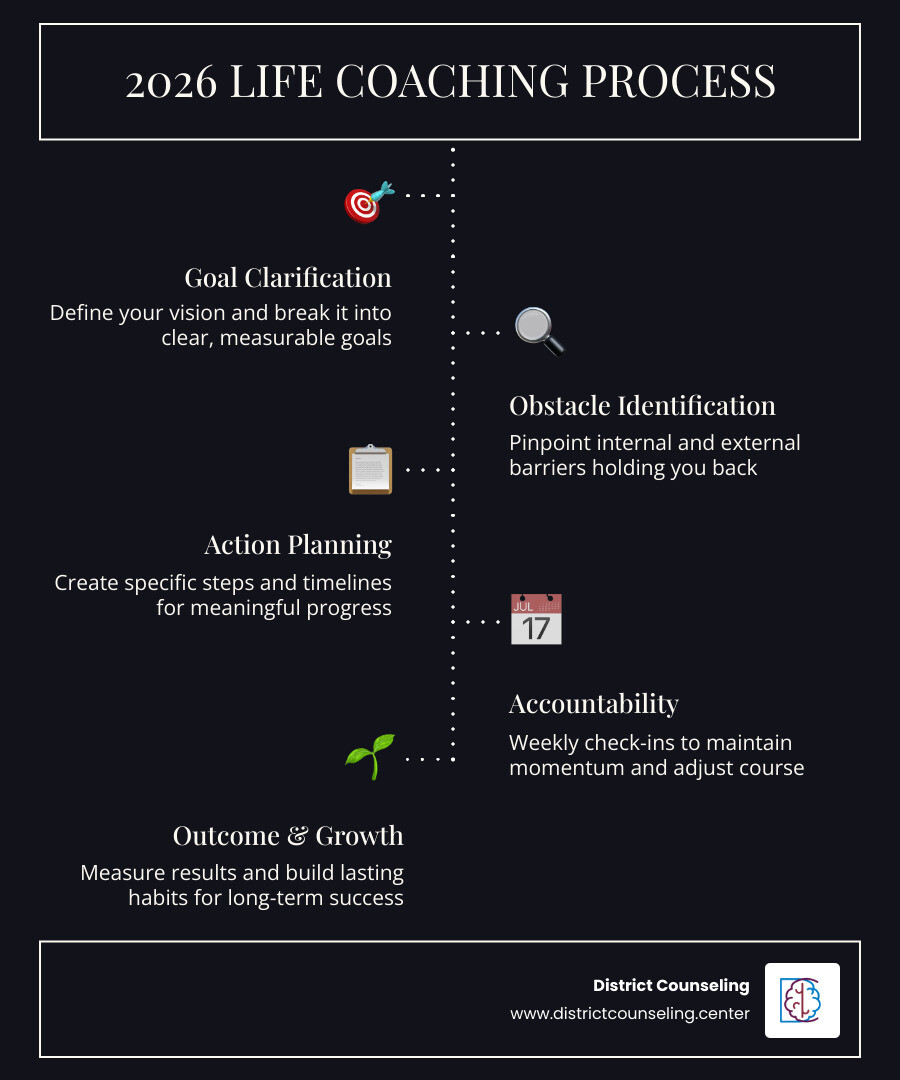
The magic of life coaching isn’t just in the conversation; it’s in the structure. Most effective coaching follows a specific roadmap designed to shift identity and behavior.

- Pattern Recognition: We often repeat the same mistakes because we can’t see our own “blind spots.” A coach helps you recognize these recurring patterns.
- Awareness Before Change: You cannot change what you do not acknowledge. Sessions focus on increasing self-awareness regarding limiting beliefs.
- Behavioral Shifts: Moving from “knowing” to “doing.” This involves setting small, actionable steps that lead to long-term change.
- Accountability: Regular check-ins ensure that the “roadmap” doesn’t just sit in a drawer.
At District Counseling, we view coaching as a “meta-profession” that can support almost any human endeavor. Whether you are looking for a Life Coach or specialized support tagged under Life Coach, the focus remains on empowering you to navigate life’s complexities.
Regulation and Ethics in Life Coaching
While there is no government-mandated license for coaching, the International Coaching Federation (ICF) has established itself as the gold standard for ethics and professionalism.
The ICF Code of Ethics provides guidelines on:
- Confidentiality: Ensuring your private sessions stay private.
- Professional Boundaries: Maintaining a clear, professional relationship.
- Referrals: Knowing when a client’s needs exceed the scope of coaching and require a licensed therapist.
How to Find a Qualified Professional
Finding the right fit is crucial. We recommend a three-step vetting process:
- Check Credentials: Look for coaches who have completed rigorous training programs (like those accredited by the ICF).
- Chemistry Calls: Most coaches offer a free “discovery call.” Use this to see if their style resonates with you.
- Methodology Assessment: Ask them how they coach. Are they using science-backed approaches or just “vibes”?
If you are looking for local support, our Fort Worth Life Coaching team emphasizes a sincere, authentic approach tailored to the Texas lifestyle.
Professional Standards: Qualifications and Earnings in 2026
In 2026, the “hobbyist” coach is being replaced by the “professional” coach. Education matters more than ever. Currently, 65% of coaches hold a graduate degree, and 30% hold a bachelor’s degree.
The Economics of Coaching
The financial landscape of the industry is diverse. In North America, life coaches earn an average annual salary of $67,800. However, this varies wildly based on experience:
- Entry Level (<1 year): $25.39 per hour
- Mid-Career (5-9 years): $58.64 per hour
- Late Career (10-19 years): $71.25 per hour
On average, a one-hour session costs around $272, though after business costs like marketing, insurance, and overhead, the coach typically recovers about $98 in revenue.
For those looking to enter the field, the SUCCESS Coaching Blog notes that the highest earners usually specialize in executive or business niches.
Income Factors and Career Growth
Several factors influence a coach’s income:
- Niche Specialization: Specialized coaches (like those for high-stakes transitions) can charge significantly more than generalists.
- Business Overhead: Self-employed coaches must manage their own billing, marketing, and taxes.
- Credentialing: Having an ICF credential (ACC, PCC, or MCC) often allows for higher rates due to increased trust and proven skill.
Future Trends: The Evolution of the Industry
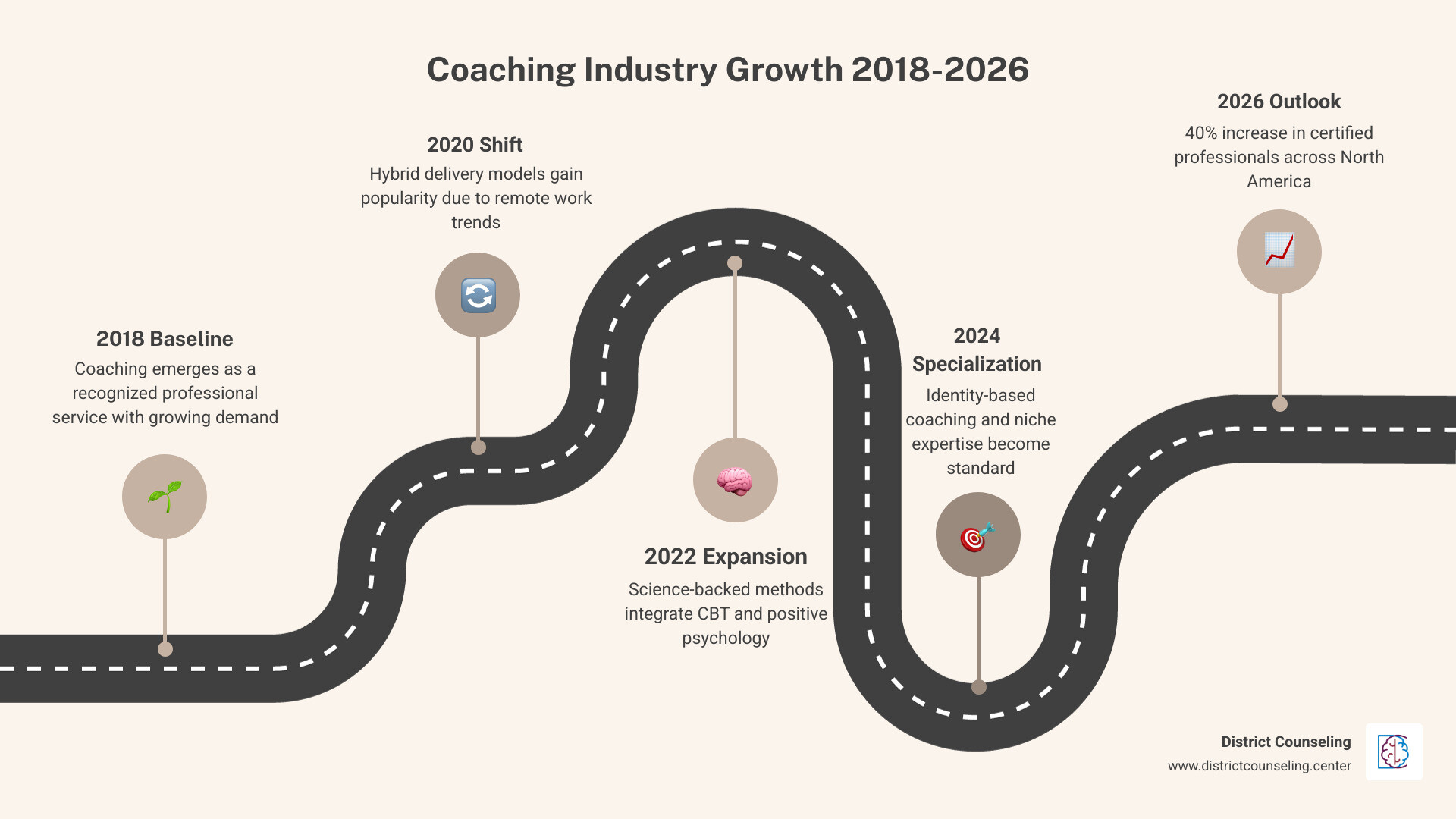
As we look toward the remainder of 2026 and beyond, several trends are reshaping life coaching:
- Identity-Based Coaching: This shifts the focus from “what you do” to “who you are.” By changing your self-concept, behavioral changes become more sustainable.
- Hybrid Delivery Models: While we love seeing clients in our offices in Pearland or The Woodlands, the shift toward “anywhere, anytime” digital coaching continues to grow.
- Science-Backed Approaches: There is an increasing integration of Cognitive Behavioral Theory (CBT) and positive psychology into coaching frameworks.
- Organizational Coaching Cultures: More companies in Houston and Austin are embedding coaching principles into their management styles rather than just hiring external consultants.
Frequently Asked Questions about Life Coaching
How do I know if I need a life coach or a therapist?
If you are struggling to function, dealing with intense trauma, or suspect a mental health condition, start with a therapist. If you are functional but feel unfulfilled, want to achieve a specific goal, or need an accountability partner for your career, a life coach is likely the better fit.
What are the typical costs for a session in 2026?
While the average is $272 per hour, you can find online “maintenance” coaching for as little as $199/month, while high-end executive coaches may charge upwards of $500 to $1,000 per session.
Is life coaching covered by health insurance?
Generally, no. Because coaching is not classified as a medical treatment for a diagnosed condition, it is an out-of-pocket investment in your personal development.
Conclusion
At District Counseling, we understand that the line between “needing help” and “wanting more” can sometimes be thin. Our heart is in providing sincere, authentic, and compassionate alignment to what matters most to you. Whether you are in Katy, Sugar Land, or Greater Heights, we are here to support your journey toward a more intentional life.
If you’re ready to stop talking in circles and start taking action, now is the time to explore how a professional can help you bridge the gap between where you are and where you want to be.
Start your journey with a Life Coach
Visited 1 times, 1 visit(s) today
Similar Posts

Adalid Blandin
September 14, 2026
The Definitive Guide to Life Coaching
Discover how life coaching can help you achieve goals, gain clarity, and create lasting change in 2026....

Adalid Blandin
September 11, 2026
The Ultimate Guide to Identifying Emotional Abuse in Relationships
The Ultimate Guide to Identifying Emotional Abuse in Relationships – Learn about emotional abuse relationship...

Adalid Blandin
September 9, 2026
A Comprehensive Guide to Effective Relationship Counseling Options
A Comprehensive Guide to Effective Relationship Counseling Options – Learn about relationship counseling...

Francisco Ortiz
September 7, 2026
First Couples Counseling Session: A Guide to Your First Hour on the Couch
Learn what happens in your first couples counseling session, from intake to ground rules, and how to prepare for a successful start....

Adalid Blandin
September 4, 2026
Spotting the Signs and Finding Help for Emotional Abuse
Recognize emotional abuse signs and connect with a relationship emotional abuse therapist for healing and support....

Francisco Ortiz
September 2, 2026
Riding Out the Storm: The Four Horsemen of Couples Therapy and Their Antidotes
Learn how the four horsemen couples therapy framework identifies destructive conflict patterns and provides proven antidotes to strengthen your relationship....

Francisco Ortiz
August 31, 2026
Premarital Counseling Online: Prep for Marriage from Your Couch
Prepare for marriage with premarital counseling online from your couch. Build skills, save on licenses, and strengthen your future today....

Francisco Ortiz
August 28, 2026
Licensed Telehealth Therapy Providers in Texas: A Quick Start Guide
Find licensed telehealth therapy Texas providers with this guide to legal rules, insurance parity, and clinical best practices....

Francisco Ortiz
August 26, 2026
The Intimacy Fix: What to Expect from Couples Sex Counselling
Learn how a relationship counsellor sex specialist helps couples rebuild intimacy, desire, and trust through evidence-based therapy....

Francisco Ortiz
August 24, 2026
Before the Nikah: Navigating Islamic Premarital Counseling
Discover how premarital counseling Islam builds a sacred, lasting union through faith-based modules, therapy, and practical guidance before your Nikah....


