
The Woodlands ADHD Testing Guide: What to Expect When You Can’t Focus
Why ADHD Testing in The Woodlands Matters More Than You Think
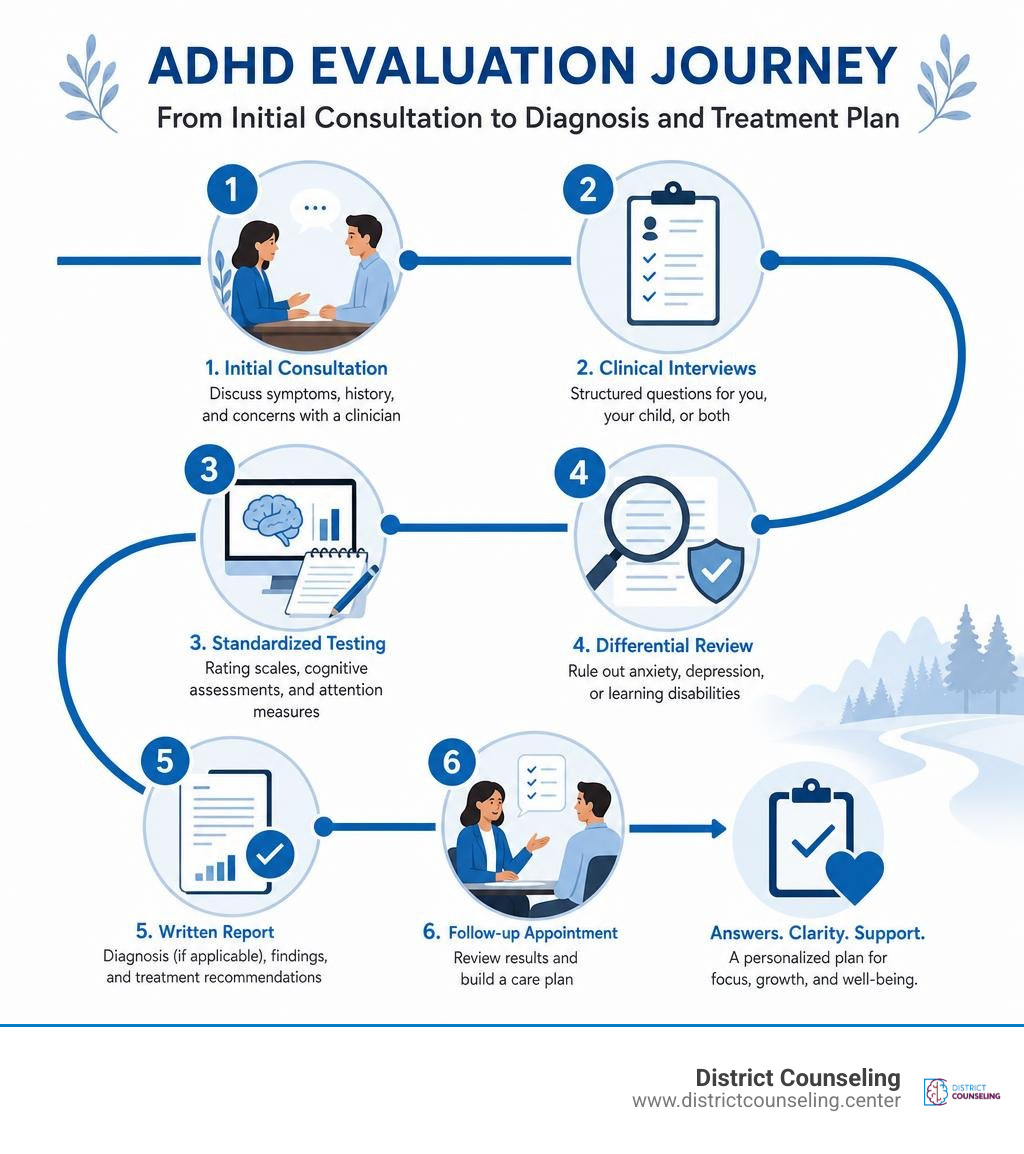
If you’re exploring ADHD testing in The Woodlands, here’s a quick overview of what to expect:
| Step | What Happens |
|---|---|
| 1. Initial consultation | Discuss symptoms, history, and concerns with a clinician |
| 2. Clinical interviews | Structured questions for you, your child, or both |
| 3. Standardized testing | Rating scales, cognitive assessments, and attention measures |
| 4. Differential review | Rule out anxiety, depression, or learning disabilities |
| 5. Written report | Diagnosis (if applicable), findings, and treatment recommendations |
| 6. Follow-up appointment | Review results and build a care plan |
Feeling scattered, overwhelmed, or like your brain just won’t cooperate? You’re not alone. Millions of children and adults live with undiagnosed ADHD — and many don’t find out until the struggles pile up at school, at work, or at home.
The good news? A proper evaluation can change everything. It gives you answers, direction, and access to real support.
In The Woodlands, families and professionals are increasingly turning to formal ADHD assessments to stop guessing and start getting help. This guide walks you through every step of the process — from recognizing the signs to understanding your results.
I’m Francisco Ortiz, a Licensed Professional Counselor-Supervisor with experience in psychological assessment and mental health evaluation, including ADHD testing in The Woodlands and across Texas. My background in forensic and clinical assessment means I understand how to identify what’s really going on beneath the surface — and how to help you move forward.
Recognizing the Signs of ADHD in Children and Adults
Attention-Deficit/Hyperactivity Disorder (ADHD) is not just a childhood condition, nor is it simply “having too much energy.” It is a complex neurodevelopmental condition that affects the brain’s executive functioning system—the control center responsible for planning, focusing, remembering instructions, and balancing multiple tasks.
Recognizing when normal daily distractions cross the line into clinical ADHD is the first step toward finding relief. Symptoms present differently across age groups and individuals, often falling into three primary presentations: inattentive, hyperactive-impulsive, or combined.

Common Symptoms in Children and Teens
In younger populations, ADHD symptoms are often noticed first by teachers or parents. These signs typically manifest in structured environments like classrooms:
- Inattention: Frequently making careless mistakes in schoolwork, difficulty sustaining attention during tasks or play, struggling to follow multi-step instructions, and constantly losing school supplies, homework, or personal items.
- Hyperactivity and Impulsivity: Fidgeting or squirming in seats, leaving their seat when remaining seated is expected, running or climbing in inappropriate situations, blurting out answers before questions are completed, and struggling to wait their turn.
According to the CDC Guidelines on ADHD Diagnosis, symptoms must be present before age 12, occur in multiple settings (such as both at home and school), and significantly interfere with daily functioning to warrant a clinical diagnosis.
Common Symptoms in Adults
For adults, ADHD rarely looks like running around a room. Instead, hyperactivity often morphs into internal restlessness, chronic mental fatigue, or severe executive dysfunction:
- Chronic Disorganization: Struggling to manage bills, keep appointments, or maintain a clean living or working space.
- Time Blindness: Consistently underestimating how long tasks will take, leading to chronic lateness or missed deadlines.
- Emotional Dysregulation: Experiencing rapid mood shifts, low frustration tolerance, and intense overwhelm when faced with minor setbacks.
- ADHD Burnout: Trying to mask symptoms and overcompensate for executive difficulties eventually leads to profound physical and mental exhaustion. If you are currently feeling this way, you can learn more about recovery strategies in our guide on How to Recover from ADHD Burnout Without Losing Your Mind.
Understanding ADHD Testing in The Woodlands
An accurate diagnosis of ADHD cannot be obtained through a quick 10-minute conversation or a simple online checklist. Because ADHD symptoms frequently mimic or overlap with other mental health conditions, a thorough evaluation is required.
At District Counseling, our approach to ADHD testing in The Woodlands is designed to look at the whole person. We combine objective data, behavioral observations, and subjective histories to build an accurate picture of your cognitive landscape. Learn more about our comprehensive approach to ADHD Evaluation for Children, Teens, and Adults in Texas.
A comprehensive evaluation typically incorporates several distinct diagnostic tools:
- Clinical Interviews: An in-depth conversation exploring your developmental, medical, educational, and social history. We look at how symptoms have impacted your life from childhood through to the present day in July 2026.
- Standardized Rating Scales: Questionnaires completed by you, and when appropriate, close family members, spouses, or teachers. Common tools include the Vanderbilt Assessment Scales (primarily for children) and the Conners Rating Scales.
- Cognitive and Attention Testing: Objective computerized tests, such as the Test of Variables of Attention (TOVA), which measure your impulse control and sustained attention in real-time by tracking response times and error rates.
Who is Qualified to Conduct ADHD Testing in The Woodlands?
When seeking ADHD testing in The Woodlands, it is vital to ensure you are working with a licensed professional who specializes in neurodevelopmental and psychological assessments. Not all mental health professionals are qualified or licensed to perform diagnostic testing.
Qualified practitioners in Texas generally include:
- Licensed Psychologists (Ph.D. or Psy.D.): These specialists are extensively trained in administering, scoring, and interpreting complex psychological and cognitive batteries.
- Psychiatrists (MD or DO): Medical doctors who specialize in mental health. While they can diagnose ADHD and prescribe medication, their evaluations are often shorter and focused primarily on clinical interviews rather than comprehensive cognitive testing batteries.
- Licensed Professional Counselors (LPCs) and Clinical Social Workers (LCSWs): Many master’s-level clinicians provide initial screenings, therapy, and behavioral coaching. At District Counseling, we offer specialized diagnostic evaluations designed to provide clarity and clear paths forward.
When choosing a provider, look for specialized experience in neurodevelopmental disorders to ensure your report is rigorous enough to be accepted by schools for 504 plans or by universities and workplaces for formal accommodations. You can learn more about our local services and team by visiting our page on The Woodlands.
Preparing for ADHD Testing in The Woodlands
To get the most out of your evaluation, a little preparation goes a long way. Having your historical records organized helps your clinician paint a complete picture of your developmental journey.
Before your testing day, we recommend gathering:
- School Records: Report cards (especially those with teacher comments about focus, effort, or behavior), standardized test scores, or past IEP/504 documentation.
- Medical History: A list of current medications, past diagnoses, and any recent physical exam results to rule out physical causes like thyroid issues.
- Prior Evaluations: Any previous psychological, speech, or occupational therapy reports.
For a step-by-step breakdown of how to prepare yourself mentally and logistically, check out our Ultimate Checklist for Adult ADHD Testing.
How the Diagnostic Process Differs for Kids vs. Adults
While the core neurobiological traits of ADHD remain consistent throughout life, the way we assess and diagnose the condition changes dramatically based on age.

In children, the diagnostic focus is largely on developmental milestones, behavioral observations in school, and external feedback from parents and teachers. Because children often lack the self-awareness to describe their executive dysfunction, we rely heavily on the adults in their lives to complete rating scales.
For adults, the process shifts toward self-reporting and reflective history. Because adults have often developed decades of coping mechanisms (or “masking” strategies) to hide their struggles, a clinician must dig deeper. We look at workplace performance, relationship patterns, and self-report scales.
Here is a quick comparison of how these evaluations differ:
| Assessment Component | Child ADHD Evaluation | Adult ADHD Evaluation |
|---|---|---|
| Primary Informants | Parents, teachers, pediatricians | The individual, spouses/partners, close friends |
| Observation Setting | Classroom observations, structured play | Clinical interview, workplace self-assessment |
| Key Metrics | Developmental milestones, academic progress | Career stability, relationship patterns, life management |
| Common Screening Focus | Hyperactivity, school disruption, peer interactions | Executive dysfunction, internal restlessness, burnout |
If you are an adult seeking to understand your own cognitive patterns, explore our comprehensive resource on Everything You Need to Know About an Adult ADHD Symptoms Test.
Differentiating ADHD from Anxiety, Depression, and Learning Disabilities
One of the most critical reasons to seek a formal, comprehensive evaluation rather than relying on self-diagnosis is the challenge of differential diagnosis. Many mental health conditions share overlapping symptoms with ADHD, and misdiagnosis can lead to ineffective treatment.
Consider these common overlaps:
- Anxiety: Chronic worry can make it incredibly difficult to concentrate, leading to careless mistakes and restlessness that look exactly like ADHD. However, while an individual with ADHD cannot focus because their brain is under-stimulated, an anxious individual cannot focus because their mind is occupied by intrusive thoughts.
- Depression: Major depressive disorder often causes brain fog, forgetfulness, low energy, and executive dysfunction.
- Learning Disabilities (LD): Dyslexia, dyscalculia, or auditory processing disorders can cause a child to tune out or act up during class out of frustration, mimicking the symptoms of inattentive or hyperactive ADHD.
According to the NIMH ADHD Overview, co-occurring conditions are incredibly common; many individuals with ADHD also struggle with anxiety or learning disorders. A professional evaluation disentangles these threads so you receive a treatment plan tailored to your actual needs.
The Cost of ADHD Evaluations and Insurance Coverage
Understanding the financial side of mental health care is essential to planning your evaluation without unnecessary stress. The cost of adhd testing the woodlands can vary widely depending on the complexity of the assessment, the credentials of the clinician, and your insurance coverage.
In July 2026, typical private-pay rates for a comprehensive ADHD evaluation in the Greater Houston and Woodlands areas range from $1,200 to $3,000. This fee generally covers the initial consultation, testing administration, scoring, report writing, and a dedicated feedback session.
- Insurance Coverage: Some insurance plans cover psychological testing, while others consider it elective or require extensive pre-authorization. It is crucial to contact your insurance provider directly to ask about your “out-of-network neuropsychological testing benefits” or in-network mental health coverage.
- Out-of-Pocket Costs: If you choose to pay out-of-pocket, many clinics offer payment plans or sliding scales to make the process more accessible.
For a realistic look at budgeting for your assessment, read our helpful guide on Breaking Down the Average Cost of ADHD Testing Without Losing Your Mind.
While the upfront cost can seem daunting, delaying an evaluation also carries a heavy toll. Unaddressed ADHD can lead to academic failure, job loss, strained relationships, and secondary mental health struggles. Learn more about The Hidden Cost of Waiting for an ADHD Evaluation.
Frequently Asked Questions About ADHD Testing
Navigating the path to an ADHD diagnosis often brings up many practical questions. Here are the answers to the questions we hear most frequently from families in The Woodlands.
How long does a typical ADHD assessment take, and what does the report include?
The entire evaluation process is spread across multiple steps to prevent cognitive fatigue and ensure accuracy. Generally, the actual testing face-to-face sessions take between 2 to 4 hours.
Once testing is complete, the clinician compiles a comprehensive written report. This report is a detailed roadmap of your cognitive strengths and weaknesses. It includes:
- A formal diagnostic statement.
- Your scores on all cognitive and attention tests compared to national averages.
- Specific recommendations for school accommodations (such as extra time on tests or quiet testing environments) or workplace adjustments.
- Guidance on behavioral therapy, executive function coaching, and medical referrals.
To see how this fits into your overall journey, read about How to Get Tested for ADHD in 7 Simple Steps.
Can I use online screeners instead of a formal ADHD evaluation?
While online quizzes and self-screeners can be a fun and helpful starting point to build self-awareness, they lack clinical validity. They cannot rule out other conditions, nor are they accepted by schools, universities, or doctors for accommodations and medical treatment.
To understand the difference between online tools and formal evaluations, take a look at our breakdown of ADHD Symptoms Test: A Comparison of Top Online Screeners.
What should I expect during the initial consultation and follow-up appointments?
The process begins with an initial consultation, which is a conversational clinical interview. We will discuss your current struggles, history, and goals.
After the testing sessions are complete, you will return for a follow-up feedback appointment. During this session, we sit down to go through your written report page by page, explain what the data means in plain English, and help you establish a clear, actionable treatment plan.
If you are wondering whether your struggles warrant this process, explore Why Your Adult Brain Might Need an ADHD Evaluation.
Conclusion
Living with undiagnosed ADHD can feel like running a marathon with weights tied to your ankles. You are working twice as hard as everyone else just to stay in the same place. But it does not have to be that way.
At District Counseling, we believe in providing sincere, authentic, and compassionate alignment to what matters most. Whether you are looking for answers for your child who is falling behind in school, or you are an adult tired of feeling constantly overwhelmed at work, we are here to support you.
We serve communities across Texas—including Houston, Katy, Cypress, Spring, and right here in The Woodlands. If you are ready to stop guessing and start finding answers, explore our Services: ADHD Evaluation options, or reach out to us directly through The Woodlands Contact page to schedule your initial consultation. Let’s work together to clear the mental fog and help you regain control of your life.
If you are also struggling with underlying feelings of stress, sadness, or anxiety, we also offer integrated Depression and Anxiety Counseling to support your complete mental wellness journey.
Visited 3 times, 1 visit(s) today
Similar Posts

Adalid Blandin
September 30, 2026
Mental Health and Miracles: Finding Local Christian Care
Find pastoral counselling near me for faith-based emotional and spiritual support in Texas....

Adalid Blandin
September 28, 2026
Missouri City and Houston Couples Therapy 101
Explore relationship counseling in Houston options, from couples therapy to intensives, with costs, insurance, and therapist tips for Missouri City families....

Adalid Blandin
September 25, 2026
How to find authentic therapy for emotional exhaustion in Houston
Find emotional exhaustion therapy Houston that helps professionals and caregivers move from burnout to renewed energy and balance....

Francisco Ortiz
September 23, 2026
A Practical Guide to Finding Licensed Telehealth Counselors in Texas
Find licensed telehealth counseling in Texas with this guide to legal standards, privacy, insurance, and best practices for virtual care....

Adalid Blandin
September 21, 2026
All About Psychiatric Weight Loss Options and Treatments
Explore psychiatric weight loss options, including medications, therapy, and bariatric support for holistic wellness....

Francisco Ortiz
September 18, 2026
No Traffic, No Waiting Rooms: Your Guide to Telehealth Counseling in Texas
Learn the rules, rights, and benefits of telehealth counseling in Texas with this complete guide to virtual therapy....

Adalid Blandin
September 16, 2026
Why Your Mitochondria Might Be Depressed
Explore metabolic mental health to boost brain energy, ease mood disorders, and support recovery through mitochondria-focused strategies....

Adalid Blandin
September 14, 2026
The Definitive Guide to Life Coaching
Discover how life coaching can help you achieve goals, gain clarity, and create lasting change in 2026....

Adalid Blandin
September 11, 2026
The Ultimate Guide to Identifying Emotional Abuse in Relationships
The Ultimate Guide to Identifying Emotional Abuse in Relationships – Learn about emotional abuse relationship...

Adalid Blandin
September 9, 2026
A Comprehensive Guide to Effective Relationship Counseling Options
A Comprehensive Guide to Effective Relationship Counseling Options – Learn about relationship counseling...


