Relationship Counseling Near Me: Find Local Counselors
When You’re Searching for Relationship Counseling Near Me
If you’re looking for relationship counseling near me, here’s what you need to know right away:
Quick answers to common questions:
| Question | Answer |
|---|---|
| What is it? | Therapy for couples or partners to improve communication, rebuild trust, and strengthen connection |
| Who is it for? | Any couple — married, dating, or cohabiting — facing conflict, distance, or major life changes |
| How do I find one? | Search for a licensed therapist specializing in couples or marriage counseling in your area or online |
| How long does it take? | Most couples see meaningful progress in 8–20 weekly sessions |
| Does insurance cover it? | Coverage varies — some plans cover it, others don’t; ask your provider |
| Is online therapy an option? | Yes — telehealth couples counseling is widely available and equally effective |
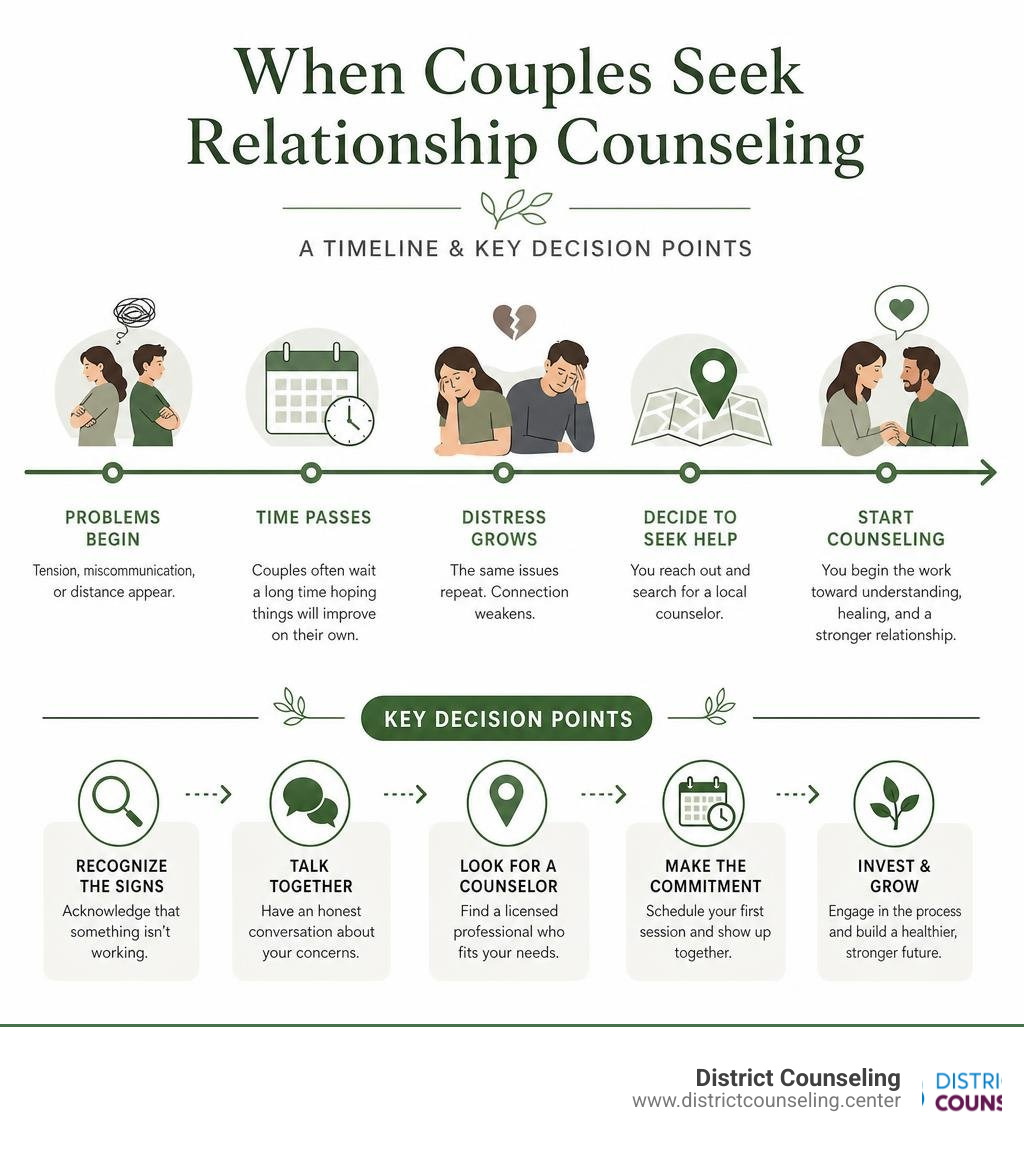
Something feels off in your relationship — and it may have felt that way for a while. Maybe you’re having the same argument on repeat. Maybe you feel alone even when you’re in the same room as your partner. Research shows that couples wait an average of nearly three years after problems begin before seeking professional help. That’s three years of distance quietly growing.
The good news? Couples therapy works. Research consistently shows it produces large, lasting improvements in relationship satisfaction — for couples willing to do the work together.
I’m Francisco Ortiz, a Licensed Professional Counselor-Supervisor with extensive experience providing counseling and psychotherapy to individuals, couples, and families navigating relationship conflicts, trauma, and mood disorders — making relationship counseling near me a core part of the work I do every day at District Counseling. Whether you’re in crisis or simply want a stronger connection, the right support can change everything.
What is Relationship Counseling and How Does It Help?
Relationship counseling is a collaborative therapeutic process designed to help partners understand their relational dynamics, resolve lingering conflicts, and build a healthier, more resilient bond.
Unlike self-help books or advice from well-meaning friends, counseling provides a structured, neutral space guided by a trained professional. In this environment, you and your partner can explore the underlying patterns that drive your behavior without the conversation devolving into a finger-pointing match.
At District Counseling, we look at the relationship itself as the client. Our goal is not to declare a “winner” or a “loser” in your arguments. Instead, we help you step back and see the negative cycles you both get caught in. By recognizing these loops, you can begin to dismantle them and replace them with patterns of safety, understanding, and mutual support. Learn more about couples therapy and how it can help you shift from feeling like roommates to feeling like true partners.
Key Differences: Relationship Counseling vs. Individual Therapy
While both individual therapy and relationship counseling promote growth, they operate through completely different lenses.
Individual therapy focuses on the self—your personal history, your internal coping mechanisms, and your unique mental health goals. Relationship counseling, on the other hand, is inherently systemic. It focuses on the space between two people.
| Feature | Individual Therapy | Relationship Counseling |
|---|---|---|
| Primary Focus | The individual’s thoughts, emotions, and personal growth. | The relational dynamic and connection between partners. |
| Therapeutic Lens | Intrapsychic (what is happening inside you). | Interpersonal (what is happening between you). |
| The “Client” | The person sitting in the chair. | The relationship itself. |
| Goal | Personal healing, coping skills, and self-awareness. | Improved communication, trust, and shared connection. |
In individual therapy, your therapist only hears your side of the story. In couples therapy, the counselor observes your interactional patterns in real-time. This allows us to interrupt unhealthy behaviors—like defensiveness or stonewalling—right as they happen in the room.
Common Issues Addressed in Relationship Counseling Near Me
Couples seek professional support for a wide variety of reasons. Some are navigating a sudden crisis, while others feel a slow, persistent erosion of closeness. When looking for relationship counseling near me, partners often want to address:
- Communication Breakdown: Feeling like every discussion turns into a shouting match or a cold shoulder.
- Intimacy and Desire Discrepancies: Navigating differences in physical affection, sexual desire, and emotional closeness.
- Life Transitions: Adapting to major shifts such as parenthood, career changes, retirement, or relocating to a new city.
- Blended Family Challenges: Managing the unique complexities of step-parenting and co-parenting.
- Neurodiversity: Helping partners understand how ADHD or autism impacts their communication styles and expectations.
- Emotional Distance: Feeling more like polite roommates than romantic partners.
No matter where you are on this spectrum, recognizing the signs early can save your relationship from severe, long-term distress. Read about when to seek couples counseling to determine if it is the right time for you and your partner to take this step.
Proven Therapeutic Approaches for Couples
We don’t believe in using generic, one-size-fits-all advice. True relationship transformation requires evidence-based methodologies that address both the cognitive and emotional aspects of love.
When we work with couples, we draw from highly researched frameworks, including:
- The Gottman Method: Developed by Drs. John and Julie Gottman, this approach is based on over forty years of research with thousands of couples. It focuses on building the “Sound Relationship House” by strengthening friendship, managing conflict constructively, and creating shared meaning. It is particularly famous for identifying and dismantling the “Four Horsemen of the Apocalypse”: criticism, contempt, defensiveness, and stonewalling.
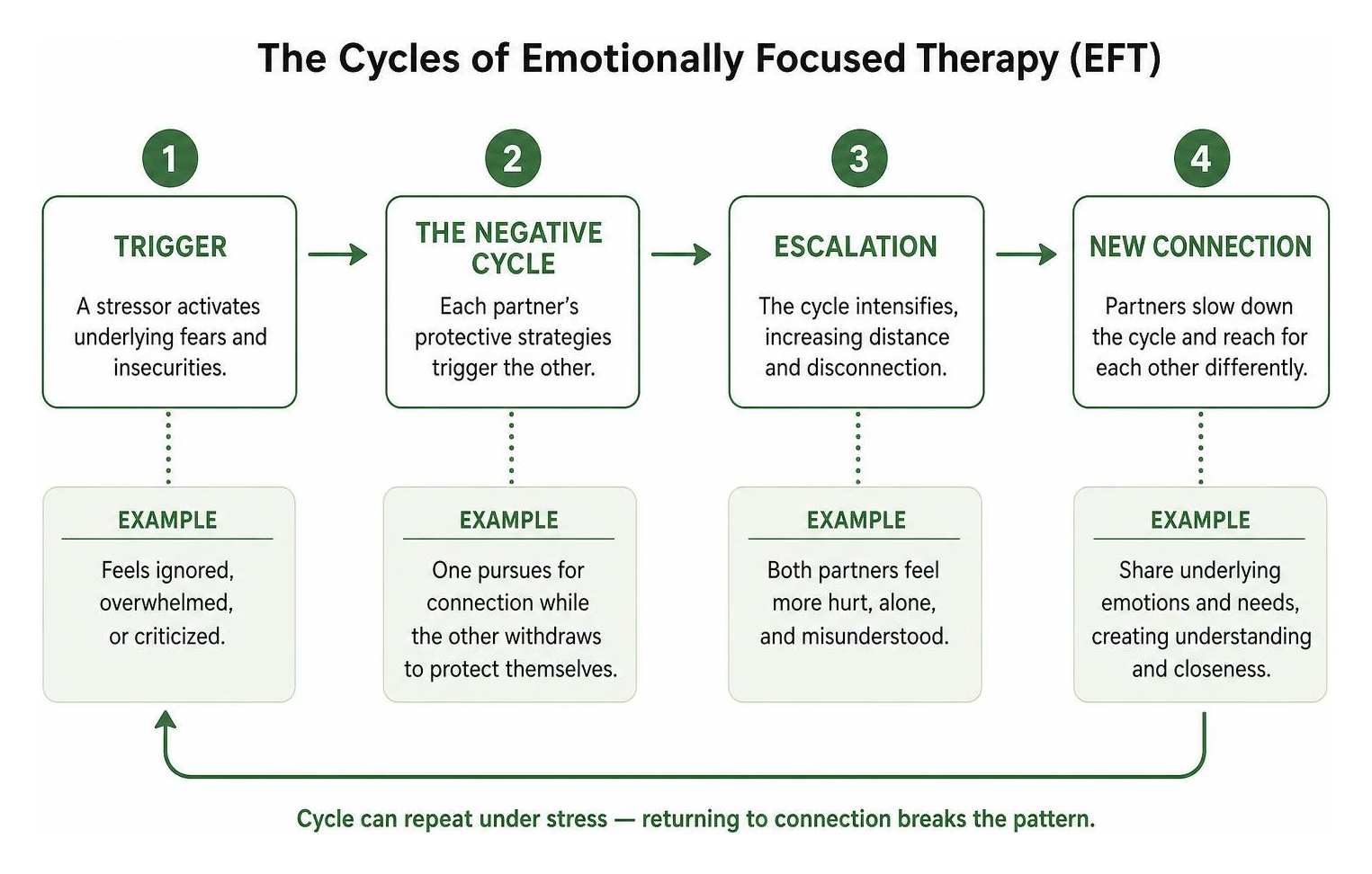
- Emotionally Focused Therapy (EFT): Grounded in attachment theory, EFT views relationship distress as a threat to emotional security. EFT helps partners identify their “negative cycle” (such as one partner pursuing for connection while the other withdraws to protect themselves) and guides them toward creating a secure, trusting bond.
- Experiential and Systems Approaches: These methods focus on what is happening in the therapy room in real-time, helping couples experience new, positive emotional connections right during the session rather than just talking about their problems intellectually.
By using these targeted frameworks, we help you move past surface-level arguments and get to the root of your connection. Explore the ultimate guide to relationship therapy to understand how these different modalities can be tailored to your relationship’s unique personality.
Rebuilding Trust and Healing from Betrayal
There are few relationship challenges as painful as a breach of trust. Whether it is an emotional affair, physical infidelity, or financial secrecy, betrayal shatters the foundation of emotional safety. Many couples wonder if it is even possible to recover after such a devastating blow.
The answer is yes—but it requires a structured, compassionate process. Rebuilding trust cannot be rushed, and a simple “I’m sorry” is rarely enough. Healing typically involves three distinct phases:
- Atonement: The partner who crossed the boundary must demonstrate genuine remorse, answer questions honestly, and establish complete transparency.
- Attunement: The couple works to understand the vulnerabilities in the relationship that existed prior to the betrayal, without excusing the betrayal itself.
- Attachment: The partners slowly build a new relationship contract based on reassurances, emotional safety, and consistent, trustworthy actions over time.
If you are currently walking through this painful valley, professional guidance is essential to keep the conversation productive. Learn about couples counseling after betrayal and explore our practical tips to build trust in a relationship to start taking your first steps toward healing.
Improving Communication and Connection
“We just don’t know how to communicate.” This is the most common phrase we hear from couples entering our offices. Yet, communication is rarely just about choosing the right words. It is about emotional responsiveness.
When we argue about chores, finances, or scheduling, we are often actually asking deeper, underlying questions: Do I matter to you? Will you be there when I call? Can I trust you to prioritize us?
In counseling, we help you slow the conversation down. Instead of reacting to the surface-level frustration, you will learn to express the vulnerable feelings underneath—like fear, loneliness, or inadequacy. How to improve communication with your spouse is a central focus of our work, helping you turn daily friction into opportunities for deeper emotional intimacy.
How to Find the Best Relationship Counseling Near Me
Finding the right therapist is a lot like dating—fit matters. You need someone who is not only highly qualified but also someone with whom both you and your partner feel safe, respected, and understood.

When searching for relationship counseling near me, keep these key factors in mind:
- Look for Specialization: General therapists are wonderful, but couples counseling requires specialized training. Look for professionals who explicitly practice evidence-based models like the Gottman Method or EFT.
- Verify Credentials: Ensure your therapist is licensed in Texas (such as an LMFT, LPC, or LCSW) and has a clean standing with their licensing board.
- Assess Neutrality: A great couples therapist will not take sides. They should make both of you feel heard, challenged, and supported.
Taking the time to research your options can make all the difference in your therapeutic journey. To help you navigate this search, you can find a therapist for couples relationship issues who aligns with your specific goals.
Evaluating Relationship Counseling Near Me and Online Options
In July 2026, couples have more flexibility than ever before when it comes to how they receive care. At District Counseling, we offer both in-person and online counseling options to fit your busy schedule.
- In-Person Therapy: Many couples prefer the physical safety and focused environment of an office. We provide comfortable, welcoming spaces across our Texas locations, including our District Counseling in Copperfield office and our Cypress office.
- Online Therapy (Telehealth): If you have a busy work schedule, young children at home, or live in different parts of Texas, online therapy is an incredibly convenient option. Research shows that virtual couples therapy is just as effective as in-person sessions.
- Intensive Formats: For couples in acute crisis or those who want to jumpstart their progress, intensive counseling sessions or weekend retreats can provide deep, focused work in a shorter timeframe.
Whether you prefer meeting face-to-face in Houston, Katy, or Austin, or connecting from the comfort of your living room via secure telehealth, we are here to accommodate your needs.
Cost, Insurance, and What to Expect in Your First Session
We believe in complete transparency when it comes to the logistics of therapy. Here is what you can expect:
- The First Session: Your initial intake session is about gathering history and establishing goals. We will discuss what brought you in, explore your relationship timeline, and begin mapping out your interactional patterns.
- Out-of-Pocket Costs & Insurance: Most health insurance plans do not cover couples counseling because relationship distress is not classified as a mental health diagnosis. However, we can provide you with detailed superbills if your plan offers out-of-network reimbursement, and we accept HSA/FSA cards.
- A Non-Judgmental Space: No matter what your relationship looks like—whether you are a traditional married couple, navigating a blended family, or exploring non-traditional dynamics—our rooms are entirely safe and affirming. Find local support from open relationships to marriage guidance to see how we tailor our compassionate care to honor your unique worldview.
Frequently Asked Questions About Relationship Therapy
Embarking on therapy can feel intimidating. Here are honest answers to the questions we hear most frequently.
How long does relationship counseling typically last?
The duration of therapy depends entirely on your unique situation and goals. On average, couples attending weekly sessions see significant, lasting shifts within 8 to 20 sessions.
For couples with deeply ingrained patterns or complex trauma, therapy may last longer. We continuously monitor your progress using collaborative discussions and feedback to ensure you are meeting your milestones and feeling the positive impacts in your daily life.
What is the success rate of couples counseling?
While overall industry statistics vary, specialized relationship practices report incredibly high success rates when both partners are motivated. For example, over 75% of clients at dedicated relationship centers reach or exceed their therapy goals.
The primary predictor of success is not how bad your problems are when you start, but how willing both of you are to look at your own behaviors and try new ways of connecting. Read about what makes love last to discover the foundational habits that keep relationships strong long after therapy ends.
Can counseling help if only one partner is willing to attend?
Absolutely. While it is ideal for both partners to be in the room, a relationship is a system. When one person changes their steps in the “dance,” the entire dance has to change.
If your partner is hesitant or refuses to attend, individual counseling focused on relationship dynamics can still help you gain clarity, establish healthy boundaries, and learn how to communicate more effectively. If you want to start this journey on your own, you can find your perfect local match for one-on-one counseling to support your personal and relational growth.
Conclusion

Your relationship is one of the most important investments you will ever make. It affects your physical health, your emotional well-being, your career, and your family. Waiting for things to “just get better” on their own often leads to deeper resentment and harder roads ahead.
At District Counseling, we offer a sincere, authentic, and compassionate alignment to what matters most to you. With convenient locations across Texas—including Houston, Cypress, Katy, Austin, Fort Worth, Sugar Land, and The Woodlands—our dedicated team is ready to help you rebuild the connection you deserve.
You don’t have to navigate this alone. Schedule a session for relationship and marital counseling today, and let’s work together to restore the warmth, trust, and joy in your partnership.
Visited 2 times, 1 visit(s) today
Similar Posts

Francisco Ortiz
October 16, 2026
Navigating Neuropsychological Evaluations from Katy to Pasadena
Learn how an ADHD evaluation for Houston teens works, from medication management to school accommodations and 504 plans....

Francisco Ortiz
October 14, 2026
How Texas caregivers can beat exhaustion with virtual therapy
Beat caregiver exhaustion therapy Texas caregivers trust—virtual sessions for stress, boundaries, and recovery. Start today....

Francisco Ortiz
October 12, 2026
Find Local Youth Counselor: How They Can Help Your Teen Thrive (52 characters)
Find a qualified youth counselor near me to help your teen thrive with evidence-based support for anxiety, trauma, and more....

Francisco Ortiz
October 9, 2026
Faith-Based Pastoral Counseling: A Comprehensive Guide
Discover how pastoral counseling integrates faith and psychology for holistic healing, grief, trauma, and marital support....

Francisco Ortiz
October 7, 2026
Houston Counseling Options: Find Local Help Nearby
Find affirming counseling in Houston for trauma, LGBTQ+ care, couples, and more. Explore local options and start your healing today....
Francisco Ortiz
October 5, 2026
Why every teacher needs a burnout therapy game plan
Why every teacher needs a burnout therapy game plan – Learn about burnout therapy for teachers...

Francisco Ortiz
October 2, 2026
Child Therapist Near Me? Here is How to Spot a Great One
Find a child therapist near me who fits your child’s needs. Learn signs, costs, and effective therapy options....

Adalid Blandin
September 30, 2026
Mental Health and Miracles: Finding Local Christian Care
Find pastoral counselling near me for faith-based emotional and spiritual support in Texas....

Adalid Blandin
September 28, 2026
Missouri City and Houston Couples Therapy 101
Explore relationship counseling in Houston options, from couples therapy to intensives, with costs, insurance, and therapist tips for Missouri City families....

Adalid Blandin
September 25, 2026
How to find authentic therapy for emotional exhaustion in Houston
Find emotional exhaustion therapy Houston that helps professionals and caregivers move from burnout to renewed energy and balance....


