
A Comprehensive Guide to ADHD Testing for Adults
Why ADHD Testing for Adults Is More Important Than You Think
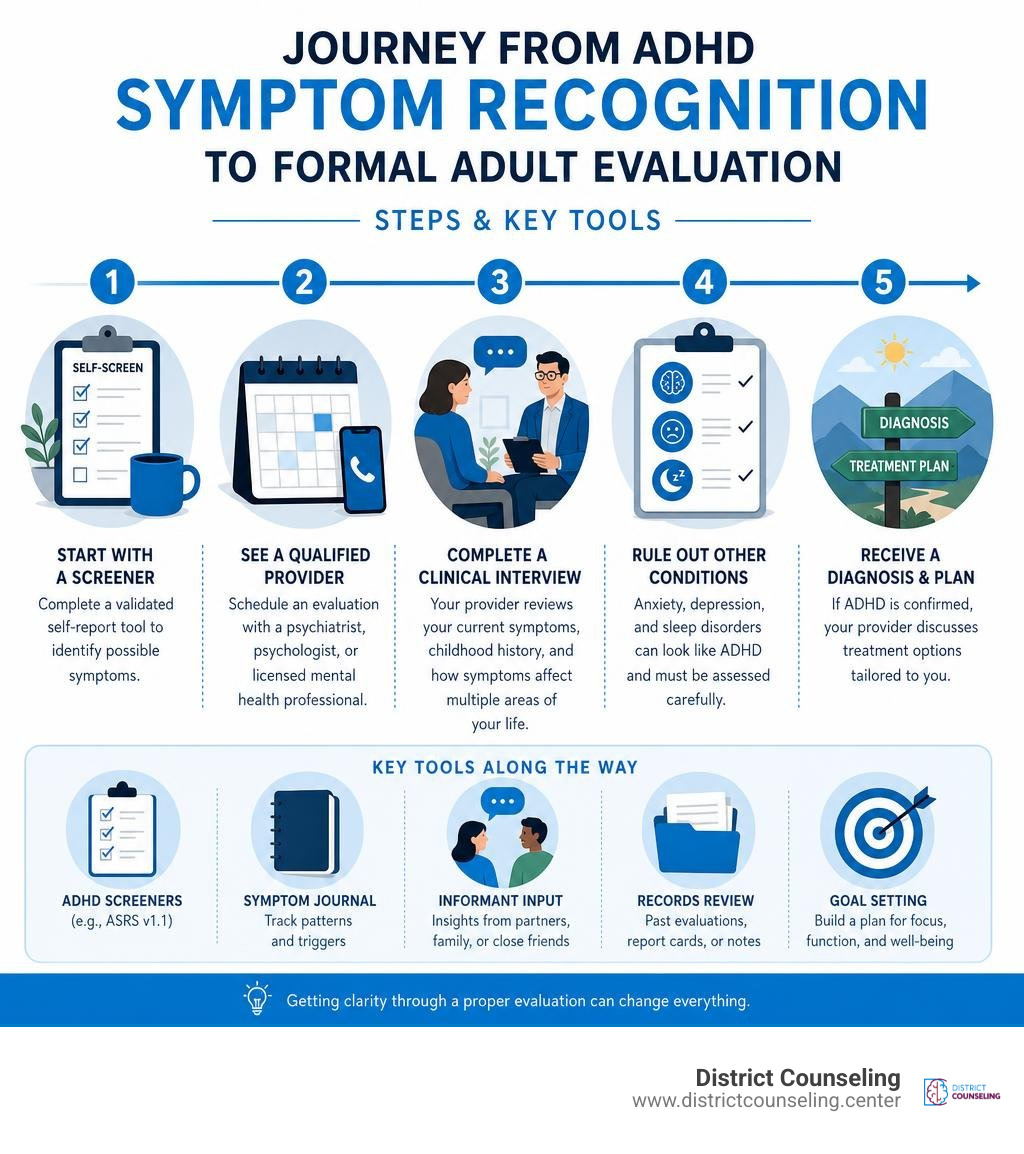
ADHD testing for adults is the process of getting a formal clinical evaluation to find out whether your struggles with focus, organization, and impulse control are caused by Attention-Deficit/Hyperactivity Disorder. Here is what that process looks like at a glance:
How Adult ADHD Testing Works — Quick Overview:
- Start with a screener — Complete a validated self-report tool like the WHO Adult ADHD Self-Report Scale (ASRS v1.1) to identify possible symptoms.
- See a qualified provider — Schedule an evaluation with a psychiatrist, psychologist, or licensed mental health professional.
- Complete a clinical interview — Your provider reviews your current symptoms, childhood history, and how symptoms affect multiple areas of your life.
- Rule out other conditions — Anxiety, depression, and sleep disorders can look like ADHD and must be assessed carefully.
- Receive a diagnosis and plan — If ADHD is confirmed, your provider discusses treatment options tailored to you.
ADHD affects roughly 4.4% of U.S. adults — yet most people living with it have never been diagnosed. Many spend years assuming their chronic disorganization, missed deadlines, and mental restlessness are just personality flaws or the result of a stressful life. They are not.
Getting clarity through a proper evaluation can change everything.
I’m Francisco Ortiz, a Licensed Professional Counselor-Supervisor and Certified Forensic Mental Health Evaluator with extensive experience conducting psychological assessments and supporting adults navigating complex mental health concerns, including ADHD testing for adults. In this guide, I’ll walk you through everything you need to know — from recognizing symptoms to understanding what a real clinical evaluation involves.
Understanding Adult ADHD: Symptoms, Types, and Childhood Differences
For decades, society viewed Attention-Deficit/Hyperactivity Disorder as a childhood condition—something kids eventually “grew out of” once they graduated high school. We now know that is simply not how the neurobiology of ADHD works.
While visible physical hyperactivity often softens as we age (turning from running around classrooms into inner restlessness or constant fidgeting), core executive function challenges follow us into our careers, relationships, and daily responsibilities.
ADHD is a highly genetic, neurodevelopmental condition. Research shows that the heritability of ADHD is around 70% to 80% in adults, matching childhood rates. According to the Updated European Consensus Statement on diagnosis and treatment of adult ADHD, adults with ADHD experience persistent differences in how brain networks—specifically the default mode network and cognitive control networks—communicate with one another.
The Three ADHD Presentations in Adulthood
Under the DSM-5 diagnostic criteria, ADHD is categorized into three distinct presentations. How these present in an adult context often looks quite different than in elementary school:
- Predominantly Inattentive Presentation: Adults with inattentive ADHD rarely bounce off the walls. Instead, they struggle with internal focus. You might lose track of conversation threads during client meetings, misplace your car keys four times before leaving the house, double-book client appointments, or feel completely paralyzed by administrative paperwork.
- Predominantly Hyperactive-Impulsive Presentation: In adults, hyperactivity manifests as a feeling of being “driven by an internal motor.” You may talk excessively, interrupt colleagues during meetings, make sudden impulse purchases, or feel deeply uncomfortable sitting still through long presentations.
- Combined Presentation: This is the most common presentation in adult clinical evaluations. Adults with combined presentation meet diagnostic thresholds for both inattention and hyperactivity-impulsivity, navigating both organizational friction and emotional or physical restlessness.
If you suspect your brain works differently, learning Why Your Adult Brain Might Need an ADHD Evaluation can help reframe years of unexplained daily struggles.
Common Symptoms and High-Functioning Coping Mechanisms
Many adults seeking adhd testing adults services are bright, hardworking, and successful on paper. They have high-functioning ADHD, which means they have spent years building intense compensation strategies to cover up their cognitive hurdles.
Common adult ADHD struggles include:
- Time Blindness: Inability to accurately estimate how long tasks take, leading to chronic tardiness or rushing at the last minute.
- Task Initiation Paralysis: Staring at a blank screen or a pile of laundry for two hours, desperately wanting to start, but feeling mentally blocked.
- Hyperfocus: The uncanny ability to focus on an engaging, high-interest project for 8 hours straight while completely forgetting to eat, drink water, or answer urgent emails.
- Rejection Sensitivity: Heightened emotional vulnerability to real or perceived criticism, leading to extreme people-pleasing or withdrawal.
To compensate, high-functioning adults often rely on looming deadlines and panic-driven adrenaline spikes to force task completion. While this gets the job done, it takes an enormous physical and mental toll over time. Unchecked compensation inevitably leads to severe exhaustion. If you are experiencing this cycle, exploring How to Recover from ADHD Burnout Without Losing Your Mind is an essential step toward restoring your balance.
What to Expect During ADHD Testing for Adults
When you decide to undergo formal ADHD testing for adults, it is helpful to know that there is no single blood test, brain scan, or 10-minute online quiz that can deliver a valid clinical diagnosis. Because ADHD symptoms overlap with many other psychological and medical conditions, formal assessment relies on a comprehensive, multi-step clinical evaluation.

At District Counseling, across our Texas locations—including Houston, Austin, Fort Worth, The Woodlands, Katy, Cypress, and Sugar Land—we guide adults through a warm, thorough, and structured evaluation process. If you want to know what steps to prepare for, check out our guide on How to Get Tested for ADHD in 7 Simple Steps.
Standardized Tools Used in ADHD Testing for Adults
To ensure diagnostic precision and eliminate subjective bias, evaluators use standardized, evidence-based rating scales and clinical diagnostic interviews. Key instruments include:
- ASRS v1.1 (Adult ADHD Self-Report Scale): Developed with the World Health Organization (WHO), the Adult ADHD Self-Report Scale-V1.1 (ASRS-V1.1) Screener evaluates 18 DSM criteria adapted specifically to adult working environments and lifestyle scenarios.
- DIVA 2.0 / DIVA-5 (Diagnostic Interview for ADHD in Adults): The Diagnostic Interview for ADHD in adults (DIVA) is a semi-structured interview protocol that systematically compares current adult behaviors against childhood behavior patterns across 18 criteria.
- CAARS (Conners’ Adult ADHD Rating Scales): Standardized self-report and observer-report instruments that quantify symptom severity relative to age-matched peer norms.
- M.I.N.I. (Mini-International Neuropsychiatric Interview): A validated structured psychiatric interview used to screen for co-occurring mood disorders, anxiety, and differential mental health conditions.
Step-by-Step Clinical Diagnostic Process
A robust adult evaluation typically takes place across two structured sessions to ensure no details are missed:
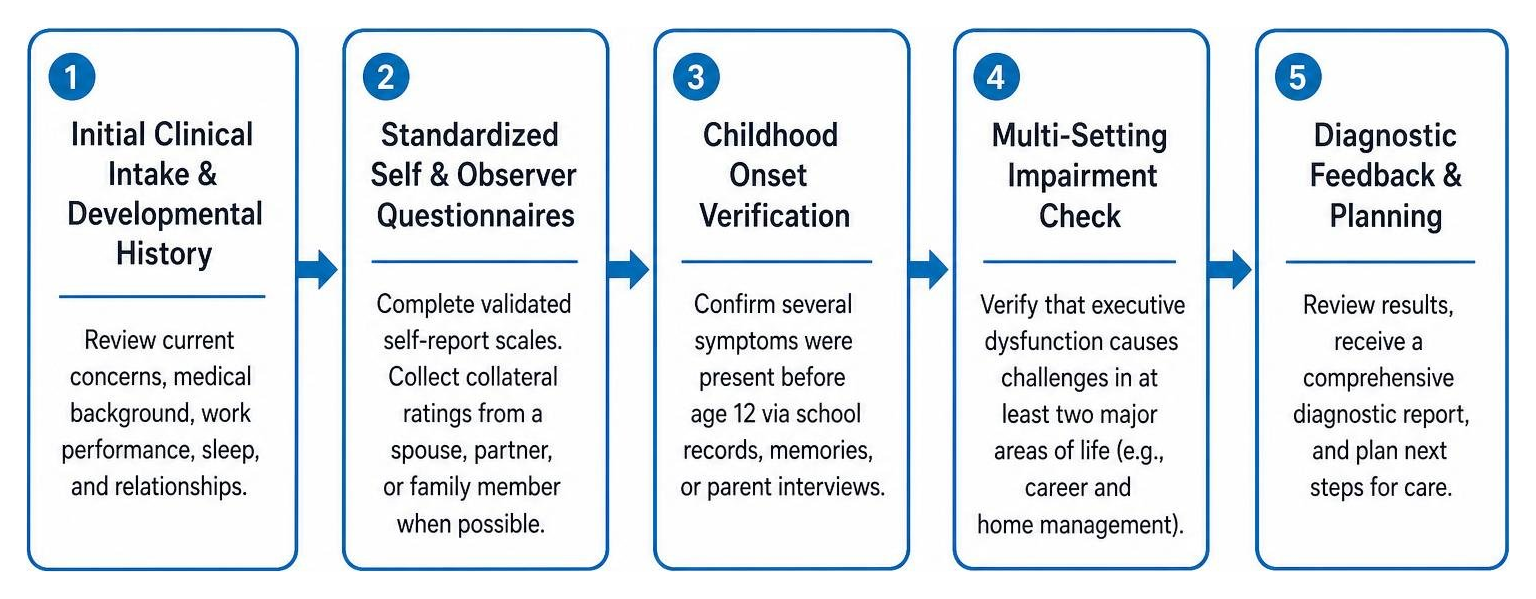
- Initial Clinical Intake & Developmental History: Your clinician reviews your current psychological concerns, workplace performance, relationship patterns, medical background, and sleep quality.
- Standardized Self & Observer Questionnaires: You complete validated self-report scales. When possible, collateral rating scales are gathered from a spouse, partner, or family member to provide observer context.
- Childhood Onset Verification: Per the DSM-5, several symptoms must have been present before age 12. Clinicians review historical evidence such as old school report cards (“works below potential,” “frequently distracted,” “talks out of turn”), childhood memories, or parent interviews.
- Multi-Setting Impairment Check: Evaluators verify that executive dysfunction causes measurable challenges across at least two major areas of life (e.g., career and home management).
- Diagnostic Feedback & Planning: You meet with your clinician to review test results, receive a comprehensive diagnostic report, and map out post-diagnostic care.
Before heading into your appointment, reviewing our Ultimate Checklist for Adult ADHD Testing ensures you have all necessary documents and background details ready.
Online Screeners vs. Formal Testing: Limitations and Differential Diagnosis
With the rise of digital wellness tools, millions of adults turn to quick online screeners when they first suspect attention issues. While these online tests serve as valuable conversation starters, it is critical to understand what they can and cannot do.

Accuracy and Limits of Online Self-Screeners
Online screeners like the 6-question ASRS screener measure self-perceived symptom frequency over a 6-month period. However, online quizzes are purely informational and non-diagnostic.
The primary limitation of online tests is their high rate of false positives. Symptoms like forgetfulness, brain fog, restlessness, and poor concentration are non-specific—meaning they can be caused by dozens of different life stressors, sleep disorders, or mental health conditions.
Online quizzes cannot evaluate your childhood history, nor can they perform a differential diagnosis. For a deeper breakdown of how popular screeners compare, read our article on ADHD Symptoms Test: A Comparison of Top Online Screeners.
In research environments and clinical assessments, tools like the MINI 7.0.2 for Adult ADHD Studies emphasize that objective clinical interview protocols are mandatory to rule out underlying medical and psychiatric causes before confirming ADHD.
Ruling Out Conditions Mistaken for ADHD
A fundamental goal during adhd testing adults evaluations is differential diagnosis—distinguishing ADHD from conditions that present with almost identical symptoms.
It is also vital to note that comorbidity is extremely common: approximately 75% of adults with ADHD have at least one co-occurring mental health condition. For instance, adults with ADHD are nearly three times more likely to experience depression compared to the general population.

Here is how clinical evaluations differentiate overlapping conditions:
- Generalized Anxiety Disorder (GAD): In anxiety, inattention stems from intrusive, hyper-fixated worries and fear of bad outcomes. In ADHD, inattention is chronic executive dysfunction—the mind wanders even when calm and relaxed.
- Major Depressive Disorder: Depression causes low motivation, fatigue, and temporary concentration drop-offs during episodic low moods. ADHD involves lifelong executive function issues that persist even when a person feels happy and motivated.
- Obstructive Sleep Apnea & Chronic Sleep Deprivation: Sleep disruption severely damages executive functioning, working memory, and impulse control. Evaluators screen for sleep hygiene and snoring issues to rule out physical sleep disorders.
- PTSD & Complex Trauma: Chronic nervous system hyperarousal can look like hyperactive restlessness and distractibility. Clinicians carefully map out trauma history and symptom onset timelines.
Managing Diagnosed ADHD: Treatment Options and Risks of Untreated Symptoms
Receiving an adult ADHD diagnosis is rarely bad news—for most people, it brings tremendous relief. It transforms a lifetime of self-blame (“Why can’t I just keep my life together?”) into self-compassion and clear action.
Leaving ADHD unaddressed, however, carries heavy long-term hidden costs across health, relationships, and financial well-being. Understanding The Hidden Cost of Waiting for an ADHD Evaluation highlights why taking action early matters so much.
Next Steps After Completing ADHD Testing for Adults
Effective adult ADHD management is multimodal—meaning it combines clinical treatments, practical skill-building, and environmental accommodations:
- Pharmacological Treatments: Medical providers may prescribe stimulant medications (like methylphenidate or amphetamine formulations) or non-stimulant alternatives (like atomoxetine or guanfacine). Research shows that approximately 60% of adults experience significant quality-of-life improvements and symptom reduction when properly treated with medication.
- Cognitive Behavioral Therapy (CBT) for Adult ADHD: Specialized CBT targets core executive challenges. It helps adults reframe toxic shame, dismantle procrastination cycles, build realistic time-management frameworks, and develop practical task-organization routines.
- Metacognitive Therapy: Unlike standard CBT which focuses on thought content, metacognitive therapy trains adults to recognize and alter their underlying thinking styles, improving focus regulation and cognitive control.
- Executive Function Coaching: Focused, hands-on support to set up physical organizational systems, calendar budgeting, and workflow routines.
If you are curious about what follows your assessment, read our comprehensive overview on Everything You Need to Know About an Adult ADHD Symptoms Test.
Comprehensive Treatment Options and Long-Term Risks
Choosing to forgo an evaluation when you suspect ADHD leaves you vulnerable to persistent real-world hazards:
- Workplace Underachievement: Frequent job changes, chronic burnout, and administrative oversights despite strong intellectual capability.
- Increased Driving Hazards: Distracted driving studies show adults with untreated ADHD have significantly higher rates of motor vehicle accidents and traffic citations.
- Co-Occurring Mental Health Struggles: Unmanaged symptoms increase chronic stress, leading to a threefold increase in clinical depression risk and elevated anxiety rates.
- High Criminal Justice Representation: Untreated impulsivity and executive dysfunction contribute to higher incarceration rates, with studies estimating 25% to 40% of incarcerated adult populations meet ADHD criteria.
- Relationship Strain: Chronic forgetfulness, emotional dysregulation, and impulsive interruptions frequently create severe friction between spouses and partners.
Frequently Asked Questions About Adult ADHD Assessment
How long does a formal adult ADHD evaluation take?
A thorough adult evaluation typically requires 2 to 4 hours of total clinical time, usually split across two separate appointments. The first visit focuses on clinical history and interviewing, while the second visit covers diagnostic feedback and treatment recommendations. In addition, you and an optional observer will spend about 45 to 60 minutes completing rating scale questionnaires.
Can a therapist diagnose adult ADHD?
It depends on their professional license and scope of practice. Licensed psychologists (PhD/PsyD) and doctoral-level clinicians routinely diagnose ADHD through formal psychological testing. Licensed Professional Counselors (LPCs), Licensed Clinical Social Workers (LCSWs), and Marriage and Family Therapists (LMFTs) can assess and treat ADHD within their scope, though formal diagnostic evaluation protocols vary by state. Medical professionals such as psychiatrists, psychiatric nurse practitioners, and primary care physicians can also evaluate and diagnose adult ADHD. For a detailed breakdown of provider scopes, read Can Your Therapist Actually Diagnose Your ADHD?.
Why is childhood symptom history required for an adult diagnosis?
ADHD is, by definition, a neurodevelopmental disorder that begins during brain development in early childhood. Under DSM-5 guidelines, several inattentive or hyperactive-impulsive symptoms must have been present prior to age 12. If a person experiences attention problems that start suddenly in adulthood without any childhood history, evaluators must look for alternative causes—such as acute stress, thyroid dysfunction, trauma, depression, or long COVID. Evaluators often use resources like the Adult ADHD Screening Test – Leeds Confederation – Think ADHD to track retrospective childhood behaviors.
Conclusion
Living with undiagnosed adult ADHD often feels like running a marathon with heavy ankle weights—you are putting in twice the effort of everyone else around you just to stay at the starting line.
Getting evaluated is not about putting a label on yourself; it is about getting an instruction manual for how your unique brain operates. With diagnostic clarity comes effective treatment, practical tools, renewed self-worth, and the freedom to thrive in your career and personal life.
If you are ready to gain clarity and take control of your mental health, our compassionate team at District Counseling is here to support you across Texas—including Houston, Austin, Fort Worth, Katy, Cypress, Spring, Sugar Land, and The Woodlands.
Schedule your comprehensive adult ADHD evaluation with District Counseling today, and let us help you map out your path forward.
Visited 9 times, 1 visit(s) today
Similar Posts

Adalid Blandin
September 28, 2026
Missouri City and Houston Couples Therapy 101
Back-to-School Mental Health: Tips for a Smooth Transition – Discover practical tips to ease back-to-school anxiety for kids, teens, and parents. Build healthy routines, manage stress, and foster emotional… …...

Adalid Blandin
September 25, 2026
How to find authentic therapy for emotional exhaustion in Houston
Find emotional exhaustion therapy Houston that helps professionals and caregivers move from burnout to renewed energy and balance....

Francisco Ortiz
September 23, 2026
A Practical Guide to Finding Licensed Telehealth Counselors in Texas
Find licensed telehealth counseling in Texas with this guide to legal standards, privacy, insurance, and best practices for virtual care....

Adalid Blandin
September 21, 2026
All About Psychiatric Weight Loss Options and Treatments
Explore psychiatric weight loss options, including medications, therapy, and bariatric support for holistic wellness....

Francisco Ortiz
September 18, 2026
No Traffic, No Waiting Rooms: Your Guide to Telehealth Counseling in Texas
Learn the rules, rights, and benefits of telehealth counseling in Texas with this complete guide to virtual therapy....

Adalid Blandin
September 16, 2026
Why Your Mitochondria Might Be Depressed
Explore metabolic mental health to boost brain energy, ease mood disorders, and support recovery through mitochondria-focused strategies....

Adalid Blandin
September 14, 2026
The Definitive Guide to Life Coaching
Discover how life coaching can help you achieve goals, gain clarity, and create lasting change in 2026....

Adalid Blandin
September 11, 2026
The Ultimate Guide to Identifying Emotional Abuse in Relationships
The Ultimate Guide to Identifying Emotional Abuse in Relationships – Learn about emotional abuse relationship...

Adalid Blandin
September 9, 2026
A Comprehensive Guide to Effective Relationship Counseling Options
A Comprehensive Guide to Effective Relationship Counseling Options – Learn about relationship counseling...

Francisco Ortiz
September 7, 2026
First Couples Counseling Session: A Guide to Your First Hour on the Couch
Learn what happens in your first couples counseling session, from intake to ground rules, and how to prepare for a successful start....


