
All About Psychiatric Weight Loss Options and Treatments
Why Psychiatric Weight Loss Deserves More Attention Than It Gets
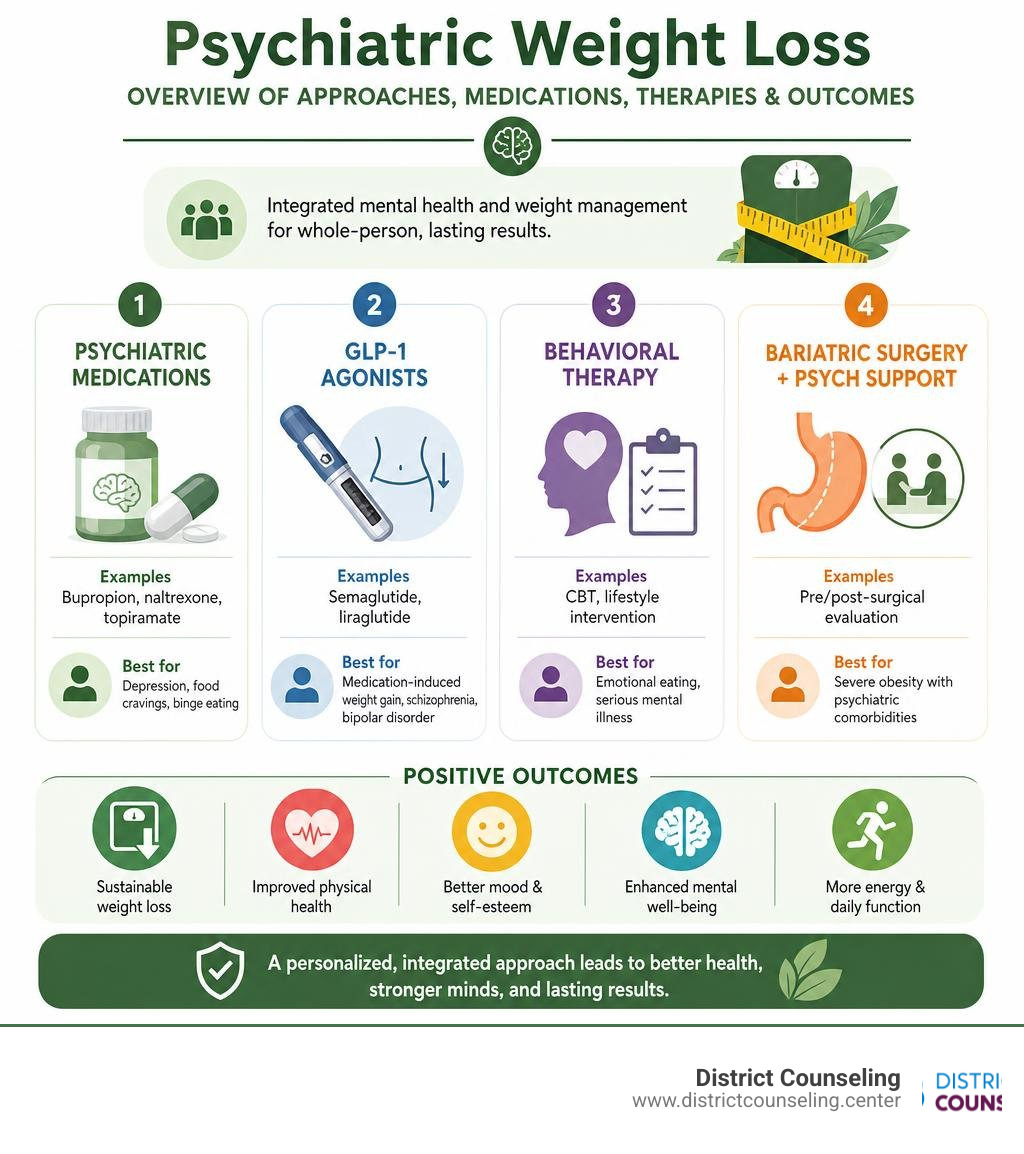
Psychiatric weight loss is the use of psychiatric medications, behavioral therapies, and mental health support to help people lose weight — especially when obesity and mental health conditions overlap.
Here is a quick overview of the main options:
| Approach | Examples | Best For |
|---|---|---|
| Psychiatric medications | Bupropion, naltrexone, topiramate | Depression, food cravings, binge eating |
| GLP-1 agonists | Semaglutide, liraglutide | Medication-induced weight gain, schizophrenia, bipolar disorder |
| Behavioral therapy | CBT, lifestyle intervention | Emotional eating, serious mental illness |
| Bariatric surgery + psych support | Pre/post-surgical evaluation | Severe obesity with psychiatric comorbidities |
Millions of Americans are caught in a painful cycle. They find a psychiatric medication that finally stabilizes their mood or controls their psychosis — only to gain 20, 30, or even 50 pounds as a side effect. That weight gain then worsens depression, self-esteem, and physical health, pushing some people to stop the very medication keeping them stable.
This is not just a cosmetic concern. According to the CDC, 40.3% of U.S. adults have obesity and 9.4% have severe obesity. Among people with serious mental illness, the rate of obesity is nearly twice that of the general population. The consequences are life-shortening: people with schizophrenia, for example, face a 16 to 20 year reduction in life expectancy, driven primarily by cardiometabolic disease — not the mental illness itself.
The good news? There are real, evidence-backed options. From psychiatric medications that promote weight loss to GLP-1 therapies and tailored behavioral programs, the field is evolving fast.
My name is Francisco Ortiz, and as a Licensed Professional Counselor-Supervisor with extensive experience treating mood disorders, trauma, and complex mental health conditions, I have worked closely with individuals navigating the emotional and physical challenges that sit at the heart of psychiatric weight loss. My goal here is to break down the latest evidence in plain language so you can make informed decisions about your care.
What is Psychiatric Weight Loss?
When many people think of weight loss, they picture calorie counting, gym memberships, or perhaps the latest trending diet. But for millions of individuals, the scale is not just a reflection of what they eat; it is deeply intertwined with brain chemistry, emotional health, and the side effects of essential mental health treatments.

Psychiatric weight loss is a specialized, medically supervised approach that addresses the biological, behavioral, and emotional barriers to achieving a healthy weight. At District Counseling, we view metabolic health and mental health as two sides of the same coin. When you struggle with chronic stress, depression, or a severe mental illness, your brain’s reward pathways, hormonal signals, and metabolic rate can become dysregulated.
Furthermore, many psychotropic medications—while life-saving—can alter how your body processes energy, leading to rapid, medication-induced weight gain. A standard “eat less, move more” approach often fails in these scenarios because it does not address the underlying neurobiology. By combining targeted psychotropic medications that support metabolic balance, specialized behavioral therapies, and close psychiatric oversight, we help patients achieve holistic wellness. For more details on how we structure these treatments, you can explore our psychiatric weight loss services.
Psychiatric Medications Associated with Weight Loss
While many psychiatric medications are notorious for causing weight gain, certain psychotropic drugs have the opposite effect. In some clinical scenarios, we can strategically select or add medications that naturally support weight management while treating underlying psychiatric conditions.

When we design a treatment plan, metabolic effects are a primary consideration. Rather than treating weight gain as an inevitable cost of mental stability, we proactively look for weight-neutral or weight-reducing alternatives. To understand how we balance these complex decisions, check out our guide to psychiatric medication management.
Bupropion and Naltrexone Combinations
One of the most notable pharmacological tools in psychiatric weight loss is the combination of bupropion (an atypical antidepressant) and naltrexone (an opioid antagonist primarily used for alcohol and opioid dependence). Together, they are FDA-approved under the brand name Contrave for chronic weight management.
This combination is particularly effective because it targets the brain’s reward pathways. While bupropion increases dopamine and norepinephrine activity in the hypothalamus to reduce appetite, naltrexone blocks feedback loops that would otherwise shut down this effect, while simultaneously curbing cravings and the emotional reward associated with food. For individuals struggling with food addiction or compulsive emotional eating, this can be a game-changer.
In clinical trials, 42% of participants taking the naltrexone/bupropion combination lost at least 5% of their body weight in a year, compared to only 17% of patients treated with a placebo. Because brand-name combination drugs can be prohibitively expensive or denied by insurance, clinicians frequently prescribe generic bupropion and generic naltrexone separately as an affordable, highly effective workaround. This strategy helps patients access life-changing care without financial strain. To see how adding medication to behavioral therapy rescues progress for those who struggle to lose weight initially, read about the efficacy of anti-obesity medication in early nonresponders.
Other Psychotropic Medications and Weight Management
Beyond the bupropion/naltrexone combination, several other psychotropic medications are recognized for their weight-neutral or weight-reducing profiles:
- Bupropion (Wellbutrin) Monotherapy: On its own, bupropion is the only antidepressant consistently associated with modest weight loss (typically averaging 5 to 7 pounds) and is widely used as a first-line option for depressed patients concerned about weight gain.
- Topiramate (Topamax): Originally an anticonvulsant and mood stabilizer, topiramate can suppress appetite and reduce binge-eating behaviors, often leading to a 10 to 15-pound weight loss. However, its use requires careful monitoring due to potential cognitive side effects (often colloquially referred to as “word-finding” difficulties).
- Stimulants: Medications like methylphenidate and lisdexamfetamine (Vyvanse) are highly effective at suppressing appetite. Lisdexamfetamine is uniquely FDA-approved to treat both ADHD and moderate-to-severe Binge Eating Disorder (BED).
- Fluoxetine (Prozac): At higher doses, this SSRI can temporarily promote weight loss and is specifically indicated for managing bulimia nervosa.
Before initiating any of these treatments, we conduct a comprehensive metabolic assessment—including baseline weight, BMI, blood pressure, fasting glucose, HbA1c, and lipid panels—to ensure patient safety. If you would like to speak with a professional about these options, you can learn more about our medication management services.
Integrating Psychiatric Care with Medical and Surgical Weight Loss Options
As the medical landscape evolves, patients now have powerful tools for weight management, including GLP-1 receptor agonists (such as semaglutide and liraglutide) and bariatric surgery. However, these physiological interventions do not exist in a vacuum; they profoundly impact, and are impacted by, a patient’s mental health.
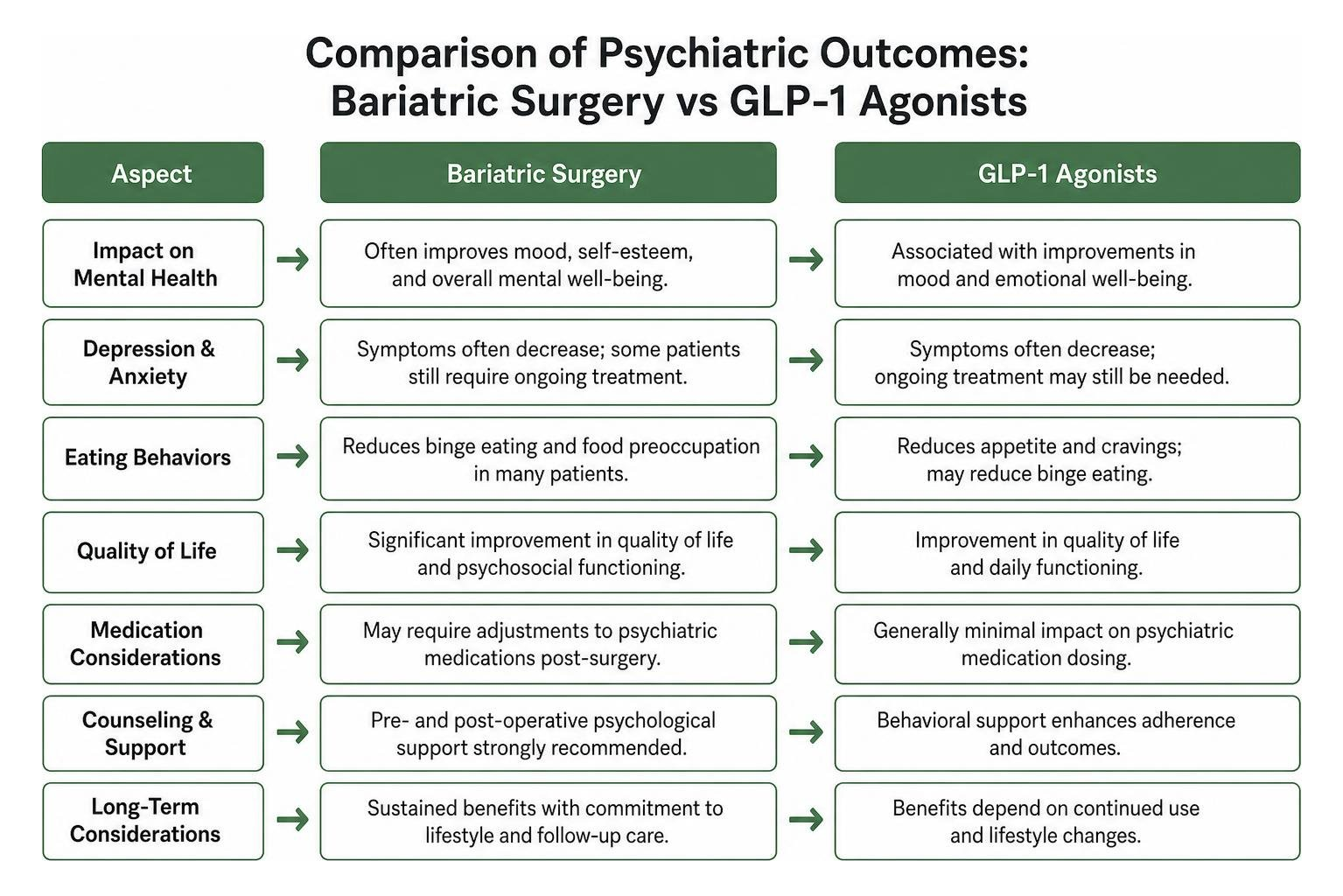
To help visualize how these two powerful modalities compare from a psychiatric and clinical standpoint, we have outlined their primary differences below:
| Clinical Aspect | GLP-1 Receptor Agonists (e.g., Semaglutide) | Metabolic & Bariatric Surgery |
|---|---|---|
| Primary Mechanism | Mimics gut hormones to slow gastric emptying and reduce central appetite signals. | Physically alters digestive anatomy and profoundly shifts metabolic hormones. |
| 5-Year Cognitive Deficits Risk | Higher relative risk compared to surgery. | 54% lower risk of developing cognitive deficits compared to GLP-1s. |
| 5-Year Anxiety Disorders Risk | Higher relative risk compared to surgery. | 18% lower risk of developing anxiety compared to GLP-1s. |
| 5-Year Substance Use Risk | Higher relative risk compared to surgery. | 17% lower risk of developing substance use disorders compared to GLP-1s. |
| Psychiatric Care Integration | Requires continuous monitoring for mood changes, gastrointestinal distress, and appetite shifts. | Mandates intensive pre-surgical psychiatric screening and long-term post-op therapy. |
Psychiatric Support and GLP-1 Agonists for Weight Management
GLP-1 receptor agonists have revolutionized metabolic medicine. However, because they act directly on the central nervous system to alter reward pathways, mental health monitoring is absolutely essential. While these medications are generally safe and do not appear to worsen psychiatric hospitalizations, some patients experience mood fluctuations, fatigue, or changes in their relationship with food that require therapeutic guidance.
For individuals living with severe mental illness, GLP-1 agonists offer a vital lifeline to combat the metabolic side effects of atypical antipsychotics. Research has shown that once-weekly subcutaneous semaglutide is highly effective in these populations, producing substantial body weight reduction without destabilizing psychiatric symptoms. To learn more about the metabolic and psychiatric safety of these drugs, read the comprehensive analysis on GLP-1 receptor agonists for weight management in mental illness.
Navigating Mental Health Risks Associated with Bariatric Surgery
A landmark study presented at the American Society for Metabolic and Bariatric Surgery (ASMBS) annual meeting highlighted a fascinating and unexpected trend. Over a five-year follow-up period tracking 67,200 matched patients, those who underwent metabolic and bariatric surgery had a 54% lower risk of developing cognitive deficits, an 18% lower risk of anxiety disorders, and a 17% lower risk of substance use disorders compared to those treated with GLP-1 pharmacotherapy.
While the exact biological mechanisms behind this protective effect are still being studied, researchers believe the profound, sustained metabolic reset of surgery may reduce chronic systemic inflammation, which is closely linked to cognitive decline and mood disorders.
However, surgery is not a quick fix. It requires a radical lifestyle adjustment. Post-surgical patients are at risk for “addiction transfer” (where the inability to overeat leads to a shift toward alcohol or substance use) and emotional distress as their coping mechanisms change. This makes ongoing psychotherapy and psychiatric support a crucial pillar of any successful surgical weight loss program.
Behavioral Interventions and the Mind-Body Connection
No pill or surgical procedure can replace the power of behavioral change. At District Counseling, we believe that lasting weight loss must start from the inside out.
Our behavioral interventions focus on helping patients identify the root causes of their eating habits, such as emotional eating, chronic stress, or trauma-induced coping mechanisms. To explore how we structure these supportive environments, read about our psychiatric weight loss programs.
Tailoring Behavioral Programs for Serious Mental Illness
For individuals living with serious mental illness (SMI), such as schizophrenia or bipolar disorder, standard weight loss advice can feel impossible to follow. Cognitive deficits, memory issues, and severe fatigue from medications make traditional programs overwhelming.
The landmark ACHIEVE trial proved that tailored behavioral interventions can achieve remarkable results. By breaking down nutritional information into small, simplified components, using visual tracking tools, and offering low-intensity, structured group exercise, the study accommodated the unique executive functioning challenges of SMI patients.
The results were inspiring: 37.8% of participants in the tailored behavioral intervention lost 5% or more of their initial body weight over 18 months, compared to just 22.7% in the control group. Unlike the general population, who typically experience rapid weight loss followed by immediate regain, participants with serious mental illness showed slow, progressive, and sustained weight loss throughout the entire 18-month period.
The Role of Mental Health in Psychiatric Weight Loss Success
Your emotional state directly dictates your physical success on the scale. In intensive lifestyle interventions, mental health stability is the ultimate predictor of whether you will break through the dreaded “six-month plateau.”
In the PREVENT-DM trial, which tracked individuals undergoing intensive lifestyle modifications, the connection between mood and metabolic success was undeniable:
- Participants whose mental health remained stable or improved lost a mean of 6.9 kg (15.2 lbs) over 12 months.
- Participants whose mental health worsened lost only 1.8 kg (3.9 lbs).
- This represents a significant difference of 5.1 kg (11.2 lbs) purely based on emotional well-being!
When depression, anxiety, or stress go unaddressed, they trigger cortisol spikes, disrupt sleep, and deplete the willpower needed to maintain healthy habits. This is why we treat mental health support as an active, foundational component of physical weight management. If you are ready to align your mind and body, explore our specialized psychiatric weight loss programs in Texas.
Frequently Asked Questions about Psychiatric Weight Loss
Is semaglutide safe for people with schizophrenia on clozapine?
Yes, according to the latest clinical evidence. Clozapine is widely recognized as the most effective antipsychotic for treatment-resistant schizophrenia, but it also carries some of the highest risks for severe, rapid weight gain and metabolic syndrome.
In the groundbreaking COaST trial (a phase 2, randomized, double-blind controlled trial), researchers evaluated the safety and efficacy of weekly semaglutide in patients taking clozapine. At 36 weeks, the semaglutide group achieved a remarkable 13.88% body weight reduction, compared to just 0.42% in the placebo group.
Crucially, semaglutide did not alter clozapine blood concentrations, nor did it cause any worsening of psychotic symptoms or adverse psychiatric events. For a detailed look at this landmark study, you can access the efficacy and safety of semaglutide versus placebo on clozapine.
Why do bariatric surgery programs require a psychiatric evaluation?
Bariatric surgery centers of excellence mandate a pre-surgical psychiatric evaluation for several vital reasons. First, the procedure requires permanent, drastic changes to how a person consumes food. An evaluation ensures that a candidate has the cognitive and behavioral readiness to adhere to strict post-operative guidelines.
Second, the evaluation screens for active, untreated eating disorders—such as Binge Eating Disorder (BED)—or severe, unstable psychiatric conditions that could compromise surgical safety or lead to severe emotional distress post-op. Finally, it helps establish a robust post-surgical therapeutic support plan, preparing the patient for the emotional shifts, body image changes, and potential “addiction transfer” risks that can arise during rapid weight loss.
What are the clinical considerations for using weight-loss-inducing psychotropics?
When using psychotropic medications that promote weight loss, clinical safety and psychiatric stability must always remain the top priorities. For instance, in patients with bipolar disorder, medications like bupropion must be used with extreme caution and always paired with a therapeutic dose of a mood stabilizer to prevent triggering a manic or hypomanic episode.
Additionally, we utilize a careful cross-titration strategy when switching medications. This involves slowly tapering a patient off a high-risk metabolic drug while gradually introducing a weight-neutral alternative over several weeks, minimizing the risk of withdrawal or psychiatric relapse. Regular safety monitoring, including mood tracking and metabolic screenings, ensures that physical progress never comes at the expense of mental peace.
Take the Next Step in Your Wellness Journey
If you are tired of fighting your body, your medications, and your mind in a silent, exhausting struggle, you do not have to do it alone. At District Counseling, we offer compassionate, authentic, and highly personalized mental health support tailored to your unique physical and emotional needs.
Whether you are in Houston, Austin, Fort Worth, Katy, or any of our other convenient Texas locations, our dedicated team is here to help you bridge the gap between mental stability and metabolic health. We believe in treating the whole person—with sincerity, warmth, and clinical excellence.
Are you ready to prioritize your mental well-being alongside your physical health? We invite you to schedule a consultation for psychiatric weight loss with us today. Let’s work together to align your mind and body so you can live the life you deserve.
Visited 1 times, 1 visit(s) today
Similar Posts

Adalid Blandin
September 21, 2026
All About Psychiatric Weight Loss Options and Treatments
Explore psychiatric weight loss options, including medications, therapy, and bariatric support for holistic wellness....

Francisco Ortiz
September 18, 2026
No Traffic, No Waiting Rooms: Your Guide to Telehealth Counseling in Texas
Learn the rules, rights, and benefits of telehealth counseling in Texas with this complete guide to virtual therapy....

Adalid Blandin
September 16, 2026
Why Your Mitochondria Might Be Depressed
Explore metabolic mental health to boost brain energy, ease mood disorders, and support recovery through mitochondria-focused strategies....

Adalid Blandin
September 14, 2026
The Definitive Guide to Life Coaching
Discover how life coaching can help you achieve goals, gain clarity, and create lasting change in 2026....

Adalid Blandin
September 11, 2026
The Ultimate Guide to Identifying Emotional Abuse in Relationships
The Ultimate Guide to Identifying Emotional Abuse in Relationships – Learn about emotional abuse relationship...

Adalid Blandin
September 9, 2026
A Comprehensive Guide to Effective Relationship Counseling Options
A Comprehensive Guide to Effective Relationship Counseling Options – Learn about relationship counseling...

Francisco Ortiz
September 7, 2026
First Couples Counseling Session: A Guide to Your First Hour on the Couch
Learn what happens in your first couples counseling session, from intake to ground rules, and how to prepare for a successful start....

Adalid Blandin
September 4, 2026
Spotting the Signs and Finding Help for Emotional Abuse
Recognize emotional abuse signs and connect with a relationship emotional abuse therapist for healing and support....

Francisco Ortiz
September 2, 2026
Riding Out the Storm: The Four Horsemen of Couples Therapy and Their Antidotes
Learn how the four horsemen couples therapy framework identifies destructive conflict patterns and provides proven antidotes to strengthen your relationship....

Francisco Ortiz
August 31, 2026
Premarital Counseling Online: Prep for Marriage from Your Couch
Prepare for marriage with premarital counseling online from your couch. Build skills, save on licenses, and strengthen your future today....


