Why Relationship Therapy Could Be the Most Important Step You Take as a Couple
Relationship therapy — also called couples therapy or marriage counseling — is a specialized form of psychotherapy that helps partners improve communication, resolve conflict, and rebuild emotional connection.
Here’s what you need to know right away:
- It works for couples at any stage — not just those in crisis
- Research shows 70–75% of couples move from distress to recovery with evidence-based approaches
- Most couples attend weekly sessions for 3–6 months
- It addresses communication, trust, intimacy, infidelity, life transitions, and more
- Both in-person and telehealth options are widely available
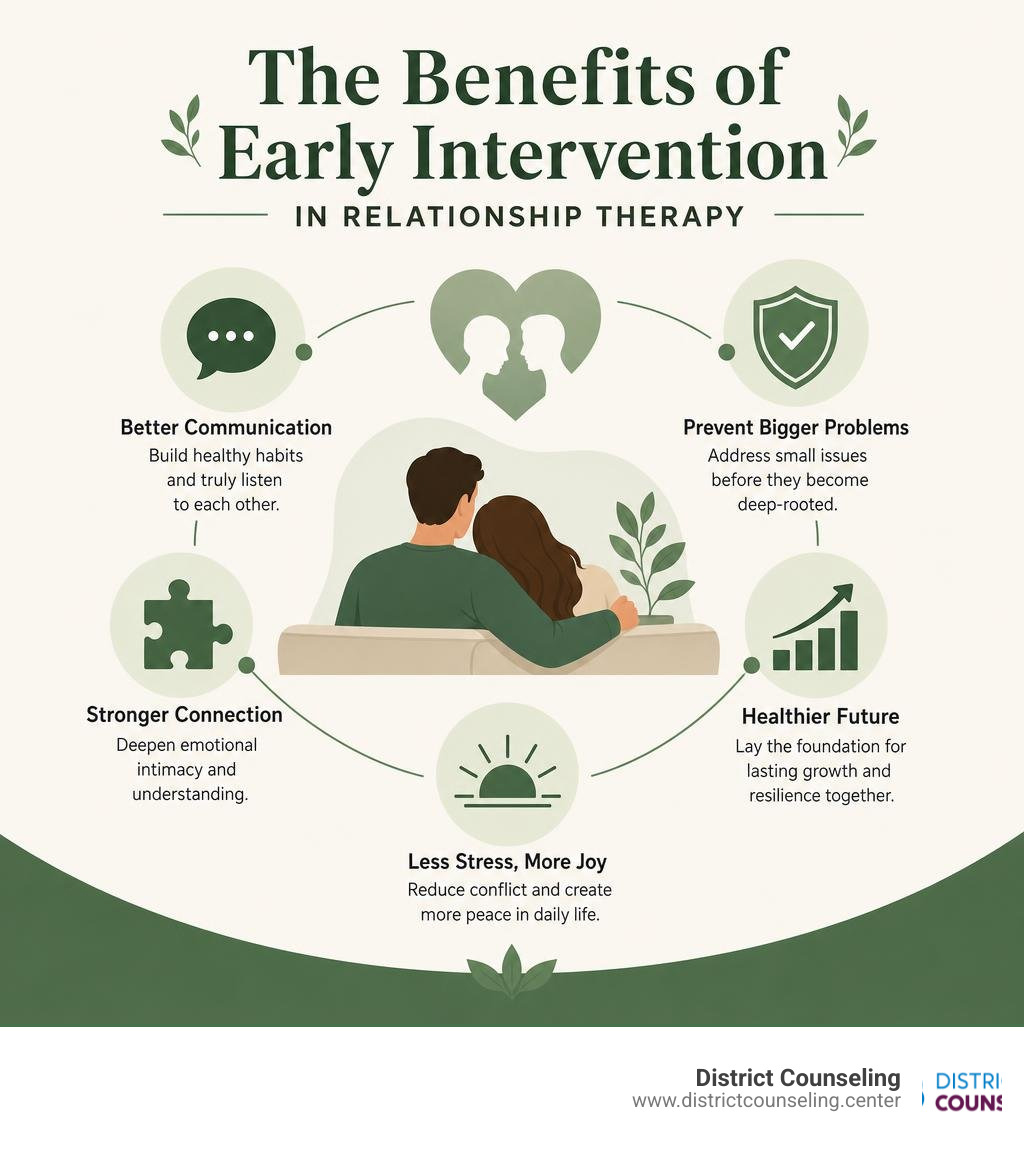
Despite how common relationship struggles are, most couples wait an average of six years before seeking help. That’s six years of unresolved conflict, growing distance, and patterns that become harder to break over time.
The good news? It’s rarely too late to start.
Whether you’re facing recurring arguments, feeling emotionally disconnected, or simply want to strengthen an already good relationship, professional support can make a real difference.
I’m Francisco Ortiz, a Licensed Professional Counselor-Supervisor with extensive experience providing relationship therapy to couples and families navigating conflict, trauma, and emotional disconnection. In this guide, I’ll walk you through everything you need to know — from how therapy works to what the research actually says about outcomes.
What is Relationship Therapy and How Does It Work?

At its core, relationship therapy is a structured, collaborative process designed to help partners understand their interactions, break destructive patterns, and foster a more secure connection. Unlike individual therapy, which focuses primarily on one person’s internal landscape, couples counseling operates from a systemic perspective.
This means we don’t look at either partner as the “problem.” Instead, we view the relationship itself as the client. The patterns, communication loops, and emotional dynamics that exist between you are what we work to heal and transform. For a deeper look into how this specialized care operates, check out The Ultimate Guide to Marital Counseling.
Understanding the Core of Relationship Therapy
When couples walk into our offices in Houston, Cypress, or Katy, they are often caught in a painful cycle of blame and withdrawal. The primary objective of relationship therapy is to slow down these interactions so both partners can see what is actually happening beneath the surface.
We work together to establish shared goals, develop practical conflict resolution tools, and cultivate a deeper understanding of each other’s emotional needs. By addressing the underlying relational dynamics, we help you shift from reactive defense mechanisms to intentional, loving connection. If you are wondering whether your partnership is ready for this step, read more about when to seek couples counseling.
How It Differs from Individual Therapy
While individual therapy is incredibly valuable for personal growth, self-reflection, and managing personal mental health challenges, it has limitations when it comes to resolving systemic relationship distress.
In individual therapy, the therapist only hears one side of the story. In relationship therapy, the therapist observes the live interaction between partners, allowing us to intervene in real-time as negative patterns unfold.
| Feature | Individual Therapy | Relationship Therapy |
|---|---|---|
| Primary Client | The individual | The relationship dynamic |
| Focus | Personal history, coping skills, and individual growth | Relational patterns, communication, and attachment |
| Therapist Role | Individual advocate and sounding board | Unbiased mediator, pattern identifier, and relationship coach |
| Core Goal | Personal symptom reduction and self-actualization | Secure attachment, mutual understanding, and shared healing |
Evidence-Based Approaches to Couples Counseling
We don’t rely on guesswork or simple “he-said-she-said” venting sessions. Instead, we utilize proven, evidence-based therapeutic modalities that have been rigorously studied and shown to create lasting change.
According to comprehensive scientific research on systemic interventions, systemic therapy leads to medium to large positive effects on relationship distress and co-occurring emotional challenges, proving far more effective than leaving problems to resolve on their own.
Emotionally Focused Therapy (EFT)
Developed in the 1980s by Dr. Sue Johnson, Emotionally Focused Therapy (EFT) is rooted in attachment theory. It posits that adults have the same fundamental need for secure attachment bonds as children do with their caregivers. When we feel disconnected from our partner, our brain registers it as a safety threat, triggering fight-or-flight behaviors (like yelling or shutting down).
EFT focuses on identifying these negative cycles and helping partners express their deeper, softer emotions—like fear of abandonment or feelings of inadequacy—rather than their surface-level anger. Research shows that 70–75% of couples move from distress to recovery using EFT, and about 90% show significant improvement. For couples in the Greater Houston area, seeking specialized care from trained professionals can make a profound difference in accessing this powerful modality.
The Gottman Method in Relationship Therapy
The Gottman Method is another gold-standard approach, built on over forty years of research by Drs. John and Julie Gottman. This method focuses on building “Love Maps” (knowing your partner’s inner world), fostering fondness and admiration, and managing conflict constructively.
A key element of this approach is identifying and defeating what Dr. Gottman calls the “Four Horsemen of the Apocalypse”: criticism, contempt, defensiveness, and stonewalling. To learn how to protect your marriage from these destructive habits, read The Gottman Four Horsemen and How to Defeat Them.
Behavioral and Integrative Approaches
Integrative Behavioral Couples Therapy (IBCT) combines traditional behavioral modifications (like communication skills training) with an emphasis on emotional acceptance. Rather than trying to change every single difference between partners, IBCT helps couples accept the natural differences in their personalities, reducing the polarization that causes chronic arguments.
Studies indicate that IBCT is highly effective, with approximately 69% of couples showing significant improvement in clinical trials, compared to 50-60% for traditional behavioral models alone.
Common Reasons Couples Seek Professional Support
Couples seek relationship therapy for a wide variety of reasons. Some are navigating sudden crises, while others feel like they have slowly drifted into becoming “roommates” who share a mortgage but little actual connection.
No matter the catalyst, professional guidance provides a structured space to address these challenges safely. To understand why taking this step is so vital, explore improving communication with your spouse.
Rebuilding Trust After Betrayal
Infidelity—whether physical or emotional—is one of the most painful disruptions a relationship can experience. However, an affair does not have to mean the end of your love story. Through dedicated, transparent therapy, couples can process the trauma of betrayal, understand the vulnerabilities that allowed the rupture to occur, and slowly rebuild a stronger foundation.
If you are currently walking through this painful valley, we highly recommend reading Couples Counseling After Betrayal. To understand the psychological impact and how to begin recovering, you can also explore our guides on how to cope with trauma caused by infidelity and the unbreakable bond of healing after trust is betrayed.
Navigating Major Life Transitions
Even positive life changes can place immense stress on a partnership. Transitions such as becoming parents, moving to a new city (like relocating to the Austin or Houston areas), empty nesting, or transitioning into retirement can throw a couple’s established rhythm out of balance.
During these times, having a therapist help you renegotiate roles and expectations is invaluable. For those in the northwest Houston suburbs, seeking support through Copperfield Counseling & Therapy can help you stay grounded. Learn more about maintaining safety and alignment during transitions in our article on how to build trust between a couple.
Enhancing Intimacy and Connection
Over time, physical and emotional intimacy can wane. Busy schedules, stress, and unaddressed resentments often lead to a quiet distance. In therapy, we normalize discussions around sexual health, desire discrepancies, and emotional disconnect without shame or judgment.
We help you move beyond surface-level interactions to cultivate a deeply satisfying, long-term bond. For practical tips on keeping the spark alive over the years, check out What Makes Love Last? and learn how to plan for deeper connection with Beyond Date Night.
What to Expect During the Therapy Process
Stepping into a therapist’s office for the first time can feel intimidating. Knowing what to expect can help ease those nerves.
- The Assessment Phase: The first 1 to 3 sessions are focused on understanding your history, your current challenges, and how you interact. Your therapist will likely meet with you together as a couple, and may also schedule brief individual sessions to understand each partner’s personal background.
- Goal-Setting: Once the assessment is complete, we collaborate to establish clear, realistic goals. What does success look like for your relationship?
- Active Therapy: In subsequent sessions, we roll up our sleeves. You will practice new ways of speaking and listening, unpack raw emotional spots, and learn to catch your negative cycles before they spiral.
- Integration and Graduation: As you build stronger patterns, sessions will be spaced further apart until you feel confident maintaining your gains independently.
While some couples find the tune-up they need in 8 to 20 sessions, others choose to attend therapy as a regular, proactive check-in to keep their relationship healthy. If you are ready to find a professional who aligns with your needs, take a look at our guide on how to find a therapist for couples relationship issues.
Frequently Asked Questions About Relationship Counseling
How effective is couples therapy according to research?
The data is overwhelmingly positive. Research shows that 60–80% of distressed couples benefit from behavioral or emotionally focused approaches, and about half of these couples fully maintain their treatment gains even at a two-year follow-up.
Furthermore, according to a landmark study published in the Journal of Family Therapy, the average treated couple fared better after systemic therapy than 71% of untreated control groups. You can review the comprehensive data directly in the scientific research on systemic therapy outcomes.
What if my partner is hesitant to attend sessions?
It is incredibly common for one partner to feel nervous, skeptical, or hesitant about starting therapy. They might worry the therapist will “take sides” or that they will be blamed for all the relationship’s problems.
If your partner is hesitant, try these gentle approaches:
- Express your own needs: Instead of saying, “You need therapy to fix your anger,” try saying, “I love you, and I want to learn how to communicate better so we both feel heard. I’d really appreciate your help in doing this together.”
- Suggest a trial: Propose committing to just 3 sessions to see how it feels.
- Start individually: If they absolutely refuse, you can start individual therapy to work on your own relational patterns, which often naturally shifts the dynamic at home.
For more guidance on navigating this conversation and exploring local support options, check out our article on moving from open relationships to marriage guidance.
Does insurance cover couples therapy?
Navigating insurance for couples therapy can be complex. Most health insurance companies require a diagnosed mental health condition (such as Major Depressive Disorder or Generalized Anxiety Disorder) for a session to be deemed “medically necessary” and eligible for reimbursement. Because relationship distress itself is not considered a mental health diagnosis, direct insurance billing for couples therapy is not always guaranteed.
However, many couples successfully utilize out-of-network benefits, Health Savings Accounts (HSAs), or Flexible Spending Accounts (FSAs) to cover their care. When you consider the immense emotional, physical, and financial costs of chronic relationship distress or divorce, investing in proactive relationship therapy is highly cost-effective and one of the best investments you can make for your family’s future.
Conclusion
Your relationship is one of the most significant investments of your life. It shapes your daily happiness, your physical health, and your overall peace of mind. When things get off track, seeking professional guidance isn’t a sign of weakness—it is an authentic, courageous step toward building a love that lasts.
At District Counseling, we provide sincere, compassionate, and evidence-based relationship therapy tailored to the unique lives of couples in Houston, Cypress, Katy, Sugar Land, Austin, and across Texas. Whether you want to heal from past hurts, break free from frustrating communication loops, or simply keep a strong bond healthy, we are here to walk alongside you.
Don’t wait another six years to find the connection you deserve. Schedule a relationship counseling session today and let’s start rebuilding your foundation together.
Visited 4 times, 1 visit(s) today
Similar Posts

Francisco Ortiz
October 16, 2026
Navigating Neuropsychological Evaluations from Katy to Pasadena
Learn how an ADHD evaluation for Houston teens works, from medication management to school accommodations and 504 plans....

Francisco Ortiz
October 14, 2026
How Texas caregivers can beat exhaustion with virtual therapy
Beat caregiver exhaustion therapy Texas caregivers trust—virtual sessions for stress, boundaries, and recovery. Start today....

Francisco Ortiz
October 12, 2026
Find Local Youth Counselor: How They Can Help Your Teen Thrive (52 characters)
Find a qualified youth counselor near me to help your teen thrive with evidence-based support for anxiety, trauma, and more....

Francisco Ortiz
October 9, 2026
Faith-Based Pastoral Counseling: A Comprehensive Guide
Discover how pastoral counseling integrates faith and psychology for holistic healing, grief, trauma, and marital support....

Francisco Ortiz
October 7, 2026
Houston Counseling Options: Find Local Help Nearby
Find affirming counseling in Houston for trauma, LGBTQ+ care, couples, and more. Explore local options and start your healing today....

Francisco Ortiz
October 5, 2026
Why every teacher needs a burnout therapy game plan
Why every teacher needs a burnout therapy game plan – Learn about burnout therapy for teachers...

Francisco Ortiz
October 2, 2026
Child Therapist Near Me? Here is How to Spot a Great One
Find a child therapist near me who fits your child’s needs. Learn signs, costs, and effective therapy options....

Adalid Blandin
September 30, 2026
Mental Health and Miracles: Finding Local Christian Care
Find pastoral counselling near me for faith-based emotional and spiritual support in Texas....

Adalid Blandin
September 28, 2026
Missouri City and Houston Couples Therapy 101
Explore relationship counseling in Houston options, from couples therapy to intensives, with costs, insurance, and therapist tips for Missouri City families....

Adalid Blandin
September 25, 2026
How to find authentic therapy for emotional exhaustion in Houston
Find emotional exhaustion therapy Houston that helps professionals and caregivers move from burnout to renewed energy and balance....


