Why Relationship Marital Counseling Is Worth Considering Sooner Than You Think
Relationship marital counseling is a specialized form of therapy where a licensed professional helps couples improve communication, resolve conflict, and rebuild emotional connection — before problems become too big to fix.
Quick answers:
- What it is: A structured therapy process for married or committed couples, guided by a trained therapist
- Who it’s for: Couples at any stage — from newlyweds to long-term partners feeling disconnected
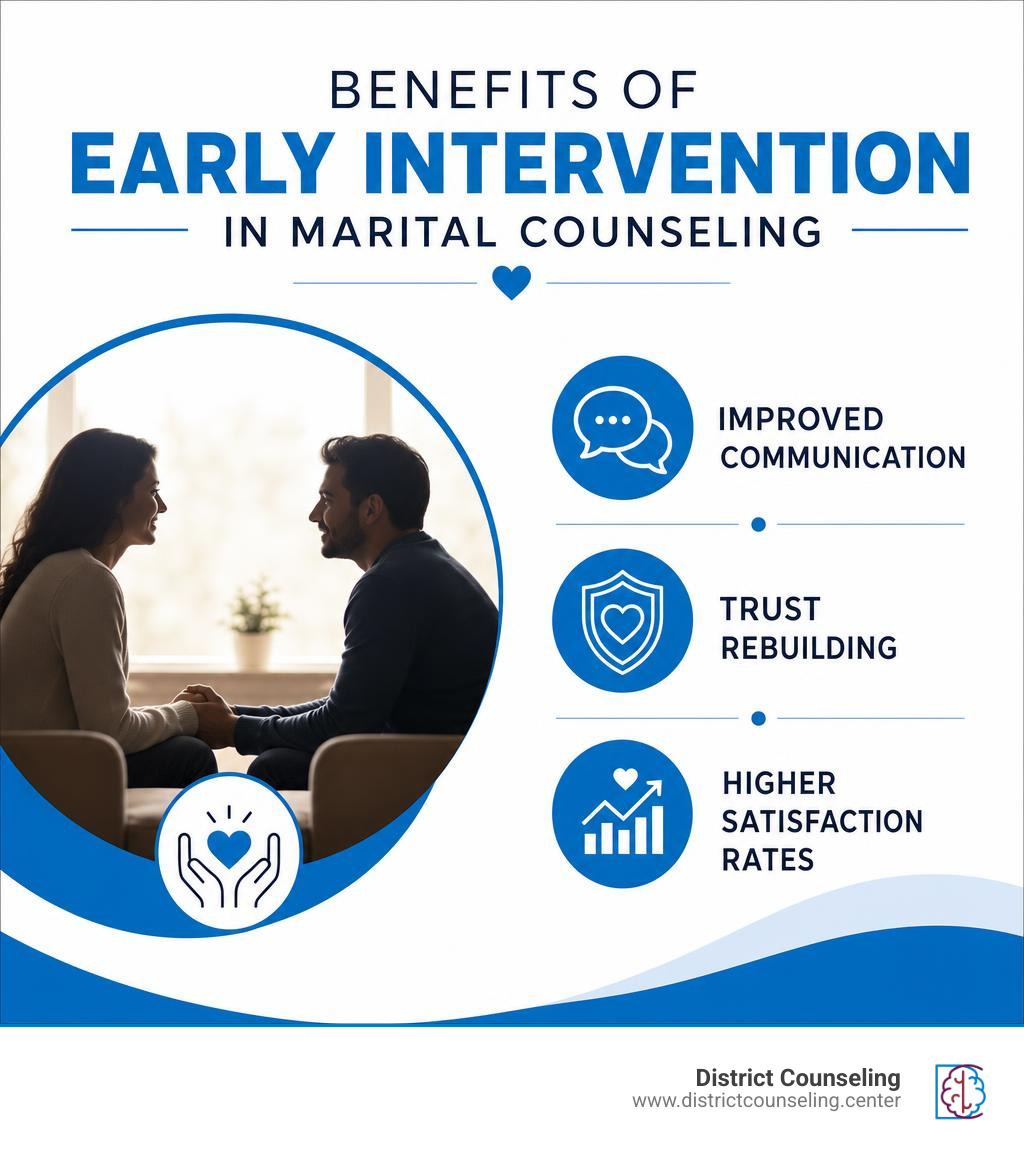
- When to start: As soon as you notice recurring conflict, emotional distance, or major life transitions
- How it works: Weekly or bi-weekly sessions focused on communication skills, conflict resolution, and rebuilding trust
- Does it work? Research shows couples who participate in therapy are better off than 70 to 80 percent of those who don’t seek help
Even the strongest marriages hit rough patches. Work stress, parenting demands, retirement, grief, and financial pressure can quietly erode the connection that once felt effortless. Many couples wait years before asking for help — often until the damage feels irreversible.
The good news? Most relationship struggles are workable with the right support and early action.
I’m Francisco Ortiz, a Licensed Professional Counselor-Supervisor with extensive experience providing counseling and psychotherapy to couples navigating the full range of relationship marital counseling challenges. In this guide, I’ll walk you through everything you need to know — from how therapy works to what to look for in a counselor.
Basic relationship marital counseling glossary:
- Which therapists in the Spring and Tomball areas are certified in emotionally focused marriage therapy?
- free marriage counseling
What is Relationship Marital Counseling and How Does It Work?

Relationship marital counseling is therapy focused on the relationship itself. Instead of asking, “What is wrong with this person?” we ask, “What is happening between these two people, and how can we help them relate differently?”
At District Counseling, we see marital counseling as a structured, compassionate space where both partners can slow down, tell the truth, and learn new ways to communicate. The goal is not to decide who is “right.” If that were the goal, most couples could save money by asking the family group chat – though we do not recommend that as a conflict-resolution strategy.
A marriage counselor helps couples:
- Identify repeating conflict patterns
- Improve communication and emotional safety
- Rebuild trust after betrayal or disappointment
- Navigate major transitions like retirement, parenting, caregiving, grief, or relocation
- Address intimacy, sex, and affection concerns
- Discuss money, family, and future planning without spiraling
- Decide whether to repair the relationship, redefine it, or separate more respectfully
Marriage counseling is closely related to couples counseling, relationship counseling, and couples therapy. The difference is usually the focus. Marriage counseling often pays special attention to the unique responsibilities of marriage: long-term commitment, shared finances, parenting or step-parenting, legal and family obligations, household roles, and the meaning of the vows or promises you made to each other.
If you are looking for support in Texas, you can learn more about our relationship marital counseling services.
How Relationship Marital Counseling Differs from Individual Therapy
Individual therapy focuses primarily on one person’s inner world: emotions, trauma history, anxiety, depression, coping skills, identity, or personal growth. It can absolutely improve a relationship, but the “client” is the individual.
In marital counseling, the relationship is the client.
That means we pay attention to the system between partners: the push-pull cycle, the silent treatment, the defensive comeback, the late-night money argument, the old wound that gets reopened every time someone says, “You always do this.”
A systemic approach looks at:
- How each partner reacts under stress
- How conflict escalates or shuts down
- How attachment needs show up as anger, withdrawal, criticism, or pursuit
- How family-of-origin patterns affect the marriage
- How outside pressures like work, illness, aging parents, or finances shape the relationship
A good marriage counselor stays neutral without being passive. Neutral does not mean “we let hurtful behavior slide.” It means both people are treated with dignity, both voices matter, and the therapist helps the couple understand the pattern rather than blame one person as the entire problem.
Sometimes individual therapy is also recommended. For example, if one partner is dealing with trauma, severe depression, substance misuse, compulsive behavior, or intense anxiety, individual support may be needed alongside couples work. For more guidance, read our tips on when to seek couples counseling.
What to Expect in a Typical Session and Treatment Duration
Most couples begin with an intake process. This may include a joint session, individual check-ins, relationship history, current concerns, and goal setting. Your therapist may ask about:
- How you met and what worked well early on
- What changed over time
- The biggest sources of conflict
- Communication patterns
- Trust injuries or betrayals
- Intimacy and affection
- Family, parenting, or blended family dynamics
- Health, grief, caregiving, finances, or retirement stress
- What each partner hopes will be different
Early sessions often focus on slowing down the conflict cycle. Many couples arrive with years of rehearsed arguments. We help you pause, listen, reflect, and respond differently.
A typical session may include:
- Practicing active listening
- Learning how to make repair attempts after conflict
- Naming emotions beneath anger or withdrawal
- Replacing blame with clear requests
- Discussing difficult topics in a structured way
- Creating homework or practice between sessions
How long does marital counseling take? It depends on the couple’s goals and the depth of the issues. Some couples see meaningful improvement in a few sessions, especially if they come in early. Others need several months, particularly when rebuilding after infidelity, long-term resentment, sexual disconnection, or major life transitions.
Many couples attend weekly or bi-weekly sessions for at least three months. Some continue with less frequent “maintenance” sessions after the initial work is complete. Think of it like physical therapy for your relationship: the session matters, but the practice between sessions is where the muscles grow.
If you are unsure where to start, our guide on how to find a therapist for couples relationship issues can help.
11 Common Reasons Couples Seek Professional Support

Couples do not need to be on the edge of divorce to benefit from counseling. In fact, earlier is usually better. Below are 11 common reasons married and long-term couples seek support.
Communication has become tense, repetitive, or avoidant. You keep having the same argument, or you avoid hard topics because they always end badly.
Emotional distance has grown. You function well as co-managers of life, but you no longer feel like close partners.
Trust has been damaged. This may involve infidelity, secrecy, financial dishonesty, broken promises, or emotional betrayal.
Financial conflict is increasing. Spending, saving, retirement planning, debt, inheritance, or different money values can create major strain.
Intimacy has changed. Desire, sexual functioning, affection, body image, menopause, erectile difficulties, medications, pain, or illness can affect closeness.
Parenting or empty nesting has shifted the marriage. After years of focusing on children, some couples look at each other and wonder, “Who are we now?”
Retirement has changed the rhythm of daily life. More time together can be wonderful – or surprisingly irritating.
One partner has become a caregiver. Illness, disability, or aging-related needs can shift the relationship from partnership to patient-caregiver dynamic.
Grief is affecting connection. Loss of parents, siblings, friends, health, identity, or independence can show up as irritability, numbness, or withdrawal.
Blended family or extended family stress is high. Adult children, grandchildren, in-laws, inheritance questions, and remarriage can all create conflict.
Old resentments never healed. Some couples carry unspoken pain for decades. Counseling gives those wounds a place to be named and repaired.
Trust is often at the center of these challenges. For practical steps, read how to build trust between a couple.
When to Seek Relationship Marital Counseling for Long-Term Success
The best time to seek counseling is before the relationship feels impossible to repair.
Many couples wait until resentment has hardened, affection has disappeared, or one partner is already emotionally out the door. Counseling can still help in those moments, but early intervention gives couples more room to work.
Consider seeking relationship marital counseling when you notice:
- The same fight keeps repeating
- One or both partners feel lonely in the marriage
- You avoid important conversations
- Small issues become big arguments
- You feel more like roommates than partners
- Physical affection has faded
- You are hiding spending, feelings, messages, or decisions
- You fantasize about leaving but have not talked honestly about what hurts
- You cannot discuss certain topics without defensiveness or shutdown
Regular counseling is not only for crisis. Some couples use therapy as a relationship tune-up, especially during major transitions. We think of it like getting the oil changed before the engine light starts flashing. For more on that mindset, explore why regular couples counseling can support a healthy marriage.
Navigating Retirement, Caregiving, and Later-in-Life Challenges
For couples over 50, marriage counseling often centers on transitions that younger couples may not be facing yet.
Retirement is a major one. Work often gives people structure, identity, independence, friendships, and time apart. When retirement changes that structure, couples may suddenly have more time together but less clarity about roles. One partner may want travel and adventure; the other may want rest, routine, or grandchild time. One may feel liberated; the other may feel lost.
Retirement can also reveal issues that were easier to avoid during busy career and parenting years. Couples who spent decades on “cruise control” may find themselves asking: Do we still know each other? Do we enjoy time together? What do we want this next chapter to mean?
Caregiving can create another major shift. Statistics show that when someone turns 65, they have almost a 70 percent chance of needing some form of long-term care or support in their remaining years. When one spouse becomes the primary caregiver, the marriage can become emotionally complicated. Love may still be present, but so can exhaustion, resentment, fear, guilt, and grief for the retirement dreams that changed.
Counseling can help couples talk about:
- Loss of independence
- Unequal household or caregiving burdens
- Medical decision-making
- Anger and sadness that feel hard to admit
- How to preserve affection and partnership inside caregiving
- When outside support is needed
Later-life betrayal can also happen. Research from the Institute for Family Studies has found that self-reported infidelity remains present in older adulthood, including notable rates among women in their 60s and men in their 70s. An affair does not automatically mean the marriage is over, but it does require careful repair. We offer support for couples working through betrayal, and you can learn more about couples counseling after betrayal.
Financial Conflict and Intimacy Issues in Aging Marriages
Money and intimacy are two of the most sensitive topics in marriage because they are rarely just about money or sex.
Financial conflict may involve:
- Different spending habits
- Retirement income worries
- Debt
- Supporting adult children
- Disagreements about downsizing
- Medical expenses
- Inheritance and estate planning
- Fear of becoming dependent
- One partner controlling financial decisions
Counseling does not replace financial planning, but it helps couples have financial conversations without shame, blame, or avoidance. We help partners identify the emotions underneath the numbers: fear, control, security, freedom, resentment, or feeling unvalued.
Intimacy also changes across a long marriage. Aging, menopause, erectile dysfunction, chronic pain, cancer treatment, heart disease, medications, depression, body changes, and caregiving can all affect sexual connection. Many couples suffer silently because they feel embarrassed or afraid of hurting each other.
Marriage counseling gives couples a respectful way to talk about:
- Desire differences
- Physical limitations
- Sexual pain or performance anxiety
- Affection without pressure
- Emotional intimacy
- Rebuilding romance after years of disconnection
- How health concerns affect closeness
A strong marriage is not defined by having the same sex life at 65 that you had at 35. It is defined by honesty, tenderness, adaptability, and mutual care. For more on long-term connection, read what makes love last.
5 Evidence-Based Therapeutic Approaches for Couples
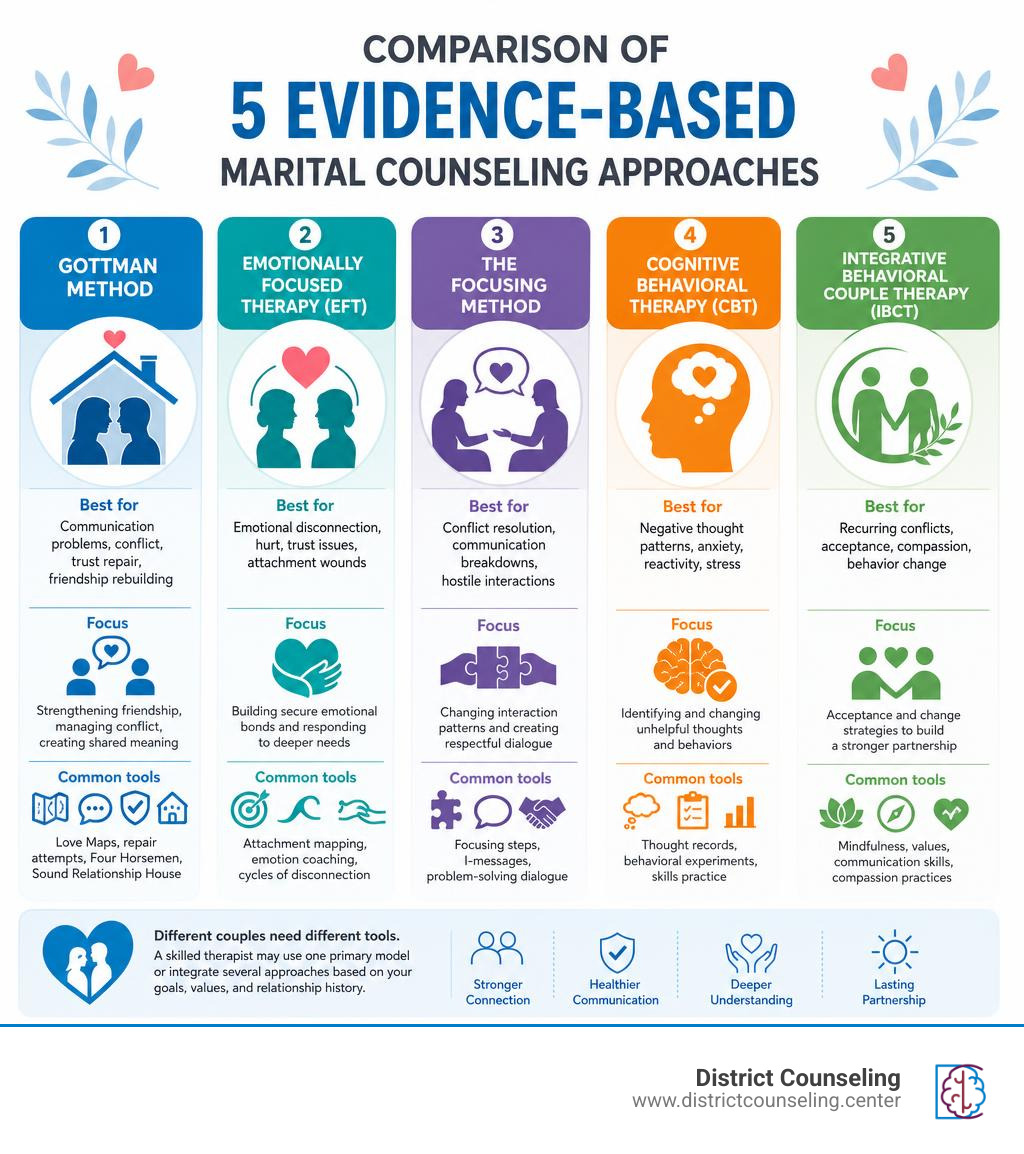
Different couples need different tools. A skilled therapist may use one primary model or integrate several approaches based on your goals, culture, values, and relationship history.
| Approach | Best for | What it focuses on | Common tools |
|---|---|---|---|
| Gottman Method | Communication problems, conflict, trust repair, friendship rebuilding | Strengthening the friendship system, managing conflict, creating shared meaning | Love Maps, repair attempts, Four Horsemen, Sound Relationship House |
| Emotionally Focused Therapy | Emotional disconnection, attachment wounds, pursue-withdraw cycles | Helping partners understand vulnerable emotions beneath conflict | De-escalating cycles, expressing attachment needs, bonding conversations |
| Imago Relationship Therapy | Childhood wounds showing up in adult conflict | Understanding how early relational patterns shape partner choice and conflict | Mirroring, validation, empathy, intentional dialogue |
| Cognitive Behavioral Therapy for Couples | Negative thinking patterns and behavior cycles | Changing unhelpful beliefs, assumptions, and reactions | Thought reframing, behavioral agreements, communication practice |
| Narrative Therapy | Couples stuck in blame-based stories | Helping partners rewrite the story of the relationship | Externalizing problems, identifying strengths, creating new meaning |
The Gottman Method is widely known for its research-based framework, including the “Four Horsemen” of conflict: criticism, contempt, defensiveness, and stonewalling. It is practical and skills-focused, which many couples appreciate.
Emotionally Focused Therapy, often called EFT, is grounded in attachment theory. It helps couples understand the deeper longing underneath conflict, such as “Do I matter to you?” or “Will you be there when I need you?” You can explore more through EFT therapy insights.
Imago Relationship Therapy helps couples see how old wounds and unmet needs can shape present-day reactions. CBT for couples is useful when assumptions and repeated behaviors keep conflict alive. Narrative therapy helps couples stop seeing each other as the enemy and start seeing the pattern as the problem.
No model is magic. The best approach depends on the therapist’s training, the couple’s needs, and both partners’ willingness to practice outside the session.
Frequently Asked Questions About Marital Therapy
Can marriage counseling prevent divorce?
Marriage counseling can help many couples avoid divorce, but it is not a guarantee. A realistic goal is not “save every marriage at all costs.” A healthier goal is clarity, safety, honesty, and meaningful change.
Research suggests couples therapy can be helpful. The average person who receives couples therapy is better off at the end of treatment than 70 to 80 percent of those who do not participate. Other long-term research evaluating marital satisfaction found that about 48 percent of couples reached improvement or full recovery after five years, while about 38 percent experienced deterioration and 14 percent remained unchanged.
Those numbers are important because they tell the truth: counseling can be powerful, but outcomes vary.
Success depends on factors like:
- Both partners’ willingness to participate
- How long the issues have been building
- Whether there is ongoing betrayal or secrecy
- Emotional and physical safety
- The therapist’s training and fit
- Practice between sessions
- Whether individual mental health needs are also addressed
Marriage counseling may prevent divorce by helping couples repair trust, communicate differently, understand each other’s pain, and make concrete changes. In other cases, counseling helps couples decide to separate with more respect, especially when repair is not possible or not healthy.
If you are trying to take immediate steps, read our guide on how to save your marriage.
What credentials should we look for in a qualified counselor?
Look for a licensed mental health professional with training and experience in couples work. Credentials may include:
- Licensed Marriage and Family Therapist, or LMFT
- Licensed Professional Counselor, or LPC
- Licensed Clinical Social Worker, or LCSW
- Licensed Psychologist
- Other state-licensed clinicians with couples therapy training
A qualified marriage counselor should have:
- Active state licensure
- Graduate-level clinical training
- Experience working with couples, not only individuals
- Training in evidence-based relationship approaches
- Comfort discussing conflict, sex, money, betrayal, parenting, grief, and family systems
- A clear plan for assessment and goals
- The ability to remain balanced and not take sides
- Cultural humility and respect for your values
- Awareness of when couples therapy is not appropriate due to safety concerns
You can also look for professional education through organizations like the American Association for Marriage and Family Therapy.
Fit matters. Both partners should feel the therapist can understand them, challenge them respectfully, and keep the room emotionally safe. You do not need a therapist who simply nods while you argue for 50 minutes. You need someone who can slow the process down, name the pattern, and help you practice something new.
What if one partner is hesitant to attend therapy?
A hesitant partner is common. Some people worry therapy will be a blame session. Others fear being pressured to talk about feelings before they are ready. Some think counseling means the marriage is already failing.
If your partner is hesitant, try saying something like:
- “I do not want therapy so someone can take my side. I want us to understand each other better.”
- “I miss feeling close to you, and I think we could use support.”
- “Can we try a few sessions and then evaluate together?”
- “I am not asking you to be the problem. I am asking us to work on the pattern.”
It can also help to frame therapy as skill-building, not punishment. Many couples come to counseling because they care about the relationship, not because they have given up.
If one partner still refuses, individual therapy can help the willing partner clarify needs, practice communication, set boundaries, and decide what is healthy. Sometimes when one partner changes their part of the pattern, the relationship begins to shift. Sometimes it also reveals that deeper action is needed.
For trust-building ideas, read our tips to build trust in a relationship.
One important note: couples counseling is not always the right first step. If there is physical violence, coercive control, severe intimidation, threats, or fear of retaliation, individual support and safety planning are usually more appropriate than joint therapy. Counseling should never pressure someone to stay in an unsafe relationship.
Conclusion
Marriage is not supposed to feel like a constant courtroom drama where both partners are gathering evidence. It is supposed to be a place where two people can be honest, safe, loved, challenged, and supported as life changes.
Relationship marital counseling can help couples communicate more clearly, repair old wounds, rebuild trust, navigate aging and retirement, address intimacy, work through grief, and make thoughtful decisions about the future. It can also help couples stop waiting until things feel unbearable.
At District Counseling, we provide compassionate, authentic support for individuals, couples, and families across Texas, including Houston, Austin, Katy, Cypress, Copperfield, Greater Heights, Memorial, Sugar Land, The Woodlands, Tomball, Spring, Fort Worth, Pearland, and surrounding communities we serve. Our work is grounded in sincere alignment with what matters most to you.
If your relationship feels strained, distant, or stuck, you do not have to figure it out alone. We are here to help you slow down, reconnect, and take the next right step together.
Schedule a relationship marital counseling session
Visited 25 times, 1 visit(s) today
Similar Posts

Francisco Ortiz
October 9, 2026
Faith-Based Pastoral Counseling: A Comprehensive Guide
Back-to-School Mental Health: Tips for a Smooth Transition – Discover practical tips to ease back-to-school anxiety for kids, teens, and parents. Build healthy routines, manage stress, and foster emotional… …...

Francisco Ortiz
October 7, 2026
Houston Counseling Options: Find Local Help Nearby
Find affirming counseling in Houston for trauma, LGBTQ+ care, couples, and more. Explore local options and start your healing today....
Francisco Ortiz
October 5, 2026
Why every teacher needs a burnout therapy game plan
Why every teacher needs a burnout therapy game plan – Learn about burnout therapy for teachers...

Francisco Ortiz
October 2, 2026
Child Therapist Near Me? Here is How to Spot a Great One
Find a child therapist near me who fits your child’s needs. Learn signs, costs, and effective therapy options....

Adalid Blandin
September 30, 2026
Mental Health and Miracles: Finding Local Christian Care
Find pastoral counselling near me for faith-based emotional and spiritual support in Texas....

Adalid Blandin
September 28, 2026
Missouri City and Houston Couples Therapy 101
Explore relationship counseling in Houston options, from couples therapy to intensives, with costs, insurance, and therapist tips for Missouri City families....

Adalid Blandin
September 25, 2026
How to find authentic therapy for emotional exhaustion in Houston
Find emotional exhaustion therapy Houston that helps professionals and caregivers move from burnout to renewed energy and balance....

Francisco Ortiz
September 23, 2026
A Practical Guide to Finding Licensed Telehealth Counselors in Texas
Find licensed telehealth counseling in Texas with this guide to legal standards, privacy, insurance, and best practices for virtual care....

Adalid Blandin
September 21, 2026
All About Psychiatric Weight Loss Options and Treatments
Explore psychiatric weight loss options, including medications, therapy, and bariatric support for holistic wellness....

Francisco Ortiz
September 18, 2026
No Traffic, No Waiting Rooms: Your Guide to Telehealth Counseling in Texas
Learn the rules, rights, and benefits of telehealth counseling in Texas with this complete guide to virtual therapy....


