
Child Therapist Near Me? Here is How to Spot a Great One
Finding a Child Therapist Near Me: What Every Parent Should Know First
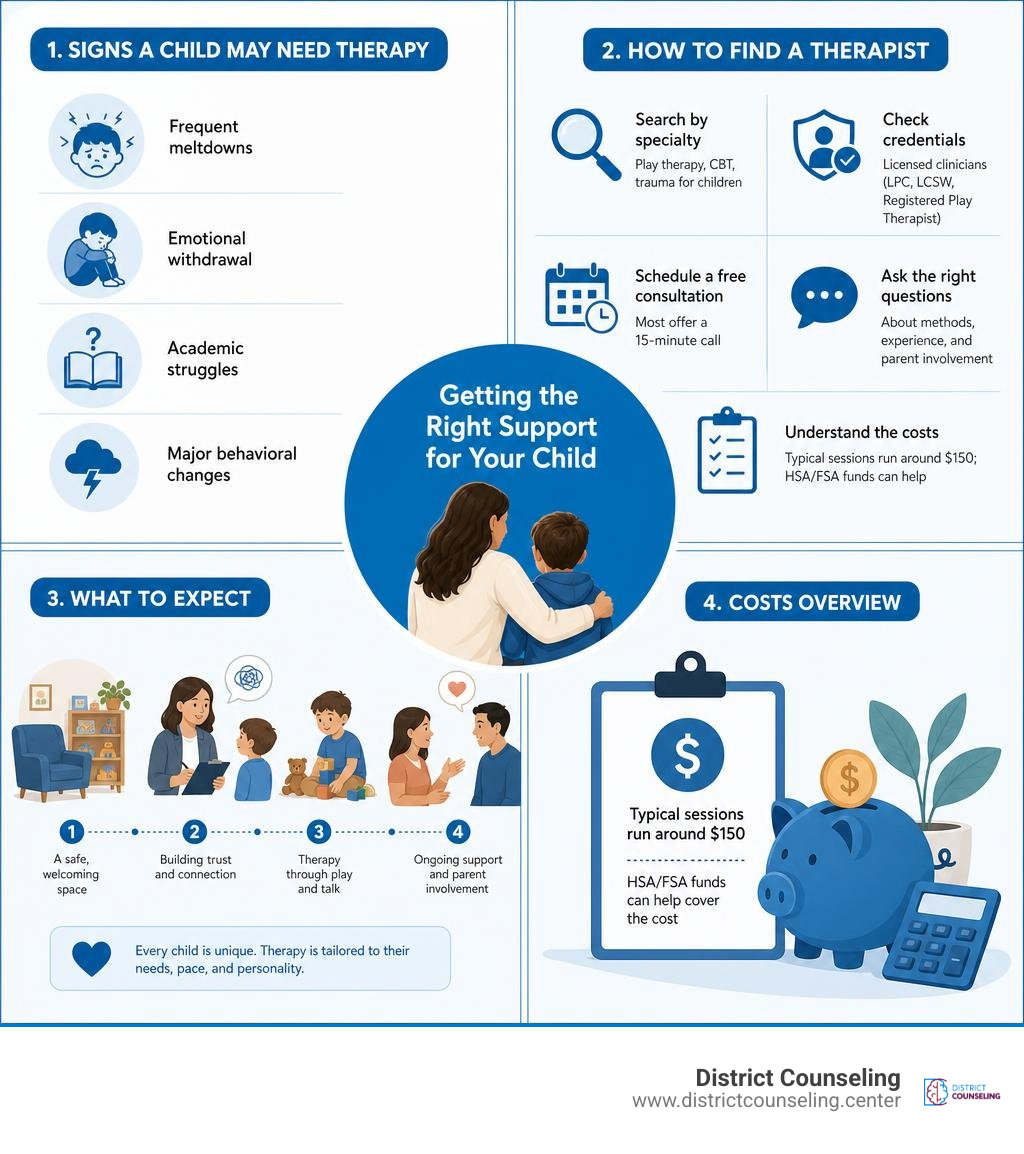
If you’re looking for a child therapist near me, here is a quick overview of what to do:
- Watch for signs — frequent meltdowns, emotional withdrawal, academic struggles, or major behavioral changes
- Search by specialty — look for therapists trained in play therapy, CBT, or trauma for children
- Check credentials — look for licensed clinicians with child-specific training (e.g., LPC, LCSW, or Registered Play Therapist)
- Schedule a free consultation — most child therapists offer a 15-minute call before the first session
- Ask the right questions — about their methods, experience, and how they involve parents
- Understand the costs — typical sessions run around $150; HSA/FSA funds can help cover the cost
Parenting is hard. And sometimes the hardest part is realizing your child may need more support than you can give them on your own. Maybe it started with a meltdown over something small — the wrong color cup, a scratchy sock — and you found yourself standing in the kitchen wondering, “What just happened?” Or maybe the changes have been slower: a quieter child, more school complaints, more tears at bedtime. Either way, that feeling that something is off is worth paying attention to.
Children don’t always have the words for what they’re feeling. That’s exactly why finding the right professional support matters so much — and why knowing how to find it can make all the difference.
I’m Francisco Ortiz, a Licensed Professional Counselor-Supervisor and the clinical lead at District Counseling, where I specialize in helping children, families, and individuals navigate trauma, mood disorders, and complex mental health challenges. Helping Texas families connect with the right child therapist near me is at the core of what we do, and this guide will walk you through every step of that process.
When Does Your Child Need Professional Support?

It is completely normal for children to go through phases. Tantrums at age two, separation anxiety on the first day of kindergarten, and occasional moodiness as they approach the pre-teen years are all standard parts of growing up. But how do we know when a behavior has crossed the line from a temporary phase to something that requires professional help?
For additional general guidance on youth mental health, the Centers for Disease Control and Prevention provides parent-friendly information about children’s mental health, including common concerns and the importance of early support.
As child development specialists, we look at several key areas to determine if professional intervention is needed:
- Frequency and Intensity of Meltdowns: Is your child melting down multiple times a day over minor changes? Are these meltdowns physically exhausting for both of you and lasting longer than what is developmentally typical?
- Emotional Withdrawal: Has your once-gregarious child become unusually silent, withdrawn, or “invisible”?
- Physical Manifestations of Stress: Children often express emotional pain through their bodies. Frequent complaints of stomachaches, headaches, or muscle tension — especially before school — are common red flags.
- Academic and Social Struggles: A sudden drop in grades, school avoidance, or a sudden loss of interest in playing with friends can indicate underlying distress.
- Major Regression: If an older child begins wetting the bed, exhibiting extreme separation anxiety, or reverting to thumb-sucking, it may be their nervous system’s way of signaling overwhelm.
If you are noticing these signs, exploring specialized Children’s Counseling Services is a proactive step. Early intervention can prevent minor emotional bumps from turning into deeply ingrained behavioral patterns. If your child is struggling with persistent sadness or worry, seeking Depression and Anxiety Support can provide them with the emotional vocabulary and coping tools they need. For a deeper look into recognizing these symptoms, you can read our comprehensive Depression in Children: A Guide for Parents.
Finding a Child Therapist Near Me: What to Look For

Once you decide to seek support, the next step is searching for a child therapist near me. However, typing those words into a search engine can return hundreds of local results. How do you separate the good from the great?
The most critical factor in successful therapy is the “therapeutic fit” — the trust and ease that both you and your child feel with the provider. Because children process the world differently than adults, a great child therapist must possess specialized training and a warm, developmentally appropriate approach.
Here is what you should look for when evaluating local professionals:
- Child-Specific Credentials: Look for licensed clinicians (such as LPC, LMFT, or LCSW) who have dedicated training in child development. A highly specialized credential to look for is the Registered Play Therapist (RPT) or Registered Play Therapist Supervisor (RPT-S). There are fewer than 5,000 Registered Play Therapist Supervisors in the United States, representing a deep dedication to the art and science of play-based healing.
- A Non-Clinical, Safe Environment: Children do not thrive in sterile, cold offices. A great child therapy space looks more like a comfortable living room filled with natural elements, soft lighting, and creative tools. This physical design actively reduces clinical anxiety and helps children feel safe.
- A Free Initial Consultation: Most reputable child therapists will offer a free 15-minute phone consultation. This call is a low-pressure opportunity for you to share your primary concerns and gauge if the therapist’s personality and approach align with your family’s values.
- Parental Partnership: A great child therapist will never treat your child in a vacuum. They will view you as the expert on your child and actively integrate parent coaching into the treatment plan.
When researching, it is helpful to look at how leading practices structure their care, placing parent consultation and developmental stages at the very center of their clinical models.
If traveling to an office weekly is a barrier for your family, you might also explore Telehealth Counseling options, which can be highly effective for older children, teens, and parent coaching sessions. You can learn more about our team of dedicated professionals on our Therapists page.
Effective Modalities: Play Therapy, CBT, and Beyond
When we think of therapy, we often picture two people sitting in chairs, talking. But if you ask a seven-year-old to sit still and talk about their anxiety for 50 minutes, you will likely get a blank stare or a lot of squirming. Children communicate through action, creativity, and play.
Because of this, child therapists use specialized, evidence-based modalities designed for developing minds and bodies.
| Modality | What It Looks Like | Best Suited For |
|---|---|---|
| Play Therapy | Using toys, puppets, and games to express feelings and process experiences. | Young children (ages 2-10), trauma, behavioral issues, and emotional expression. |
| Cognitive Behavioral Therapy (CBT) | Identifying negative thought patterns and learning practical coping skills. | Older children (ages 8+), teens, anxiety, depression, and OCD. |
| Somatic & Body-Based Therapy | Focuses on body sensations, breathing, and movement to regulate the nervous system. | Trauma, hyper-arousal, ADHD, and physical anxiety symptoms. |
| Sand Tray Therapy | Creating miniature worlds in a tray of sand to represent internal feelings. | Non-verbal processing, trauma, and children who struggle to express complex emotions. |
Let’s look at these modalities in more detail.
Play Therapy: The Language of Childhood
Play is a child’s natural language, and toys are their words. In a dedicated play therapy room, a child might use a family of puppets to act out a chaotic morning routine, or use building blocks to express feelings of instability. Through play, children can safely distance themselves from difficult emotions and process them without feeling cornered.
If you are in the Houston area, you can access specialized play therapy at our local clinics, such as Children’s Counseling Services Play Therapy in Cypress or our dedicated child spaces through Children’s Counseling Services Play Therapy in Spring Branch.
Cognitive Behavioral Therapy (CBT) and Somatic Approaches
For older children and teens, CBT is highly effective. It helps them connect their thoughts, feelings, and behaviors, giving them concrete strategies to “talk back” to anxious thoughts. When combined with somatic (body-based) techniques, children learn how to calm their racing hearts and tight muscles in real-time.
Advanced Trauma Care
When a child has experienced a distressing event, traditional talk therapy may not be enough to help their nervous system feel safe again. Specialized approaches like Trauma Counseling and EMDR Treatment (Eye Movement Desensitization and Reprocessing) are highly effective in helping children process traumatic memories and reduce their emotional charge.
By blending creative and play-based therapies with structured, evidence-based practices, specialized child therapists can help children process difficult emotions and build lasting resilience.
What to Expect: Preparing for the First Session and Parent Involvement
It is completely natural to feel a bit nervous before your child’s first therapy appointment. Knowing what lies ahead can demystify the process and help you prepare your child.
Preparing Your Child
When talking to your child about therapy, avoid using clinical language that might make them feel like they are “broken” or in trouble. Instead, frame the therapist as an ally. You might say:
“We are going to meet a helper named [Therapist’s Name]. Their job is to play, draw, and talk with kids to help them handle big feelings, like worry or anger. Their room has a lot of cool toys, and it’s a safe place where you can just be yourself.”
The Typical Therapy Journey
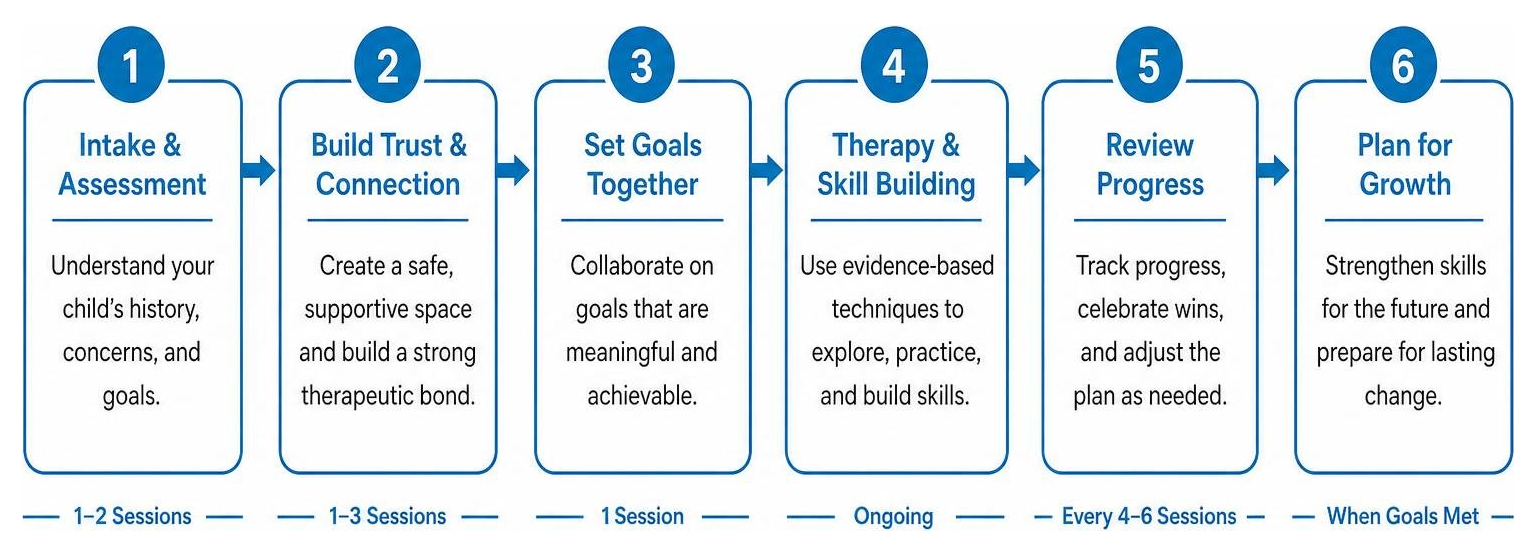
To help you visualize the process, here is how we typically structure the therapeutic journey for families:
The First Session (The Intake)
The first session is usually an intake meeting. In many cases, the therapist will meet with you, the parent, without the child present. This allows you to speak openly about your child’s developmental history, family dynamics, and behavioral struggles without worrying about how your child is perceiving the conversation.
If the child is present, the therapist will focus heavily on building trust, exploring the room, and playing low-pressure games to establish a secure attachment. You can learn more about how we structure these initial steps through our Children’s Counseling in Spring or our Children’s Counseling in Katy services.
The Role of Parent Consultation and Co-Regulation
You are the most important person in your child’s life. While a therapist can provide excellent support for 50 minutes a week, the real healing happens in the hours between sessions. This is why parent coaching and consultation are the “secret sauce” of successful child therapy.
Through regular parent consultation sessions, your child’s therapist will teach you co-regulation strategies. When you learn how to remain calm and anchored during a child’s meltdown, your calm nervous system helps soothe theirs. Confident, connected parents accelerate their child’s growth and support it long after therapy ends.
Navigating Costs, Insurance, and Professional Roles
Understanding the logistics of mental healthcare is essential for making informed decisions for your family.
Rates, Insurance, and the Value of Private Pay
The typical rate for a 50-minute individual child therapy session in a dedicated private practice is around $150 per session.
While some families look exclusively for providers who accept in-network insurance, many families actively choose private-pay (out-of-network) therapy practices for several key reasons:
- Protecting Your Child’s Record: To file an insurance claim, a therapist must assign your child a formal mental health diagnosis. This diagnosis becomes a permanent part of their medical record. Private pay bypasses this requirement, keeping your child’s care completely confidential.
- No Limits on Care: Insurance companies often dictate the number of sessions allowed and the specific modalities used. Private-pay practices allow you and your therapist to decide the pace and style of treatment based entirely on your child’s needs.
- Out-of-Network Reimbursement: If you have out-of-network benefits, private-pay practices can provide you with a monthly document called a superbill. You can submit this to your insurance company for potential partial reimbursement.
- HSA and FSA Accounts: Many families successfully use their Health Savings Accounts (HSA) or Flexible Spending Accounts (FSA) to cover child therapy expenses directly.
Whether you are seeking Children’s Counseling in Cypress or exploring options through Children’s Counseling in Copperfield, our team is committed to helping you navigate these financial logistics transparently.
Frequently Asked Questions about Finding a Youth Counselor
How do I find a child therapist near me who specializes in ADHD or autism?
If you suspect your child is neurodivergent, it is important to seek out clinicians who offer neurodivergent-affirming care. Instead of trying to force your child to mask their traits, a neurodivergent-affirming therapist works with your child’s unique brain structure to build self-esteem and coping tools.
At District Counseling, we provide specialized, comprehensive evaluations to help clarify your child’s needs, including our ADHD Evaluation and Autism Testing services. To learn more about the evaluation process, see our guide on ADHD Evaluation for Children, Teens and Adults in Texas.
What is the difference between a child therapist, psychologist, and psychiatrist?
Understanding these distinct professional roles will help you build the right support team for your child:
- Child Therapist (LPC, LCSW, LMFT): Focuses on talk therapy, play therapy, and behavioral interventions. They work directly with children and parents to build emotional regulation and coping skills.
- Child Psychologist (PhD, PsyD): Highly trained in developmental psychology. In addition to providing therapy, they often specialize in administering comprehensive psychological and educational testing for learning disabilities, ADHD, and autism.
- Child Psychiatrist (MD or DO): Medical doctors who specialize in youth mental health. Their primary role is medication management, evaluating whether psychiatric medication could be a helpful tool alongside therapy.
How do I find a child therapist near me if my child doesn’t connect with their first one?
Therapeutic fit is everything. If your child comes home from their first few sessions and expresses that they “don’t like” their therapist or that it “doesn’t feel right,” do not give up on the idea of counseling.
Sometimes, a therapist’s personality simply doesn’t align with your child’s temperament. Speak openly with the therapist about your child’s feedback; a professional clinician will welcome this communication and will gladly help you transition to a colleague who might be a better fit.
As your child grows into their teenage years, their therapeutic needs will shift as well. If you are navigating this transition, you can explore our specialized Teen Counseling in Cypress or review our general Teen Counseling Services to see how we pivot our clinical style to match older developmental stages.
Conclusion: Partnering for Your Child’s Bright Future
Every child deserves a safe space to process their worries, understand their big emotions, and learn how to navigate a complex world. When you search for a child therapist near me, you aren’t just looking for a clinical service — you are looking for a partner who will stand alongside your family, offering compassion, professional expertise, and a steady hand.
At District Counseling, we are dedicated to providing sincere, authentic, and deeply compassionate care to families across Texas. Whether you are seeking support in Houston, Sugar Land, Pearland, Cypress, Spring, Austin, or Fort Worth, we are here to help restore peace to your home and set your child up for a bright, confident future.
When you are ready to take that next step, we invite you to Schedule Teen and Child Counseling with our warm and experienced team. Let’s work through the worries together.
Visited 1 times, 1 visit(s) today
Similar Posts

Francisco Ortiz
October 2, 2026
Child Therapist Near Me? Here is How to Spot a Great One
Find a child therapist near me who fits your child’s needs. Learn signs, costs, and effective therapy options....

Adalid Blandin
September 30, 2026
Mental Health and Miracles: Finding Local Christian Care
Find pastoral counselling near me for faith-based emotional and spiritual support in Texas....

Adalid Blandin
September 28, 2026
Missouri City and Houston Couples Therapy 101
Explore relationship counseling in Houston options, from couples therapy to intensives, with costs, insurance, and therapist tips for Missouri City families....

Adalid Blandin
September 25, 2026
How to find authentic therapy for emotional exhaustion in Houston
Find emotional exhaustion therapy Houston that helps professionals and caregivers move from burnout to renewed energy and balance....

Francisco Ortiz
September 23, 2026
A Practical Guide to Finding Licensed Telehealth Counselors in Texas
Find licensed telehealth counseling in Texas with this guide to legal standards, privacy, insurance, and best practices for virtual care....

Adalid Blandin
September 21, 2026
All About Psychiatric Weight Loss Options and Treatments
Explore psychiatric weight loss options, including medications, therapy, and bariatric support for holistic wellness....

Francisco Ortiz
September 18, 2026
No Traffic, No Waiting Rooms: Your Guide to Telehealth Counseling in Texas
Learn the rules, rights, and benefits of telehealth counseling in Texas with this complete guide to virtual therapy....

Adalid Blandin
September 16, 2026
Why Your Mitochondria Might Be Depressed
Explore metabolic mental health to boost brain energy, ease mood disorders, and support recovery through mitochondria-focused strategies....

Adalid Blandin
September 14, 2026
The Definitive Guide to Life Coaching
Discover how life coaching can help you achieve goals, gain clarity, and create lasting change in 2026....

Adalid Blandin
September 11, 2026
The Ultimate Guide to Identifying Emotional Abuse in Relationships
The Ultimate Guide to Identifying Emotional Abuse in Relationships – Learn about emotional abuse relationship...


