
Demystifying the Drug Abuse Evaluation Process
What You Need to Know About the Drug Abuse Evaluation Process
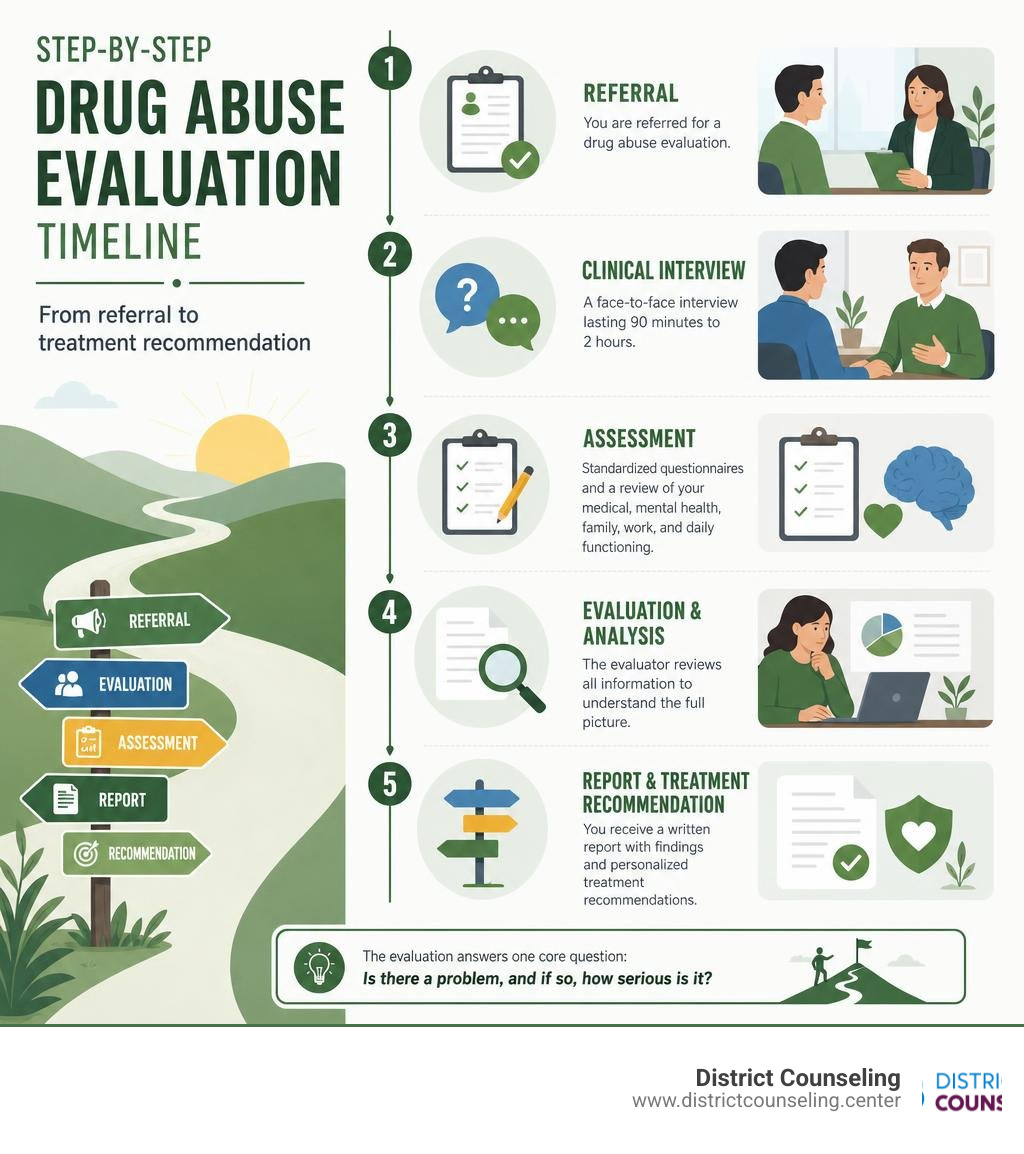
A drug abuse evaluation is a structured clinical process used to determine whether a person’s substance use has become harmful — and if so, what kind of help they need. It is not a punishment, a diagnosis, or a commitment to treatment. It is simply a professional assessment designed to give you clarity and a clear path forward.
Here is what a drug abuse evaluation typically involves:
- A face-to-face clinical interview lasting 90 minutes to 2 hours
- Standardized screening questionnaires about your substance use patterns
- A review of your medical, mental health, and family history
- Questions about your work, relationships, and daily functioning
- A written report with findings and treatment recommendations
Who usually needs one:
- People charged with a DUI, OWI, or other substance-related offense
- Employees referred through a workplace drug-free program or DOT SAP process
- Individuals involved in court proceedings (custody, probation, criminal cases)
- People who want to understand their own relationship with substances
The evaluation answers one core question: Is there a problem, and if so, how serious is it?
A well-known clinical guide from the Substance Abuse and Mental Health Services Administration notes that in-depth substance abuse assessment requires specialized skills and typically takes anywhere from 90 minutes to 2 hours — far more involved than a quick screening or a routine doctor’s visit.
My name is Francisco Ortiz, and as a Licensed Professional Counselor-Supervisor and Certified Forensic Mental Health Evaluator, I have conducted and supervised numerous drug abuse evaluations across legal, clinical, and workplace settings. In this guide, I will walk you through exactly what the process looks like so you can approach it with confidence rather than anxiety.
What is a Drug Abuse Evaluation and Who Needs It?
When people hear the word “evaluation,” they often picture a cold, sterile interrogation or a high-stakes test where they might “fail.” Let us put those fears to rest. A professional drug abuse evaluation is simply a collaborative, clinical conversation. We are not here to judge you, scold you, or make you feel guilty. Our goal is to paint an honest, accurate picture of your relationship with substances so we can help you navigate whatever legal, occupational, or personal challenges lie ahead.
To understand what this process is, it helps to look at what it is not. A common point of confusion is the difference between a quick screening and a comprehensive clinical evaluation.
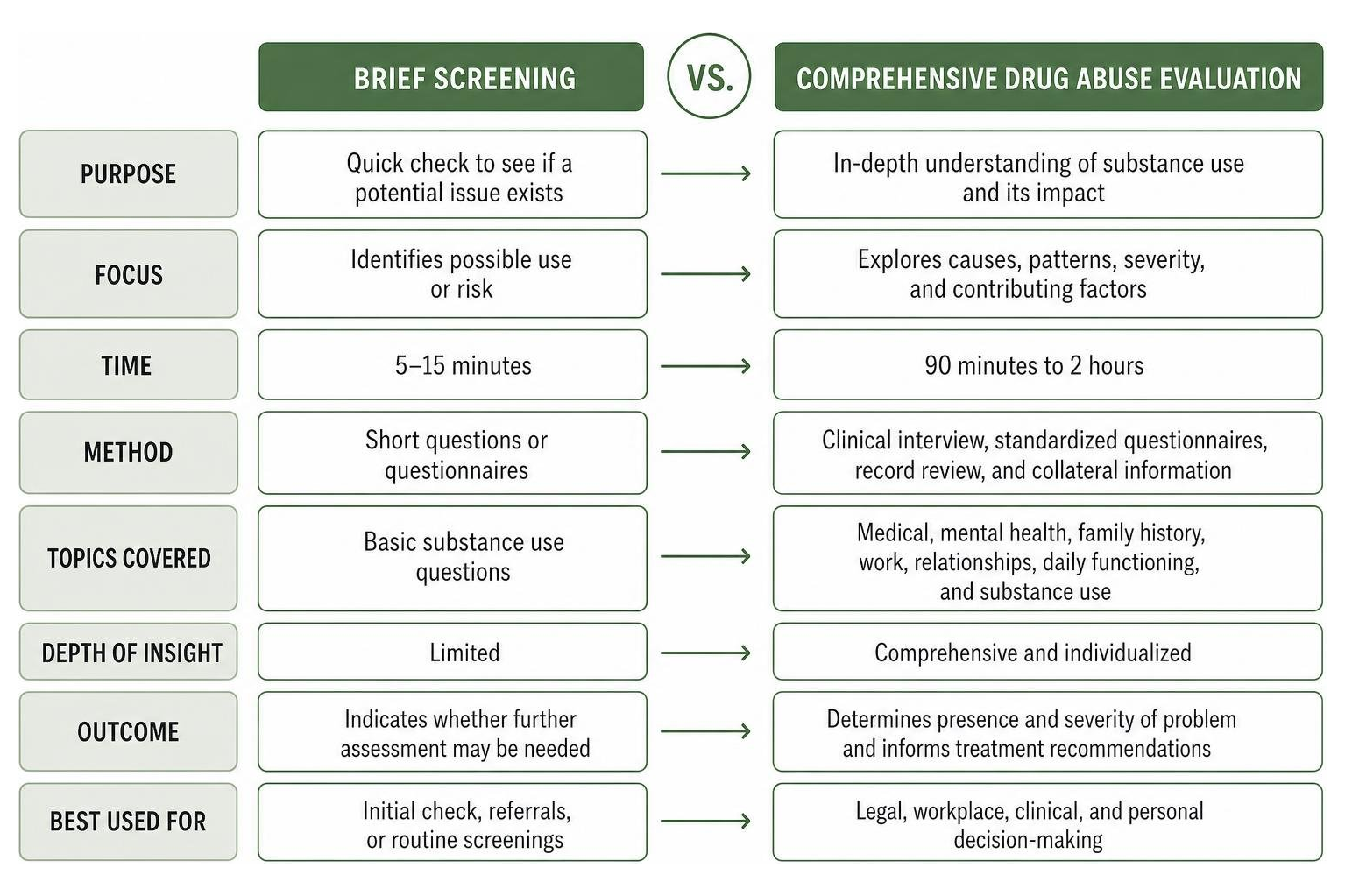
While a screening is a rapid “yes/no” checkpoint to see if a potential issue exists, a full clinical evaluation dives deep into the “why” and “how.” It explores your physical health, your mental well-being, your family background, and the social environments that influence your choices.
This comprehensive approach is vital because substance use patterns are rarely simple. In the general population, alcohol and drug dependence directly affects about 5% to 8% of people, with millions more impacted indirectly. Because every individual’s situation is unique, a cookie-cutter approach simply does not work.
Understanding the Clinical Drug Abuse Evaluation
A comprehensive drug abuse evaluation relies on a thorough biopsychosocial history. This fancy clinical term simply means we look at your life through three distinct lenses:
- Biological: Your genetics, physical health, medical history, and any physiological dependency or withdrawal symptoms you might experience.
- Psychological: Your mental health history, coping mechanisms, trauma, and how you process stress or emotional pain.
- Social: Your relationships, living situation, work environment, and cultural influences.
By examining these three areas, we can evaluate your symptoms against the gold standard of diagnostic criteria: the Diagnostic and Statistical Manual of Mental Disorders, Fifth Edition, Text Revision (DSM-5-TR). Rather than labeling people with outdated, stigmatizing terms, the DSM-5-TR categorizes substance use on a spectrum of severity: mild, moderate, or severe.
During this process, we also consider your overall physical health. While we are counselors and evaluators rather than primary care physicians, we look closely at how substance use might be impacting your physical body, sleep cycles, and energy levels. For a highly detailed medical perspective on how clinicians approach these diagnostic categories, you can read the Clinical assessment of substance use disorders.
Who is Required to Get a Professional Drug Abuse Evaluation?
Not everyone who walks through our doors for an evaluation is there purely out of curiosity. In fact, many individuals are required to obtain a professional assessment due to external circumstances.
- Legal Mandates and Court Orders: If you have been charged with a DUI, drug possession, or another substance-related offense in Texas, the court will almost certainly mandate a professional evaluation. This is designed to help judges and probation officers determine whether education classes or structured treatment should be part of your legal resolution.
- Department of Transportation (DOT) and SAP Processes: For safety-sensitive employees (such as commercial truck drivers, pilots, or transit workers) who violate federal drug and alcohol regulations, a Substance Abuse Professional (SAP) evaluation is required before they can return to duty.
- Child Custody and Family Law: During high-stakes divorce or custody disputes, family courts may request an objective, third-party evaluation to ensure a safe, stable environment for the children involved.
- Driver’s License Restoration: If your Texas driver’s license was suspended due to substance-related offenses, proving your sobriety and rehabilitation through a formal clinical evaluation is a critical step in getting back behind the wheel.
Whether you are navigating a court order in Houston, a workplace mandate in Katy, or are seeking answers for yourself in Fort Worth, we provide the objective, professional documentation you need. For more details on how we structure these specialized services to meet both clinical standards and legal requirements, explore More info on substance abuse evaluation services.
Key Components of a Comprehensive Substance Use Assessment
A truly effective drug abuse evaluation is grounded in science. To ensure our findings are objective, accurate, and fair, we utilize a combination of clinical interviews and scientifically validated, standardized assessment instruments.

These standardized tools act as objective benchmarks. They help us cut through the anxiety and uncertainty of the evaluation by asking clear, targeted questions. Some of the most widely respected tools we use include:
- AUDIT-C (Alcohol Use Disorders Identification Test – Consumption): A brief, highly effective three-question screening tool used to identify hazardous drinking patterns.
- CUDIT-R (Cannabis Use Disorders Identification Test – Revised): A specialized questionnaire designed specifically to evaluate the frequency and impact of cannabis use.
- DAST-10 (Drug Abuse Screening Test): A quick, 10-item self-report instrument that helps evaluate the consequences of drug use over the past year.
Using these evidence-based instruments ensures that your assessment is not based on a counselor’s “hunch,” but on rigorous, peer-reviewed clinical data. To learn more about how these scientific instruments are validated and used in professional settings, you can read the Evidence-based assessment of substance use disorder.
The Role of Laboratory Tests and Collateral Reports
While your self-report is the foundation of the evaluation, a comprehensive assessment must look at the bigger picture. To build a complete and honest narrative, we often incorporate laboratory testing and collateral reports.
Let’s talk about honesty for a moment. It is completely natural to feel defensive during an evaluation. In fact, a famous study by researcher Midanik revealed that 71 percent of patients’ self-reports perfectly matched their Breathalyzer findings when they knew the test would be administered. When we know there is an objective measure in place, it actually helps us feel safer being completely transparent.
To supplement your interview, we may review:
- Laboratory Tests: This can include urine drug screens (UDS), blood alcohol concentration (BAC) reports, or liver function tests (such as GGT) to evaluate physical impacts.
- Collateral Reports: With your explicit written consent, we may speak with a family member, spouse, or employer. These conversations help us understand how your substance use impacts your daily life from an outside perspective.
- Official Documentation: This includes reviewing police reports, driving records, or prior medical and psychiatric records.
We handle all of this supplementary data with the utmost care, ensuring we respect your privacy and legal rights every step of the way. If you would like to read the official federal guidelines on how clinical assessments should gather and verify this sensitive data, check out the Guidelines on screening and assessment.
Identifying Co-Occurring Mental Health Disorders
One of the most critical aspects of a modern drug abuse evaluation is identifying what we call “co-occurring disorders” or a “dual diagnosis.” It is incredibly common for substance use to walk hand-in-hand with mental health struggles.
In fact, research shows that between 4.7% and 13.7% of individuals between the ages of 15 and 54 experience both a mental health disorder and a substance use problem simultaneously. Often, what looks like a simple drug or alcohol problem is actually an attempt to self-medicate underlying, untreated pain.
If an evaluator only looks at the drinking or drug use, they are only treating the smoke while ignoring the fire underneath. We take a deeply trauma-informed approach to ensure we identify co-occurring conditions like:
- Major Depressive Disorder (MDD)
- Generalized Anxiety Disorder (GAD)
- Post-Traumatic Stress Disorder (PTSD)
- Attention-Deficit/Hyperactivity Disorder (ADHD)
By identifying these root causes during the evaluation, we can recommend an integrated treatment plan that addresses both your mental health and your recovery at the same time. To explore how clinicians screen for these complex, overlapping conditions, consult the Screening and assessment of co-occurring disorders.
This integrated approach is especially vital when working with younger populations, whose brains and coping mechanisms are still actively developing. Parents and educators looking for specialized guidance on this topic can find More info on teen drug abuse and treatment.
Determining the Level of Care and Next Steps
Once we have gathered all the puzzle pieces — the clinical interview, the standardized test scores, the collateral reports, and the mental health history — it is time to put them together. The primary goal of this synthesis is to determine the most appropriate “level of care” for your specific situation.
To do this objectively, we utilize the industry-standard criteria established by the American Society of Addiction Medicine (ASAM).
The ASAM criteria evaluate six distinct dimensions of your life:
- Acute Intoxication and/or Withdrawal Potential: Do you need medical supervision to safely stop using?
- Biomedical Conditions and Complications: Do you have physical health issues that need monitoring?
- Cognitive, Behavioral, and Emotional Conditions: Are there co-occurring mental health challenges that require integrated psychiatric care?
- Readiness to Change: What is your personal level of motivation and interest in recovery?
- Relapse, Continued Use, or Continued Problem Potential: What is the immediate risk of returning to use?
- Recovery Environment: Do you have a safe, supportive living situation, or are you surrounded by triggers?
By scoring these dimensions, we can match you with a precise level of care that is neither too restrictive nor too lenient. For a deep dive into the official framework used by clinicians to make these determinations, you can view The ASAM Criteria Level of Care Assessment Guide.
Implementing Treatment Recommendations
Our recommendations are never designed to disrupt your life unnecessarily. Instead, they are tailored to help you rebuild and thrive. Depending on your evaluation results, the next steps might include:
- Medically Managed Detoxification: For individuals facing severe physical withdrawal risks, a short-term, medically supervised stay is recommended to ensure safety and comfort.
- Residential or Inpatient Treatment: A structured, 24/7 healing environment for those who need to step away from daily triggers to focus entirely on recovery.
- Partial Hospitalization Programs (PHP): Intensive, day-long clinical care while allowing you to return home in the evenings.
- Intensive Outpatient Programs (IOP): A highly flexible option (typically 9 hours of therapy per week) that lets you keep working, attending school, and living your life while receiving professional support.
- Outpatient Therapy and Education: Individual counseling and relapse prevention classes for mild substance use concerns or legal education requirements.
No matter which path is recommended, the goal is always sustainable, long-term healing. If you are ready to explore what these treatment options look like in practice, you can find More info on substance abuse treatment.
Frequently Asked Questions about Substance Use Assessments
Navigating a drug abuse evaluation can bring up a lot of questions. Here are clear, straightforward answers to the most common concerns we hear from our clients in Texas.
How long does a typical evaluation take and what should I expect?
A standard, comprehensive evaluation typically takes between 90 and 120 minutes. During this time, you will meet face-to-face (or via secure telehealth) with a licensed clinician.
You can expect the session to be broken down into three main phases:
- Paperwork and Questionnaires: You will complete standardized screening tools (like the AUDIT or DAST) and sign necessary consent forms.
- The Clinical Interview: A warm, guided conversation about your substance use history, mental health, family background, and daily life.
- Review and Recommendations: The clinician will discuss their preliminary findings with you, explain the recommended next steps, and prepare the formal written report.
What confidentiality protections apply to my evaluation?
Your privacy is protected by some of the strictest laws in the medical field. In addition to standard HIPAA regulations, substance use records are protected by federal law under 42 CFR Part 2.
This means that we cannot share any information about your evaluation — or even confirm that you are a client — with anyone (including courts, employers, or family members) without your explicit, written Consent to Release Information. The only exceptions are emergency medical situations, suspected child or elder abuse, or a direct court order signed by a judge.
How much does an evaluation cost and is financial assistance available?
The cost of a professional drug abuse evaluation can vary depending on the complexity of the case (for instance, a standard personal assessment versus a highly detailed forensic or DOT SAP evaluation). Generally, professional evaluations range from $125 to several hundred dollars.
Many insurance plans cover these clinical assessments. If you are facing financial hardship, we recommend asking about sliding-scale options or payment plans. Additionally, if you need immediate, free resources or crisis support, the federal government provides a 24/7 confidential resource via the SAMHSA National Helpline.
Conclusion
At District Counseling, we believe that a drug abuse evaluation shouldn’t feel like a dead end. Instead, we view it as a doorway to a healthier, more stable, and more fulfilling life. Whether you are seeking an assessment to satisfy a Texas court order, clear a workplace requirement, or simply find answers for yourself or a loved one, we are here to support you.
We are proud to serve communities across Texas with a sincere, compassionate, and deeply authentic approach to mental health and recovery. From our offices in Houston, Katy, Fort Worth, Sugar Land, and Austin, to our specialized clinics in Greater Heights, Cypress, The Woodlands, Pearland, and beyond, our team of licensed professionals is ready to walk alongside you.
You do not have to navigate this process alone, and you certainly do not have to let anxiety hold you back. Let us help you take the first step with clarity, dignity, and respect.
If you are ready to move forward, we invite you to Schedule a professional drug abuse evaluation with our team today.
Visited 4 times, 1 visit(s) today
Similar Posts

Francisco Ortiz
September 23, 2026
A Practical Guide to Finding Licensed Telehealth Counselors in Texas
Find licensed telehealth counseling in Texas with this guide to legal standards, privacy, insurance, and best practices for virtual care....

Adalid Blandin
September 21, 2026
All About Psychiatric Weight Loss Options and Treatments
Explore psychiatric weight loss options, including medications, therapy, and bariatric support for holistic wellness....

Francisco Ortiz
September 18, 2026
No Traffic, No Waiting Rooms: Your Guide to Telehealth Counseling in Texas
Learn the rules, rights, and benefits of telehealth counseling in Texas with this complete guide to virtual therapy....

Adalid Blandin
September 16, 2026
Why Your Mitochondria Might Be Depressed
Explore metabolic mental health to boost brain energy, ease mood disorders, and support recovery through mitochondria-focused strategies....

Adalid Blandin
September 14, 2026
The Definitive Guide to Life Coaching
Discover how life coaching can help you achieve goals, gain clarity, and create lasting change in 2026....

Adalid Blandin
September 11, 2026
The Ultimate Guide to Identifying Emotional Abuse in Relationships
The Ultimate Guide to Identifying Emotional Abuse in Relationships – Learn about emotional abuse relationship...

Adalid Blandin
September 9, 2026
A Comprehensive Guide to Effective Relationship Counseling Options
A Comprehensive Guide to Effective Relationship Counseling Options – Learn about relationship counseling...

Francisco Ortiz
September 7, 2026
First Couples Counseling Session: A Guide to Your First Hour on the Couch
Learn what happens in your first couples counseling session, from intake to ground rules, and how to prepare for a successful start....

Adalid Blandin
September 4, 2026
Spotting the Signs and Finding Help for Emotional Abuse
Recognize emotional abuse signs and connect with a relationship emotional abuse therapist for healing and support....

Francisco Ortiz
September 2, 2026
Riding Out the Storm: The Four Horsemen of Couples Therapy and Their Antidotes
Learn how the four horsemen couples therapy framework identifies destructive conflict patterns and provides proven antidotes to strengthen your relationship....


